Hindu Sanskriti
Today's Generation and Customs: Why Do They Want to Know the Truth Behind Every Practice?

Today's generation, often called the digital generation or Gen-Z, has grown up in a world different from their ancestors. An ocean of information is at their fingertips, and the answer to every question is just a click away on Google. In such a scenario, when it comes to centuries-old Indian rituals and traditions, their attitude is not merely one of 'accepting' but of 'knowing' and 'understanding'. They want to know what the truth behind customs is? What is the logic, history, and significance behind every practice? This article is an attempt to address this curiosity and shed light on the untouched aspects of our rich cultural heritage.
Indian culture is like a flowing river that has absorbed many streams over time but has never lost its originality. Our customs are not just religious rituals; they are also ways of life, repositories of knowledge, and threads of community harmony. Through this article, we will try to deepen this dialogue between today's generation and tradition, attempting to understand why young people want to know the scientific reasons and deeper meanings behind these practices.
The Changing Definition of Traditions: A New Generation Full of Curiosity
There was a time when children would accept everything their elders said without questioning. Answers like 'this is how it has always been' or 'one should obey elders' were sufficient. But today's youth are independent thinkers, emphasizing logic and analysis. They want to embrace knowledge and truth, not superstition. This is why they want to know the truth behind every custom.
Why Do Questions Arise?
- Information Explosion: Due to the internet and social media, youth come into contact with various cultures and ideas. This gives rise to a spirit of comparison and analysis.
- Rational Thinking: The modern education system emphasizes critical thinking and questioning. Young people want to test everything on the anvil of logic.
- Distance from Superstition: Often, traditions are linked to superstition. Young people want to avoid this and embrace true knowledge.
- Search for Personal Meaning: Today's youth do not just want to follow rules; they want to find some personal meaning and value for themselves in these practices. They want to know how these practices can bring positive changes into their lives.
This raising of questions is a healthy sign. It shows that young people do not want to disconnect from their roots but rather want to understand them more deeply. This lays the foundation for a new relationship between youth and आध्यात्मिकता, where faith is strengthened by logic, not weakened by it.
The Truth Behind Customs: Deeper Meaning and Scientific Basis
The customs embedded in our Indian culture are based on a deeper meaning and often scientific, social, and psychological foundations. These are not merely external displays but reflect ancient wisdom for human welfare and establishing harmony with nature.
Historical and Cultural Context
The history of customs in India spans millennia, rooted in the Vedas, Upanishads, Puranas, and various regional traditions. These practices are the result of our ancestors' life experiences, natural observations, and deep contemplation. In ancient times, when modern science was in its nascent stages, these customs provided a practical framework for maintaining health, hygiene, social order, and mental peace. These practices continued to be transferred from generation to generation verbally and through behavior, becoming an integral part of our cultural identity.
Customs from a Scientific Perspective
Many Indian customs surprisingly conceal scientific principles, which modern science is now slowly accepting.
- Health and Hygiene: Practices like waking up early, performing Surya Namaskar, worshipping plants like Tulsi, and bathing in rivers (with some exceptions where hygiene is not maintained) promote physical and mental health. In ancient times, these practices played a significant role in ensuring public health.
- Environmental Protection: Worshipping nature, such as considering trees (Peepal, Banyan, Tulsi) and rivers sacred, promotes a sense of respect and protection for the environment. This is an ancient way of maintaining our ecology.
- Weather and Agriculture: Many festivals and rituals are associated with the seasonal cycle and harvest. These practices have been a way for farmers to express gratitude and adapt their lifestyle according to seasonal changes. For example, festivals like Makar Sankranti, Pongal, Bihu are harvest celebrations.
- Psychological Stability: Practices like meditation, chanting, and worship calm the mind, reduce stress, and increase concentration. These are powerful tools for psychological well-being.
Social and Psychological Benefits
Customs provide significant benefits not only for individuals but also for the entire society:
- Community Cohesion: Festivals and rituals bring people together, strengthening the sense of community. Worshipping together, sharing food, and celebrating deepen social bonds.
- Communication of Values: Stories, songs, and performances that are part of rituals transmit moral values, mythological tales, and life lessons to the next generation. These connect children to their culture and history.
- Identity and Belonging: Customs connect an individual to their culture, family, and community, fostering a sense of identity and belonging. This is extremely important for mental health.
- Transitional Phases: Rituals performed during significant transitional phases of life like birth, marriage, and death help individuals accept and cope with these changes, providing emotional support and comfort.
- Self-Discipline and Control: Practices like fasting, vrat (vows), and penance promote self-discipline, strengthen willpower, and teach individuals to control their senses.
Thus, the importance of practices is not limited to religious beliefs but touches every aspect of our lives, nurturing us physically, mentally, socially, and spiritually.
Deeper Meanings of Some Common Practices: A Detailed Analysis
Let's now look at some common Indian practices that we often perform thoughtlessly, but behind which deep meaning and scientific basis are hidden.
Applying Tilak: Symbol of Concentration and Energy
In Indian culture, applying a tilak on the forehead is a very common and important practice. It is not just a religious symbol; there are deep scientific and spiritual reasons behind it.
- Scientific Reason: In the middle of our forehead, above the eyebrows, lies the Ajna Chakra (third eye). This is considered an important energy point in the body. Applying tilak exerts pressure on this point, which increases concentration and calms the mind. Substances like sandalwood, roli, kumkum, or turmeric are used, which have cooling and medicinal properties. Sandalwood provides coolness, reduces stress, and relieves headaches. Turmeric has anti-bacterial properties.
- Spiritual and Psychological Reason: Tilak is a symbol of knowledge, respect, purity, and auspiciousness. It reminds an individual of their spiritual goal and attracts positive energy. It also boosts confidence and makes an individual feel calm from within. It is also a way of showing respect and welcome.
Fasting (Vrat): Physical and Mental Purification
Fasting is an integral part of Indian traditions, observed on various religious and social occasions.
- Scientific Reason: Modern medical science has also accepted the importance of 'intermittent fasting' and 'detoxification'. Fasting gives the body an opportunity to rest the digestive system, allowing the body to expel toxins (detoxification). It improves metabolism, strengthens the immune system, and promotes cell renewal. It can also help control blood pressure and cholesterol.
- Spiritual and Psychological Reason: Fasting is a symbol of self-control, willpower, and penance. It helps an individual conquer their senses and rise above material pleasures. It calms the mind, increases concentration, and gives an individual a chance to connect with their spiritual self. It is also a way to express devotion and gratitude towards God.
Performing Namaskar: A Gesture of Respect and Humility
The Indian greeting 'Namaskar' or 'Namaste' is not just about joining hands, but it is a deep cultural and spiritual symbol.
- Scientific Reason: Joining hands presses the acupressure points located on the palms and fingertips. These points are connected to various organs of the body, such as the eyes, ears, and brain. Pressure on these points improves blood circulation and calms the mind. It is also a hygienic way to avoid physical contact, especially during times of infectious diseases.
- Spiritual and Psychological Reason: 'Namaskar' means, "I bow to the divine spirit within you." It expresses humility, respect, and a sense of equality. It shows that we see the person in front not just as a body, but as a divine being. It exchanges positive energy and establishes peaceful relationships.
Touching Feet: Gratitude Towards Teachers and Elders
Touching feet, especially of elders and teachers, is an ancient way of expressing respect in Indian culture.
- Scientific and Energetic Reason: According to Indian philosophy, energy flows from the upper body to the lower body. When we touch someone's feet, we receive their blessings and positive energy. This establishes a type of energetic contact, where the positive energy and experience of a knowledgeable person are received by us as blessings.
- Spiritual and Psychological Reason: This is the ultimate expression of humility, gratitude, and respect. It shows how much an individual values the knowledge and experience of their gurus and elders. This creates an emotional bridge between elders and younger ones, leading to deep trust and affection in relationships. It signifies respect for knowledge and experience in our culture.
Tulsi Pooja (Worship): Medicinal and Spiritual Significance
The Tulsi plant is considered sacred in Indian homes and is worshipped. It is not just a religious practice.
- Scientific Reason: Tulsi is an excellent medicinal plant with countless health benefits. It has anti-bacterial, anti-viral, anti-inflammatory, and antioxidant properties. It strengthens the immune system, reduces stress, provides relief in respiratory problems, and helps control blood sugar. Tulsi also emits oxygen, keeping the surrounding environment pure. Its strong scent keeps mosquitoes and other insects away.
- Spiritual and Environmental Reason: Worshipping Tulsi as a 'Goddess' is an ancient way of environmental protection. It teaches us to respect and care for nature. It is also considered 'Mokshadayini' (giver of liberation), symbolizing spiritual purification.
Ringing Bells in Temples: The Science of Sound Energy
The practice of ringing bells while entering temples also holds scientific and spiritual significance.
- Scientific Reason: The sound of a bell produces a specific frequency and vibration. This sound activates the alpha and theta waves of our brain, which calms and concentrates the mind. It dispels negative energy and transmits positive energy. The echo of the bell lingers in the atmosphere for a few seconds, purifying the surrounding area.
- Spiritual and Psychological Reason: Ringing a bell symbolizes invoking deities and registering one's presence. It brings us into the present moment, frees us from external thoughts, and helps us focus on worship. It is also a symbol of auspiciousness and purity.
Region-wise Diversity: India's Cultural Rainbow
India is a vast and diverse country, where every region has its unique traditions and customs. These diversities further enrich our cultural heritage, but the underlying principles behind them are often similar – respect for nature, community harmony, and spiritual upliftment.
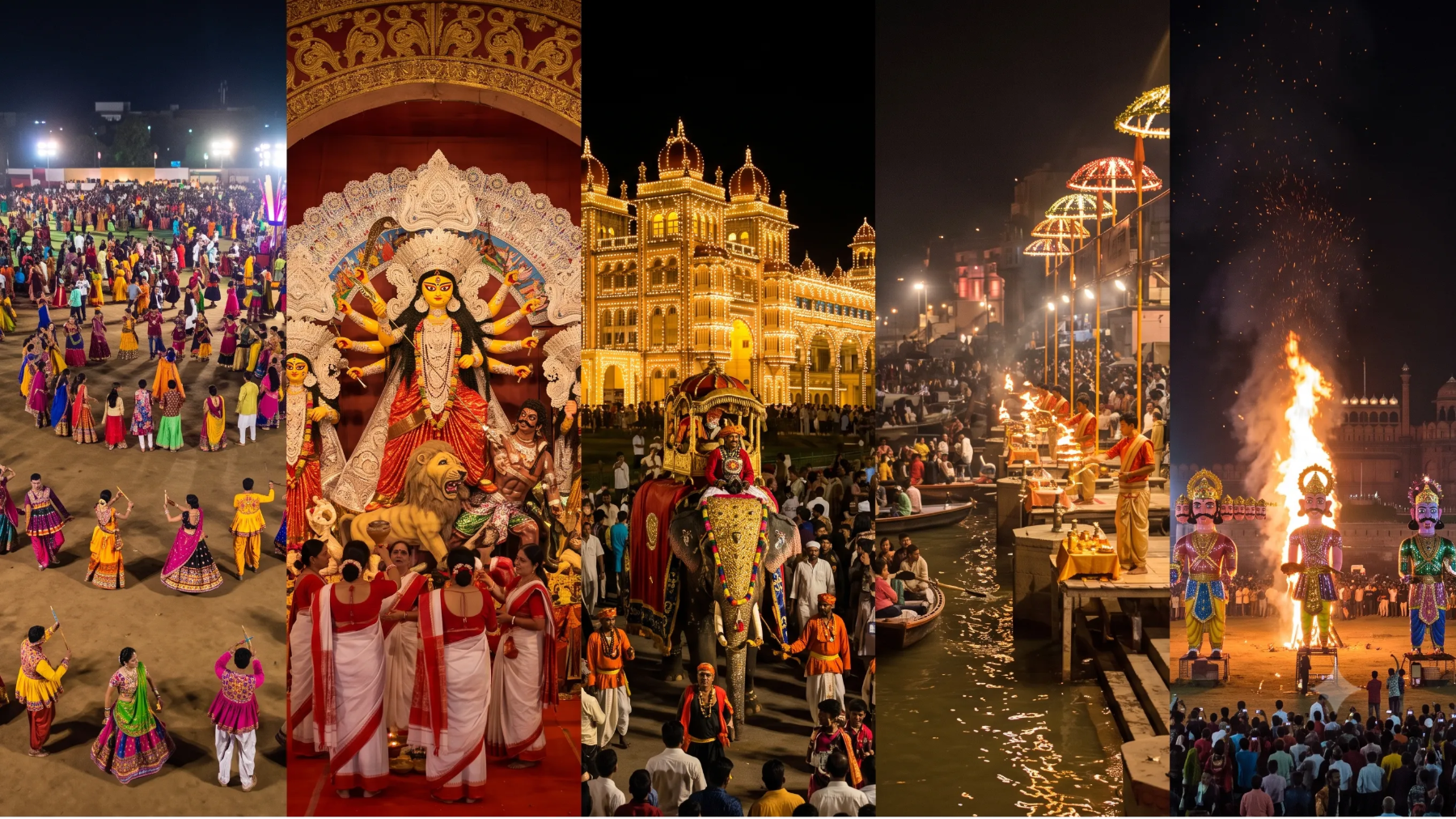
- North India: Festivals like Diwali (festival of lights, victory of good over evil), Holi (festival of colors, social equality), Karwa Chauth (fast observed by wife for husband's long life) strengthen community solidarity and family values. A connection with nature and the crop cycle is also seen in them.
- South India: Pongal (harvest festival, worship of Sun and nature), Onam (Kerala's harvest festival and welcome of King Mahabali), classical dance forms like Bharatanatyam which were part of temple rituals, are famous for their deep आध्यात्मिकता and artistry. The architecture and sculpture of temples in South India are also evidence of deep religious beliefs and engineering skill.
- East India: Durga Puja (worship of the Goddess of power, symbol of the destruction of evil) is a grand socio-cultural festival celebrated in states like Bengal and Assam. It presents a unique blend of community spirit and artistic performance. Bihu (Assam's harvest festival) is also associated with nature and agriculture.
- West India: Garba and Dandiya (dances performed during Navratri in devotion to Goddess Shakti) are the identity of Gujarat and Rajasthan. These festivals are full of energy, devotion, and community participation. Ganesh Chaturthi (birthday celebration of Lord Ganesh in Maharashtra) is also a symbol of social unity and celebration.
In all these regional practices, in whatever form they may be, we find a common thread – gratitude towards life, respect for nature, love for family and community, and the quest for आध्यात्मिकता. It is the truth behind customs that they connect us, teach us, and give us our identity.
Balance Between Modern Generation and Traditions
The challenge for today's generation is not to abandon traditions, but to understand them and follow them with a rational approach. Preserving cultural heritage and encouraging rational understanding can go hand in hand.
Promoting Rational Understanding
- Welcome Questioning: We should encourage young people to ask questions and answer them respectfully and logically. They should be told that there is a reason behind every practice.
- Sharing Knowledge: Elders should share the historical, scientific, and philosophical aspects behind these practices with the youth. Information can also be provided through books, websites, and documentaries.
- Challenging Superstition: Where a practice is based solely on superstition and has no logical or scientific basis, there should be courage to identify and abandon it. It is important to differentiate between tradition and superstition.
Preserving Heritage, Abandoning Superstition
Our goal is to build a young generation that feels proud of its cultural roots, but also possesses a progressive and scientific mindset.
- Finding Relevance: Many old practices can also be made relevant in today's context. For example, Yoga and meditation are now part of global health systems.
- Selection and Adaptation: It is not necessary to follow every practice literally. Young people can adopt those practices that are meaningful to them and add positive value to their lives, based on their understanding and discretion. They can also adapt them to modern lifestyles.
- Embracing आध्यात्मिकता: Customs are often a path to आध्यात्मिकता. Young people should understand that आध्यात्मिकता is not just religion, but a way of self-discovery, inner peace, and establishing connections with others.
Conclusion: The Truth Behind Customs - A Spiritual Journey
Today's generation's curious approach towards customs is truly a blessing. It is an opportunity for us to dust off our centuries-old traditions, revisit them, understand their original meanings, and revitalize them with new energy and relevance. The truth behind customs is not merely about following rituals, but about assimilating the knowledge, science, and life values hidden behind them.
Our traditions give us a strong cultural identity, connect us with the wisdom of our ancestors, and inspire us to become better human beings. When young people understand the scientific reasons and deeper meanings behind these practices, they see them not just as a burden, but as a valuable heritage. This helps them to be proud of their Indian culture and to responsibly pass it on to the next generation.
Ultimately, the importance of practices teaches us that life is not just material, but also has a deep spiritual dimension. It builds a bridge between youth and आध्यात्मिकता, enabling them to find meaning, peace, and contentment in their lives. So, let's make our curiosity a guide, know the truth behind every practice, and embrace our rich cultural heritage in a conscious and rational way. This is not just about following traditions, but about discovering oneself and understanding the deeper meanings of one's existence.
Do you want to know about any particular custom? Or do you have your own experiences? Let us know in the comments!
अक्सर पूछे जाने वाले प्रश्न (FAQ)
Q: What attitude does today's generation have towards customs?
Today's generation holds an attitude of 'knowing' and 'understanding' customs, rather than merely 'accepting' them.
Q: Why do young people want to know the truth behind every practice?
They want to know the logic, history, and significance behind every practice.
Q: What is the main characteristic of the 'Digital Generation' or 'Gen-Z'?
An ocean of information is at their fingertips, and the answer to every question is easily available.
Q: What are the main reasons for today's generation's curiosity?
Information explosion, rational thinking, distance from superstition, and the search for personal meaning are the main reasons.
Q: How do the internet and social media affect the thinking of young people?
They bring them into contact with various cultures and ideas, increasing the sense of comparison and analysis.
Q: What is the impact of the modern education system on the thinking of young people?
It emphasizes critical thinking and questioning, leading young people to test everything on the anvil of logic.
Q: Why do young people want to avoid superstition?
They want to avoid superstitions associated with traditions and embrace true knowledge.
Q: What kind of personal meaning do today's youth find in traditions?
They want to know how these practices can bring positive changes into their lives and what value they hold for them.
Q: Is questioning customs a positive sign?
Yes, it is a healthy sign that shows young people do not want to disconnect from their roots but rather want to understand them more deeply.
Q: How are customs described in Indian culture?
Indian customs are not just religious rituals; they are also ways of life, repositories of knowledge, and threads of community harmony.
Q: What is the 'truth' about Indian customs?
They are based on a deeper meaning and often scientific, social, and psychological foundations.
Q: What is the fundamental purpose of these practices?
These practices reflect ancient wisdom for human welfare and establishing harmony with nature.
Q: What is the historical context of Indian customs?
Their history spans millennia, rooted in the Vedas, Upanishads, Puranas, and various regional traditions.
Q: How has the definition of traditions changed over time?
There was a time when the word of elders was accepted without question, but now youth emphasize logic and analysis.
Q: What does the article say about the new relationship between faith and logic?
It lays the foundation for a new relationship between youth and spirituality, where faith is strengthened by logic, not weakened by it.

Author
Praarthana Editorial Team
The Praarthana Editorial Team shares daily spiritual guidance, authentic rituals, and deep insights from ancient Sanatan scriptures to support your spiritual journey.
ऐप डाउनलोड करें
पंचांग तिथि, त्यौहार, व्रत, उत्सव, एकादशी, आरती संग्रह, मंत्र, व्रत कथा



एक टिप्पणी छोड़ें