
Gyaana Ananda Mayam Devam Nirmala Sphatikakritim | Aadhaaram Sarva Vidyaanaam Hayagrivam Upaasmahe ||
हम उन हयग्रीव देवता का ध्यान करते हैं, जो ज्ञान और आनंद से परिपूर्ण हैं, जिनकी आकृति निर्मल स्फटिक के समान है, और जो समस्त विद्याओं के आधार ...
Meaning of Mantra
We meditate upon Hayagriva, the divine being who is full of knowledge and bliss, who has a pure, crystal-like form, and who is the very foundation of all knowledge.
Benefits & Science
Benefits of Chanting:
Regular and devoted chanting of this Hayagriva mantra can profoundly impact an individual's cognitive functions and spiritual development. The powerful vibrations associated with Lord Hayagriva are believed to resonate with the brain's capacity for learning, retention, and analytical thinking, potentially leading to enhanced memory, improved concentration, and greater mental clarity. Students, researchers, and scholars may find it significantly beneficial for academic pursuits, as it is said to unlock deeper understanding, foster critical thinking, and improve retention of complex information. Beyond intellectual gains, the mantra serves as a spiritual tool to dispel the veil of ignorance (avidya) and guide the practitioner towards intuitive wisdom and self-realization. It can also inspire creative expression, refine communication skills, and provide insightful solutions to complex problems, cultivating a well-rounded and enlightened intellect.
Scientific Perspective:
Chanting mantras, including the Hayagriva mantra, involves rhythmic vocalization and focused breathwork that can induce a profound meditative state. The repetitive phonetic patterns and specific sound frequencies are known to influence brainwave activity, potentially shifting the brain into alpha or theta states, associated with deep relaxation, heightened creativity, improved learning capacity, and enhanced memory consolidation. The vibrational resonance created in the vocal cords and surrounding areas stimulates the vagus nerve, a key component of the parasympathetic nervous system. This stimulation promotes a sense of calm, reduces physiological stress, and optimizes heart rate variability, thereby improving overall well-being. This physiological response can significantly enhance brain function, making it more receptive to new information, improving cognitive processing, and strengthening neural pathways related to concentration and memory, analogous to a structured mental workout.
Mythology & Origin
Mantra Origin Saga:
Lord Hayagriva's origin is steeped in ancient Vedic and Puranic lore. One prominent legend, found in the Brahmanda Purana and Skanda Purana, describes how during a cosmic dissolution, the Vedas (sacred scriptures of knowledge) were stolen by two powerful demons, Madhu and Kaitabha, while Brahma, the creator god, was in a deep sleep. To retrieve the lost divine knowledge and restore order to the cosmos, Lord Vishnu assumed the unique form of Hayagriva, a deity with the head of a horse and a human body. He then plunged into the cosmic ocean, vanquished the demons, and successfully recovered the Vedas, re-establishing the flow of divine wisdom.
Scriptures Mentions:
This mantra itself is a revered dhyana shloka (meditation verse) found in various traditional texts and tantras dedicated to Hayagriva worship. Mentions of Lord Hayagriva and his profound significance as the deity of knowledge are extensively found in the Brahmanda Purana, Skanda Purana, Vishnu Purana, and notably, the Hayagriva Upanishad. These scriptures elaborate on his divine attributes, his role as the preserver of all sacred knowledge, and the ultimate source of both spiritual and secular learning, making him a central figure for seekers of wisdom.
Associated Rishi & Deity:
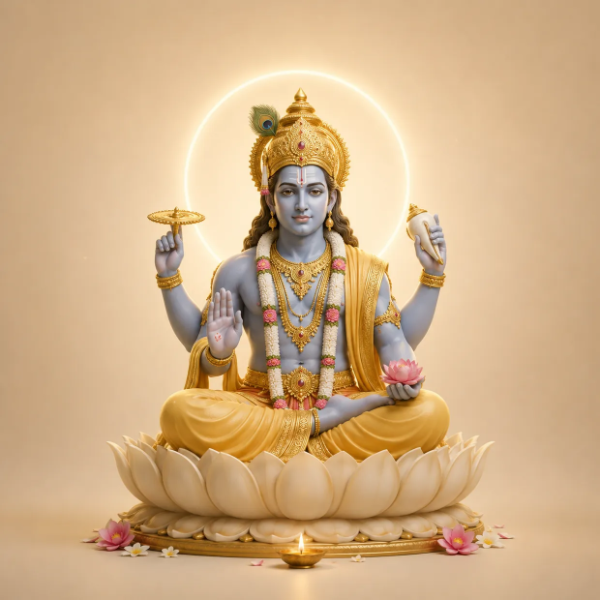
Lord Hayagriva is primarily an avatar of Lord Vishnu, the preserver of the universe. He is revered by a multitude of sages, scholars, and deities who seek to master various forms of knowledge. Goddess Saraswati, the Hindu deity of arts, music, knowledge, and learning, also venerates Hayagriva as the ultimate source of wisdom. Historically, great Vaishnava Acharyas and saints, such as Vedanta Desika (who composed the Hayagriva Stotram) and Ranganatha Muni, played pivotal roles in popularizing his worship and emphasizing his unique position as the grantor of divine intellect and remover of ignorance.
Historical Significance:
The worship of Lord Hayagriva has a rich historical trajectory, particularly flourishing in the Vaishnava traditions of South India. Numerous ancient temples are dedicated to him across India, such as the Sri Hayagriva Temple in Chettipunyam and within the Parakala Matha. Throughout history, he has been revered as the patron deity of students, educators, and all those engaged in intellectual pursuits or seeking spiritual wisdom. His cult gained significant momentum through the efforts of influential Acharyas and philosophers, who composed elaborate hymns, commentaries, and devotional literature in his praise, cementing his position as the embodiment of divine intellect capable of dispelling all forms of ignorance and guiding humanity towards higher consciousness.
Mantra Sadhana Guidelines
Best Time to Chant
- Mondays are especially auspicious and beneficial.
- Early morning Brahma Muhurta (4:00 - 6:00 AM) is best.
- Highly fruitful during Pradosh Kaal and Mahashivratri.
- Chant before commencing any auspicious task or ritual.
Other Popular Other Mantra Mantras
Other Devotional Categories

Download App
पंचांग तिथि, त्यौहार, व्रत, उत्सव, एकादशी, आरती संग्रह, मंत्र, व्रत कथा