
Kasturi Tilakam (Gopala Chudamani Stotram)
Explore the profound 'Kasturi Tilakam' mantra of Lord Krishna. Discover its spiritual meaning, benefits, pronunciation, and how to connect with Gopala Chudamani's divine form.
Meaning of Mantra
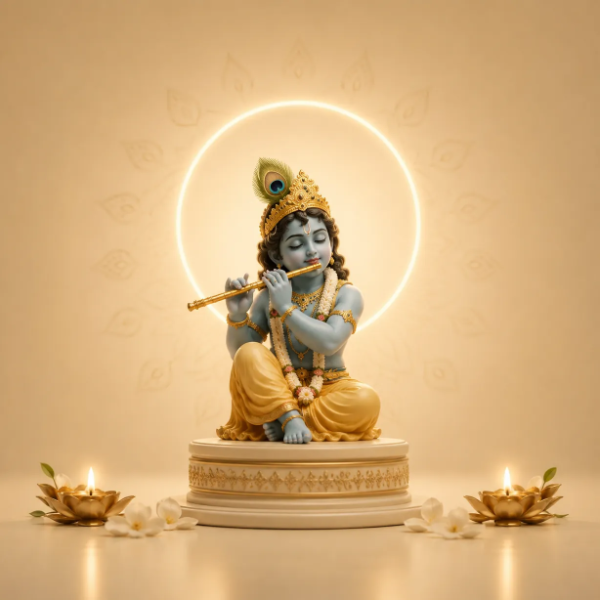
With a mark of musk on His forehead's expanse, and the Kaustubha gem on His chest. A beautiful pearl adorning the tip of His nose, a flute held in His hand, and bracelets on His wrist. His entire body elegantly smeared with divine Harichandana, and a string of pearls gracing His neck. Surrounded by gopi women, the crest-jewel of Gopas, Sri Gopala, shines gloriously in victory.
Benefits & Science
Benefits of Chanting:
Chanting the 'Kasturi Tilakam' mantra offers a pathway to deep spiritual enrichment. By focusing on the divine attributes of Lord Krishna, devotees may experience an enhancement in their devotion (Bhakti), fostering a profound connection with the Supreme. The vivid imagery aids in spiritual visualization, leading to a more immersive meditative experience that can induce inner peace and calm, helping to alleviate stress and mental agitation. Regular practice is believed to purify the mind, removing negative thoughts and fostering a positive outlook. This mantra can serve as a spiritual conduit for receiving divine grace and blessings, which may subtly influence one's life by removing perceived obstacles and promoting overall well-being. It cultivates an appreciation for the aesthetic beauty of the divine, deepening one's spiritual journey and leading to a sense of contentment and joy.
Scientific Perspective:
Chanting this mantra, like many Sanskrit mantras, involves rhythmic vocalization that can induce specific physiological and neurological responses. The precise vibrational patterns generated by Sanskrit syllables are believed to activate various neural pathways. The sustained repetition and focus inherent in chanting can synchronize brainwave states, potentially shifting from a high-frequency beta state to more relaxed alpha or even meditative theta states. This shift is often associated with reduced stress, improved mental clarity, and enhanced emotional regulation. The act of chanting also stimulates the vagus nerve, which plays a crucial role in regulating the body's parasympathetic nervous system, responsible for the 'rest and digest' response. This can lead to a decrease in heart rate, blood pressure, and muscle tension, fostering a sense of deep relaxation and well-being. Furthermore, the vivid imagery invoked by the mantra's descriptive verses engages the visual cortex and imagination, potentially enhancing positive emotional states and a feeling of spiritual connection, further influencing neurochemical release and overall brain function positively.
Mythology & Origin
Mantra Origin Saga:
This particular verse is a Dhyana Sloka (meditative verse) or Stuti (hymn of praise) dedicated to Lord Krishna, specifically in His form as Gopala, the enchanting cowherd boy. While not directly tied to a singular mythological event of its 'creation' like the Gayatri Mantra, such descriptive verses have been composed by numerous saints, poets, and devotees throughout history, encapsulating their profound love and vision of the Divine. It emerged organically from the rich Vaishnava Bhakti tradition, where visualizing and describing the Lord's form is a central practice for cultivating devotion.
Scriptures Mentions:
Descriptions similar to this mantra's imagery are abundant in various Puranas, particularly the Srimad Bhagavatam (Bhagavata Purana), which extensively details Lord Krishna's lilas (divine pastimes) and His enchanting form in Vrindavan. The Brahma-samhita and other Vaishnava texts also contain detailed descriptions of Krishna's transcendental beauty and adornments, which form the basis for such meditative verses.
Associated Rishi & Deity:
The primary deity associated is Lord Krishna (Gopala). While a specific Rishi for this exact verse is not commonly cited, it belongs to the lineage of Vaishnava Acharyas, poet-saints, and devotees who have glorified Krishna through their devotional compositions. It embodies the collective spiritual realization and aesthetic appreciation of countless devotees over centuries.
Historical Significance:
This mantra, or similar verses, holds immense historical significance within the Bhakti movement. During the medieval period, Bhakti traditions flourished, emphasizing personal devotion to God. Mantras and stutis like this played a crucial role in making the divine accessible to all, irrespective of caste or creed. They became tools for personal worship, meditation, and community singing (kirtan), fostering a deep spiritual connection and preserving the rich cultural and devotional heritage centered around Lord Krishna, particularly in regions like Braj, Bengal, and Odisha.
Frequently Asked Questions (FAQs)
Who is the deity of this mantra?
What is the primary purpose of chanting 'Kasturi Tilakam'?
Can anyone chant this mantra, or are there specific initiation requirements?
What do the ornaments described in the mantra symbolize?
How does chanting this mantra benefit mental well-being?
Is there a specific time of day best for chanting this mantra?
What is the significance of 'Gopala Chudamani'?
Is this mantra mentioned in any specific ancient scriptures?
Can I listen to this mantra instead of chanting it?
What kind of devotion does this mantra promote?
Mantra Sadhana Guidelines
Best Time to Chant
- Mondays are especially auspicious and beneficial.
- Early morning Brahma Muhurta (4:00 - 6:00 AM) is best.
- Highly fruitful during Pradosh Kaal and Mahashivratri.
- Chant before commencing any auspicious task or ritual.
Other Popular Other Mantra Mantras
Other Devotional Categories

Download App
पंचांग तिथि, त्यौहार, व्रत, उत्सव, एकादशी, आरती संग्रह, मंत्र, व्रत कथा