
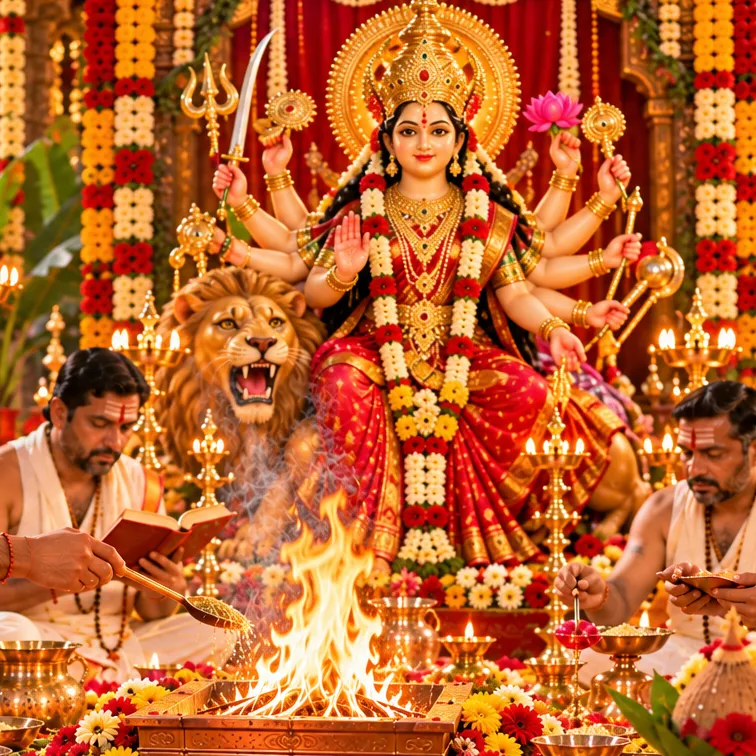
Durga Yagya / Shashtharchan
About This Pooja
Durga Yagya and Shashtharchan is a high-potency Vedic-Tantric ritual dedicated to Maa Durga, the supreme manifestation of Shakti, courage, and cosmic protection. This sacred ceremony—combining the elaborate Shashtharchan (deep worship of the Goddess across the six primary angles/aspects of the Durga Yantra using six sacred offerings) with the powerful Durga Saptashati Chandi Havan—is undertaken to destroy malevolent forces, overcome chronic disputes or court matters, dispel evil eye (buri nazar) and negative entities, and bless the devotee with victory, fearlessness, health, and all-around prosperity. The ceremony begins with Ganpati Puja, Punyaha Vachan, Kalash Sthapana, Navarna Yantra Puja, and Sankalp by the devotee, followed by the invocation of the Nava Durgas and the Dashamahavidyas. The Shashtharchan rites involve offering six sacred dravyas—red hibiscus/lotus flowers, kumkum/raktachandan, cloves and green cardamom, sweet pomegranate/red fruits, pure honey, and sacred prasad/halwa-puri—accompanied by the recitation of the Durga Saptashati (Devi Mahatmyam), Argala Stotram, and Devi Suktam. Subsequently, the grand Durga Yagya (Chandi Havan) is performed with consecrated ahutis of pure cow ghee, lotus seeds, guggal, dry fruits, and kheer using the sacred Navarna Mantra (Om Aim Hreem Kleem Chamundayai Vichche). The ritual culminates in Kanya Puja (worship of young girls), Purnahuti with a dry coconut offering, Durga Aarti, and Prasad distribution.
Pooja Samagri Overview
Idol or photo of Maa Durga, Durga/Navarna Yantra, Kalash, coconuts, mango leaves, betel leaves, supari, raw turmeric knots, unbroken rice colored with kumkum (raktakshat), red sandalwood paste, sindoor, roli, moli (kalawa), red silk chunri and red cloth, red hibiscus flowers and red rose garlands, cloves (laung), green cardamom (elaichi), pure honey, Panchamrit (cow milk, curd, honey, sugar, pure cow ghee), Gangajal, dry mango wood/samidha, havan kund, special Chandi havan samagri (including guggal, camphor, black sesame seeds, and dry fruits), dry coconut (gola), brass or copper diyas, seasonal red fruits (pomegranates, apples), traditional prasad (suji halwa, puri, and soaked black chana), gifts/dakshina for Kanya Puja, and priest dakshina.
Important Note
Durga Yagya and Shashtharchan is traditionally organized during auspicious periods such as Chaitra or Sharad Navratri, Ashtami, Navami, Fridays, or Tuesdays. The ritual space must be purified and maintained with strict ritual discipline. The yajman and participating family members observe complete dietary purity (satvik food without onion or garlic) and celibacy throughout the period. The number of Durga Saptashati chapters recited and the volume of havan oblations depend on the devotee’s sankalp, with specific rites tailored according to family traditions and regional Shakta customs.
You Might Like
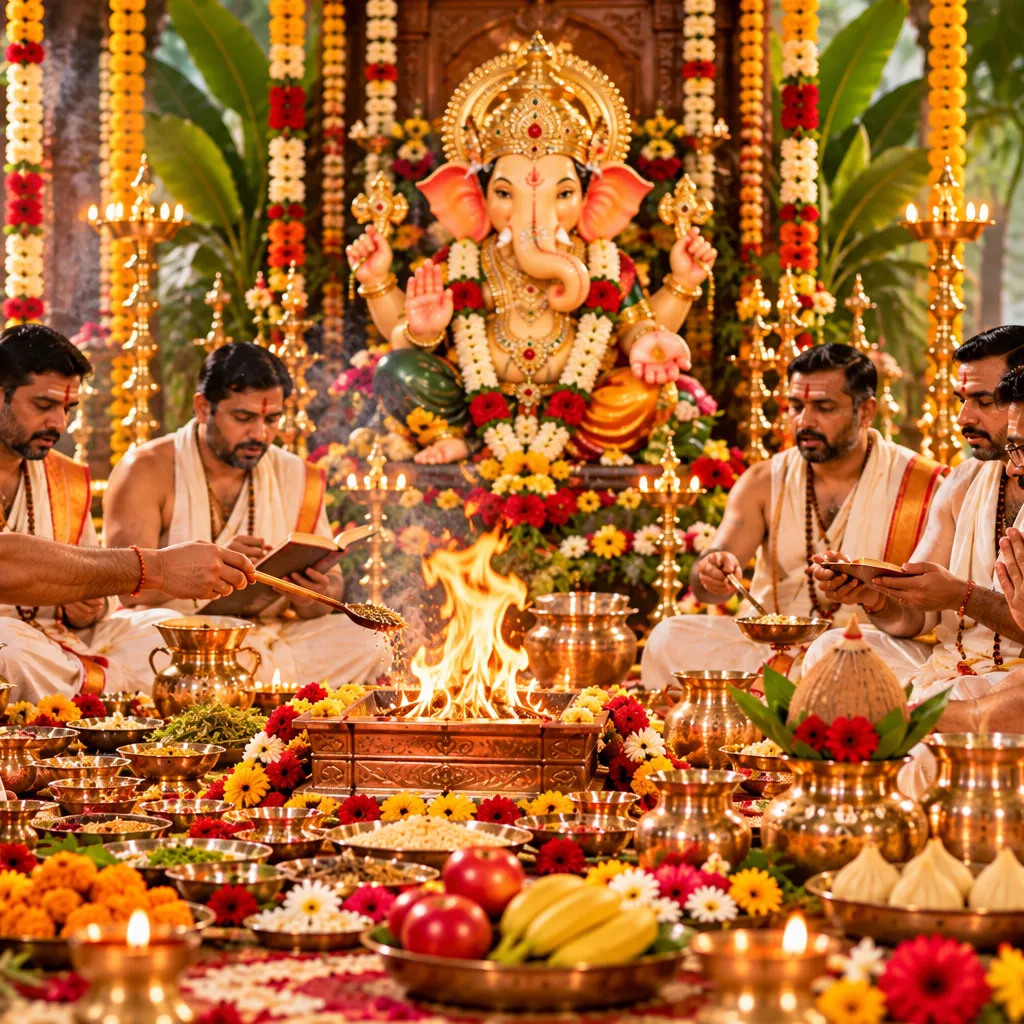
Ganpati Yagya / Shashtharchan
Ganpati Yagya and Shashtharchan is a deeply revered Vedic ritual dedicated to Lord Ganesha, the remover of all obstacles (Vighnaharta) and the harbinger of intellect, wisdom, and auspicious beginnings. This sacred anushthan—featuring the elaborate Shashtharchan (specialized worship across the six primary angles/facets of the Ganesha Yantra or the Sahasranama archana of six distinct offerings)—is undertaken to eliminate stubborn impediments in career, business, education, or personal life, and to bestow peace, clarity of mind, and lasting success. The ceremony commences with Swasti Vachan, Ganpati Sthapana, Punyaha Vachan, Kalash Sthapana, and Sankalp. The Shashtharchan rites involve meticulous offerings of six sacred dravyas (such as modak, durva grass, red flowers, sugarcane pieces, bilva patra, and sacred herbs) accompanied by the recitation of the Ganapati Atharvashirsha, Ganesha Suktam, and Ganesha Sahasranama. Following the archana, a dedicated Ganpati Yagya (Havan) is conducted where thousands of ahutis of modak, durva soaked in pure cow ghee, and consecrated havan samagri are offered into the sacred fire. The ceremony concludes with Purnahuti, Maha Ganesha Aarti, and Prasad distribution. Samagri: Idol or photo of Lord Ganesha, Ganesha Yantra, Kalash, coconut, mango leaves, betel leaves, supari, raw turmeric knots, unbroken rice colored with kumkum (raktakshat), sindoor (vermilion/orange lead), sandalwood paste, moli (kalawa), janeu, yellow and red cloth, fresh Durva grass (abundant bunches), red hibiscus or red rose garlands, modak or motichoor laddoo (for puja and havan ahutis), sugarcane pieces, pure cow ghee, dry mango wood (samidha), havan kund, havan samagri, dry coconut (gola), camphor, brass or silver diyas, gangajal, seasonal fruits (especially pomegranate and bananas), and dakshina for the priests. Note: Ganpati Yagya and Shashtharchan can be organized on auspicious occasions such as Ganesh Chaturthi, Sankashti Chaturthi, Vinayaka Chaturthi, Wednesdays, or prior to initiating major ventures like business launches, housewarmings, or weddings. The count of recitations (such as 21 or 108 recitations of the Atharvashirsha) and havan ahutis depends on the devotee's specific sankalp. Ritual procedures and the choice of archana offerings may vary slightly according to family traditions and Vedic lineages.
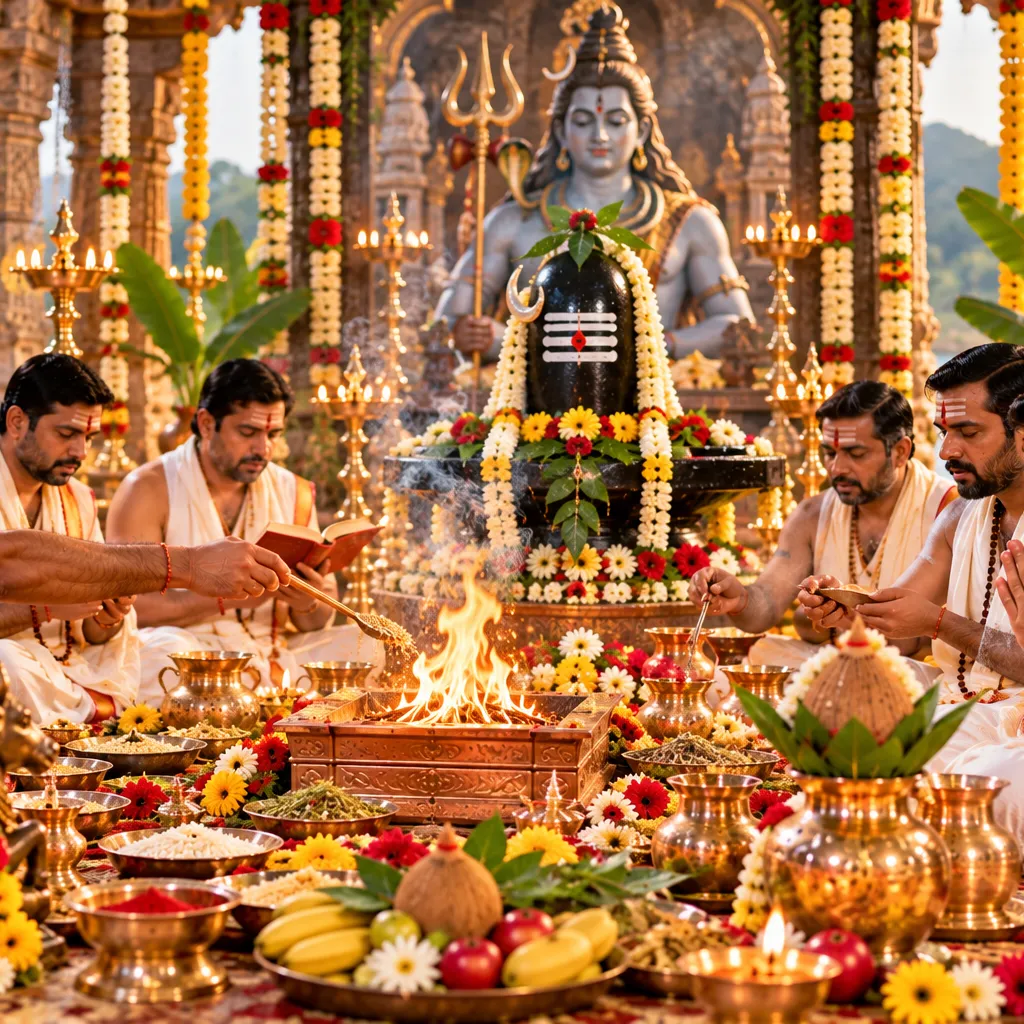
Shiv Yagya / Shashtharchan
Shiv Yagya and Shashtharchan is a supreme Vedic ritual dedicated to Lord Shiva, the auspicious transformer, protector, and eternal consciousness (Mahadev). This sacred anushthan—combining the power of specialized Rudra Havan with Shashtharchan (consecration and deep worship across the six primary faces/aspects of Shiva or with six sacred cooling dravyas)—is undertaken to dissolve karmic burdens, neutralize severe planetary afflictions, overcome chronic ailments, ward off negative energies, and bestow spiritual peace, vitality, and family prosperity. The ceremony begins with Ganpati Puja, Punyaha Vachan, Kalash Sthapana, and Sankalp, followed by the installation of the Shiva Lingam. The Shashtharchan involves an elaborate Rudrabhishek accompanied by the chanting of the Sri Rudram (Namakam and Chamakam), Shiva Sahasranama, and Maha Mrityunjaya Mantra, systematically offering six essential dravyas: pure cow milk, curd, honey, ghee, sugarcane juice (or sacred water), and bilva leaves with bhasma. Following the archana, the Shiv Yagya (Rudra Havan) is performed with specific oblations of Bilva patra, lotus seeds, guggal, and ghee into the consecrated Agni. The ceremony culminates in Purnahuti, Kapur Aarti, Shiva Tandava Stotram recitation, and distribution of Mahaprasad. Samagri: Shiva Lingam (sphatik, parad, stone, or brass) and idol/image of Mata Parvati, Kalash, coconut, mango leaves, betel leaves, supari, raw turmeric knots, unbroken rice (akshat), white sandalwood paste (chandan), vibhuti/bhasma, janeu, moli (kalawa), white and yellow cloth, fresh Bilva leaves (Belpatra in abundance), Dhatura fruit and flower, Shami leaves, white flowers (maddar/kaner), pure cow milk, curd, honey, sugar candy, pure cow ghee, sugarcane juice, gangajal, dry mango wood/samidha, havan kund, havan samagri (including guggal, loban, and black sesame), dry coconut (gola), camphor, brass diyas, seasonal fruits, sweets/prasad, and dakshina for the priests. Note: Shiv Yagya and Shashtharchan is traditionally conducted during auspicious times such as Maha Shivratri, Shravan Maas (especially Mondays), Pradosh Vrat, or during planetary periods requiring Shiva's grace (such as Saturn's Sade Sati or Rahu-Ketu periods). Devotees observe complete ritual cleanliness and a satvik diet throughout the period. The specific recitation counts of Sri Rudram and the volume of havan oblations can be tailored according to the yajman’s sankalp, family tradition, and astrological requirements.
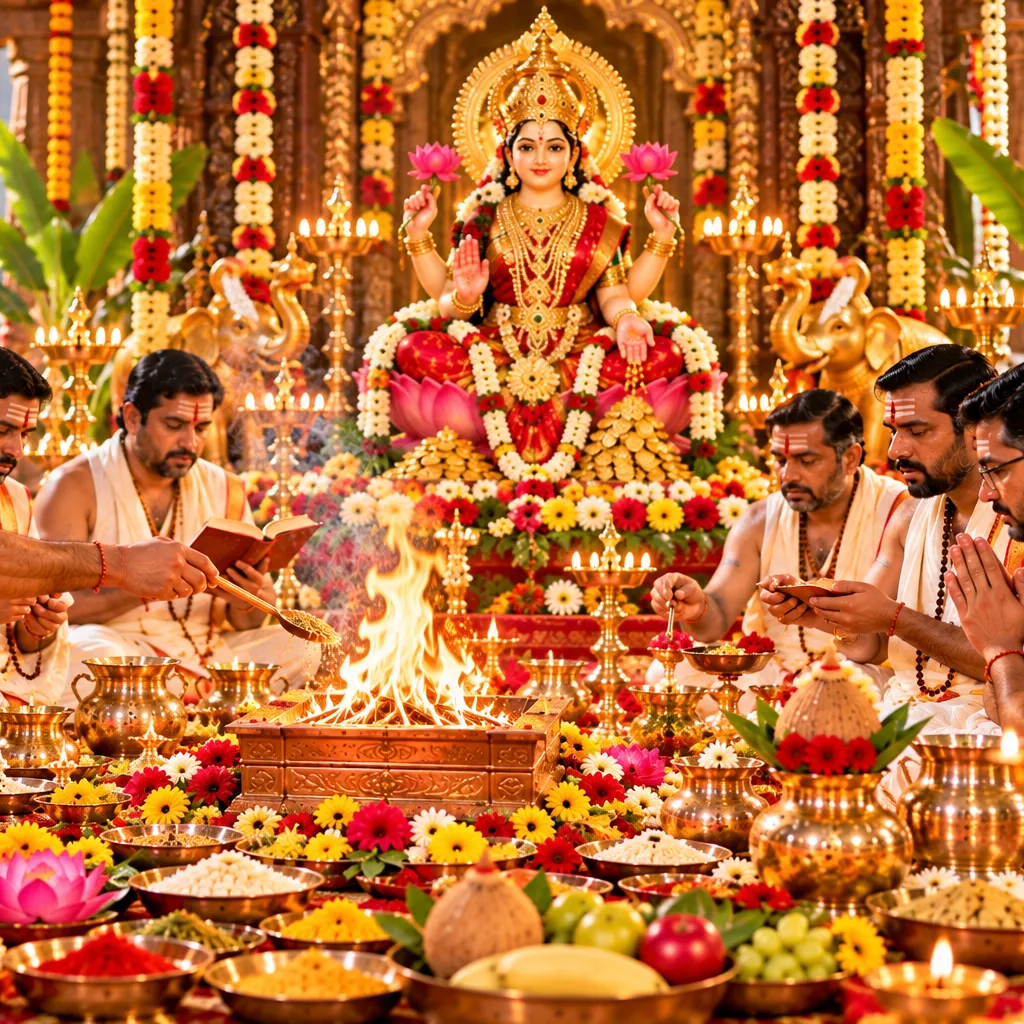
Lakshmi Yagya / Shashtharchan
Lakshmi Yagya and Shashtharchan is an exalted Vedic ritual dedicated to Goddess Mahalakshmi, the primordial source of wealth, auspiciousness, royal abundance (Aishwarya), and spiritual nourishment. This specialized ceremony—integrating the elaborate Shashtharchan (consecration and worship of the Goddess across the six primary angles/facets of the Sri Yantra using six sacred offerings) with the grand Sri Sukta Havan—is performed to eradicate severe financial stagnation, resolve longstanding debts, dispel poverty (Alakshmi), and anchor permanent fortune (Sthir Lakshmi) and opulence in homes and business establishments. The ceremony begins with Ganpati Puja, Punyaha Vachan, Kalash Sthapana, and Sankalp by the devotee, followed by the invocation of the Ashta Lakshmis and the sacred Sri Yantra. The Shashtharchan involves reciting the Sri Suktam, Kanakadhara Stotram, and Mahalakshmi Sahasranama while offering six sacred dravyas: lotus flowers/petals, kamal gatta (lotus seeds), bilva fruits/leaves, kheer (sweet rice pudding), gold/silver coins, and dry fruits. Subsequently, the Lakshmi Yagya is conducted where hundreds or thousands of oblations of pure cow ghee, lotus seeds dipped in honey, bilva patra, and sacred samagri are offered into the consecrated fire. The ritual concludes with Purnahuti, Mahalakshmi Deepa Aarti, and the distribution of Mahaprasad. Samagri: Idol or photo of Goddess Mahalakshmi, Lord Ganesha, and Lord Vishnu, Sri Yantra, Kalash, coconuts, mango leaves, betel leaves, supari, raw turmeric knots, unbroken rice colored with kumkum (raktakshat), roli, sandalwood paste, red and yellow silk cloth, lotus flowers, red rose garlands, kamal gatta (lotus seeds), bilva fruits and bilva leaves, Panchamrit (cow milk, curd, honey, sugar, pure cow ghee), Gangajal, rose water, dry mango wood/samidha, havan kund, havan samagri (including guggal, saffron, and dry fruits), dry coconut (gola), camphor, brass or silver diyas, fresh seasonal fruits (pomegranates and bananas), traditional milk sweets or kheer, and dakshina for the priests. Note: Lakshmi Yagya and Shashtharchan is ideally organized on auspicious occasions such as Diwali, Dhanteras, Sharad Purnima, Varalakshmi Vratam, Akshaya Tritiya, or Fridays during Shukla Paksha. The space must remain spotlessly clean and filled with positive intent. The number of Sri Suktam recitations (such as 16, 108, or 1,008 cycles) and corresponding havan ahutis are determined by the yajman’s sankalp. Minor procedures and specific offerings may vary according to family traditions and regional customs.
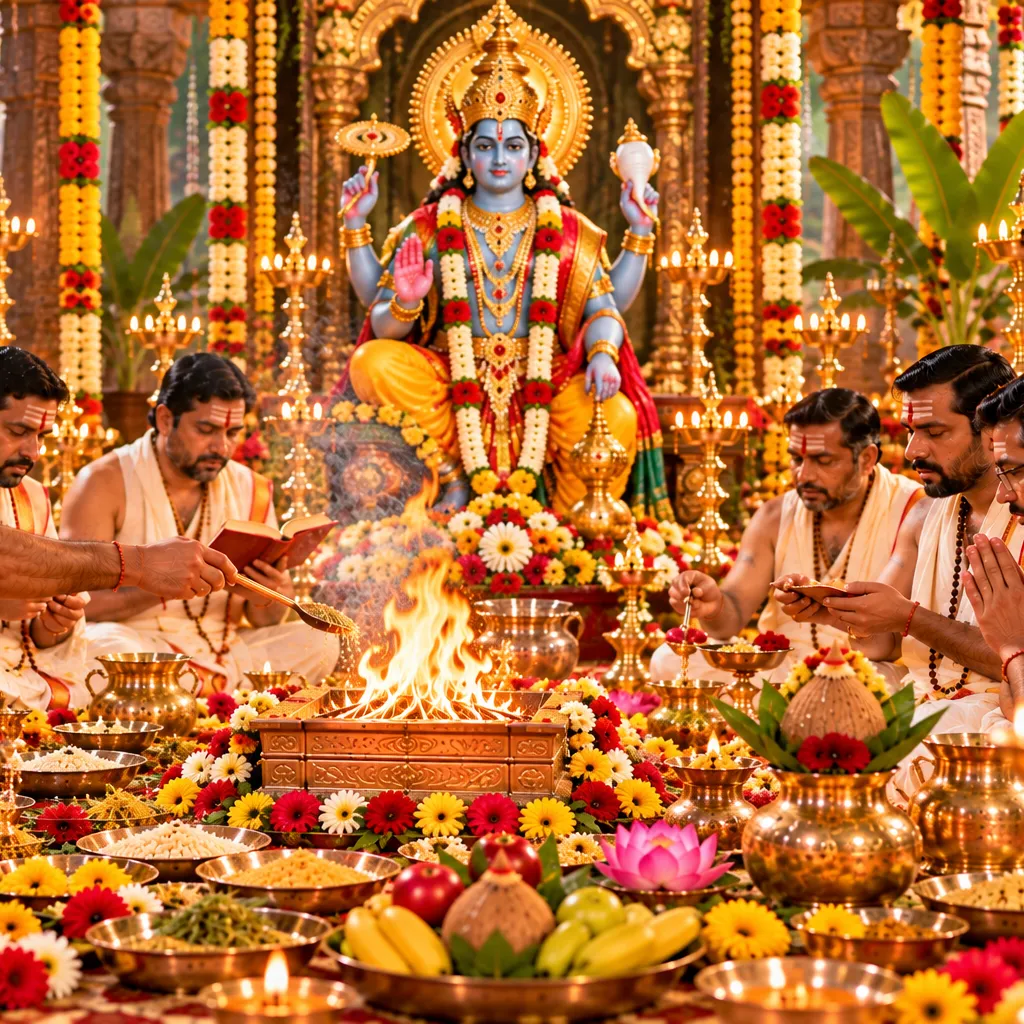
Vishnu Yagya / Shashtharchan
Vishnu Yagya and Shashtharchan is a supreme Vedic ritual dedicated to Lord Maha Vishnu, the preserver and protector of the cosmos. This sacred ceremony—combining the elaborate Shashtharchan (consecration and deep worship across the six primary forms or weapons/facets of Lord Vishnu using six sacred offerings) with the potent Purusha Sukta and Vishnu Sahasranama Havan—is performed to restore spiritual balance, remove ancestral and karmic burdens, bestow physical well-being, protect the household from negative energies, and bless the family with lasting peace, harmony, and righteous prosperity (Dharma and Moksha). The ceremony begins with Ganpati Puja, Punyaha Vachan, Kalash Sthapana, and Sankalp, followed by the invocation of Lord Vishnu, Goddess Lakshmi, and the Navgrahas. The Shashtharchan rites involve offering six sacred dravyas—fresh Tulsi leaves, yellow pitambari flowers, sandalwood paste, Panchamrit, soaked yellow pulses/chana dal with jaggery, and sacred water/Gangajal—accompanied by the continuous chanting of the Vishnu Sahasranama, Purusha Suktam, and Narayana Suktam. Following the archana, the Vishnu Yagya (Havan) is conducted with dedicated oblations of pure cow ghee, sacred samidha, payasam (kheer), and Vishnu havan samagri offered into the holy fire. The ritual concludes with Purnahuti, Maha Vishnu Aarti, and the distribution of consecrated Mahaprasad. Samagri: Idols or images of Lord Vishnu (or Shaligram Shila) and Goddess Lakshmi, Lord Ganesha, Kalash, coconuts, mango leaves, betel leaves, supari, raw turmeric knots, unbroken yellow rice (akshat), yellow sandalwood paste (chandan), roli, janeu, moli (kalawa), yellow silk cloth (Pitambari), fresh Tulsi leaves (abundant supply), yellow marigold or yellow rose garlands, Panchamrit (cow milk, curd, honey, sugar, pure cow ghee), Gangajal, dry mango wood/samidha, havan kund, havan samagri (including white sesame, barley, and guggal), dry coconut (gola), soaked chana dal and jaggery, traditional kheer or yellow sweets (besan laddoo), brass diyas, camphor, incense sticks, seasonal fruits (especially bananas), and priest dakshina. Note: Vishnu Yagya and Shashtharchan is ideally organized on auspicious occasions such as Ekadashi, Vaikuntha Ekadashi, Purnima (especially Satyanarayan days), Thursdays, or during Shravan and Kartik months. The home and participants must observe strict ritual cleanliness, celibacy, and a pure satvik diet (free of onion and garlic) during the rites. The number of Vishnu Sahasranama or Purusha Suktam recitations and corresponding havan ahutis are determined by the yajman’s sankalp, with minor procedural nuances tailored to family traditions and regional customs.