
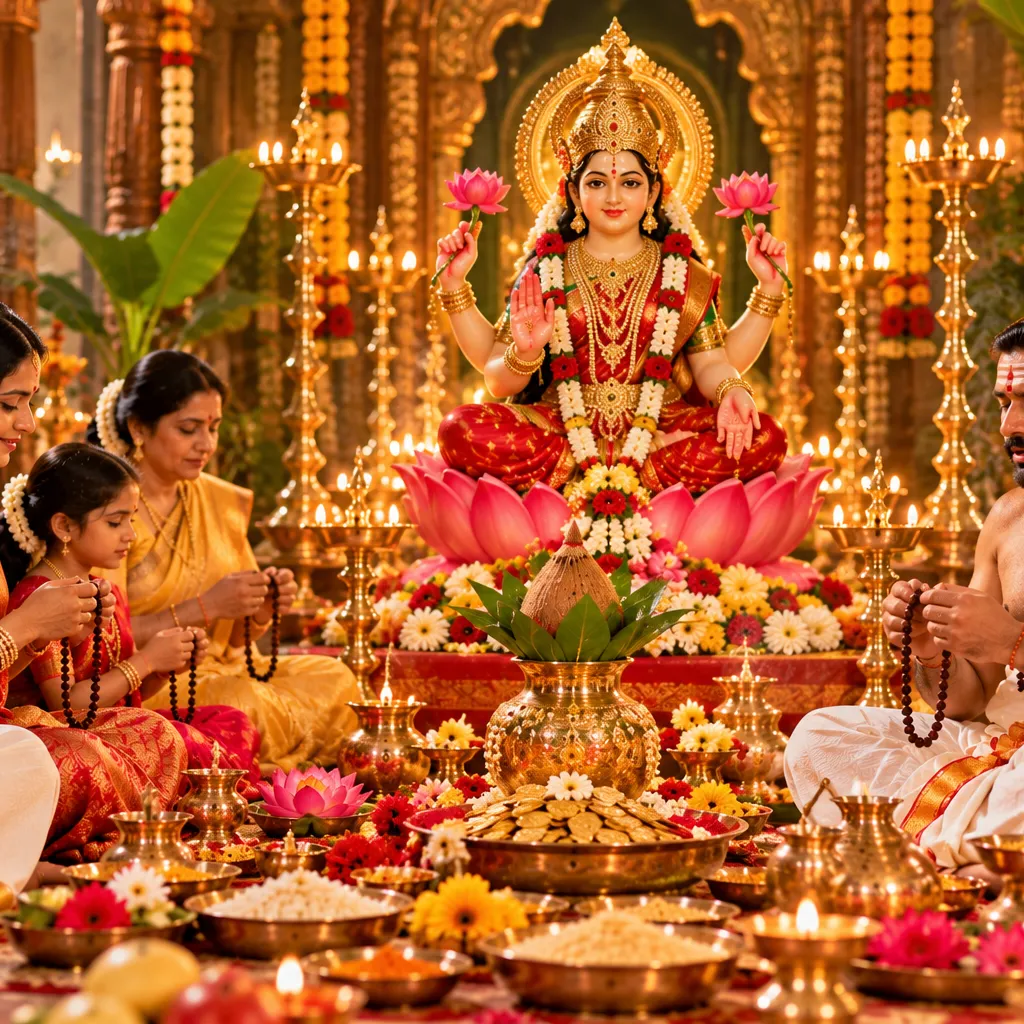
Lakshmi Jaap
About This Pooja
Lakshmi Jaap is a potent Vedic chanting and invocation ritual dedicated to Goddess Mahalakshmi, the embodiment of wealth, fortune, abundance, and auspiciousness. Devotees undertake this sacred japa anushthan to overcome persistent financial distress, clear outstanding debts, eliminate obstacles in trade or career, and attract enduring prosperity (Sthir Lakshmi) into the home or business. It is also performed to invoke grace, inner contentment, and overall domestic harmony. The ceremony commences with Ganpati Puja, Punyaha Vachan, Kalash Sthapana, and Sankalp by the devotee. The Sri Yantra or consecrated idol of Goddess Lakshmi is honored with Shodashopachara rituals, including Abhishek with pure rose water, milk, and Gangajal. Qualified Vedic priests systematically chant the chosen Lakshmi Beej Mantra or Sri Suktam for a designated count (typically 11,000, 21,000, 51,000, or 125,000 recitations) using consecrated Kamal Gatta (lotus seed) or Sphatik malas. The anushthan culminates in a sacred Lakshmi Havan offering lotus seeds, kheer (sweet rice pudding), and bilva fruits, followed by Purnahuti, Mahalakshmi Aarti, and Prasad distribution.
Pooja Samagri Overview
Idol or photo of Goddess Mahalakshmi and Lord Ganesha, Sri Yantra, Kamal Gatta rosary (lotus seed mala) or Sphatik mala, Kalash, coconut, mango leaves, betel leaves, supari, raw turmeric knots, unbroken rice colored with turmeric/kumkum (akshat), roli, sandalwood paste, red cloth (for altar and deity), yellow cloth, lotus flowers, fresh red rose garlands, gangajal, rose water, pure cow milk, curd, honey, pure cow ghee, dry fruits, havan kund, samidha (mango wood), havan samagri, dry coconut (gola), camphor, brass or silver diyas (with sesame oil or cow ghee), fresh fruits (especially pomegranate and bananas), kheer or traditional milk sweets (laddoo/peda), and priest dakshina.
Important Note
Lakshmi Jaap is ideally initiated on auspicious occasions such as Diwali, Dhanteras, Sharad Purnima, Varalakshmi Vratam, Akshaya Tritiya, or Fridays during Shukla Paksha. The chanting requires focused devotion, correct pronunciation, and strict physical and ritual cleanliness. The yajman and family members observe a satvik lifestyle throughout the duration of the anushthan. Specific mantra variations and havan ahutis may vary according to the yajman’s sankalp, family traditions, and astrological guidance.
You Might Like
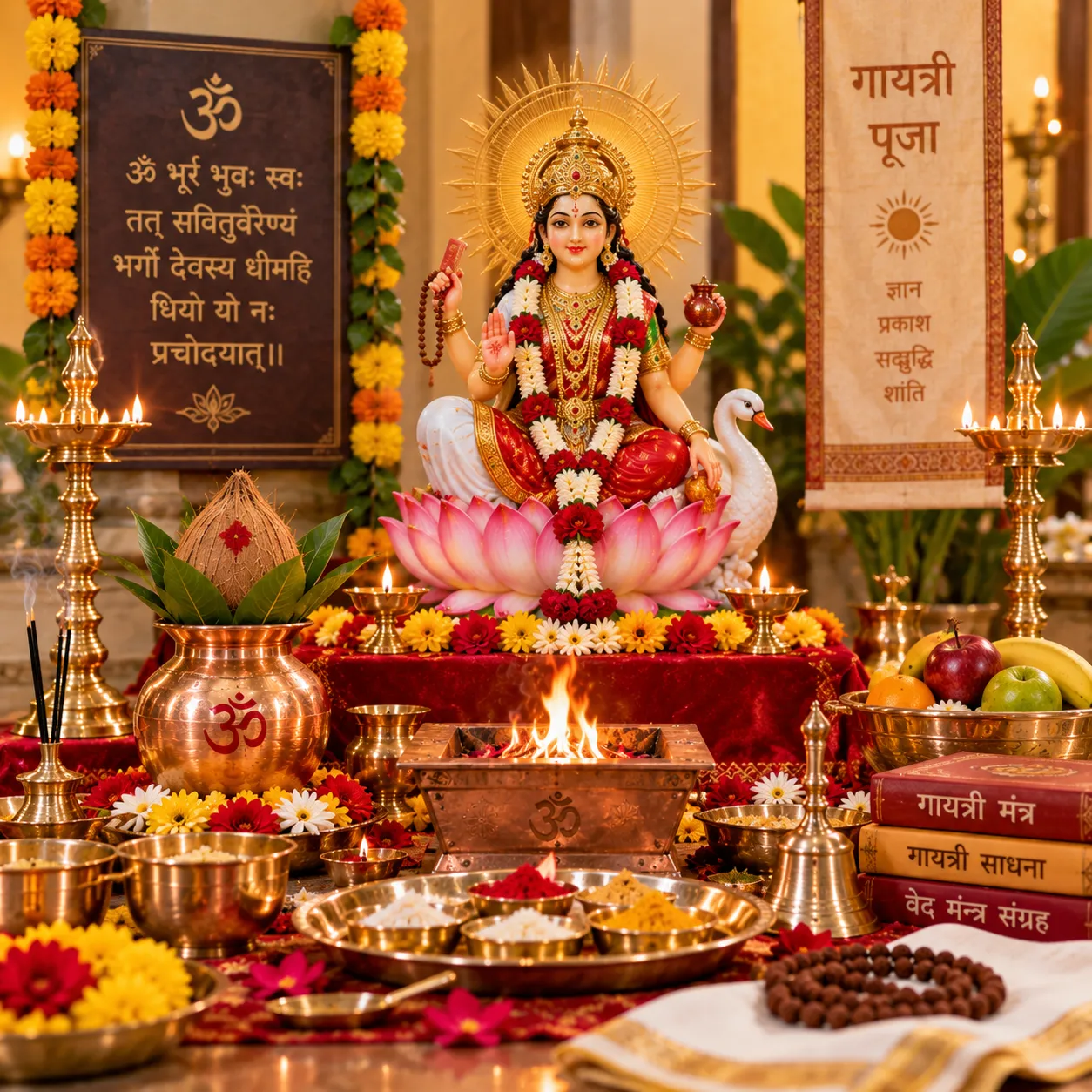
Gayatri Jaap
Gayatri Mantra Jaap is a revered Vedic ritual centered around the chanting of the supreme Maha Mantra from the Rigveda, dedicated to Vedmata Gayatri and Savitr (the cosmic solar deity). Devotees undertake this sacred japa to awaken intellectual brilliance (Dhee), destroy past karmic impurities, eliminate mental agitation and negative energies, and align the mind with higher cosmic consciousness. The recitation is performed to invoke divine blessings for wisdom, health, mental peace, spiritual liberation, and overall family well-being. The ceremony begins with Aachaman, Pranayama, Sankalp, Ganesh Puja, Kalash Sthapana, and the invocation of Maa Gayatri and the Navagrahas. The core ritual involves the focused, rhythmic chanting of the sacred Gayatri Mantra for the designated count (such as 5,100, 24,000 for a Laghu Anushthan, or 1,25,000 for a Maha Purashcharana) using a sanctified Tulsi or Sandalwood (Chandan) rosary in a Gomukhi bag. Following the completion of the japa, a sacred Gayatri Dashansh Havan is performed where offerings of cow ghee, kheer, and havan samagri are made into the consecrated fire. The ritual concludes with Gayatri Aarti, Pushpanjali, Naivedya offering, honoring of the priests, and Prasad distribution. Samagri: Maa Gayatri idol or photo, Tulsi or Sandalwood Japa Mala, Gomukhi (japa bag), yellow or white cloth, Kalash, coconut with coir, mango leaves, Gangajal, Panchamrit (milk, curd, honey, ghee, sugar), yellow Chandan, Roli, Kumkum, Akshat (unbroken rice), Janeu, yellow flowers and flower garlands, betel leaves, supari, cloves, cardamom, seasonal fruits, yellow sweets or kheer, Havan kund, havan samagri, dry coconut (gola), pure cow ghee, camphor, dhoop, incense sticks, diyas, cotton wicks, and Prasad. Note: Gayatri Jaap can be performed as a single-day puja or as an extensive multi-day Anushthan depending on the devotee's specific sankalp. Chanting during the Brahma Muhurta and Sandhya times (dawn, noon, and dusk) is traditionally considered most auspicious. Proper pronunciation, ritual discipline, and sacred cleanliness must be maintained throughout the chanting duration. Specific vidhi and samagri items may vary according to family customs and traditional guidance.
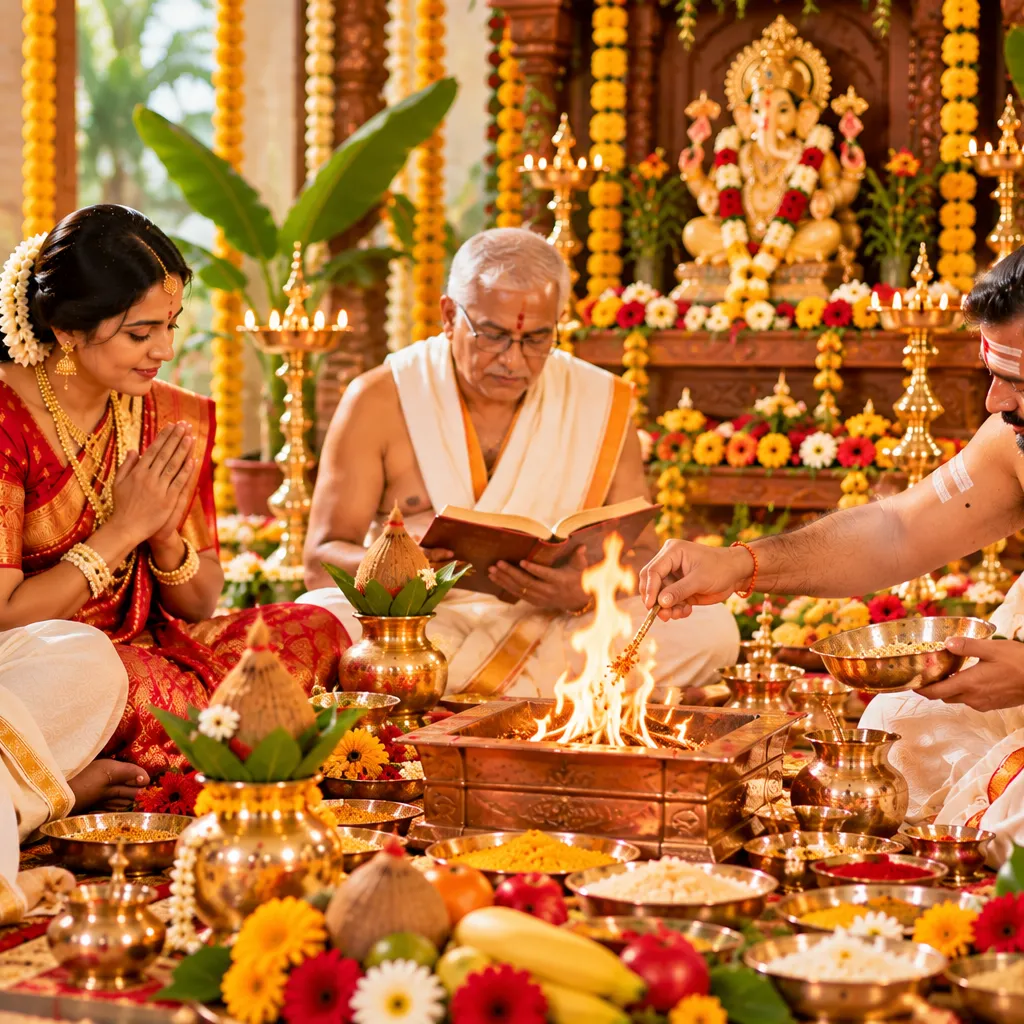
Mool Shanti Puja
Mool Shanti Puja (also known as Gand Mool Nakshatra Shanti Puja) is a vital Vedic remedial ritual performed when a newborn is born under one of the six Gand Mool Nakshatras—Ashwini, Ashlesha, Magha, Jyeshtha, Moola, or Revati. Governed by Ketu and Mercury (Budha), these nakshatras fall at the transitional junctions (Gandanta) of the zodiac and lunar signs. Devotees perform this puja to neutralize potential astrological doshas affecting the health, longevity, and prosperity of the newborn child, parents, maternal relatives, or siblings, thereby inviting divine protection and peaceful growth. The ceremony begins with Ganpati Puja, Punyaha Vachan, Kalash Sthapana, and Sankalp. The primary rites involve invoking the presiding deities and ruling planetary lords of the specific Mool Nakshatra, along with Lord Shiva, Lord Ganesha, and the Navgrahas. A specialized ritual bath is administered to the infant using consecrated water sourced from 27 different wells/water bodies, soil collected from 7 sacred locations (Sapta Mrittika), and leaves from 27 distinct trees. This is followed by Nakshatra Havan with specific medicinal wood and herbs, father-child shadow reflection darshan (Chhaya Daan in oil/ghee), Purnahuti, Aarti, and generous charity. Samagri: Idols or images of Lord Ganesha, Lord Shiva, and Nakshatra deities, 27 small earthen or brass pots (kulhad/ghats), water from 27 sacred water sources/wells, 27 varieties of tree leaves, Sapta Mrittika (soil from 7 holy places: cow shed, horse stable, ant hill, river confluence, palace/temple, etc.), bronze bowl with mustard oil or ghee for Chhaya Daan, Kalash, coconut, mango leaves, betel leaves, supari, raw turmeric knots, akshat, roli, chandan, janeu, moli (sacred thread), gangajal, pure cow ghee, dry wood (samidha of Palash, Khadir, or Peepal), havan samagri, camphor, earthen diyas, fresh flowers, fruits, sweets, new clothes for the baby and parents, and items for daan (grains, utensils, blankets, and priest dakshina). Note: Mool Shanti Puja is traditionally performed on the 27th day after the child's birth, when the moon re-enters the birth nakshatra, or during an auspicious muhurat recommended by an astrologer. Prior to the completion of the ritual and the symbolic Chhaya Daan, the father is traditionally advised by Vedic custom to refrain from looking directly at the newborn's face. Ritual details and specific mantras vary depending on which of the six Gand Mool nakshatras and specific nakshatra charana (pada) the baby was born into.
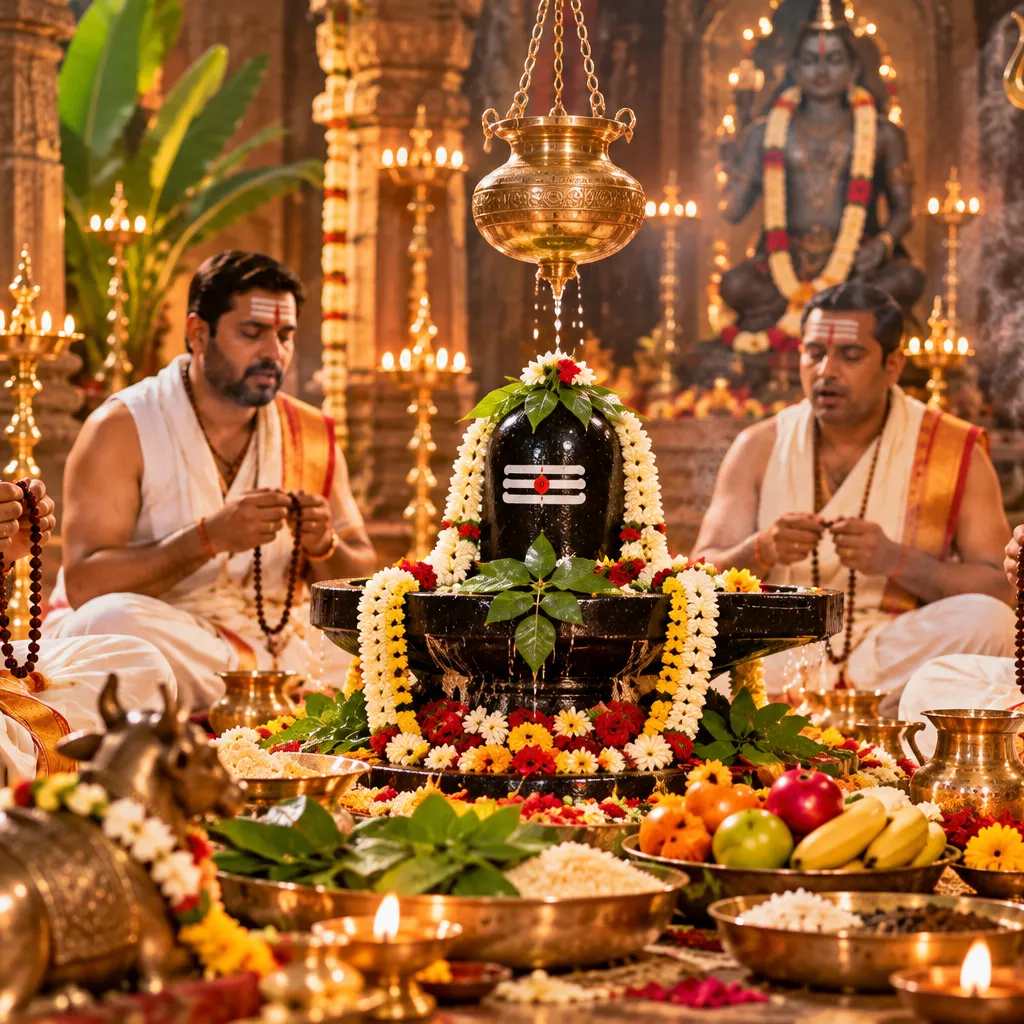
Maha Mrityunjaya Jaap
Maha Mrityunjaya Jaap is one of the most potent and revered Vedic chanting rituals dedicated to Lord Shiva (Tryambaka). Derived from the Rigveda, this sacred recitation is performed to overcome the fear of untimely death (Akal Mrityu), protect against life-threatening illnesses, alleviate chronic physical and mental distress, and neutralize severe malefic planetary influences (such as Maraka Dashas). Devotees undertake this anushthan to invoke the boundless healing grace of Mahadev for rejuvenation, vitality, peace of mind, and longevity. The ceremony commences with Ganpati Puja, Punyaha Vachan, Kalash Sthapana, and Sankalp by the devotee or head of the household. This is followed by Navgraha Puja and a ceremonial Rudrabhishek using Panchamrit (milk, curd, honey, ghee, and sugar) and holy Gangajal. Qualified Vedic Brahmins then systematically chant the Maha Mrityunjaya Mantra (Om Tryambakam Yajamahe...) for a determined count—commonly 11,000, 21,000, 51,000, or 125,000 recitations—using consecrated Rudraksha malas. The anushthan concludes with a transformative Mrityunjaya Havan offering sacred herbs and Bilva leaves, followed by Purnahuti, Shiva Aarti, and Prasad distribution. Samagri: Shiva Lingam or idol/image of Lord Shiva and Goddess Parvati, Rudraksha rosaries (Japa malas), Kalash, coconut, mango leaves, Bilva patra (Belpatra), Dhatura fruit and flower, Bhaang, white flowers, Akshat (unbroken raw rice), sandalwood paste (chandan), bhasma/vibhuti, roli, janeu, gangajal, pure cow milk, curd, honey, sugar, pure cow ghee, dry mango wood/samidha, specific havan samagri (including Giloy, sesame seeds, Guggal, and camphor), earthen or brass diyas, betel leaves, supari, fresh fruits, sweets, and dakshina for the chanting priests. Note: Maha Mrityunjaya Jaap is a precision-driven Vedic sadhana where accurate pronunciation (Uchcharan) and correct intonation are paramount. Depending on the chosen sankalp number (e.g., 125,000 jaap), the anushthan can span across 3, 5, 7, or 11 days with an odd number of initiated pandits (e.g., 3, 5, or 7 priests). Strict dietary purity (pure satvik food) and celibacy are observed by the yajman throughout the duration. Ritual nuances and specific offerings may vary according to family traditions and personal astrological remedies.
Vastu Shanti Puja
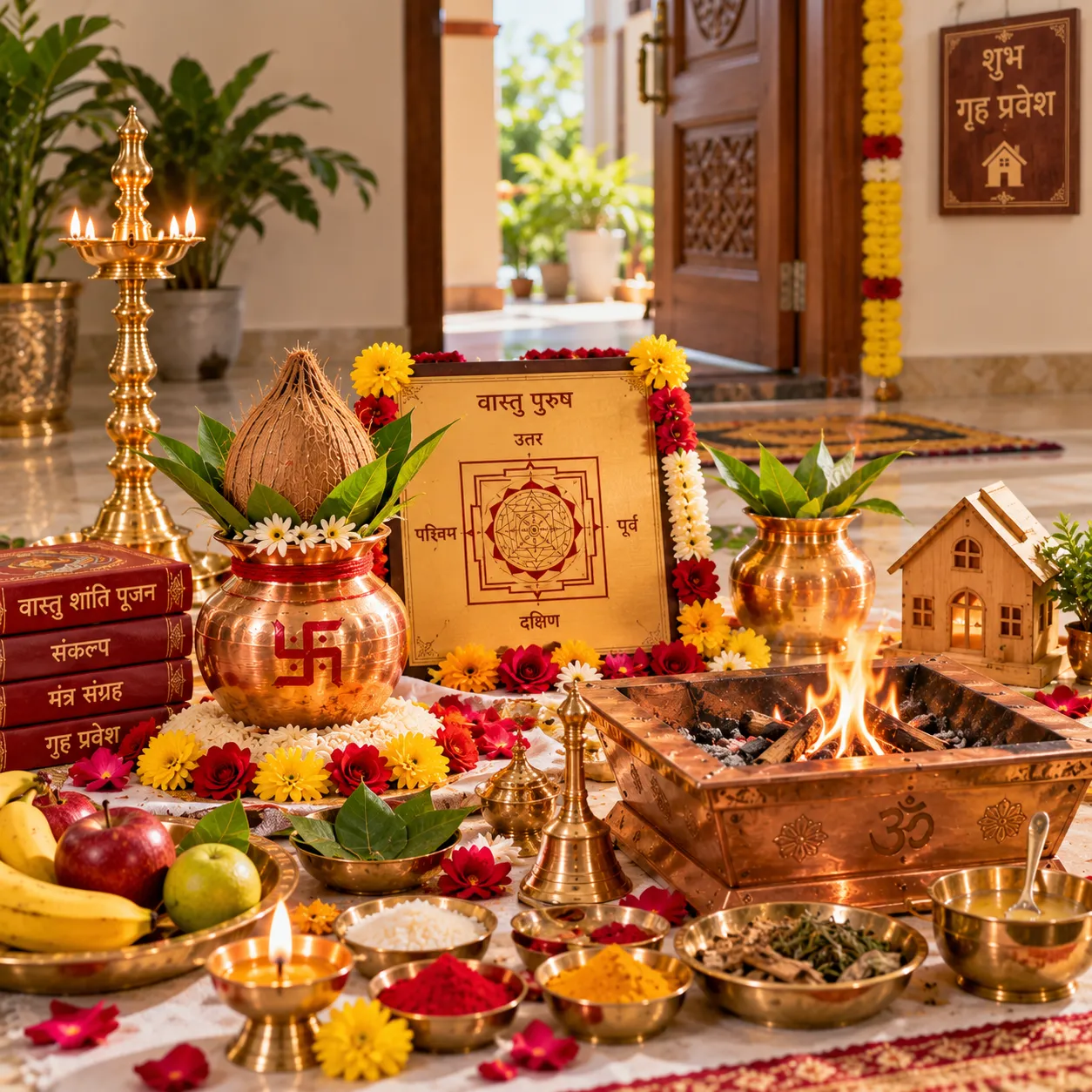
Vastu Shanti Puja is a sacred Vedic ceremony performed to harmonize the five elements of nature (Panchabhuta)—Earth, Water, Fire, Air, and Space—within a residential or commercial property. Rooted in the ancient science of Vastu Shastra, this puja is undertaken before moving into a new home (Griha Pravesh), renovating an existing structure, or whenever structural or directional flaws (Vastu Dosha) are present. Devotees perform this ritual to appease Vastu Purusha (the cosmic spirit of structure) and seek blessings for peace, prosperity, physical health, and protection against negative energies. The ceremony begins with Ganpati Puja, Punyaha Vachan, Kalash Sthapana, and Sankalp, followed by the invocation of the presiding directional deities (Digpalas) and Navgrahas. A geometric Vastu Mandala is drafted on the floor using vibrant natural grains and colored flours, onto which Vastu Purusha, Lord Kuldevata, and directional lords are invoked and honored with ceremonial offerings. The priest then leads a dedicated Vastu Havan using special samidha woods, consecrated herbs, and pure cow ghee to purify the ambient atmosphere. The ritual culminates in the sacred burial or placement of the consecrated Vastu Pratima (copper or silver idol) with Navratna/pancharatna, Kalash Abhishek across all corners of the home, Purnahuti, Aarti, and Prasad distribution. Samagri: Idols or photos of Lord Ganesha and Vastu Purusha (copper/silver Vastu pratima or yantra), Kalash, coconuts, mango leaves, betel leaves, supari, raw turmeric knots, dry fruits, Pancharatna or Navratna (gemstones/substitutes), Sapta Mrittika (seven sacred soils), Sarvoshadhi (ayurvedic herbs), yellow and white cloth, raw rice (akshat), roli, sandalwood paste, moli (kalawa), pure cow milk, curd, honey, pure cow ghee, dry mango wood (samidha), havan kund, havan samagri, dry coconut (gola), brass or earthen diyas, camphor, incense sticks, gangajal, fresh flower garlands, seasonal fruits, sweets/prasad, and dakshina for the priests. Note: Vastu Shanti Puja is performed during an auspicious muhurat calculated based on planetary positions, solar transitions, and the homeowner's Janam Kundali. It is essential to ensure the home is clean, thoroughly whitewashed or painted, and free of clutter before beginning the ceremony. The specific layout of the Vastu Mandala, the direction of the havan kund, and individual oblations may vary according to property blueprints, gotra traditions, and regional customs.
Kaal Sarp Shanti
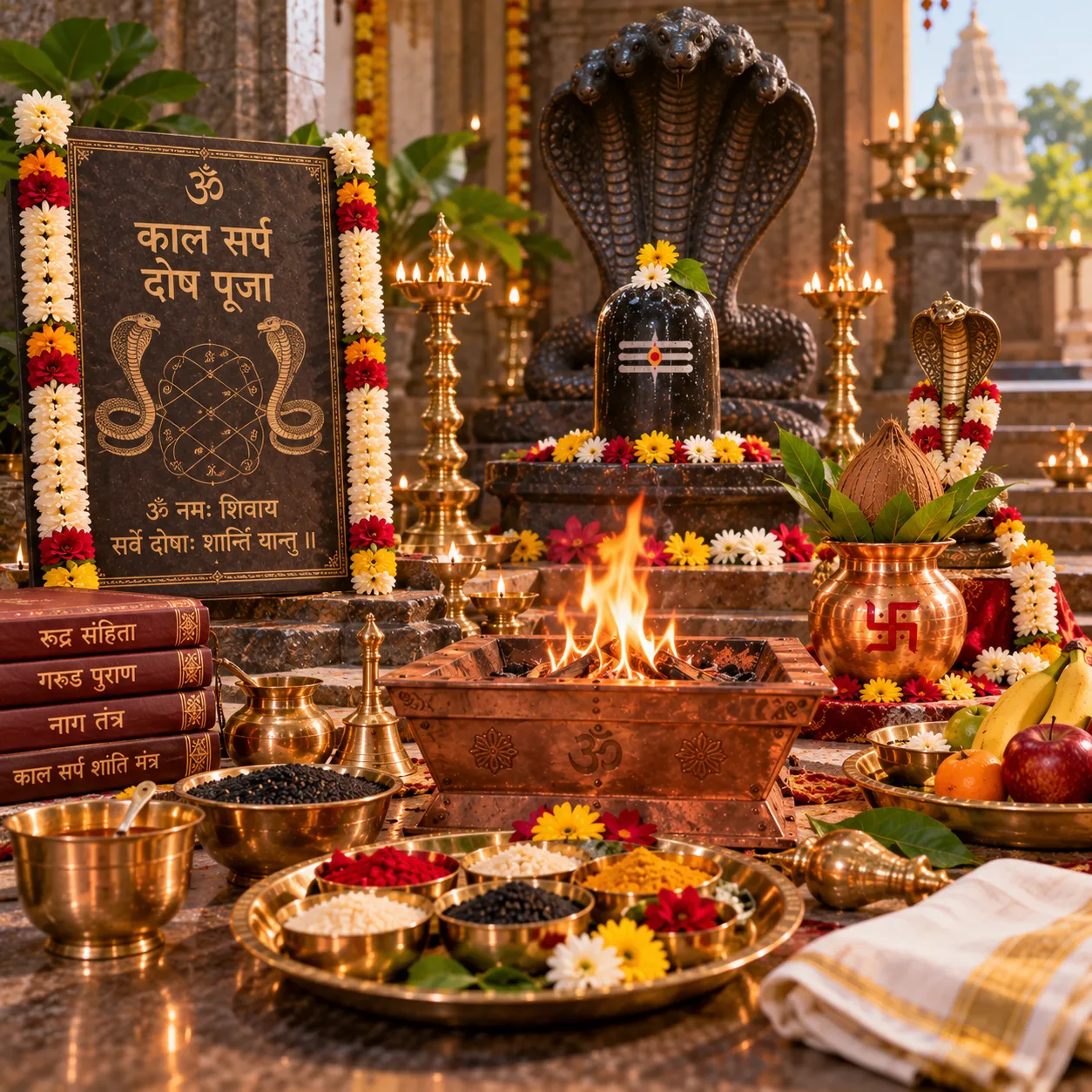
Kaal Sarp Shanti Puja is a specialized Vedic remedial ritual performed to neutralize the adverse influences of Kaal Sarp Dosha in a native’s horoscope. This astrological condition occurs when all seven primary planets (Sun, Moon, Mars, Mercury, Jupiter, Venus, and Saturn) are hemmed between the shadow planets Rahu (the serpent's head) and Ketu (the serpent's tail). Devotees undertake this puja to alleviate persistent delays, chronic struggles in career and business, marital discord, unexplained health setbacks, mental anxiety, and recurring dreams of snakes, thereby invoking divine harmony, success, and mental peace. The ceremony commences with Ganpati Puja, Punyaha Vachan, Sankalp, and Navgraha Sthapana to remove obstacles and invoke auspicious cosmic energies. The central rites involve the invocation and worship of Lord Shiva along with the twelve primary serpent deities (such as Ananta, Vasuki, Shesha, and Takshaka) and the dual shadow nodes, Rahu and Ketu. A consecrated Rudrabhishek is performed on the Shiva Lingam using milk, holy Gangajal, and sacred herbs, followed by a dedicated Rahu-Ketu and Sarpa Gayatri Havan. The ritual concludes with the symbolic immersion (visarjan) or donation of consecrated metal nag-nagin pairs, Purnahuti, Shiva Aarti, and Prasad distribution. Samagri: Pair of Nag-Nagin (traditionally made of silver, copper, or lead), Shiva Lingam or idol/image of Lord Shiva, Navgraha Yantra/idols, Kalash, coconuts, mango leaves, betel leaves, supari, raw turmeric, black sesame seeds (kale til), black urad dal, mustard seeds, blue/black cloth for Rahu and multicolored cloth for Ketu, white and yellow unstitched clothes, akshat (unbroken rice), roli, chandan (sandalwood paste), bhasma/vibhuti, janeu, moli (kalawa), pure cow milk, curd, honey, pure cow ghee, dry mango wood/samidha, havan kund, havan samagri, dry coconut (gola), camphor, earthen or brass diyas, fresh flowers (especially white flowers and Bilva patra), seasonal fruits, sweets/prasad, and dakshina for the priests. Note: Kaal Sarp Shanti Puja is typically performed on auspicious days such as Nag Panchami, Amavasya, Maha Shivratri, or specific planetary muhurats under the guidance of knowledgeable Vedic priests. It is widely recommended to be conducted at prominent pilgrimage sites known for serpent remedies—such as Trimbakeshwar (Nashik), Ujjain, Kalahasti, or Prayagraj—though it can also be arranged at consecrated Shiva temples or at home with complete Vedic rites. Specific offerings and mantras vary depending on which of the 12 distinct types of Kaal Sarp Dosha (e.g., Anant, Kulik, Vasuki, Shankhpal) is present in the native's birth chart.