
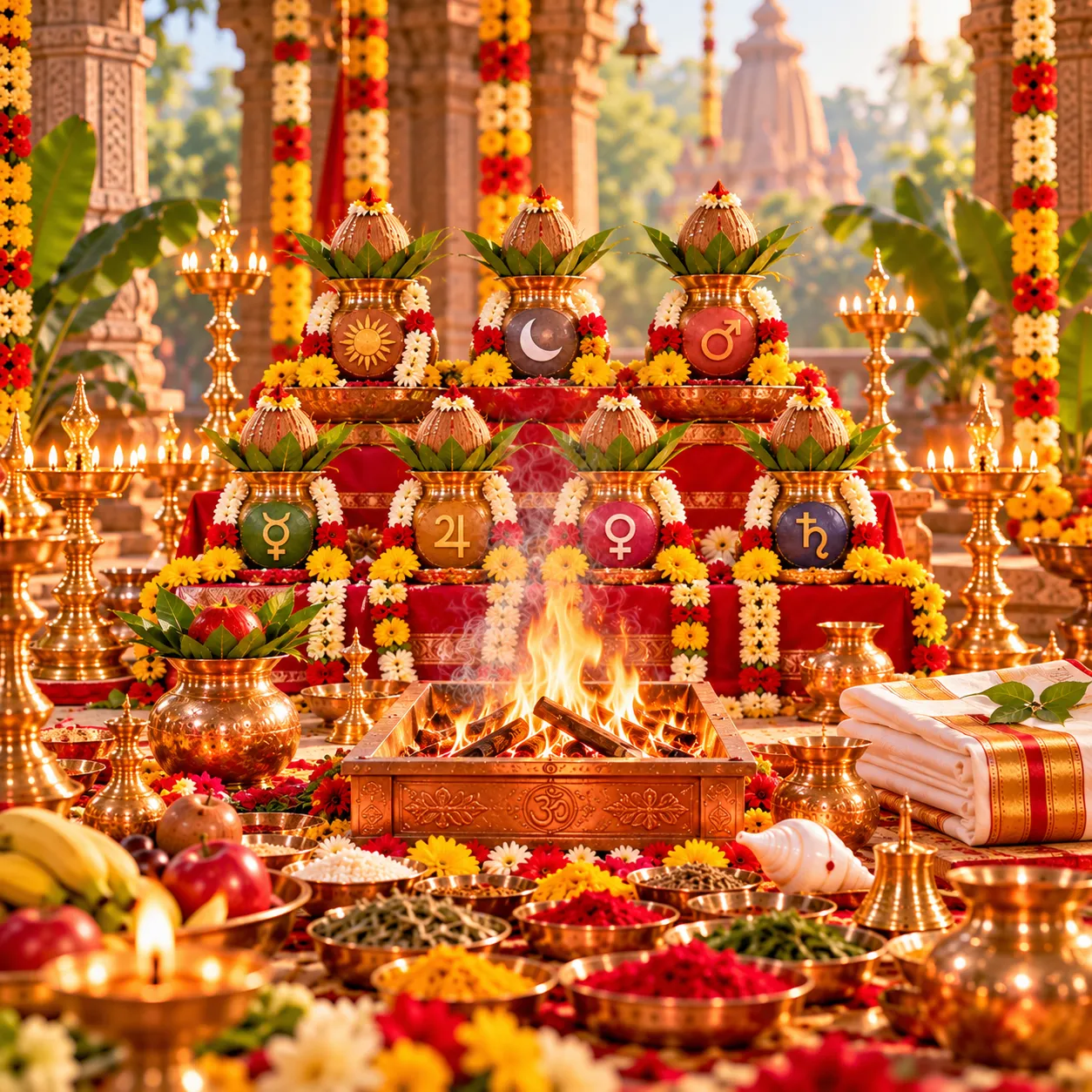
Saptvar Udyapan
About This Pooja
Saptvar Udyapan (also known as Vaar Vrat Udyapan) is a comprehensive Vedic concluding ceremony performed upon completing the observance of fasts dedicated to the seven days of the week (Ravivar to Shanivar) and their presiding planetary lords (Navgraha deities). Whether a devotee undertook a specific day’s fast (such as Monday for Lord Shiva, Tuesday for Lord Hanuman, or Thursday for Lord Brihaspati) or completed a continuous cycle of fasting across all seven weekdays, this udyapan formally seals the spiritual merits. Devotees perform this ritual to seek forgiveness for any lapses during the fasting tenure, harmonize all nine planetary energies, remove malefic planetary afflictions, and invoke holistic blessings for health, wealth, intellect, and domestic peace. The ceremony commences with Swasti Vachan, Ganpati Puja, Punyaha Vachan, Kalash Sthapana, and Sankalp, followed by the installation of the comprehensive Navgraha Mandal and Sarvatobhadra Mandal. The central rites involve honoring the primary deities of each day: Lord Surya (Sunday), Lord Shiva/Chandra (Monday), Lord Hanuman/Mangal (Tuesday), Lord Ganesha/Budha (Wednesday), Lord Vishnu/Brihaspati (Thursday), Goddess Lakshmi/Shukra (Friday), and Lord Shani/Bhairav (Saturday). Each deity is worshipped with designated colored cloths, grains, and specific mantras. An elaborate Navgraha and Vaar Devata Havan is performed with the respective sacred samidhas (Ark, Palash, Khadir, Apamarga, Peepal, Udumbara, and Shami) and pure cow ghee. The ritual culminates in gifting seven distinct daan sets (specific grains, clothes, metals, and dakshina aligned with the seven days) to worthy Brahmins, followed by Purnahuti, Maha Aarti, and Prasad distribution.
Pooja Samagri Overview
Idols or photos of Lord Ganesha, Navgraha deities, and day-specific lords (Surya, Shiva, Hanuman, Vishnu, Lakshmi, Shani), copper or brass Kalash, coconuts, mango leaves, betel leaves, supari, raw turmeric knots, unbroken rice (akshat), roli, chandan, janeu, moli (kalawa), seven-colored cloths (red, white, saffron/red, green, yellow, white/cream, and black/navy blue), Sapta Dhanya (seven grains: wheat, rice, toor dal, moong, chana dal, white beans, and black urad/til), pure cow ghee, dry mango wood and specific planetary wood sticks (navgraha samidha), havan kund, havan samagri, dry coconut (gola for Purnahuti), camphor, brass diyas, Gangajal, fresh flowers and garlands of different colors, seasonal fruits, day-specific sweets (kheer, laddoo, jalebi), seven sets of daan items with appropriate utensils, and dakshina for the priests.
Important Note
Saptvar Udyapan is scheduled on an auspicious day matching the primary day of the completed fast (e.g., on a Thursday if the fast was Brihaspativar Vrat, or on a Sunday/Purnima for an all-inclusive seven-day fast cycle) during Shukla Paksha. The devotee must maintain strict fasting, purity, and celibacy until the conclusion of the havan and charitable offerings. The selection of grains, colored garments, and specific daan articles depends on whether a single weekday fast or the complete seven-day rotation is being consecrated, in accordance with family traditions and planetary guidance.
You Might Like
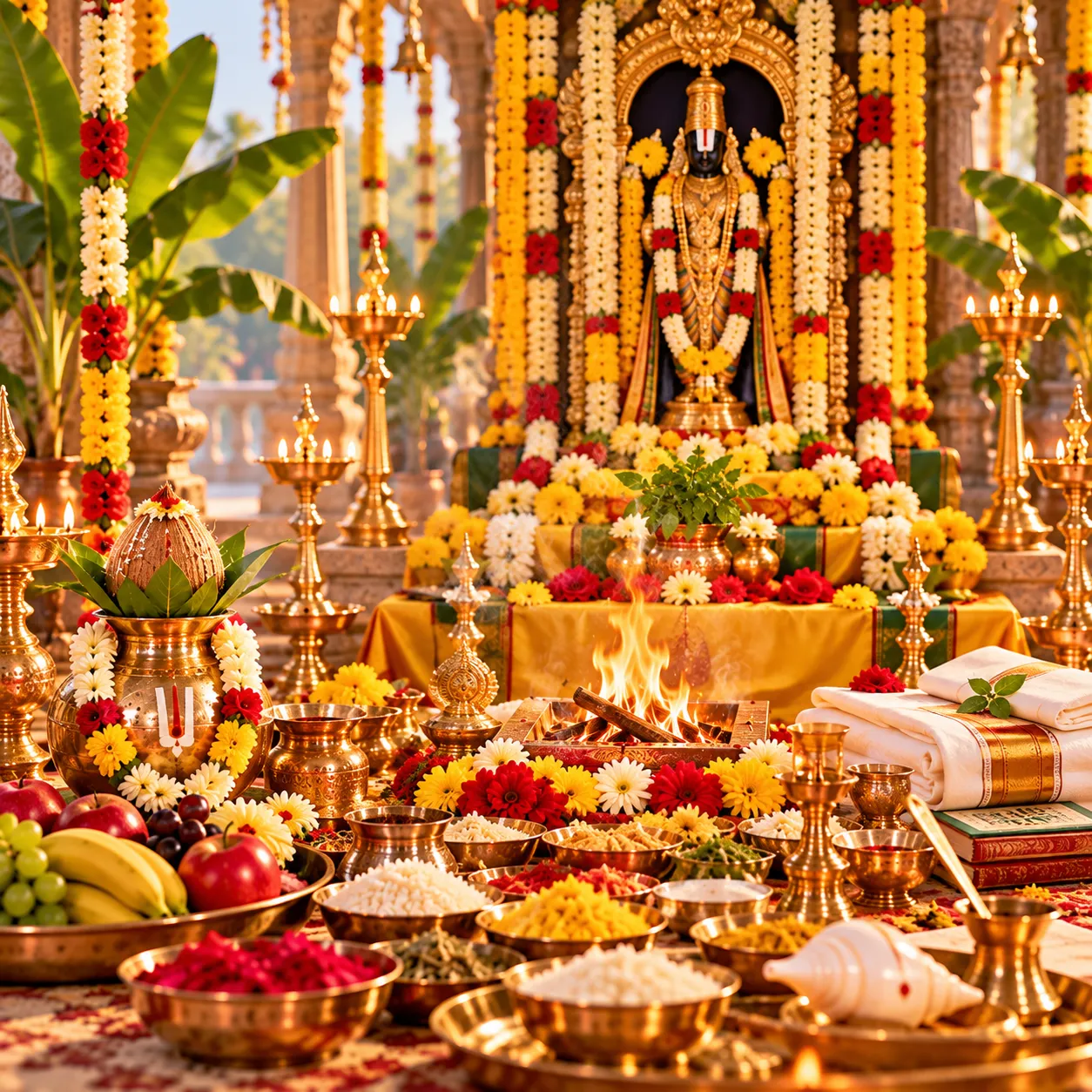
Ekadashi Udyapan
Ekadashi Udyapan is the sacred concluding ceremony performed upon completing the observance of Ekadashi Vrats (typically observed consistently for 1 year, 3 years, or 26 continuous fortnightly fasts). Dedicated to Lord Maha Vishnu and Goddess Mahalakshmi, this ritual formally seals and consecrates the spiritual merits accumulated through fasting. Devotees perform this udyapan to seek complete forgiveness for any unintentional flaws or omissions during the fasts, express heartfelt gratitude to Lord Narayana, and invoke blessings for spiritual liberation (Moksha), righteous progeny, good health, and family prosperity. The ceremony commences with Ganpati Puja, Punyaha Vachan, Kalash Sthapana, and Sankalp, followed by the invocation of Lord Vishnu, Goddess Lakshmi, and the Navgraha deities. The central rite involves the worship of Lord Vishnu using the Shodashopachara method with sacred Tulsi leaves, followed by the recitation of the Ekadashi Mahatmya and Vishnu Sahasranama. A consecrated Havan is conducted using samidha wood, sesame seeds, barley, pure cow ghee, and kheer to satisfy the divine energies. The ritual culminates in honoring eligible couples (representing Lakshmi-Narayana) or Brahmins with food, traditional garments, umbrellas, fans, shoes, and Dakshina, concluding with Purnahuti, Vishnu Aarti, and Prasad distribution. Samagri: Idols or photos of Lord Vishnu (or Shaligram Shila) and Goddess Lakshmi, Lord Ganesha, copper or brass Kalash, coconuts, mango leaves, betel leaves, supari, raw turmeric knots, unbroken rice colored yellow with turmeric (akshat), yellow sandalwood paste (chandan), roli, janeu, moli (kalawa), yellow silk cloth (Pitambari), fresh Tulsi leaves (abundant supply), yellow marigold flower garlands, Panchamrit (cow milk, curd, honey, sugar, pure cow ghee), Gangajal, dry mango wood/samidha, havan kund, havan samagri (including white and black sesame seeds, barley, and guggal), dry coconut (gola for Purnahuti), camphor, brass or earthen diyas, seasonal fruits (especially bananas), traditional bhog sweets (kheer, soaked chana dal, or besan laddoos), Daan items for Brahmins/couples (dhoti-kurta, saree, umbrella, footwear, fan, brass utensils), and priest dakshina. Note: Ekadashi Udyapan is traditionally performed on a Shukla Paksha Ekadashi or during a highly auspicious Ekadashi such as Prabodhini (Devutthana) Ekadashi, Nirjala Ekadashi, or Vaikuntha Ekadashi under the guidance of learned Vedic priests. Fasting rules and ritual cleanliness must be observed until the completion of the purnahuti and parana. The number of couples or Brahmins honored (commonly 1, 5, 12, or 26 pairs depending on the duration of the vrat) and the specific offerings vary according to the devotee’s initial sankalp and family traditions.
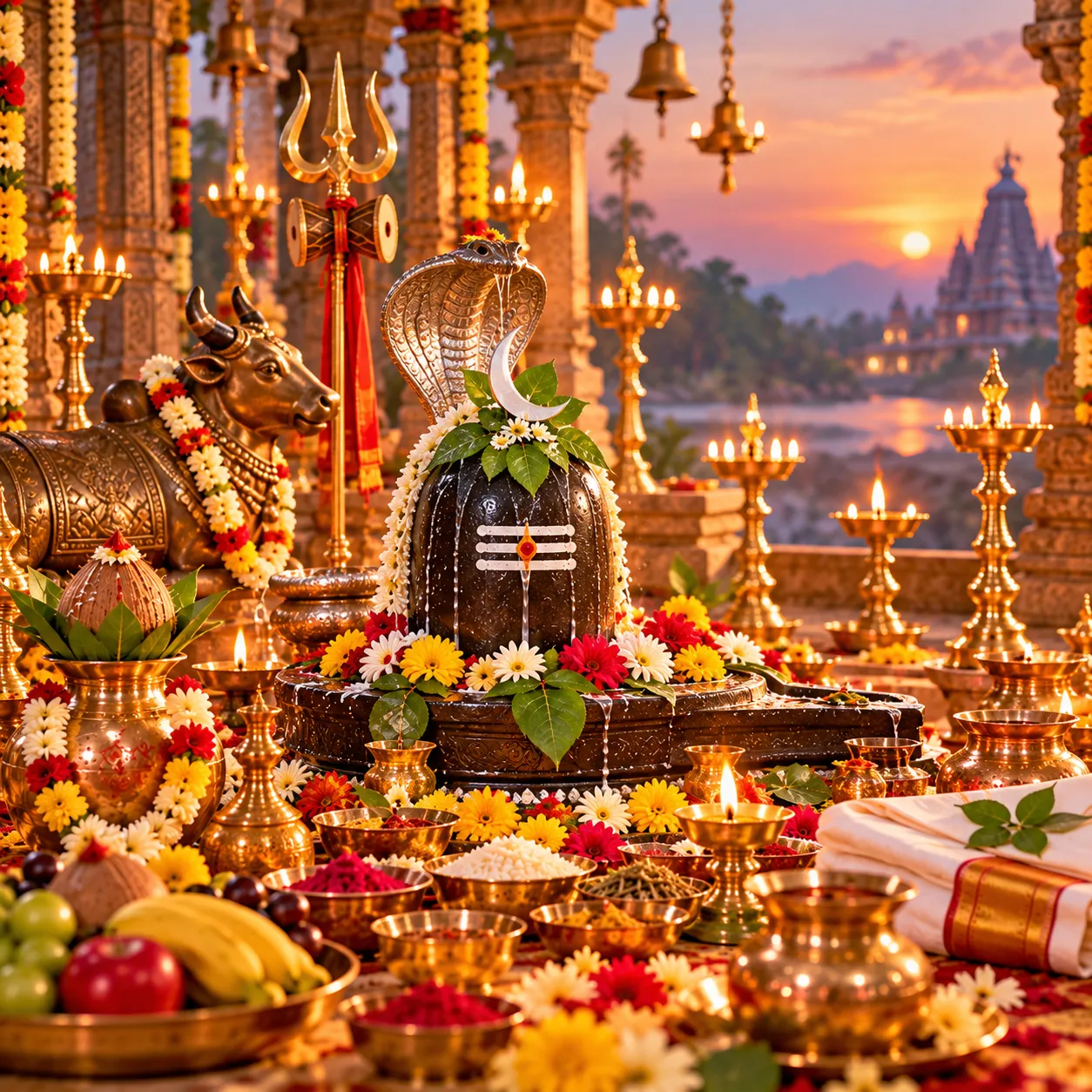
Pradosh Udyapan
Pradosh Udyapan is the sacred concluding ceremony performed upon completing the observance of Pradosh Vrats (traditionally kept for 11, 26, or a full year of continuous fortnightly fasts). Dedicated to Lord Shiva and Goddess Parvati, this ritual formally seals and sanctifies the spiritual merits accumulated through fasting and evening twilight devotion (Pradosha Kaal). Devotees undertake this udyapan to seek absolution for any unwitting mistakes made during the fasting tenure, dissolve persistent karmic bondages, cure chronic ailments, and invoke divine blessings for long life, marital bliss, financial prosperity, and spiritual liberation. The ceremony commences during the auspicious Pradosha Kaal (the twilight period around sunset) with Ganpati Puja, Punyaha Vachan, Kalash Sthapana, and Sankalp, followed by the installation of the Shiva Parivar. A detailed Rudrabhishek is performed on the Shiva Lingam using Panchamrit (milk, curd, honey, ghee, sugar) and holy Gangajal, accompanied by the chanting of Sri Rudram and the Pradosha Vrat Katha. An elaborate Havan is then conducted using dry mango wood, pure cow ghee, sacred herbs, and bilva leaves with the chanting of the Maha Mrityunjaya Mantra and Shiva Panchakshari Mantra. The ceremony culminates in honoring an initiated Brahmin couple (symbolizing Uma-Maheshwar) with traditional clothes, footwear, umbrellas, utensils, and dakshina, followed by Purnahuti, Kapur Aarti, and distribution of Mahaprasad. Samagri: Shiva Lingam (Narmadeshwar, brass, or parad) and idol/photo of Shiva Parivar (Lord Shiva, Mata Parvati, Ganesha, and Kartikeya), copper or brass Kalash, coconuts, mango leaves, betel leaves, supari, raw turmeric knots, unbroken rice (akshat), white sandalwood paste (chandan), vibhuti/bhasma, janeu, moli (kalawa), white and red unstitched cloth, fresh Bilva leaves (Belpatra in abundance), Dhatura fruits and flowers, Shami leaves, white flowers, Panchamrit (cow milk, curd, honey, sugar, pure cow ghee), Gangajal, dry mango wood/samidha, havan kund, havan samagri (including guggal, black sesame seeds, and barley), dry coconut (gola for Purnahuti), camphor, brass diyas, seasonal fruits, traditional sweets/kheer, Daan items for the Brahmin couple (dhoti-kurta, saree, shawl, umbrella, footwear, brass/bronze vessel), and priest dakshina. Note: Pradosh Udyapan must be conducted during the Pradosha Kaal (approximately 45 minutes before to 45 minutes after sunset) on either a Shukla Paksha or Krishna Paksha Trayodashi tithi. Depending on the day of the week the fast was observed (e.g., Som Pradosh for peace, Bhauma Pradosh for debt relief, or Shani Pradosh for planetary relief), specific intentions are renewed during the sankalp. The devotee observes strict fasting until the completion of the evening puja, havan, and offerings. Minor ritual nuances may vary according to family lineages, gotra customs, and regional Shaiva practices.
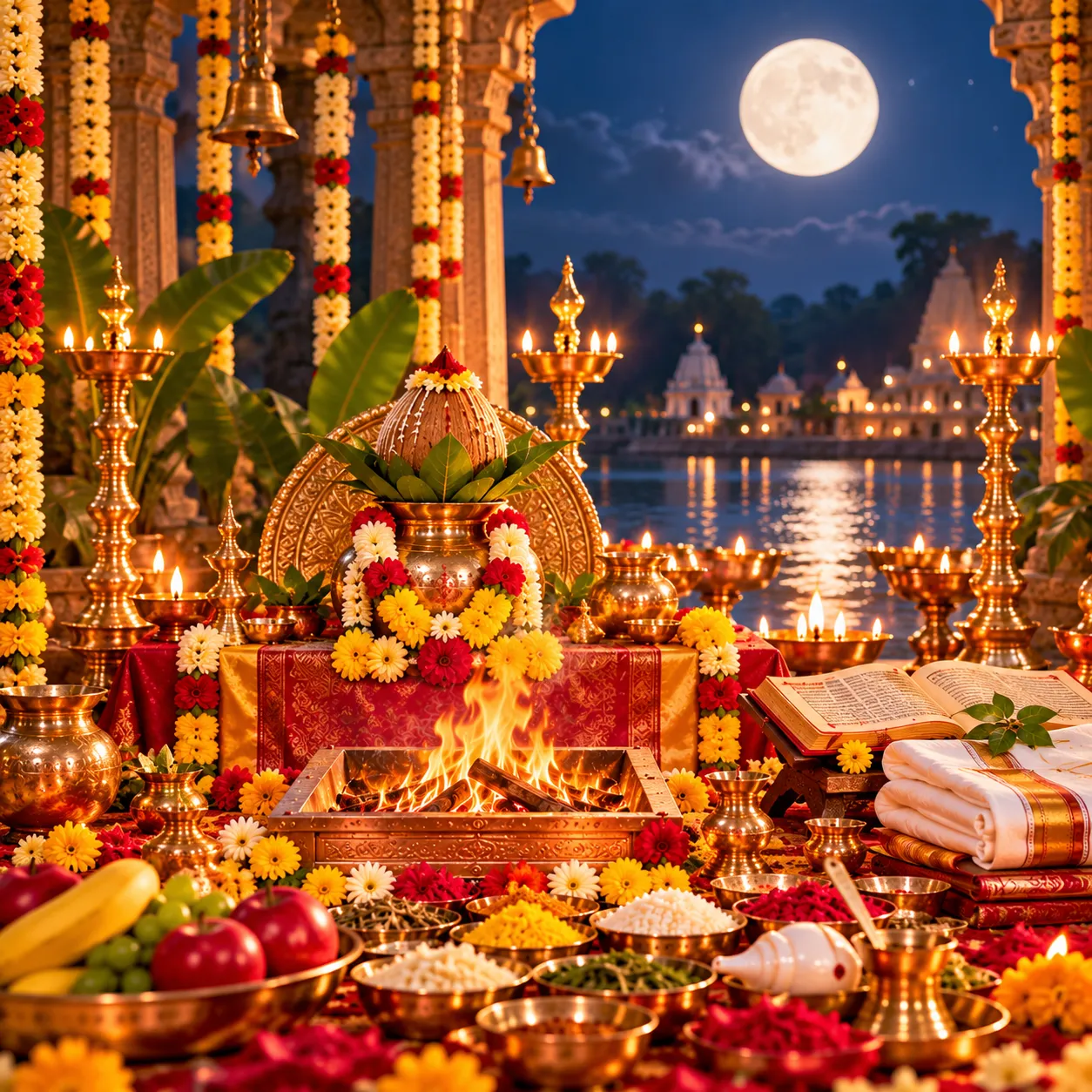
Purnima Udyapan
Purnima Udyapan is the sacred concluding ceremony performed upon completing the observance of Purnima (full moon) fasts, traditionally observed continuously for 16, 32, or a full year of monthly cycles. Dedicated to Lord Satyanarayan (Lord Vishnu) and Goddess Mahalakshmi, as well as Chandra Deva (the Moon God), this ritual formally seals and consecrates the spiritual merits accumulated through monthly fasting. Devotees perform this udyapan to seek absolution for any unintentional lapses during the fasts, eliminate domestic discord, stabilize mental peace and emotional well-being, attract enduring prosperity, and invoke divine blessings for long life and spiritual fulfillment. The ceremony commences with Ganpati Puja, Punyaha Vachan, Kalash Sthapana, and Sankalp, followed by the invocation of Lord Satyanarayan, Goddess Lakshmi, and Chandra Deva. The central rite involves the recitation of the Sri Satyanarayan Vrat Katha along with the Vishnu Sahasranama and Chandra Gayatri Mantra. A special Arghya is prepared using cow milk, holy Gangajal, raw rice, and white flowers to offer to the rising full moon in the evening. An elaborate Havan is conducted using mango wood, pure cow ghee, sacred samidha, and sweet offerings into the consecrated fire. The ritual culminates in honoring eligible Brahmin couples (representing Lakshmi-Narayana) with food, white/yellow garments, silver items, and Dakshina, concluding with Purnahuti, Maha Aarti, and Panjiri/Charanamrit Prasad distribution. Samagri: Idols or photos of Lord Satyanarayan, Goddess Mahalakshmi, and Lord Ganesha, copper or brass Kalash, coconuts, mango leaves, banana tree stems/leaves for mandap, betel leaves, supari, raw turmeric knots, unbroken rice (akshat), yellow sandalwood paste (chandan), roli, janeu, moli (kalawa), yellow and white unstitched cloths, fresh Tulsi leaves (abundant supply), white fragrant flowers and yellow marigold garlands, Panchamrit (cow milk, curd, honey, sugar, pure cow ghee), Gangajal, dry mango wood/samidha, havan kund, havan samagri (including white sesame seeds, barley, and guggal), dry coconut (gola for Purnahuti), camphor, brass or silver diyas, seasonal fruits (especially bananas), traditional Satyanarayan prasad (Panjiri made of roasted wheat flour, sugar, and banana slices / Panchamrit), Daan items for the Brahmin couple (dhoti-kurta, saree, utensils, white cloth, silver coin/ornament), and priest dakshina. Note: Purnima Udyapan must be conducted on a Purnima tithi, especially during major full moon festivals such as Sharad Purnima, Kartik Purnima, Guru Purnima, or Chaitra Purnima, under the guidance of knowledgeable Vedic priests. The devotee maintains complete fasting until the full moon rises and the evening moon arghya, havan, and katha are completed. The number of couples or Brahmins honored and the choice of daan articles (such as white grains, sugar, and milk products aligned with the Moon God) vary according to the yajman’s sankalp and family traditions.