
Shatchandi Path
About This Pooja
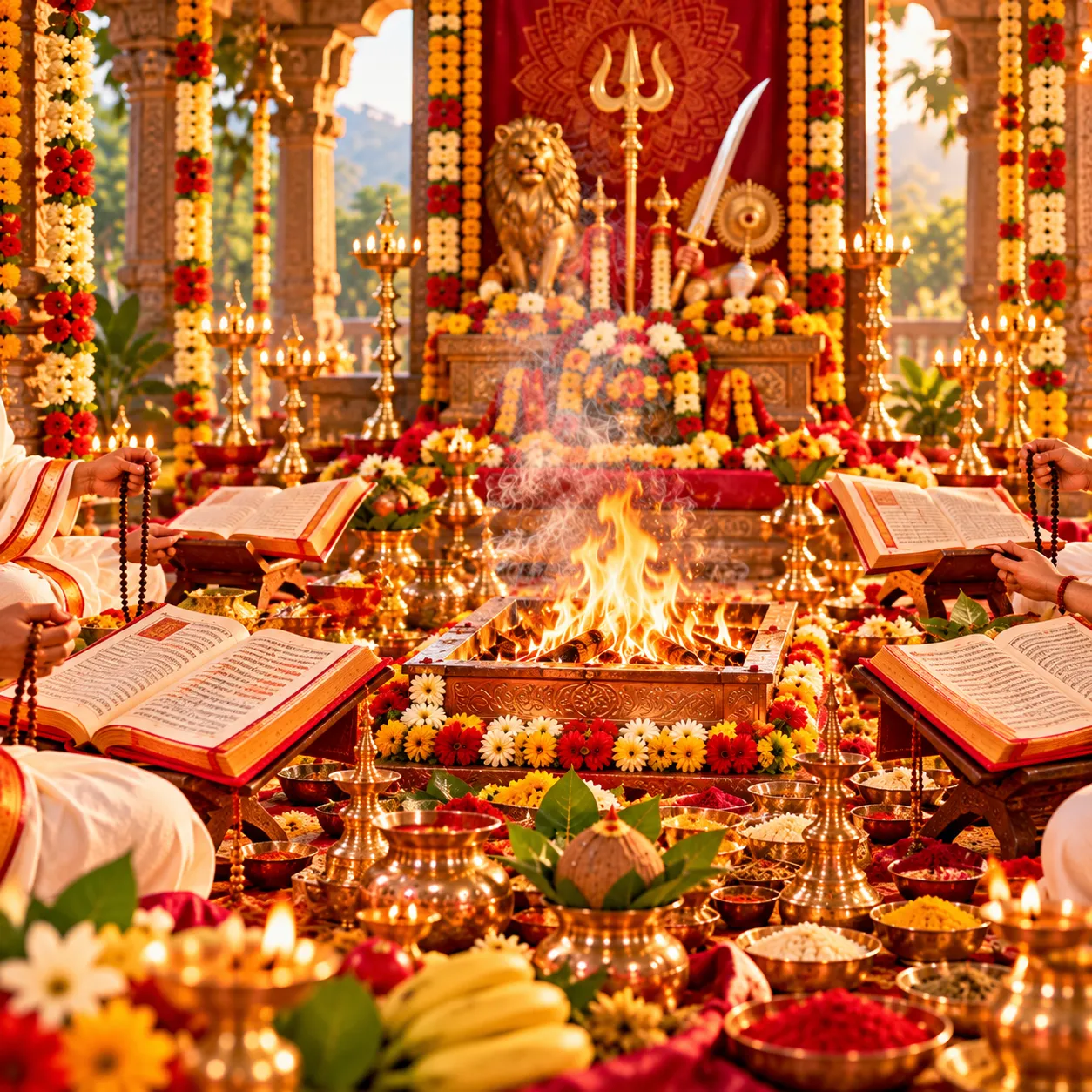
Shatchandi Path is one of the most formidable and auspicious grand Vedic-Shakta mahayagyas dedicated to Supreme Goddess Durga (Chandi), the unified embodiment of Maha Kali, Maha Lakshmi, and Maha Saraswati. Scripturally sanctioned in the Markandeya Purana, this immense anushthan involves the systematic recitation of the complete Durga Saptashati (700 verses across 13 chapters) one hundred times (totaling 70,000 sacred mantras). Undertaken to invoke the omnipotent protective mantle of the Divine Mother, Shatchandi Path is performed to overcome insurmountable obstacles, eliminate acute enemy threats and persistent legal battles, counteract severe generational curses and planetary catastrophes, recover from chronic illness, and usher in supreme victory, prosperity, and spiritual liberation. The ceremony commences with Swasti Vachan, Ganpati Puja, Punyaha Vachan, Matrika Puja, and Kalash Sthapana, accompanied by the elaborate installation of the Navgraha, Sarvatobhadra, and 64 Yogini Mandalas. Following a solemn Sankalp, initiated Vedic scholars invoke the protective Anga Mantras (Devi Kavach, Argala Stotram, Keelakam, and Ratri Suktam) alongside intensive Navarna Mantra japa. The pandits then systematically complete the 100 recitations of the Durga Saptashati over consecutive days. The ritual reaches its grand culmination in the magnificent Shatchandi Maha Yagya (Havan), where thousands of sacred oblations of pure cow ghee, kheer, lotus seeds, bilva patra, and sacred samagri are offered into the holy fire with each shloka. The anushthan concludes with a grand Kanya Puja (honoring and feeding young girls as manifestations of the Goddess), Suvasini (Sumangali) Puja, Purnahuti with a consecrated dry coconut, Maha Chandi Aarti, and the distribution of Mahaprasad.
Pooja Samagri Overview
Idols or consecrated photos of Maa Durga, Sri Yantra and Navarna Yantra, multiple copper/brass Kalash, coconuts, mango leaves, betel leaves, supari, raw turmeric knots, unbroken rice colored with kumkum (raktakshat), sindoor, roli, red sandalwood paste, moli (kalawa), janeu, red silk chunri and altar drapes, abundant fresh red hibiscus and rose garlands, cloves (laung), green cardamom (elaichi), nutmeg (jaiphal), pure honey, Panchamrit (cow milk, curd, honey, sugar, and pure cow ghee), Gangajal, dry mango wood/samidha, large havan kund, extensive Chandi havan samagri (including guggal, loban, black sesame seeds, barley, lotus seeds, dry fruits, and aromatic roots), whole dry coconuts (gola for Purnahuti), brass and earthen diyas, pure camphor, seasonal red fruits (pomegranates, apples), elaborate bhog offerings (suji halwa, puris, black chana, and kheer), new clothes, chunris, and gifts/dakshina for Kanyas and Suvasinis, and comprehensive dakshina for the chanting Vedic priests.
Important Note
Shatchandi Path is a massive, highly disciplined anushthan traditionally executed over 3, 5, 7, or 9 days by a congregation of 7, 9, 10, or more initiated karma-kandi Vedic pandits. It is ideally scheduled during auspicious windows such as Chaitra or Sharad Navratri, Gupt Navratri, or during intense planetary afflictions requiring divine intervention. The yajman and household members must observe absolute purity, celibacy, truthful conduct, and a strict satvik diet throughout the period. Recitation variations (such as Samputit Path with specific mantras) and havan procedures are executed strictly under the guidance of the head acharya following Shakta traditions.
You Might Like
Navchandi Path
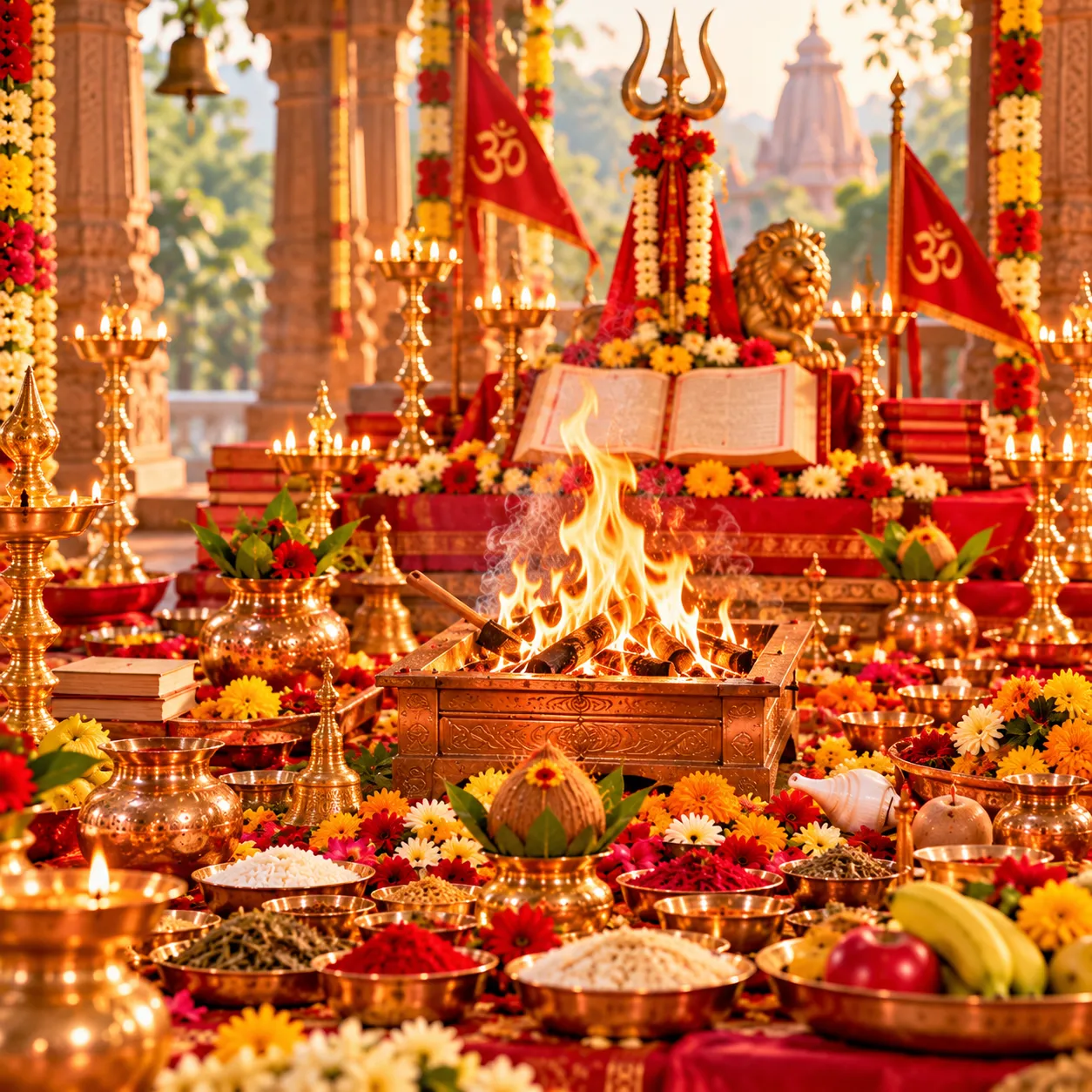
Navchandi Path is an exceptionally powerful and elaborate Vedic-Shakta ritual dedicated to Goddess Durga, embodying the combined divine energies of Maha Kali, Maha Lakshmi, and Maha Saraswati. Rooted in the Markandeya Purana, this sacred anushthan comprises nine complete recitations of the sacred Durga Saptashati (700 verses across 13 chapters, totaling 6,300 mantras). Devotees undertake the Navchandi Path to dissolve severe karmic and planetary afflictions, neutralize hidden enemies, overcome prolonged legal battles, dispel black magic and negative vibrations, and invoke supreme protection, prosperity, and spiritual elevation. The ceremony commences with Ganpati Puja, Punyaha Vachan, Matrika Puja, and Kalash Sthapana, followed by the establishment of the Navgraha Mandal, Sarvatobhadra Mandal, and Yogini Mandal. The priests and yajman take a formal Sankalp, reciting preliminary protective hymns including the Devi Kavach, Argala Stotram, Keelakam, and Ratri Suktam. Qualified Vedic pandits then systematically recite the full Durga Saptashati nine times with concentrated devotion and Navarna Mantra japa. The ritual reaches its zenith with the grand Navchandi Havan (Chandi Yagya), where dedicated oblations of pure cow ghee, sacred samidha, payasam (kheer), lotus seeds, and fragrant herbs are offered into the holy fire for every chapter. The ceremony concludes with Kanya Puja (worship of nine young girls as living embodiments of Nava Durga), Purnahuti, Mahachandi Aarti, and Prasad distribution. Samagri: Idol or photo of Maa Durga, Sri Yantra or Navarna Yantra, Kalash, coconuts, mango leaves, betel leaves, supari, raw turmeric knots, unbroken rice colored with kumkum (raktakshat), sindoor, roli, red sandalwood paste, moli (kalawa), janeu, red silk chunri and red altar cloths, red hibiscus flowers, red rose garlands, cloves (laung), green cardamom (elaichi), pure honey, Panchamrit (cow milk, curd, honey, sugar, pure cow ghee), Gangajal, dry mango wood/samidha, havan kund, special Chandi havan samagri (including guggal, loban, black sesame seeds, barley, lotus seeds, dry fruits, and nutmeg), whole dry coconut (gola for Purnahuti), camphor, brass or earthen diyas, seasonal fruits (especially pomegranates and bananas), bhog offerings (suji halwa, puri, boiled black chana, and kheer), new clothes, red ribbons, and gifts/dakshina for 9 Kanyas, and dakshina for the chanting priests. Note: Navchandi Path is traditionally organized during auspicious windows such as Chaitra or Sharad Navratri, Ashtami, Navami, Purnima, Amavasya, or on specific Tuesdays and Fridays. Due to the extensive scale of reciting the 700 verses nine times, the ceremony is typically conducted over 1 to 3 days by a group of initiated Vedic priests. The yajman and family members must observe strict dietary purity (pure satvik food without onion or garlic), ritual cleanliness, and celibacy throughout the anushthan. Specific recitation styles (such as Samput Path) and havan offerings may vary according to the yajman’s sankalp, family lineage, and regional Shakta traditions.
Navratri Puja
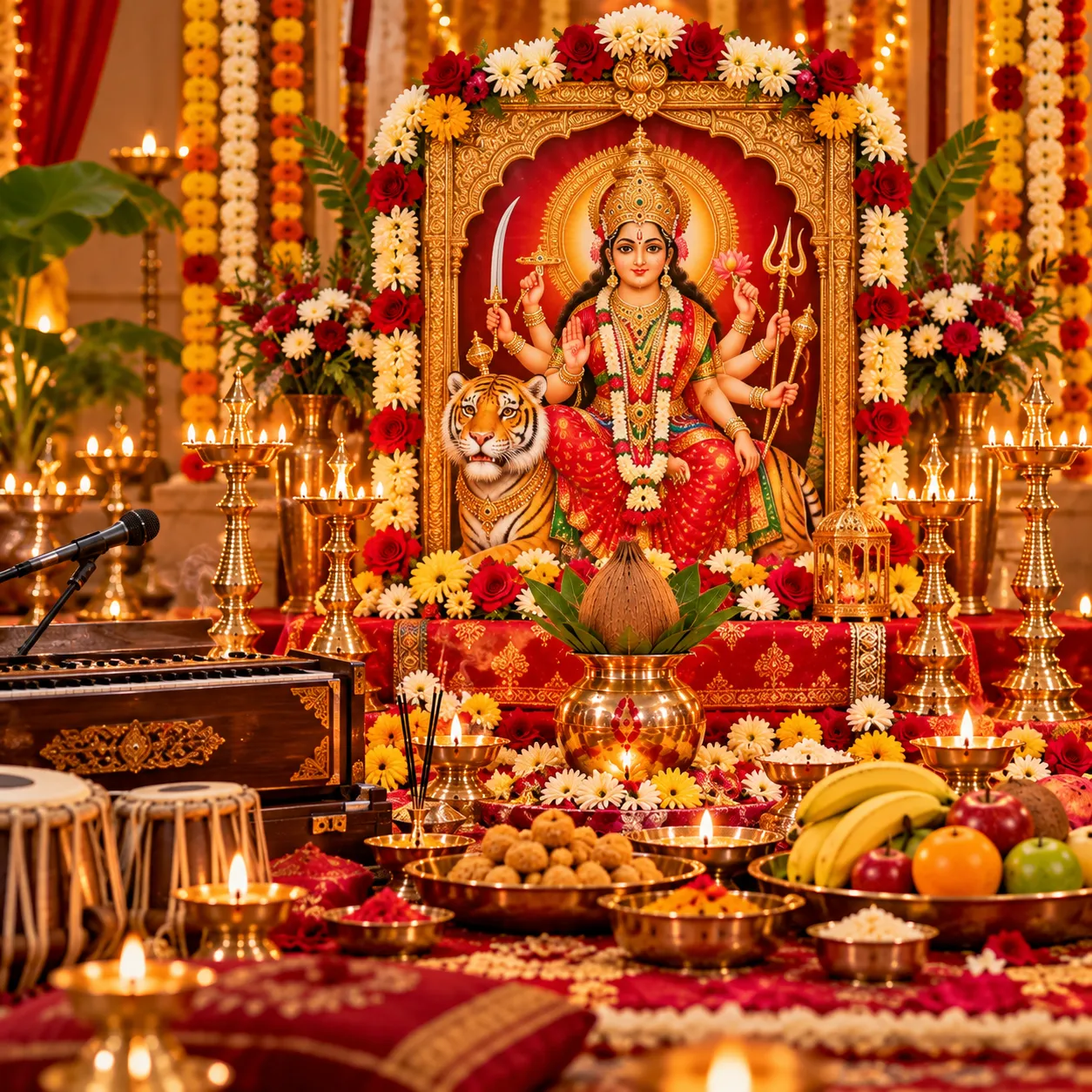
Navratri Puja is a sacred nine-night festival dedicated to the invocation and worship of Goddess Durga and her nine divine manifestations (Navadurga). Celebrated with profound reverence during Chaitra and Sharadiya Navratri, devotees undertake fasts, spiritual recitations, and daily rituals to invoke the supreme cosmic feminine energy (Shakti). The puja is performed to eradicate negative energies and inner vices, overcome life’s hurdles, cultivate spiritual strength, and seek divine blessings for health, prosperity, and harmony for the family. The ceremony commences on Pratipada with Ghatasthapana (Kalash Sthapana) and the ceremonial sowing of barley seeds (Jau bona). Devotees invoke Goddess Durga with Aachaman, Sankalp, lighting of the sacred Akhand Jyot, and daily recitation of the Durga Saptashati, Devi Mahatmya, or Navarna Mantra. Each day of the festival is dedicated to a distinct form of Maa Durga—from Mata Shailputri to Mata Siddhidatri. The nine-day observance culminates on Ashtami or Navami with a purifying Chandi/Durga Havan, Kanya Pujan (ceremonial worship and feasting of nine young girls representing the Navadurgas along with a boy representing Batuk Bhairav), Maha Aarti, and Prasad distribution. Samagri: Goddess Durga idol or photo, earthen/brass Kalash, coconut with coir, red cloth (chunri), mango or ashoka leaves, clay pot for sowing barley, clean soil/sand, barley seeds (jau), Akhand Diya, pure cow ghee or sesame oil, long cotton wicks, Gangajal, Panchamrit (milk, curd, honey, ghee, sugar), Durga Saptashati book, Roli, Kumkum, Chandan, Haldi, Akshat (unbroken rice), Janeu, red flowers (hibiscus preferred) and flower garlands, betel leaves, supari, cloves, cardamom, seasonal fruits, dry fruits, traditional bhog ingredients (halwa, puri, kale chane), complete Shringar samagri (sindoor, bindi, bangles, alta, mehendi), Havan kund, havan samagri, dry coconut (gola), camphor, dhoop, incense sticks, and Prasad. Note: Ghatasthapana must be performed strictly during the auspicious Muhurat or Abhijit Muhurat on Pratipada as calculated by the Hindu Panchang. If an Akhand Jyot is established, proper care must be taken to ensure it remains lit continuously throughout the nine days. Fasting regulations, daily recitation counts, and the choice of performing Kanya Pujan on Ashtami or Navami may vary according to family traditions and regional customs.