
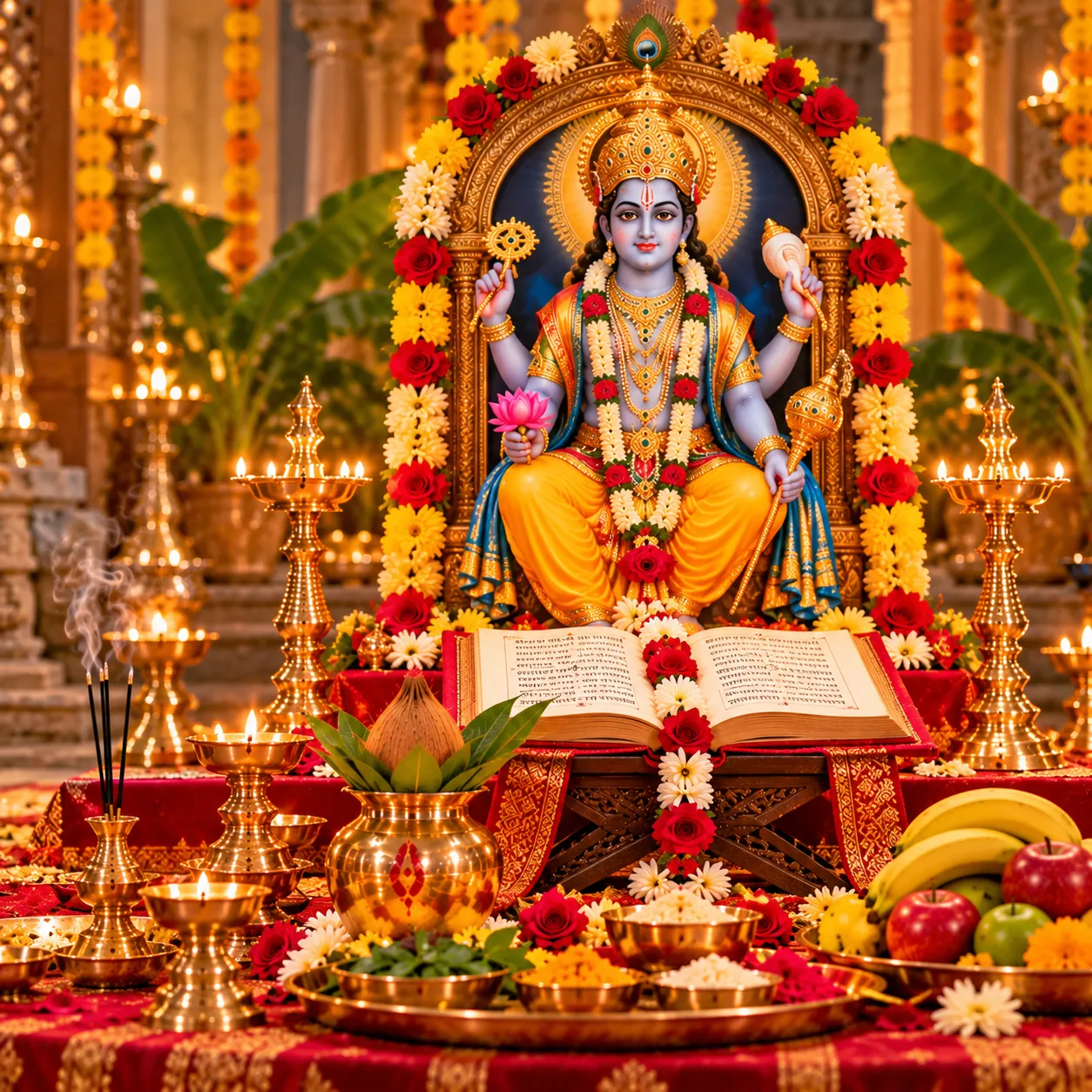
Vishnu Sahasranama Path
About This Pooja
Vishnu Sahasranama Path is a sacred Sanskrit recitation containing the 1,000 divine names of Lord Mahavishnu, originally revealed by Bhishma Pitamah in the Anushasana Parva of the Mahabharata. Devotees undertake this path to mitigate planetary afflictions, dissolve past karmic obstacles, invite good health, peace, and spiritual upliftment, and seek the benevolent grace of Lord Narayana and Goddess Lakshmi. The ceremony begins with Aachaman, Sankalp, Ganesh Puja, and Kalash Sthapana, followed by the invocation and Shodashopachara puja of Lord Vishnu and Maa Lakshmi. The 1,000 divine names are recited devotedly, often accompanied by Nama Archana—offering Tulsi leaves and yellow flowers with each name. The path concludes with the recitation of the Phalasruti, Shri Vishnu Aarti, Pushpanjali, Naivedya offering, and Prasad distribution.
Pooja Samagri Overview
Lord Vishnu or Shaligram idol/image, Maa Lakshmi image or idol, Tulsi leaves and manjari, yellow flowers or garlands, yellow cloth (peetambar), Panchamrit ingredients (milk, curd, honey, ghee, sugar), Gangajal, Kalash, coconut, mango leaves, Janeu (sacred thread), yellow Chandan, Roli, Kumkum, Akshat, betel leaves, supari, cloves, cardamom, seasonal fruits (especially bananas), yellow sweets or kheer, incense sticks, dhoop, camphor, diya, pure cow ghee, cotton wicks, and Prasad.
Important Note
Vishnu Sahasranama Path can be performed as a standard stotra recitation or as an elaborate archana using individual names (Sahasranamavali) with continuous Tulsi offerings. Maintaining sacred cleanliness and clear Vedic pronunciation is traditionally emphasized during the chanting. The puja vidhi and samagri list may vary according to family traditions and regional customs.
You Might Like
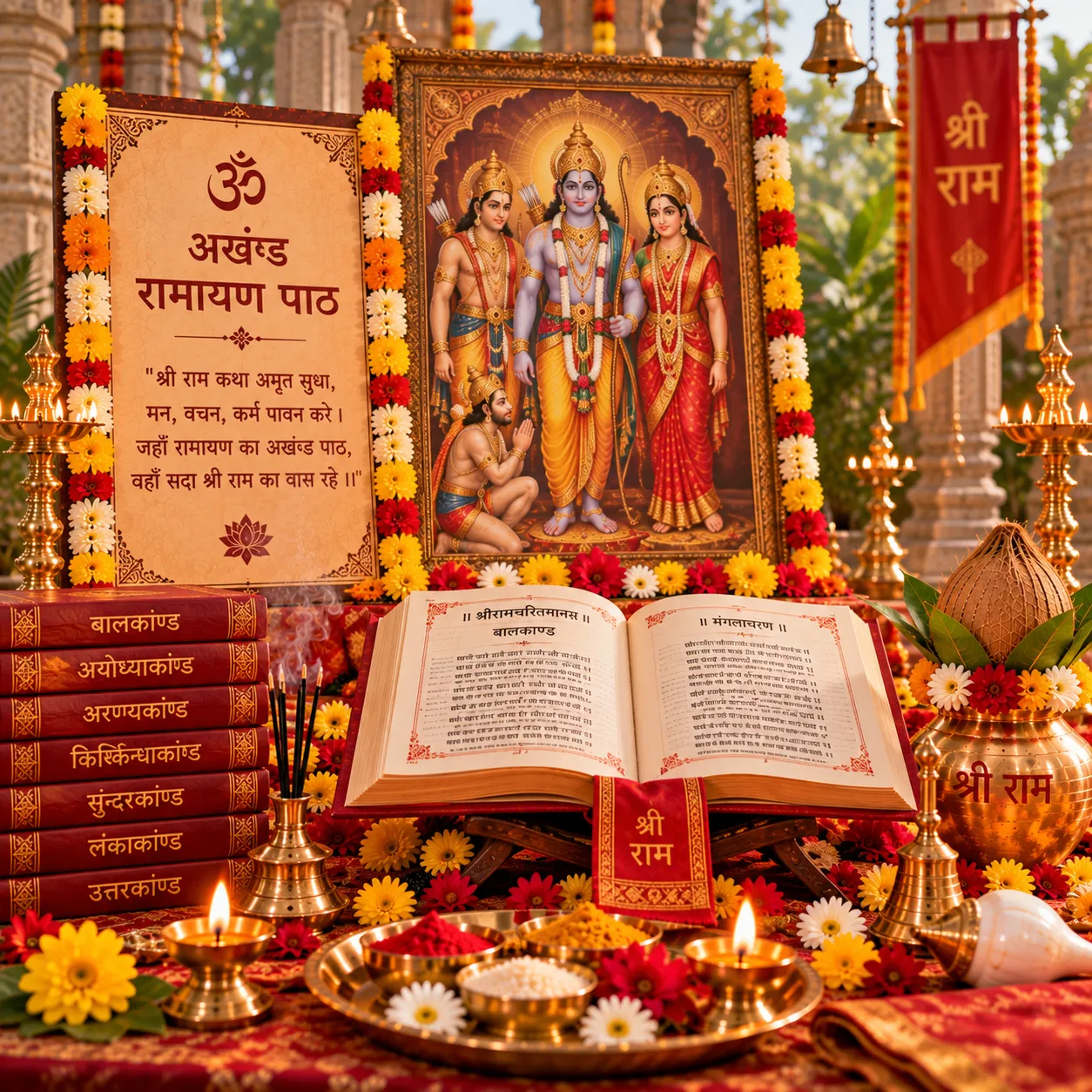
Akhand Ramayan Path
Akhand Ramayan Path is a continuous recitation of the Ramcharitmanas, traditionally performed without interruption over an extended period. Devotees undertake the Path to express devotion to Lord Shri Ram and seek blessings for peace, harmony, prosperity, and the well-being of the family. The ceremony begins with Sankalp, Ganesh Puja, Kalash Sthapana, and invocation of Lord Shri Ram and Maa Sita. The complete Ramcharitmanas is then recited continuously by the participating devotees or designated pathi, followed by Havan, Purnahuti, Shri Ram Aarti, and Prasad distribution upon completion. Samagri: Ramcharitmanas, Lord Shri Ram and Maa Sita idols or images, Kalash, coconut, mango leaves, flowers, roli, kumkum, akshat (rice), Tulsi leaves, fruits, sweets, betel leaves, supari, incense, camphor, diya, ghee, havan samagri, and other essential puja items. Note: Akhand Ramayan Path generally requires continuous participation and proper arrangements for the entire duration. The exact duration may vary depending on the recitation speed and number of participants. The puja vidhi and samagri may vary according to family tradition and local customs.
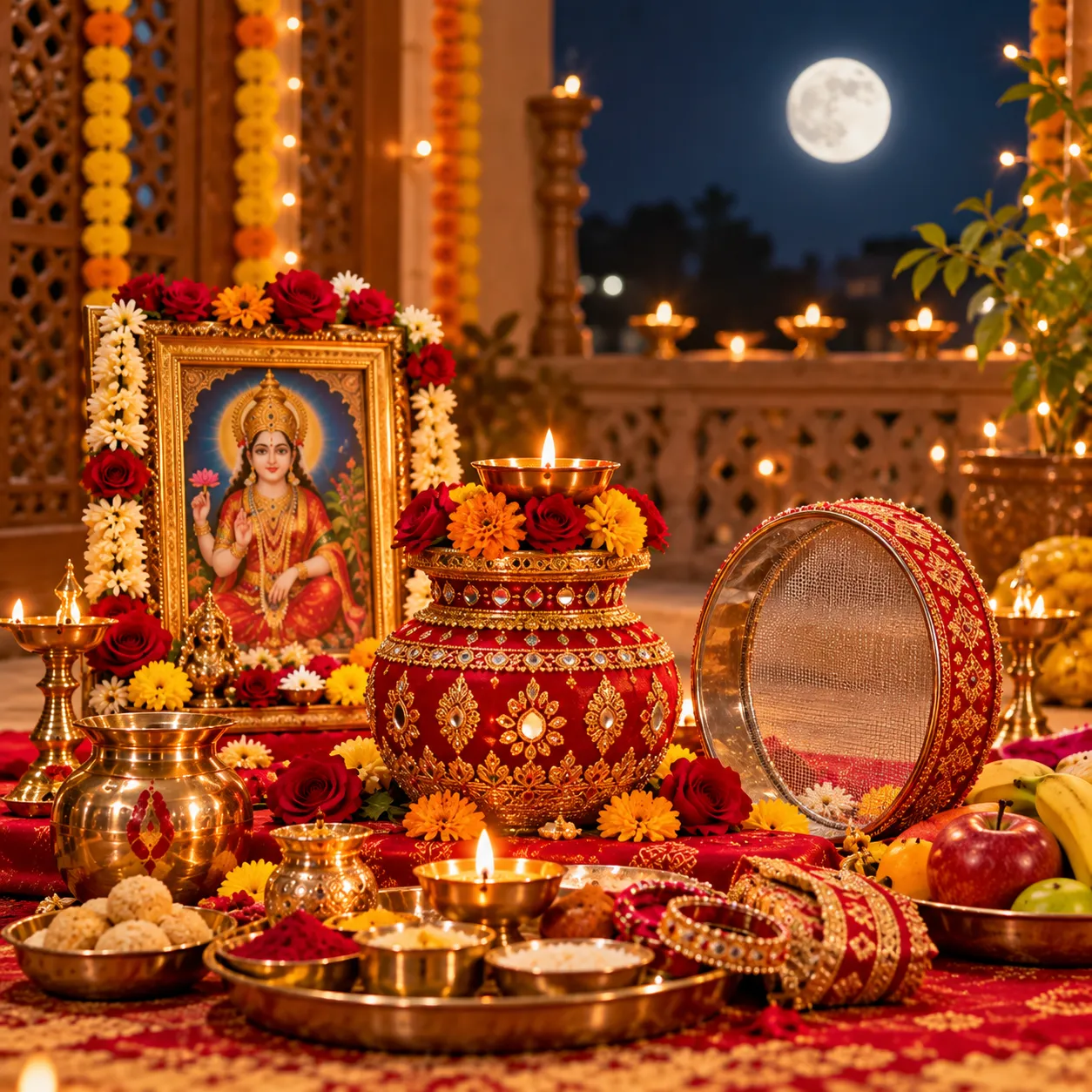
Karwa Chauth Puja
Karwa Chauth is an auspicious fasting ritual observed primarily by married women for the long life, good health, and prosperity of their husbands. Devotees observe a strict Nirjala (waterless) fast from sunrise until moonrise, seeking the divine blessings of Lord Shiva, Maa Parvati, Lord Ganesha, and Karwa Mata for enduring marital harmony and family well-being. The ceremony begins before dawn with the consumption of Sargi. In the evening, the puja commences with Sankalp, Ganesh Puja, and the invocation of Lord Shiva, Goddess Parvati, Lord Kartikeya, and Karwa Mata. Women gather to listen to the traditional Karwa Chauth Vrat Katha and perform the ceremonial thali batana (exchanging thalis). Upon moonrise, devotees offer Arghya to Chandra Dev, view the moon and their husbands through a sieve (chhalni), perform their husband's aarti, and conclude the fast by taking their first sip of water and sweet from them, followed by seeking elders' blessings and prasad distribution. Samagri: Karwa (earthen or brass pot with spout and lid), Chhalni (sieve), Puja Thali, Diya, Ghee or oil, cotton wicks, Kalash or lota for Arghya, Karwa Chauth photo/calendar or idols, Vrat Katha book, Roli, Kumkum, Chandan, Akshat (rice), flowers, fresh fruits, sweets, dry fruits, betel leaves, supari, dhoop, camphor, and traditional suhaag items (sindoor, bindi, bangles, mehendi, chunri). Note: Karwa Chauth requires observing a waterless fast from dawn until the moon is sighted and the evening puja rituals are completed. The moonrise time may vary depending on the geographic location. Puja vidhi, traditions, and specific samagri items may vary according to regional practices and family customs.
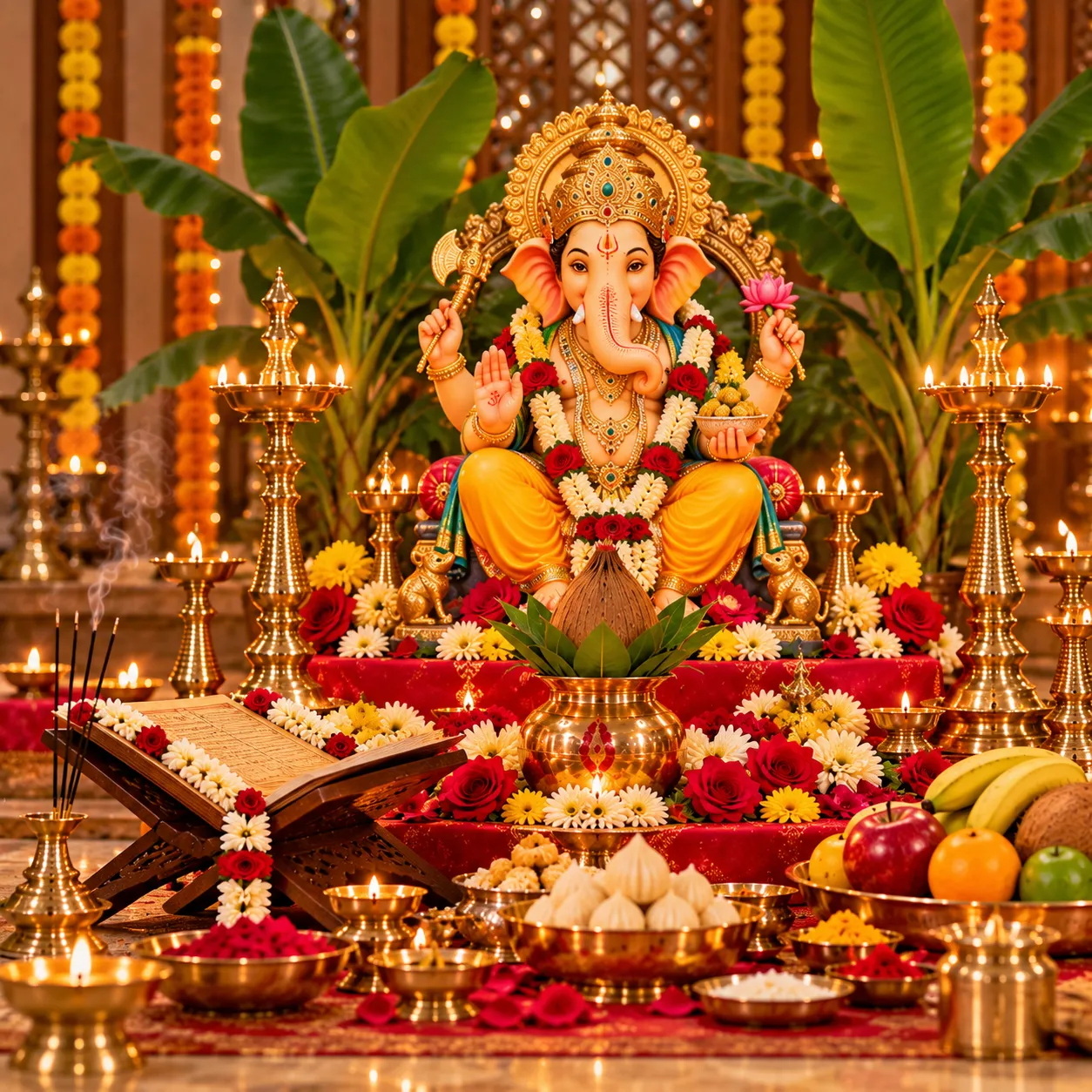
Ganpati Atharvashirsha Path
Ganpati Atharvashirsha Path is a sacred Vedic recitation from the Atharva Veda dedicated to Lord Ganesha, the remover of obstacles and the giver of intellect, wisdom, and prosperity. Devotees undertake this path to overcome hurdles in personal and professional life, gain mental peace, achieve success in new ventures, and seek the divine protection of Lord Vignaharta. The ceremony begins with Aachaman, Sankalp, Kalash Sthapana, and Lord Ganesha's invocation through Shodashopachara puja, often accompanied by Abhishek with Panchamrit and Gangajal. Devotees or designated priests then chant the Atharvashirsha stotra continuously for the designated count of recitations (such as 11, 21, or 108 avartans), offering fresh Durva grass and red flowers with each avartan. The ritual concludes with Shri Ganesh Aarti, Pushpanjali, Naivedya offering, and Prasad distribution. Samagri: Lord Ganesha idol or image, fresh Durva grass, red flowers (hibiscus preferred), Modak or Motichoor laddoos, Kalash, coconut, mango leaves, Janeu (sacred thread), Roli, Kumkum, Sindoor, Akshat (unbroken rice), Panchamrit ingredients (milk, curd, honey, ghee, sugar), Gangajal, betel leaves, supari, cloves, cardamom, seasonal fruits, incense sticks (agarbatti), dhoop, camphor, diya, pure ghee, cotton wicks, and Prasad. Note: Ganpati Atharvashirsha Path can be conducted as a single recitation or as multiple avartans (such as 11, 21, or 108 repetitions) depending on the devotee's sankalp. Pure Vedic pronunciation and ritual discipline are traditionally emphasized during the chanting. The puja vidhi and samagri list may vary according to family customs and regional traditions.
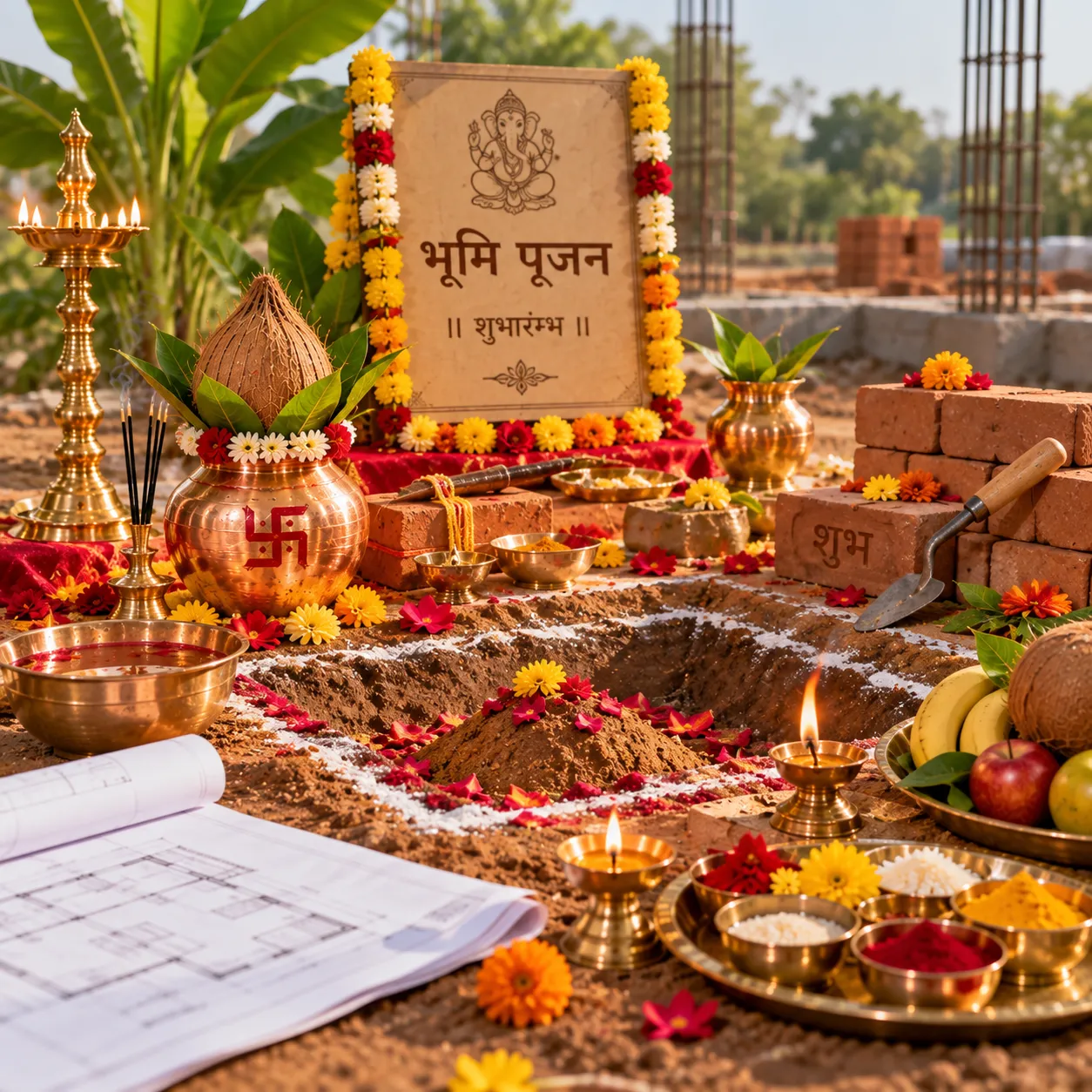
Bhoomi Pujan
Bhoomi Poojan is a sacred Vedic ritual performed before commencing construction on a plot of land or property. Devotees undertake this ceremony to pay homage to Bhoomi Devi (Mother Earth) and seek her forgiveness for disturbing the soil and natural organisms during excavation. The ceremony invokes the divine blessings of Lord Ganesha, Bhoomi Devi, Vastu Purush, and Sheshnaag to ensure unhindered progress, structural safety, longevity, and perpetual prosperity for the occupants. The ceremony is traditionally initiated in the Ishan Kon (North-East corner) of the plot and begins with Aachaman, Sankalp, Ganesh Puja, Kalash Sthapana, and Navagraha invocation. The ground is consecrated and ceremonially excavated using a clean tool. Sacred elements, including a silver idol of Sheshnaag and Kurma (turtle), Pancharatna, supari, and auspicious coins, are placed into the foundation pit, followed by the ceremonial laying of the first foundation bricks (Shila Nyas). The ritual concludes with Vastu prayers, Aarti, Naivedya offering, and Prasad distribution. Samagri: Five clean bricks (Shila), digging tool (spade or trowel), silver Sheshnaag and Kurma idol, Kalash, coconut, mango leaves, red and yellow cloth, Gangajal, Panchamrit, Roli, Haldi (turmeric powder and whole knots), Kumkum, Chandan, Akshat (unbroken rice), Pancharatna or Navratna, auspicious coins, betel leaves, supari, cloves, cardamom, flowers, flower garlands, seasonal fruits, sweets, dhoop, incense sticks, camphor, diya, pure ghee, cotton wicks, and Prasad. Note: Bhoomi Poojan is ideally conducted during an auspicious Vastu muhurat as determined by the Hindu Panchang. The ceremonial digging and foundation stone laying are traditionally carried out in the North-East direction. The puja vidhi and samagri list may vary according to regional customs, Vastu guidelines, and family traditions.
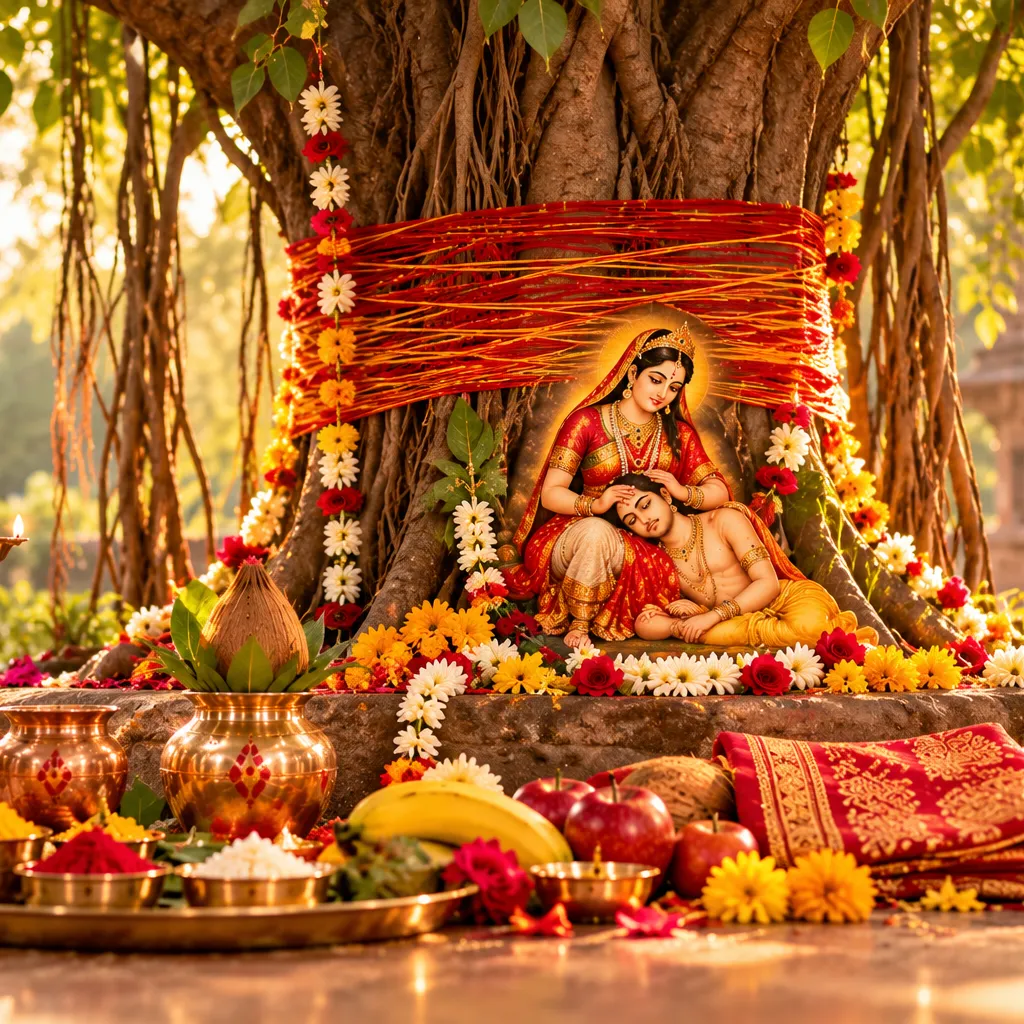
Vat Savitri Puja
Vat Savitri Puja is a sacred fasting ritual observed by married women for the longevity, good health, and prosperity of their husbands and enduring marital harmony. Rooted in the legendary devotion of Devi Savitri, who brought back the life of her husband Satyavan from Yamraj through unwavering dedication, this vrat is dedicated to honoring the sacred Vat Vriksha (Banyan tree), which embodies the divine trinity of Lord Brahma, Lord Vishnu, and Lord Shiva. The ceremony begins with Aachaman, Sankalp, Ganesh Puja, and the invocation of Devi Savitri, Satyavan, and Yamraj. Devotees offer Gangajal, milk, flowers, and soaked black gram (chana) to the Banyan tree. A sacred raw cotton thread (kacha sut) or mauli is wound around the trunk while performing circumambulations (Parikrama, traditionally 7 or 108 times). Devotees listen to the sacred Vat Savitri Vrat Katha, wave a traditional bamboo hand fan (baans ka pankha) to offer breeze, perform Aarti, seek the blessings of elders, and conclude the rituals with Prasad distribution. Samagri: Raw white cotton thread (kacha sut) or Mauli, soaked black gram (chana), bamboo hand fan, Banyan tree branch (if performing at home) or access to a Banyan tree, Kalash, coconut, mango leaves, Roli, Kumkum, Chandan, Akshat, fresh flowers, flower garlands, seasonal fruits (mangoes, melons, bananas), traditional prasad (puri, pua, or sweets), betel leaves, supari, camphor, incense sticks, diya, pure ghee, cotton wicks, Gangajal, and traditional suhaag items (sindoor, bindi, bangles, mehendi, alta, red chunri). Note: Vat Savitri Puja is predominantly observed on Jyeshtha Amavasya in North India, while in Maharashtra, Gujarat, and parts of South India, it is observed on Jyeshtha Purnima (Vat Purnima). The fasting rules, parikrama count, and specific samagri items may vary according to regional practices and family customs.
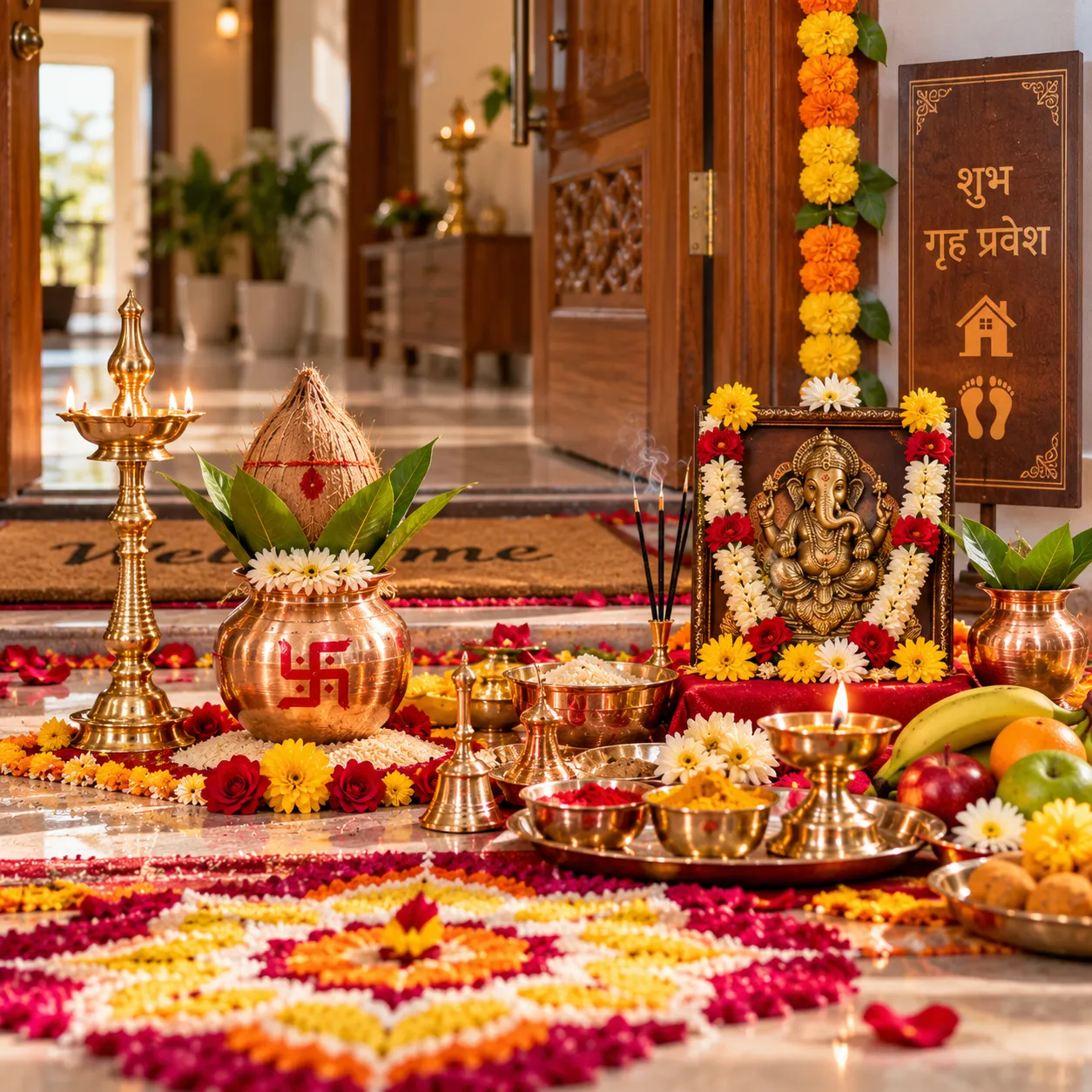
Griha Pravesh Puja
Griha Pravesh Puja is a sacred Vedic housewarming ceremony performed before moving into a newly constructed, purchased, or renovated home. Devotees undertake this auspicious ritual to cleanse the living space, eliminate negative energies and Vastu doshas, and invoke divine blessings for peace, good health, prosperity, and harmonious living for all family members. The ceremony begins at the main entrance with Dwar Puja, hanging of the auspicious Toran, breaking a coconut, and entering the home carrying a consecrated Mangal Kalash (traditionally placing the right foot first during an auspicious lagna). The rituals proceed with Aachaman, Sankalp, Ganesh Puja, Vastu Shanti Puja, Navagraha Puja, and Kuldevta invocation. A traditional ritual of boiling milk in a new vessel until it overflows is commonly performed to symbolize perpetual abundance. The ceremony proceeds with a purifying Havan to sanctify the home's atmosphere, concluding with Purnahuti, Maha Aarti, sprinkling Gangajal in every room, and Prasad distribution. Samagri: Mangal Kalash, coconut, mango or ashoka leaves, entrance Toran (marigold/mango leaves), new vessel for boiling milk, raw milk, sugar, rice, Lord Ganesha and Goddess Lakshmi idols or images, Vastu Yantra/idols, red and yellow cloth, Gangajal, Panchamrit, Roli, Kumkum, Haldi knots and powder, Chandan, Akshat, Janeu, betel leaves, supari, cloves, cardamom, fresh flowers, flower garlands, seasonal fruits, sweets, havan kund, havan samagri, dry coconut (gola), camphor, dhoop, incense sticks, diyas, pure cow ghee, cotton wicks, and Prasad. Note: Griha Pravesh is traditionally conducted during an auspicious Muhurat determined by the Hindu Panchang based on solar and lunar calendar alignments (categorized into Apoorva, Sapoorva, or Dwandhav Pravesh). Customs such as the milk-boiling ritual and specific samagri requirements may vary according to regional traditions and family practices.
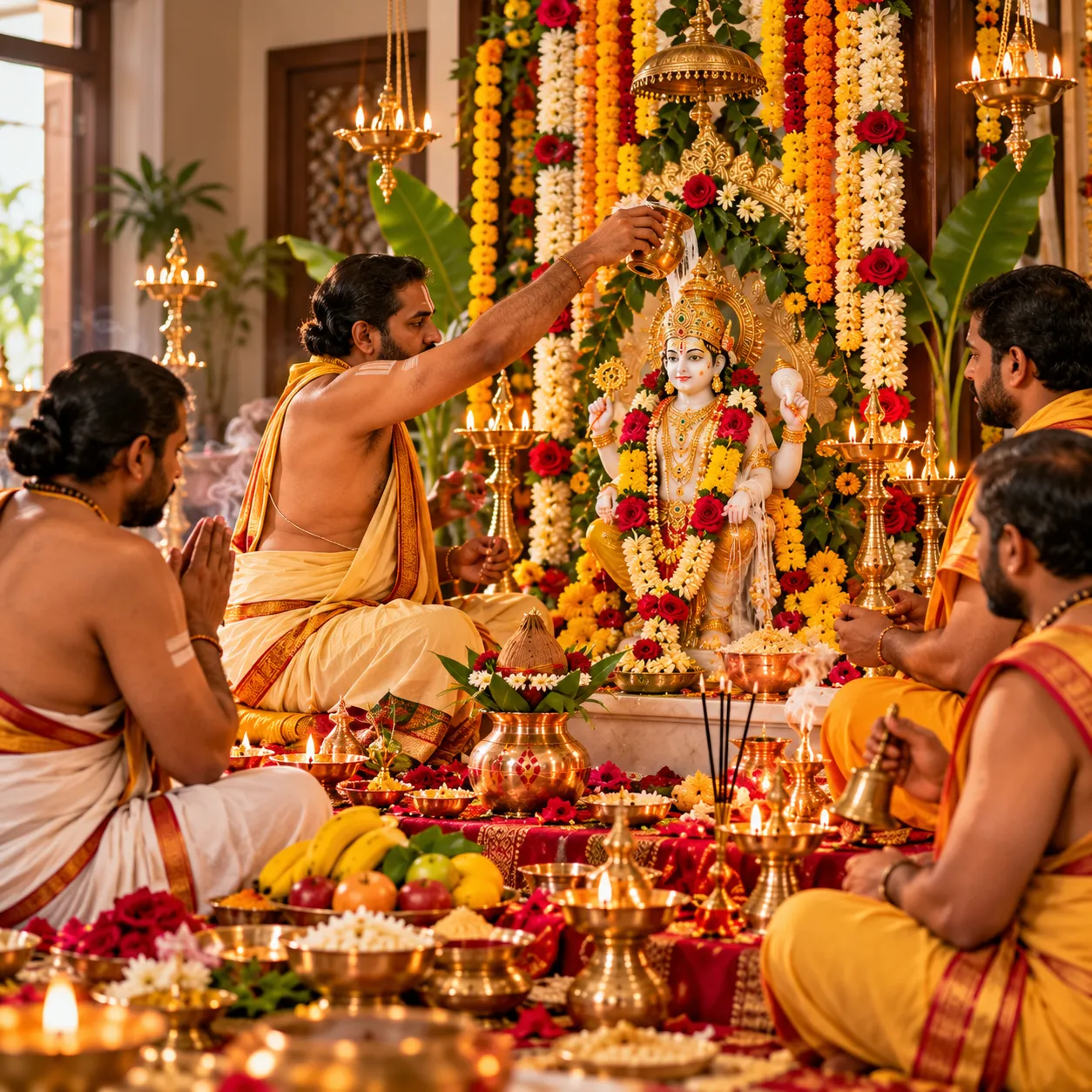
Murti Pran Pratishtha at Home
Murti Pran Pratishtha is a sacred Vedic consecration ceremony performed to invoke and infuse divine life force (Prana) into a newly acquired deity idol (Vigraha) installed in a home temple. Devotees undertake this ceremony to transform the sacred form into a living divine presence, sanctifying the household with pure cosmic energy, spiritual protection, lasting peace, and divine grace. The ceremony begins with Aachaman, Sankalp, Ganesh Puja, and Kalash Sthapana, followed by symbolic purification and Adhivasa rituals (resting the idol in sacred water or anna/grains). The deity is then consecrated through a sacred Maha Abhishek using Panchamrit, Gangajal, and aromatic oils (itra), followed by adornment with new sacred garments, ornaments, and Janeu. The primary rite involves chanting the sacred Pran Pratishtha Mantras and performing Nyasa to invite the deity’s consciousness into the idol, concluded by Netronmeelan (the ceremonial opening of the deity's eyes using honey and a small mirror). The ritual culminates with an auspicious Havan, the first Maha Bhog offering, Aarti, Pushpanjali, and Prasad distribution. Samagri: Deity idol (Vigraha), wooden platform (chauki) or singhasan, red or yellow silk cloth, Kalash, coconut, mango leaves, Panchamrit ingredients (raw milk, curd, honey, pure ghee, sugar), Gangajal, rose water, itra (perfume), new deity garments (vastra) and ornaments, Janeu, Chandan, Roli, Kumkum, Akshat, fresh flowers, flower garlands, Tulsi leaves/Durva/Bilva patra (as per deity), small mirror, kusha grass, betel leaves, supari, cloves, cardamom, seasonal fruits, sweets or kheer, Havan kund, havan samagri, dry coconut (gola), camphor, dhoop, diyas, pure cow ghee, cotton wicks, and Prasad. Note: Murti Pran Pratishtha must be conducted during an auspicious Muhurat determined by the Hindu Panchang. Once an idol is consecrated with Pran Pratishtha, the household is traditionally committed to maintaining sacred cleanliness and performing regular daily worship (Nitya Puja) and bhog offerings. Specific vidhi and samagri details may vary depending on the deity and family traditions.
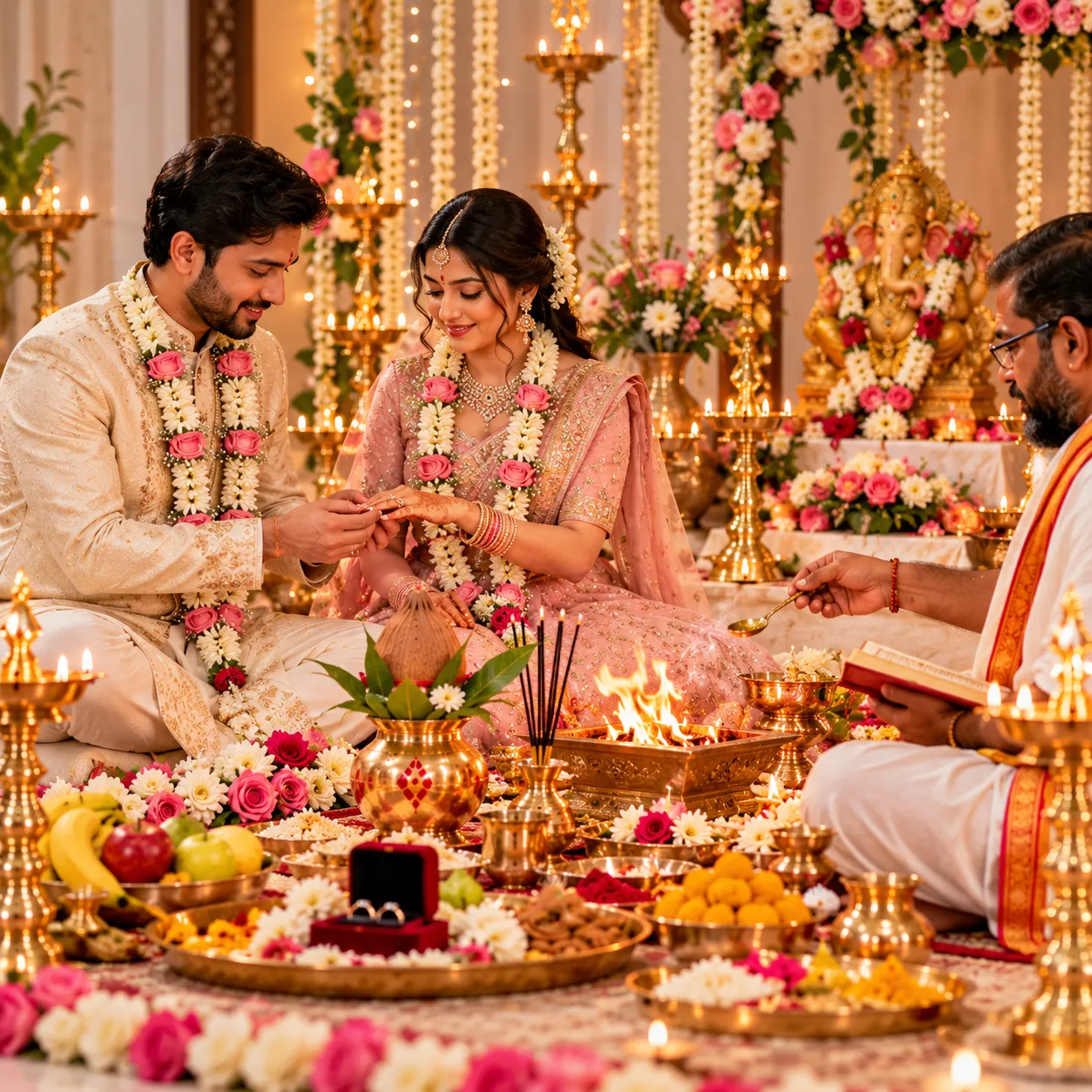
Engagement Puja
Engagement Puja (traditionally known as Vagdana or Sagai Puja) is an auspicious pre-wedding Vedic ceremony that marks the formal commitment between the bride and groom and unites their two families. Devotees perform this puja to seek the divine grace of Lord Ganesha, the Kuldevta (family deities), and the Navagrahas, praying for the removal of all obstacles in the upcoming marriage journey, mutual understanding, harmony, and a prosperous future together. The ceremony begins with Aachaman, Sankalp, Ganesh Puja, Kalash Sthapana, and the invocation of Kuldevta and Navagraha deities. The priests conduct the formal commitment rites (Vagdana Sankalp), followed by the exchange of auspicious greetings and the traditional Tilak ceremony. The engagement rings are consecrated with sacred mantras, Gangajal, and Akshat before being exchanged by the couple. The ritual concludes with offering flower garlands, performing Shri Ganesh Aarti, seeking the blessings (Ashirwad) of parents and elders, exchanging family gifts and sweets, and Prasad distribution. Samagri: Lord Ganesha idol or image, engagement rings, puja thali, Kalash, coconut, mango leaves, red and yellow cloth, Janeu, Gangajal, Roli, Kumkum, Haldi knots and powder, Chandan, Akshat (unbroken rice), fresh flowers, flower garlands, betel leaves, supari, cloves, cardamom, dry fruits, seasonal fruits, traditional sweets, shagun items/envelopes, dhoop, incense sticks, camphor, diya, pure ghee, cotton wicks, and Prasad. Note: Engagement Puja is traditionally scheduled during a Shubh Muhurat determined by the Hindu Panchang and planetary compatibility (Kundali Milan). Specific rituals such as Vagdana, Tilak, Chunni ceremony, or Ring exchange may vary according to regional customs and family traditions.