
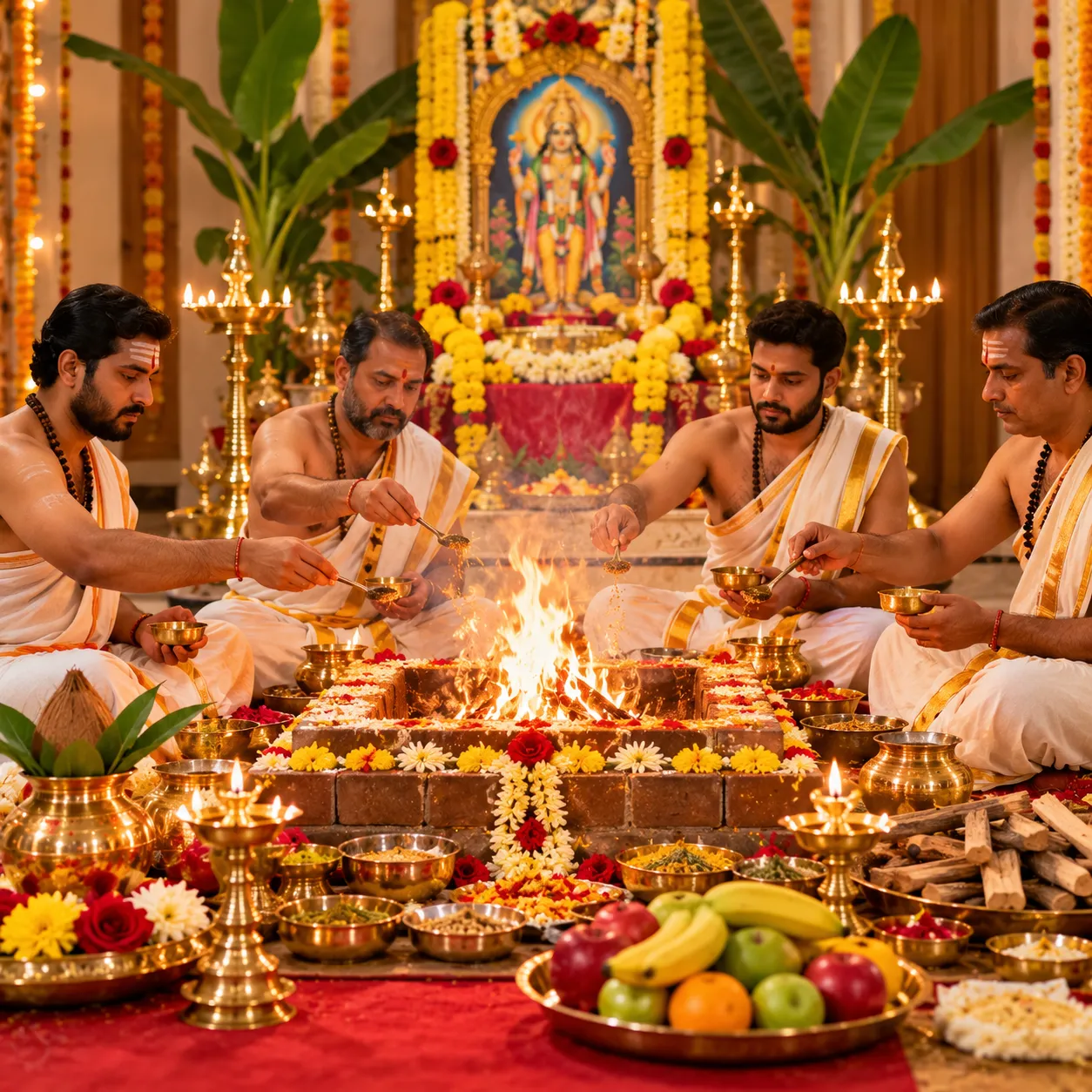
Yagya / Shanti Havan
About This Pooja
Yagya / Shanti Havan is a sacred Vedic ritual in which offerings are made into the holy fire while chanting traditional Vedic mantras. This ceremony is performed to seek divine blessings for peace, positivity, prosperity, and spiritual well-being in the home and family. Shanti Havan is traditionally conducted to pray for mental peace, family harmony, and divine grace. The ceremony includes Sankalp, Ganesh Puja, Kalash Sthapana, Navgraha Puja, Agni Sthapana, Vedic Mantra Jaap, Havan Ahuti, Purnahuti, Shanti Path, and Aarti. The Pandit Ji performs the complete Yagya and Havan according to traditional Vedic rituals.
Pooja Samagri Overview
Havan Kund, mango wood, samidha, havan samagri, ghee, barley, sesame seeds, akshat (rice), Navgraha samagri, camphor, sandalwood, roli, kumkum, flowers, garland, coconut, betel leaves, supari, fruits, sweets, Kalash, mango leaves, incense, diya, and other essential puja items.
Important Note
The exact puja vidhi, mantra jaap count, samagri, and duration may vary according to family traditions, the purpose of the Yagya, and the Pandit Ji's guidance.
You Might Like
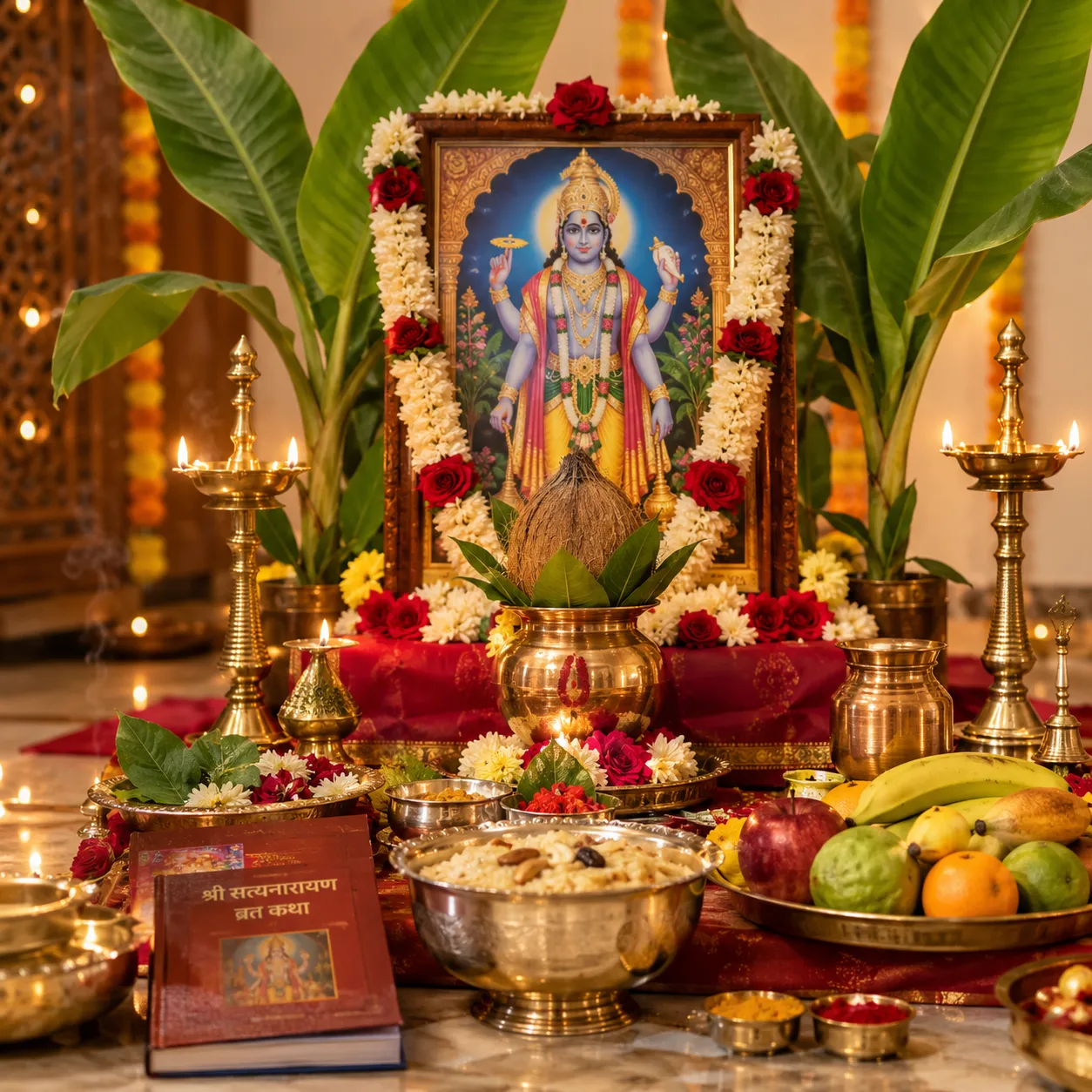
Satyanarayan Puja
Satyanarayan Katha is a traditional Hindu puja dedicated to Lord Vishnu in the form of Lord Satyanarayan. It is commonly performed to express gratitude, seek divine blessings, and pray for peace, prosperity, happiness, and the well-being of the family. The ceremony includes Sankalp, Ganesh Puja, Kalash Sthapana, Lord Satyanarayan Puja, Panchamrit Abhishek, offerings, recitation of the Satyanarayan Vrat Katha, Havan, Purnahuti, and Aarti. The Pandit Ji guides the family through the complete puja and Katha vidhi. Samagri: Lord Satyanarayan and Lord Ganesha idols or images, Kalash, coconut, mango leaves, Panchamrit ingredients, roli, kumkum, akshat (rice), flowers, Tulsi leaves, fruits, bananas, sweets, betel leaves, supari, incense, camphor, diya, ghee, havan samagri, and other essential puja items. Note: The exact puja vidhi and samagri may vary according to family tradition, occasion, and local customs. Prasad is generally prepared and distributed after completion of the Katha.
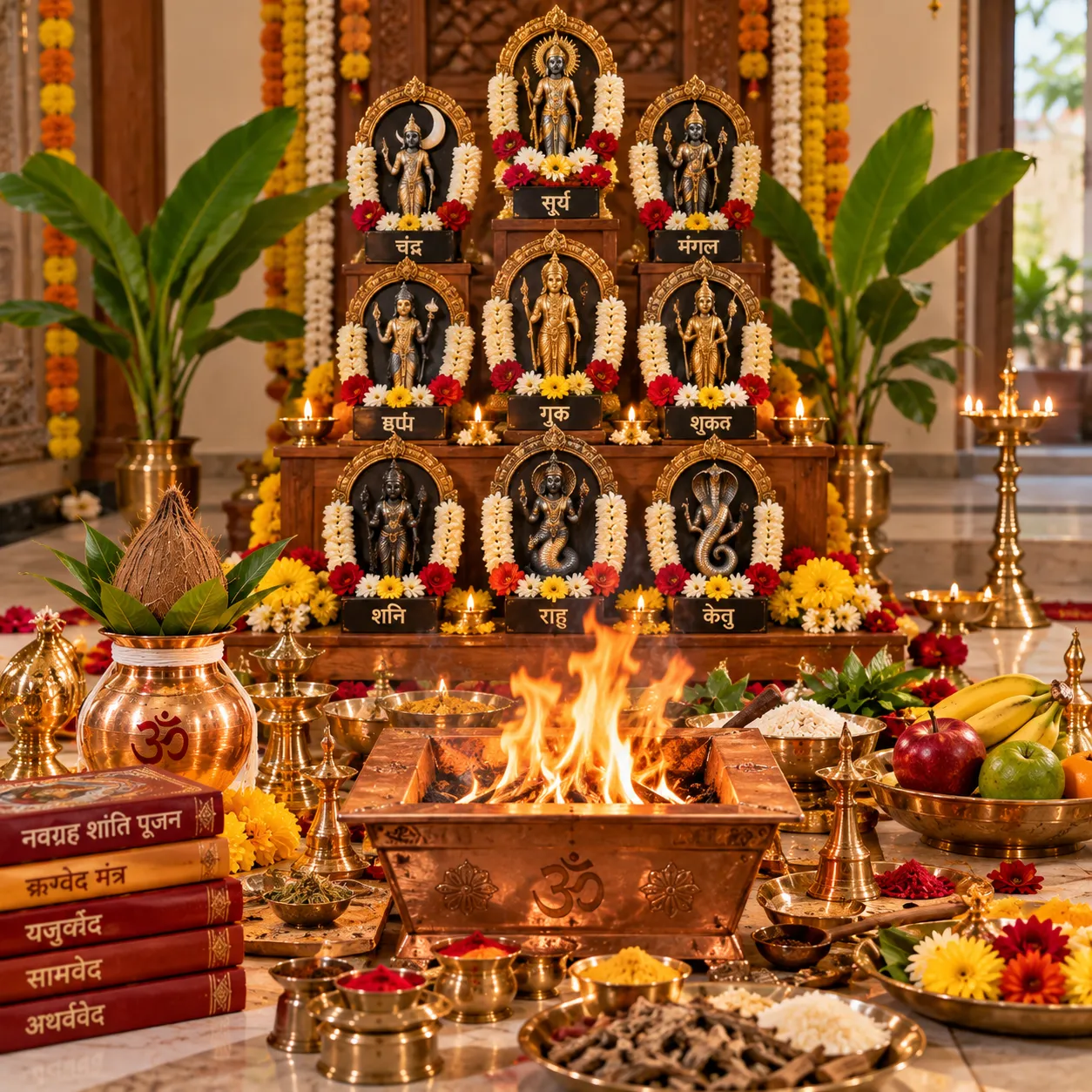
Nav Grah Puja (Navgraha Puja)
Navagraha Shanti Puja and Havan is performed to worship and seek blessings of the nine planetary deities—Surya, Chandra, Mangal, Budh, Guru, Shukra, Shani, Rahu, and Ketu. The puja is traditionally performed for peace, spiritual well-being, and to seek relief from difficulties associated with unfavorable planetary influences. The ceremony includes Sankalp, Ganesh Puja, Kalash Sthapana, Navagraha Puja, Navagraha Mantra Jaap, Graha Shanti rituals, Havan, Purnahuti, and Aarti. The Pandit Ji performs the rituals according to the prescribed puja vidhi and guides the family throughout the ceremony. Samagri: Navagraha-related puja items, Kalash, coconut, mango leaves, roli, kumkum, akshat (rice), flowers, fruits, betel leaves, supari, different grains, sesame seeds, ghee, havan samagri, incense, camphor, diya, and other essential puja items. Note: The exact vidhi, mantra count, and samagri may vary according to the purpose of the puja, individual requirements, family tradition, and guidance of the Pandit Ji.
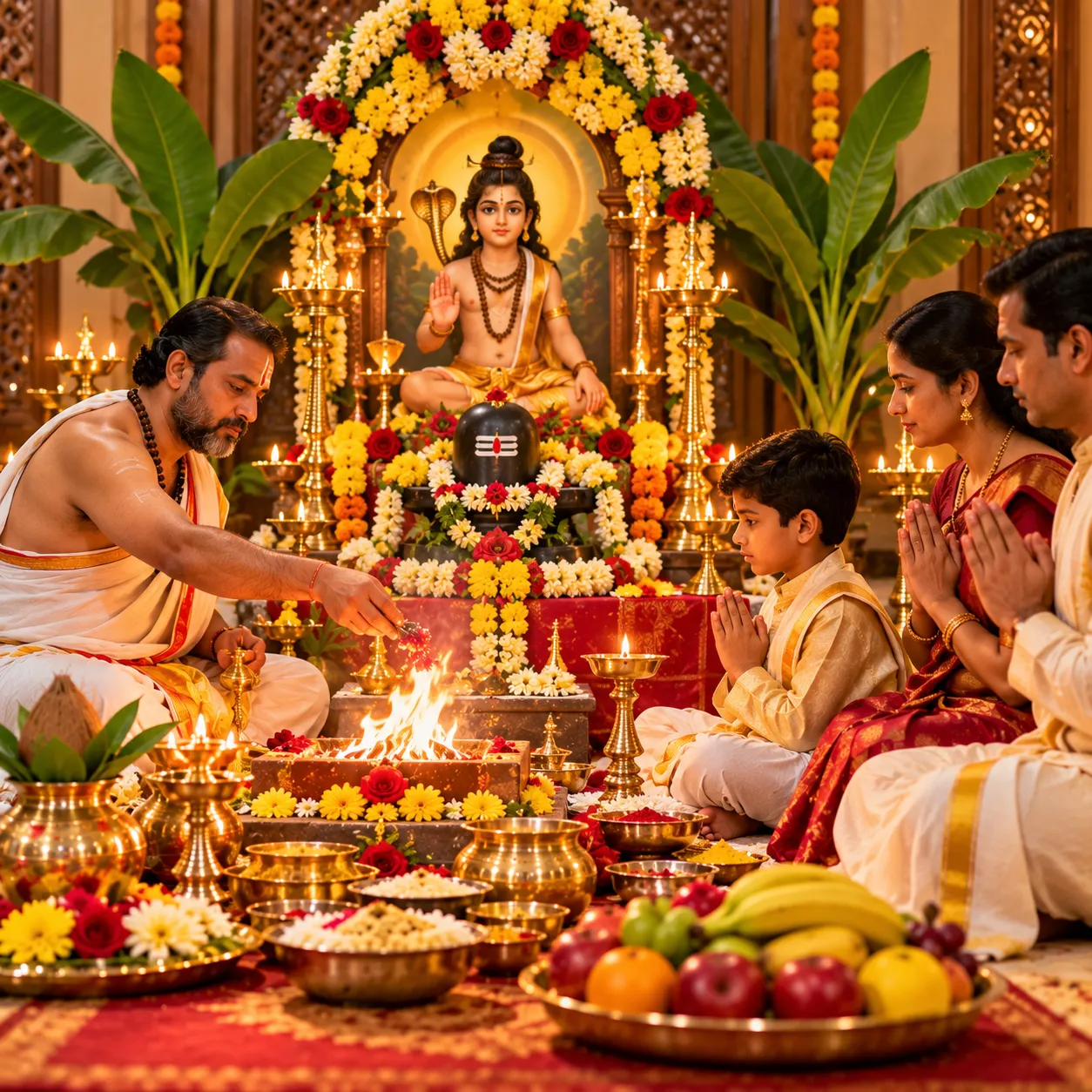
Birthday Pujan / Markandeya Pujan
Birthday Pujan / Markandeya Pujan is a sacred Vedic ritual performed on a birthday to seek blessings for longevity, good health, happiness, prosperity, and a blessed life. The puja is dedicated to Lord Ganesha, Lord Shiva, and Sage Markandeya, seeking divine grace for a long and healthy life. The ceremony is performed with devotion to pray for positivity, spiritual well-being, and family welfare. The ceremony includes Sankalp, Ganesh Puja, Kalash Sthapana, Navgraha Puja, Ayush Mantra Jaap, Mahamrityunjaya Mantra Jaap, Sage Markandeya Puja, Janma Nakshatra Puja, Havan, Purnahuti, and Aarti. The Pandit Ji performs the complete puja according to traditional Vedic rituals. Samagri: Lord Shiva and Ganesha images or idols, Kalash, coconut, mango leaves, roli, kumkum, akshat (rice), sandalwood, flowers, garland, Bel Patra, Durva grass, betel leaves, supari, fruits, sweets, Panchamrit, ghee, havan samagri, barley, sesame seeds, incense, camphor, diya, and other essential puja items. Note: The exact puja vidhi, mantra jaap count, samagri, and duration may vary according to family traditions, birth nakshatra, and the Pandit Ji's guidance.
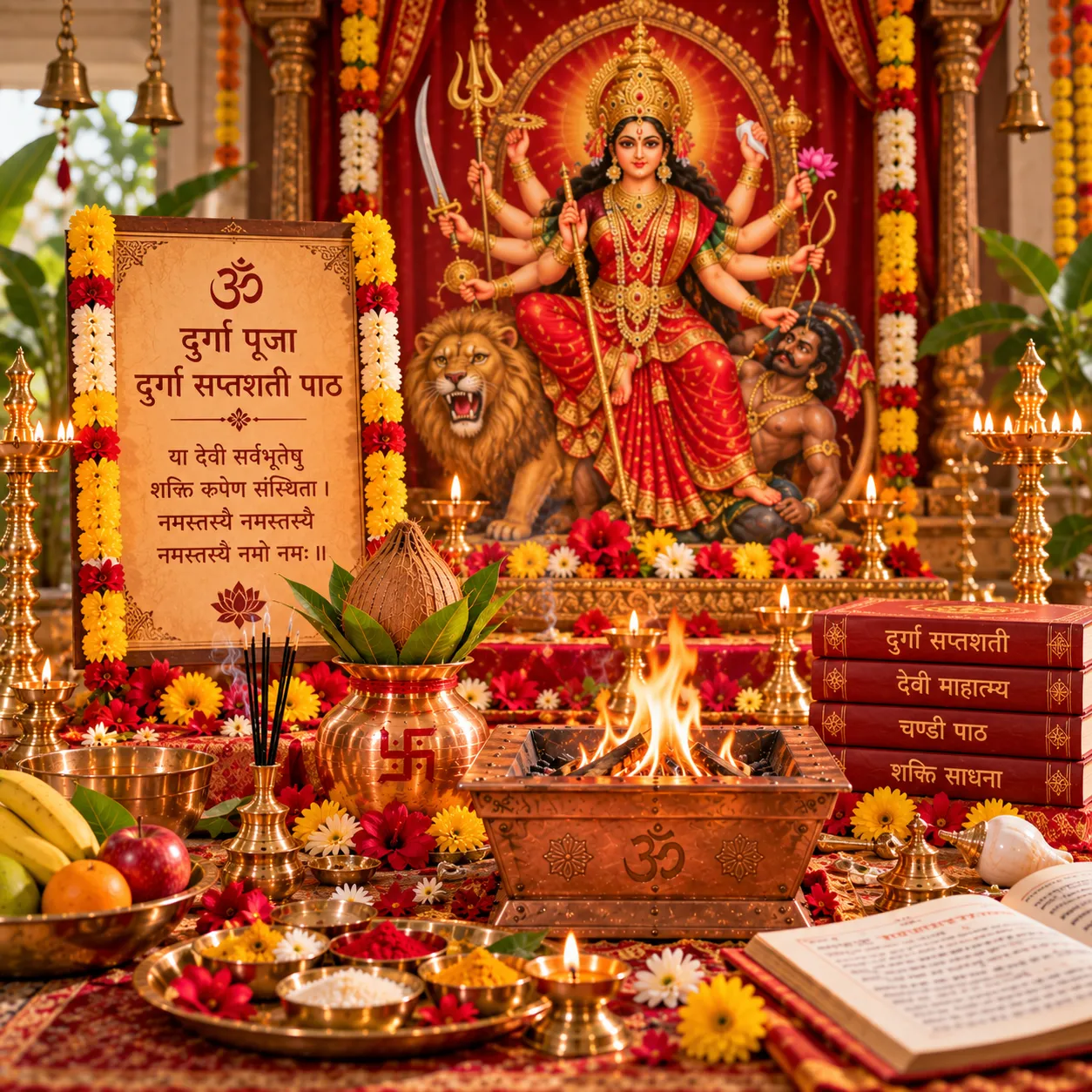
Durga Pujan / Havan
Durga Puja and Durga Saptashati Path are sacred rituals dedicated to Maa Durga and her divine forms. The ceremony is traditionally performed to seek the blessings of Maa Durga for strength, protection, peace, prosperity, and the well-being of the family. The ceremony includes Sankalp, Ganesh Puja, Kalash Sthapana, Maa Durga Puja, Durga Saptashati Path, Mantra Jaap, Navarna Mantra Jaap, Havan, Purnahuti, and Maa Durga Aarti. The Pandit Ji performs the rituals according to the prescribed Vedic and traditional vidhi. Samagri: Maa Durga idol or image, Kalash, coconut, mango leaves, red cloth, roli, kumkum, akshat (rice), red flowers, fruits, sweets, betel leaves, supari, sandalwood, incense, camphor, diya, ghee, havan samagri, Durga Saptashati book, and other essential puja items. Note: The exact duration, mantra count, path, havan procedure, and samagri may vary depending on whether the service includes complete Durga Saptashati Path, specific chapters, Navratri rituals, family tradition, and the guidance of the Pandit Ji.
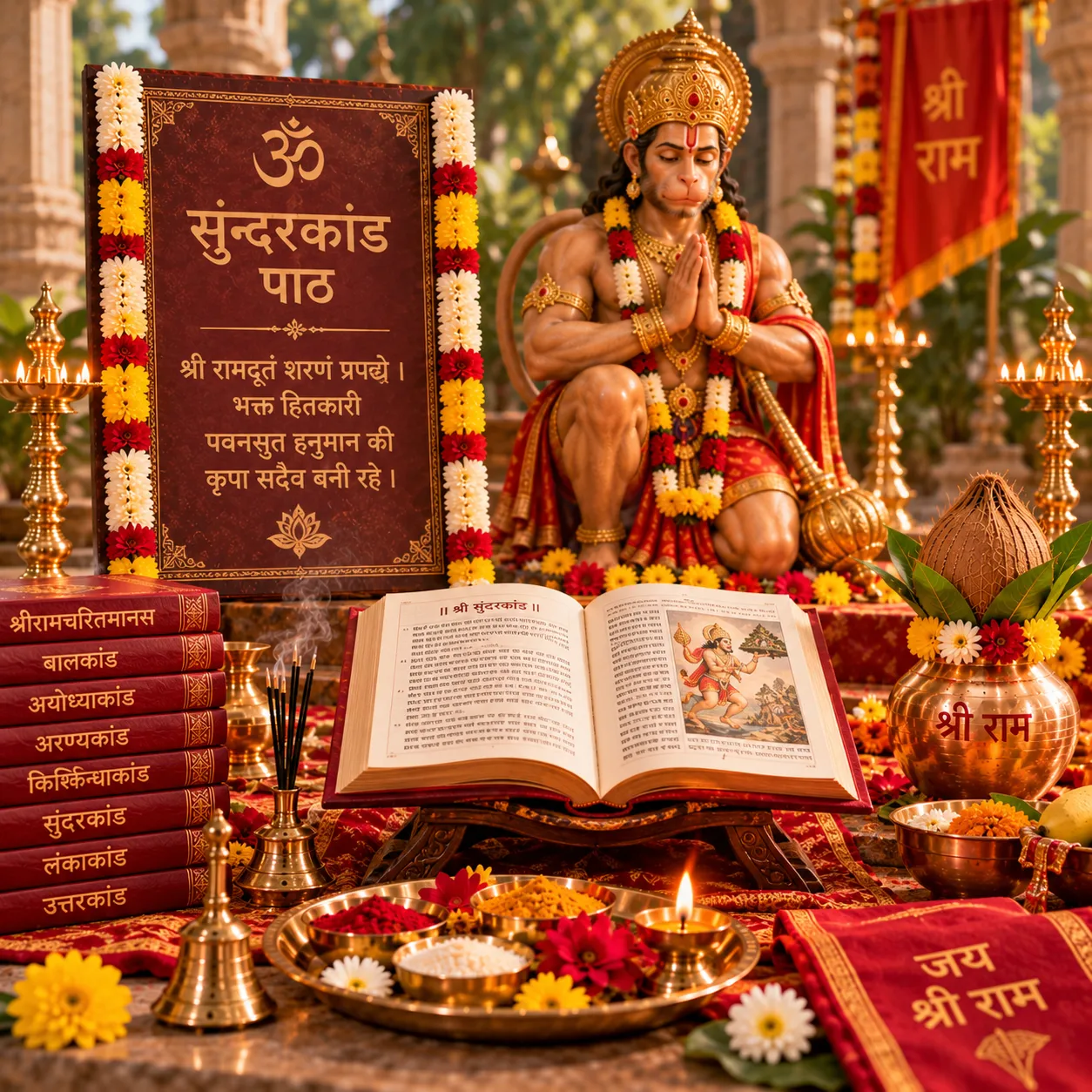
Sunder Kand Path
Sundarkand Path is a sacred recitation from the Ramcharitmanas, describing the devotion, courage, wisdom, and extraordinary journey of Lord Hanuman in his search for Maa Sita. It is traditionally performed to seek the blessings of Lord Hanuman and Shri Ram and to cultivate courage, devotion, peace, and spiritual strength. The ceremony includes Sankalp, Ganesh Puja, Kalash Sthapana, Sundarkand Path, Hanuman Mantra Jaap, Hanuman Aarti, Shri Ram Aarti, and Prasad. The Pandit Ji guides the family through the complete Path according to traditional practices. Samagri: Ramcharitmanas / Sundarkand book, Lord Hanuman and Shri Ram images or idols, flowers, Sindoor, jasmine oil, roli, kumkum, akshat (rice), betel leaves, supari, coconut, fruits, sweets, jaggery, incense, camphor, diya, ghee, and other essential puja items. Note: The duration may vary depending on the number of participants and the pace of recitation. The exact puja vidhi and samagri may vary according to family tradition and local customs.
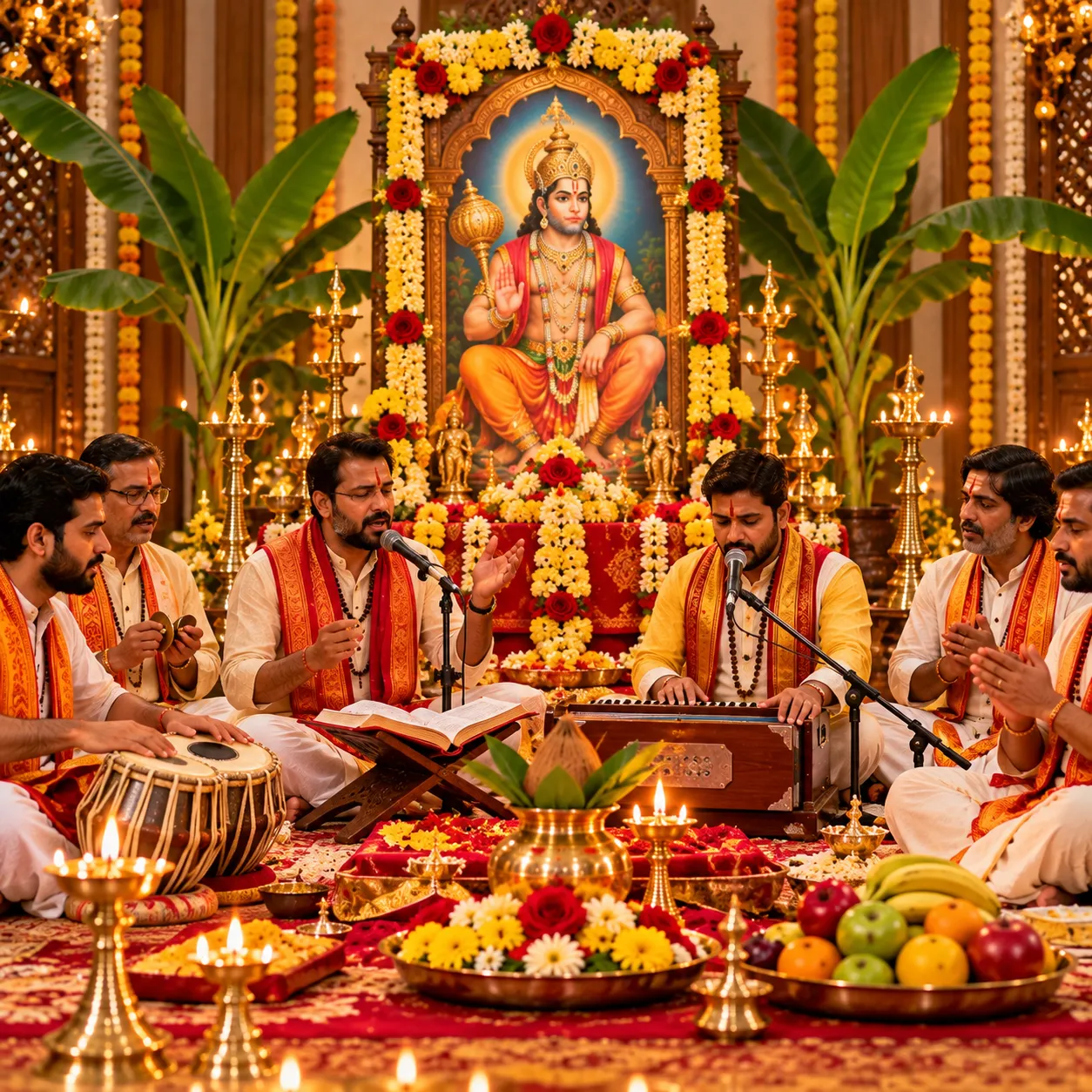
Sunder Kand Path With Sangeet
Sunder Kand Path With Sangeet is a sacred and devotional recitation from the Ramcharitmanas, performed with melodious verses, devotional songs, and bhajans. It describes the devotion, courage, wisdom, and extraordinary journey of Lord Hanuman in his search for Maa Sita. This ceremony is performed to seek the blessings of Lord Hanuman and Shri Ram and to pray for peace, courage, positivity, and spiritual strength. The ceremony includes Sankalp, Ganesh Puja, Kalash Sthapana, Musical Sunder Kand Path, Hanuman Mantra Jaap, Bhajan-Kirtan, Hanuman Aarti, Shri Ram Aarti, and Prasad distribution. The Pandit Ji and devotional music group conduct the complete recitation and musical devotional program according to traditional practices. Samagri: Ramcharitmanas / Sunder Kand book, Lord Hanuman and Shri Ram images or idols, flowers, garland, sindoor, jasmine oil, roli, kumkum, akshat (rice), betel leaves, supari, coconut, fruits, sweets, jaggery, incense, camphor, diya, ghee, sound system for bhajans and music, and other essential puja items. Note: The exact puja vidhi, mantra jaap count, samagri, and duration may vary depending on the number of participants, musical arrangements, family traditions, and the Pandit Ji's guidance.
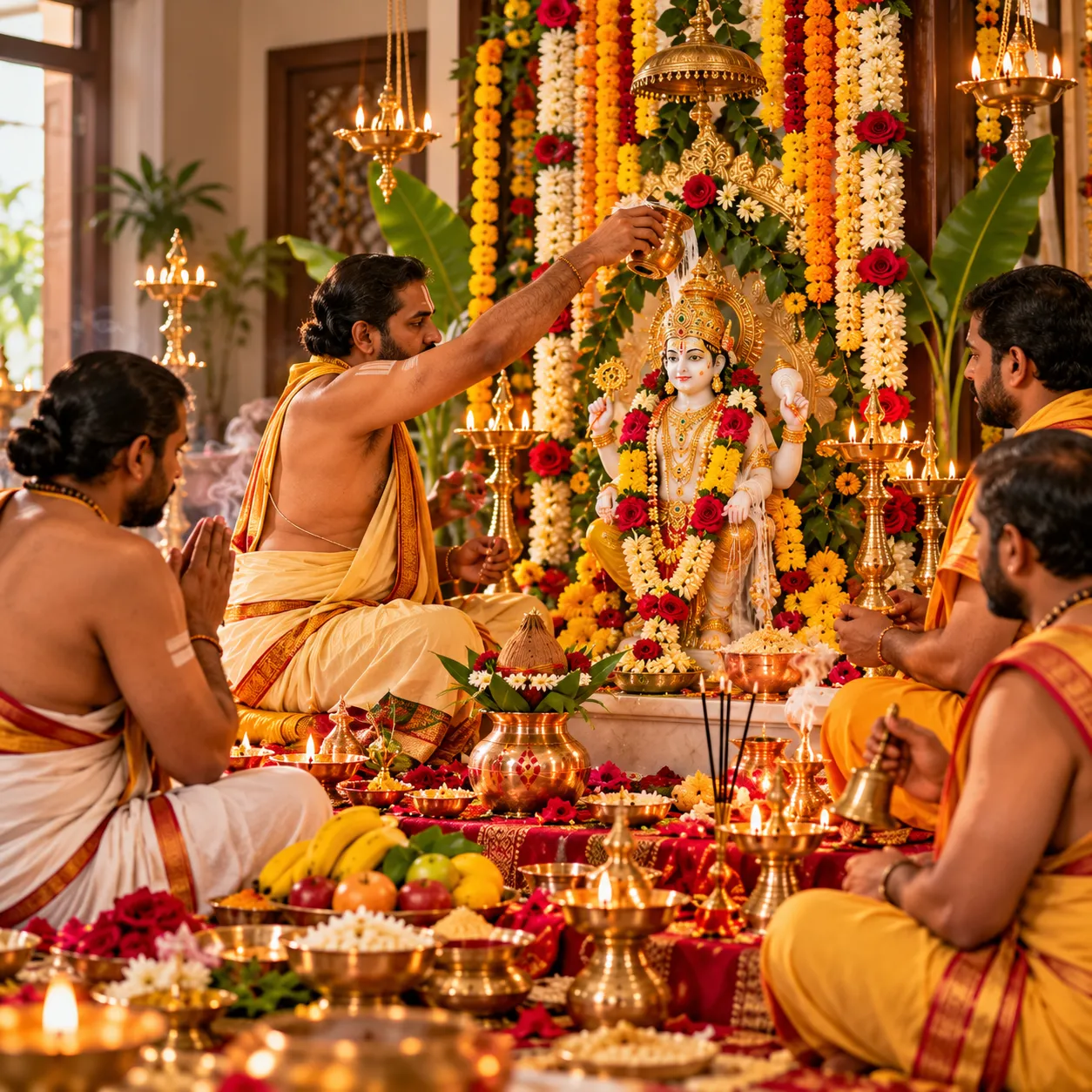
Murti Pran Pratishtha at Home
Murti Pran Pratishtha is a sacred Vedic consecration ceremony performed to invoke and infuse divine life force (Prana) into a newly acquired deity idol (Vigraha) installed in a home temple. Devotees undertake this ceremony to transform the sacred form into a living divine presence, sanctifying the household with pure cosmic energy, spiritual protection, lasting peace, and divine grace. The ceremony begins with Aachaman, Sankalp, Ganesh Puja, and Kalash Sthapana, followed by symbolic purification and Adhivasa rituals (resting the idol in sacred water or anna/grains). The deity is then consecrated through a sacred Maha Abhishek using Panchamrit, Gangajal, and aromatic oils (itra), followed by adornment with new sacred garments, ornaments, and Janeu. The primary rite involves chanting the sacred Pran Pratishtha Mantras and performing Nyasa to invite the deity’s consciousness into the idol, concluded by Netronmeelan (the ceremonial opening of the deity's eyes using honey and a small mirror). The ritual culminates with an auspicious Havan, the first Maha Bhog offering, Aarti, Pushpanjali, and Prasad distribution. Samagri: Deity idol (Vigraha), wooden platform (chauki) or singhasan, red or yellow silk cloth, Kalash, coconut, mango leaves, Panchamrit ingredients (raw milk, curd, honey, pure ghee, sugar), Gangajal, rose water, itra (perfume), new deity garments (vastra) and ornaments, Janeu, Chandan, Roli, Kumkum, Akshat, fresh flowers, flower garlands, Tulsi leaves/Durva/Bilva patra (as per deity), small mirror, kusha grass, betel leaves, supari, cloves, cardamom, seasonal fruits, sweets or kheer, Havan kund, havan samagri, dry coconut (gola), camphor, dhoop, diyas, pure cow ghee, cotton wicks, and Prasad. Note: Murti Pran Pratishtha must be conducted during an auspicious Muhurat determined by the Hindu Panchang. Once an idol is consecrated with Pran Pratishtha, the household is traditionally committed to maintaining sacred cleanliness and performing regular daily worship (Nitya Puja) and bhog offerings. Specific vidhi and samagri details may vary depending on the deity and family traditions.
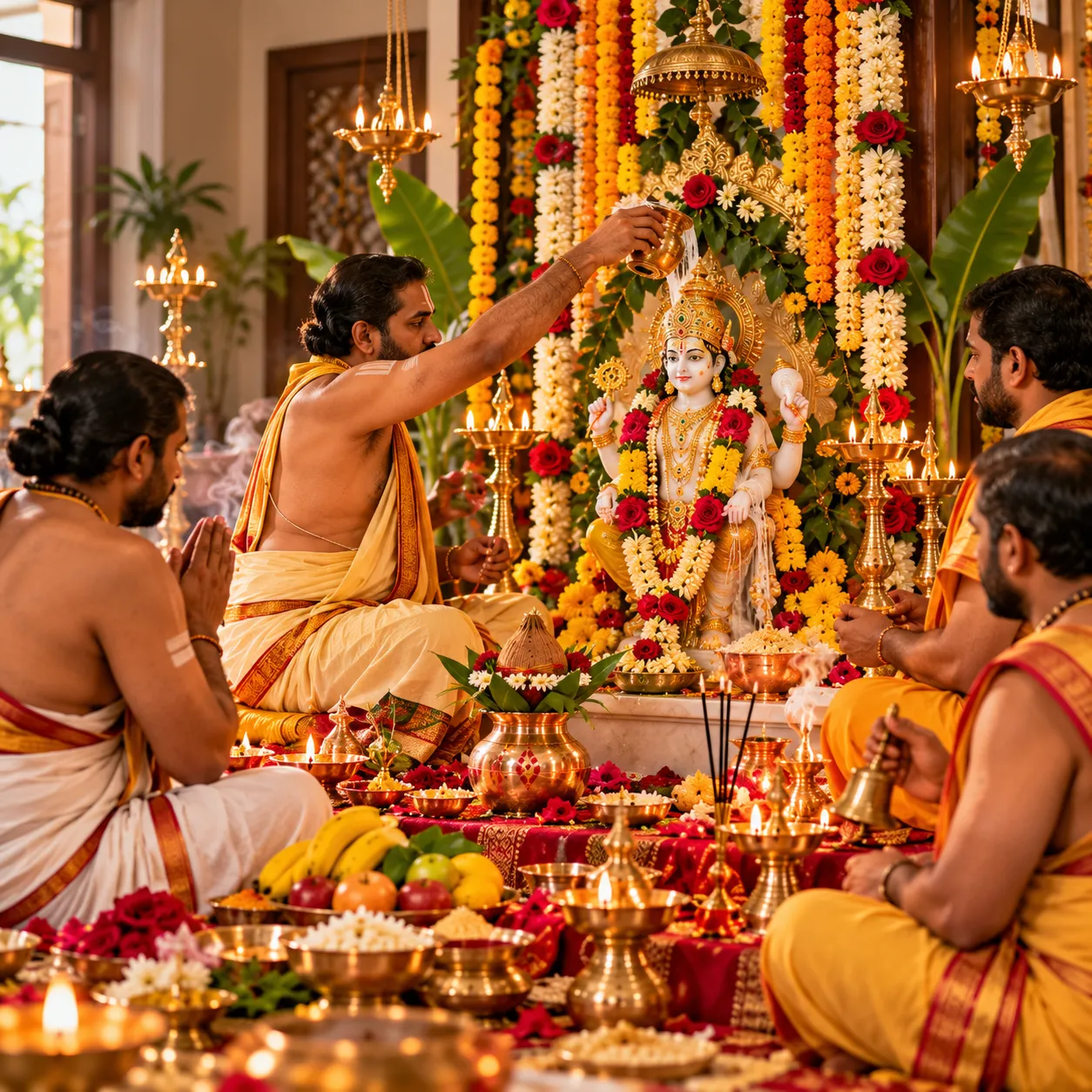
Murti Pran Pratishtha at Home
Murti Pran Pratishtha is a sacred Vedic consecration ceremony performed to invoke and infuse divine life force (Prana) into a newly acquired deity idol (Vigraha) installed in a home temple. Devotees undertake this ceremony to transform the sacred form into a living divine presence, sanctifying the household with pure cosmic energy, spiritual protection, lasting peace, and divine grace. The ceremony begins with Aachaman, Sankalp, Ganesh Puja, and Kalash Sthapana, followed by symbolic purification and Adhivasa rituals (resting the idol in sacred water or anna/grains). The deity is then consecrated through a sacred Maha Abhishek using Panchamrit, Gangajal, and aromatic oils (itra), followed by adornment with new sacred garments, ornaments, and Janeu. The primary rite involves chanting the sacred Pran Pratishtha Mantras and performing Nyasa to invite the deity’s consciousness into the idol, concluded by Netronmeelan (the ceremonial opening of the deity's eyes using honey and a small mirror). The ritual culminates with an auspicious Havan, the first Maha Bhog offering, Aarti, Pushpanjali, and Prasad distribution. Samagri: Deity idol (Vigraha), wooden platform (chauki) or singhasan, red or yellow silk cloth, Kalash, coconut, mango leaves, Panchamrit ingredients (raw milk, curd, honey, pure ghee, sugar), Gangajal, rose water, itra (perfume), new deity garments (vastra) and ornaments, Janeu, Chandan, Roli, Kumkum, Akshat, fresh flowers, flower garlands, Tulsi leaves/Durva/Bilva patra (as per deity), small mirror, kusha grass, betel leaves, supari, cloves, cardamom, seasonal fruits, sweets or kheer, Havan kund, havan samagri, dry coconut (gola), camphor, dhoop, diyas, pure cow ghee, cotton wicks, and Prasad. Note: Murti Pran Pratishtha must be conducted during an auspicious Muhurat determined by the Hindu Panchang. Once an idol is consecrated with Pran Pratishtha, the household is traditionally committed to maintaining sacred cleanliness and performing regular daily worship (Nitya Puja) and bhog offerings. Specific vidhi and samagri details may vary depending on the deity and family traditions.