Yagyopavit Sanskar
About This Pooja
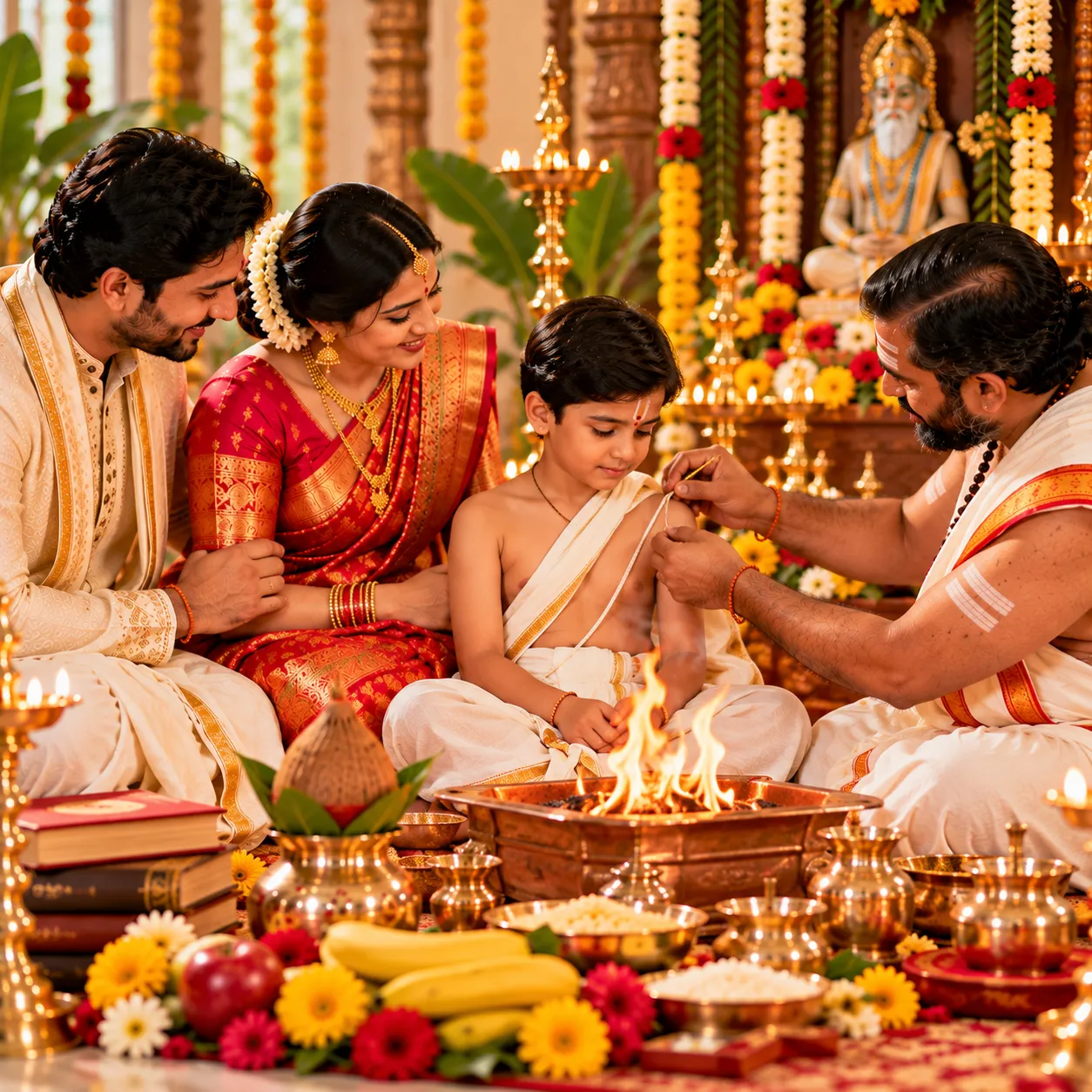
Yagyopavit Sanskar, also known as Upanayana or the sacred thread ceremony, is one of the most significant of the sixteen Hindu sacraments (Solah Sanskar). It marks a formal transition into intellectual, spiritual, and moral discipline, signifying a "second birth" (Dvija) into conscious learning. Devotees perform this sacred ceremony to seek blessings from Lord Gayatri, Lord Surya, and the ancestors for wisdom, self-control, knowledge, and spiritual growth. The ceremony begins with Ganpati Puja, Punyaha Vachan, Matrika Puja, and Sankalp, followed by the shaving of the head (Chudakarma/Mundan, where customary), ceremonial bath, and wearing of traditional attire (dhoti and unstitched cloth). The Guru or chief priest performs the Havan, consecrates the Yagyopavita (sacred thread/Janeu) with Vedic mantras, and invests it across the initiate’s left shoulder down to the right hip. The Guru then whispers the sacred Gayatri Mantra into the child's ear, followed by the symbolic Bhiksha ceremony (seeking alms from elders), Purnahuti, Aarti, and blessings.
Pooja Samagri Overview
Yagyopavita (Janeu - cotton threads for initiate and father), idols/photos of Lord Ganesha and Gayatri Mata, Kalash, mango leaves, coconut, sacred grass (Kusha/Darbha), Mekhala (sacred girdle/belt of munja grass), Danda (palash or bilva wooden staff), yellow/white dhoti and angavastra, Janeu-cloth bag, Akshat (unbroken rice), roli, chandan (sandalwood paste), turmeric, betel leaves, supari, flowers, gangajal, pure cow ghee, dry wood/samidha for havan, havan samagri, brass/copper havan kund, camphor, earthen or brass diyas, raw rice and sweets for Bhiksha ceremony, fruits, and dakshina.
Important Note
Yagyopavit Sanskar is traditionally performed on a highly auspicious Muhurat, typically during the odd years of childhood (ages 7, 9, or 11) or prior to marriage/adulthood according to family lineage. Following the ceremony, the initiate vows to observe purity, daily Sandhyavandanam, and Gayatri Japa. Puja rituals and specific rites may vary according to Vedic Shakha (Rigveda, Yajurveda, or Samaveda), gotra, and regional customs.
You Might Like
Namkaran Sanskar Puja
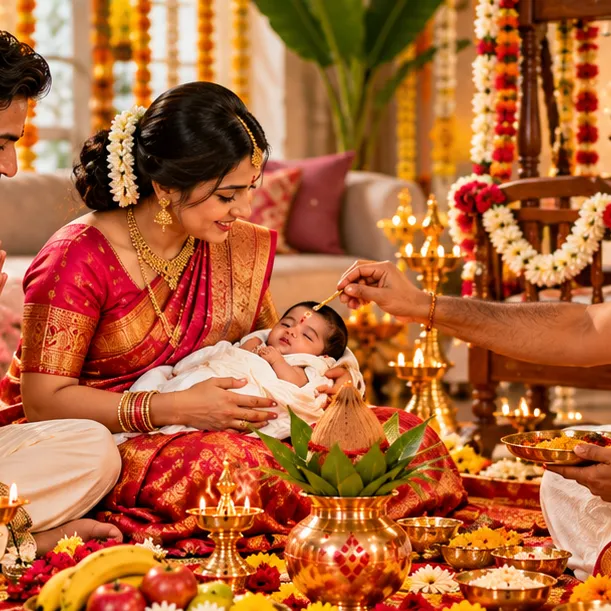
Namkaran Sanskar is one of the essential sixteen Vedic Samskaras (Shodasha Samskara) performed to formally confer a meaningful and astrologically aligned name upon a newborn baby. Devotees undertake this ceremony to bestow positive vibrations, invoke longevity, intellect, and sound health for the child, and seek the divine protection of Lord Ganesha, the Kuldevta, and the Navagrahas for an auspicious life path. The ceremony begins with Shuddhi (purification), Sankalp, Ganesh Puja, Kalash Sthapana, and invocation of the family deity (Kuldevta) and Navagrahas. An auspicious Havan (often including Ayushya Havan) is performed to eliminate planetary afflictions and pray for the baby's long life. Based on the child’s birth chart and Janma Nakshatra, the designated initial letter is calculated by the priest. The father (or paternal aunt/elder family member) then gently whispers the chosen name into the baby’s right ear, traditionally using a betel leaf or a blade of kusha grass. The ritual concludes with placing the baby in a decorated cradle (Palna), receiving blessings (Ashirwad) from elders, Aarti, and Prasad distribution. Samagri: New clothes for the newborn and parents, baby cradle or new bedding, Kalash, coconut, mango leaves, Gangajal, Panchamrit ingredients (milk, curd, honey, pure ghee, sugar), Roli, Kumkum, Chandan, Haldi, Akshat (unbroken rice), betel leaves, supari, cloves, cardamom, honey, kusha grass, fresh flowers, flower garlands, seasonal fruits, sweets, Havan kund, havan samagri, dry coconut (gola), camphor, dhoop, diyas, pure cow ghee, cotton wicks, and Prasad. Note: Namkaran Sanskar is traditionally performed on the 11th, 12th, or 21st day after the child's birth, or on an auspicious Muhurat determined by the Hindu Panchang and the child's Janma Nakshatra. Specific customs, such as who whispers the name into the baby’s ear and cradle traditions, may vary according to regional practices and family traditions.
Annaprashan Sanskar
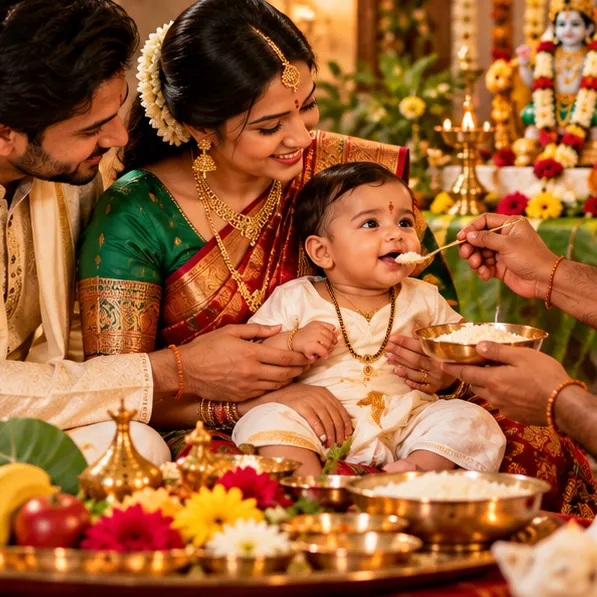
Annaprashan Sanskar is one of the essential sixteen Vedic Samskaras (Shodasha Samskara), marking an infant’s sacred transition from liquid nourishment to the intake of their first solid food. Devotees undertake this ceremony to invoke sound physical health, balanced digestion, mental clarity, and longevity for the child, while seeking the divine grace of Goddess Annapurna, Lord Ganesha, and the Kuldevta to ensure the child never lacks sustenance and wisdom in life. The ceremony begins with Aachaman, Sankalp, Ganesh Puja, Kalash Sthapana, and the invocation of Goddess Annapurna and the Navagrahas, followed by a purifying Havan to pray for the baby's health and vitality. The central ritual involves feeding the baby freshly prepared sacred Kheer (rice pudding) or a honey-curd mix using a consecrated silver spoon and bowl, traditionally offered first by the maternal uncle (Mama), father, or elder family members while Vedic mantras are chanted. A traditional symbolic test is often conducted where items representing knowledge, wealth, and labor (such as a book, pen, coin, and clay) are placed before the child to observe their natural inclination. The ceremony concludes with Aarti, receiving blessings (Ashirwad) from elders, and Prasad distribution. Samagri: Silver bowl and silver spoon, freshly prepared cow-milk Kheer, new traditional clothes for the baby and parents, Kalash, coconut, mango leaves, Gangajal, Panchamrit (milk, curd, honey, ghee, sugar), Roli, Kumkum, Chandan, Haldi, Akshat (unbroken rice), betel leaves, supari, cloves, cardamom, fresh flowers, flower garlands, seasonal fruits, sweets, Havan kund, havan samagri, dry coconut (gola), pure cow ghee, camphor, dhoop, diyas, cotton wicks, symbolic items tray (book, pen, coin/gold, soil), and Prasad. Note: Annaprashan Sanskar is traditionally performed in even months (6th or 8th month) for baby boys and in odd months (5th or 7th month) for baby girls, strictly on an auspicious Muhurat determined by the Hindu Panchang. The choice of who initiates the first feeding and the inclusion of specific regional customs may vary according to family traditions.
Mundan Puja
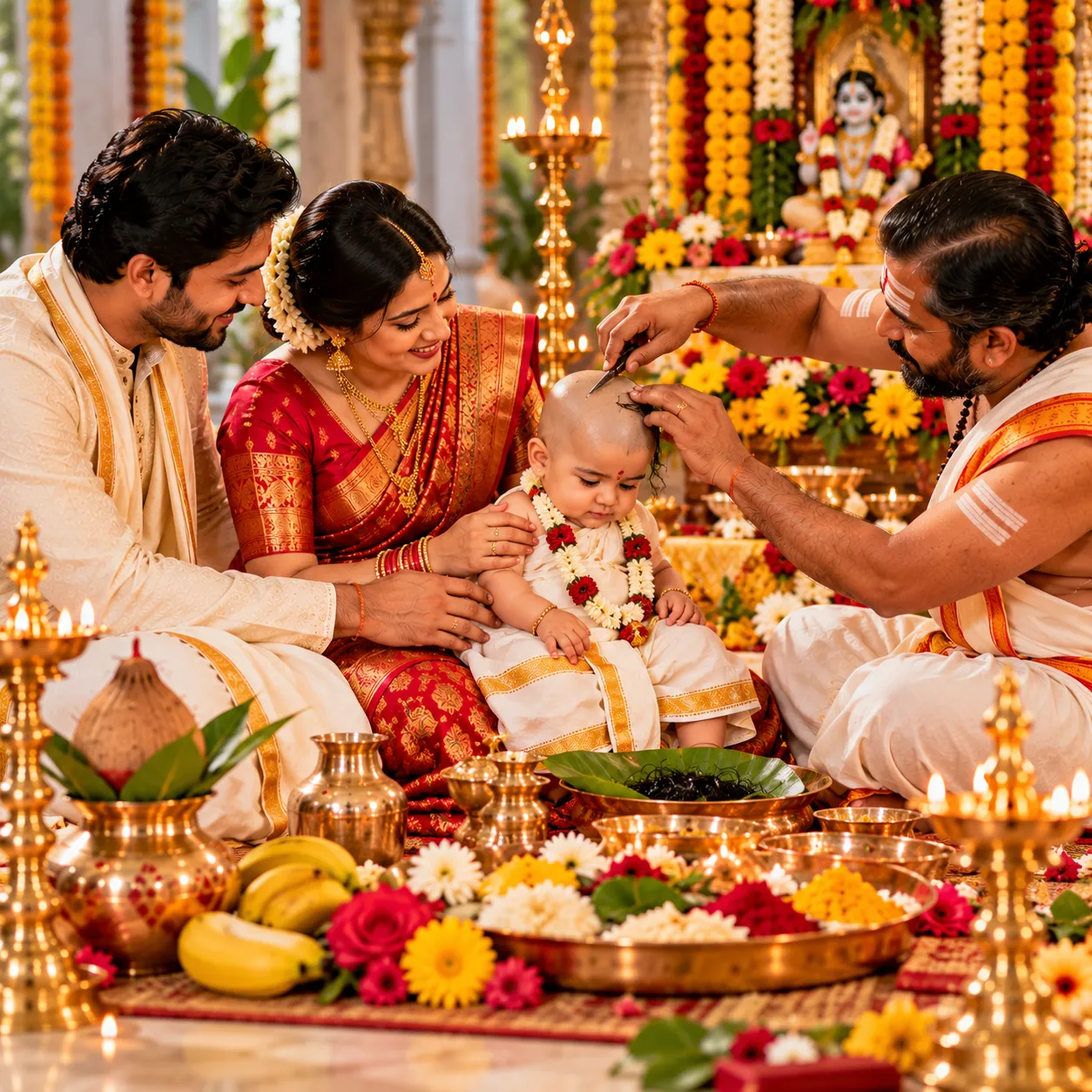
Mundan Puja, also known as Chudakarana Sanskar, is one of the sacred sixteen Vedic Samskaras (Shodasha Samskara), marking the ceremonial first shaving of a child's birth hair. Devotees undertake this ceremony to cleanse the child of residual negative impressions and karmic impurities carried from past lives, stimulate cranial nerves for enhanced intellect and brain development, and promote sound health, vitality, and longevity under the protective grace of Lord Ganesha and the Kuldevta. The ceremony begins with Aachaman, Sankalp, Ganesh Puja, Kalash Sthapana, and Navagraha invocation, followed by an auspicious Ayushya Havan to pray for the child's long life and well-being. While priests chant sacred Vedic mantras, the child's head is ceremonially shaved by a barber (traditionally leaving a small tuft of hair or shikha). The shorn hair is collected respectfully in a cloth or dough to be consecrated and immersed in a sacred river. The child's head is then washed with Gangajal and soothed with a cooling paste of Haldi and Chandan. After bathing and dressing in new clothes, the ceremony concludes with Aarti, receiving blessings (Ashirwad) from elders, and Prasad distribution. Samagri: Clean razor/blade and scissors, warm water or milk bowl, raw turmeric (haldi) and sandalwood (chandan) paste, wheat flour dough or clean yellow/red cloth (for collecting hair), new clothes for the baby and parents, Kalash, coconut, mango leaves, Gangajal, Panchamrit (milk, curd, honey, ghee, sugar), Roli, Kumkum, Akshat (unbroken rice), betel leaves, supari, cloves, cardamom, fresh flowers, flower garlands, seasonal fruits, sweets, Havan kund, havan samagri, dry coconut (gola), camphor, dhoop, diyas, pure cow ghee, cotton wicks, and Prasad. Note: Mundan Sanskar is traditionally performed in an odd year of the child's life (such as the 1st, 3rd, or 5th year) during an auspicious Muhurat determined by the Hindu Panchang. The ritual is frequently conducted at holy river banks (such as the Ganga) or at the family's Kuldevta/Kuldevi temple. Ritual details and customs may vary according to regional traditions and family heritage.
Vidyarambh Sanskar
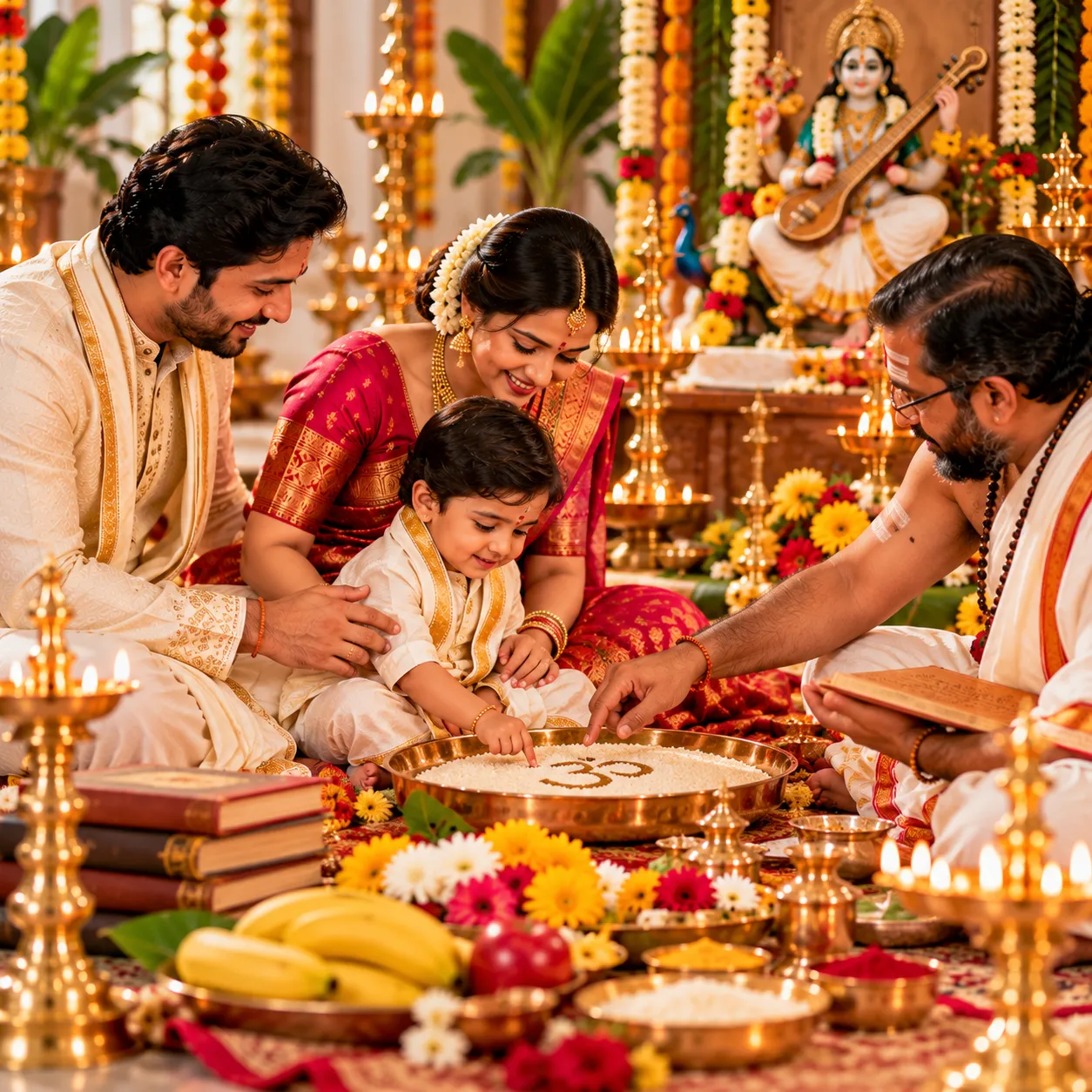
Vidyarambh Sanskar (also known as Aksharabhyasam) is one of the essential sixteen Vedic Samskaras (Shodasha Samskara), marking a child's formal initiation into education, reading, and writing. Devotees undertake this sacred ceremony to awaken intellect (Medha), focus, wisdom, and virtuous learning in the child, seeking the divine blessings of Goddess Saraswati, Lord Ganesha, and Lord Brihaspati for academic excellence, lifelong knowledge, and intellectual clarity. The ceremony begins with Aachaman, Sankalp, Ganesh Puja, Kalash Sthapana, and the invocation of Maa Saraswati, the Kuldevta, and Guru Brihaspati. The implements of learning—such as a slate, notebook, pen, and books—are sanctified through ceremonial Pustak and Lekhani Puja. In the central ritual, the child's index finger is guided by the father, mother, or Guru to write sacred symbols and syllables (such as Hari Om, Om, or the Swastika, followed by the preliminary alphabet) on a silver or brass tray spread with raw rice grains (Akshat) or on a slate using a stylus or turmeric root. A purifying Saraswati or Medha Havan is then conducted to pray for intellectual acuity and speech clarity, followed by Saraswati Aarti, blessings (Ashirwad) from elders and teachers, and Prasad distribution. Samagri: Slate and chalk (or notebook and pen), brass or silver tray/thali, raw rice (Akshat—to spread on the tray), whole turmeric root or gold coin/stylus (for tracing letters), Maa Saraswati and Lord Ganesha idol or picture, yellow or white cloth, Kalash, coconut, mango leaves, Panchamrit (milk, curd, honey, pure ghee, sugar), Gangajal, yellow Chandan, Roli, Kumkum, yellow flowers and garlands, betel leaves, supari, cloves, cardamom, seasonal fruits, yellow sweets (boondi laddoos or kheer), Havan kund, havan samagri, dry coconut (gola), camphor, dhoop, diyas, pure cow ghee, cotton wicks, and Prasad. Note: Vidyarambh Sanskar is traditionally performed when the child is between the ages of 3 and 5, ideally on auspicious occasions such as Basant Panchami, Vijayadashami, or on a favorable Muhurat calculated by the Hindu Panchang. The ritual practice of writing initial syllables and associated regional customs (such as Aksharabhyasam in South India or Hate-Khori in Eastern India) may vary according to family heritage.
Karnavedh Sanskar
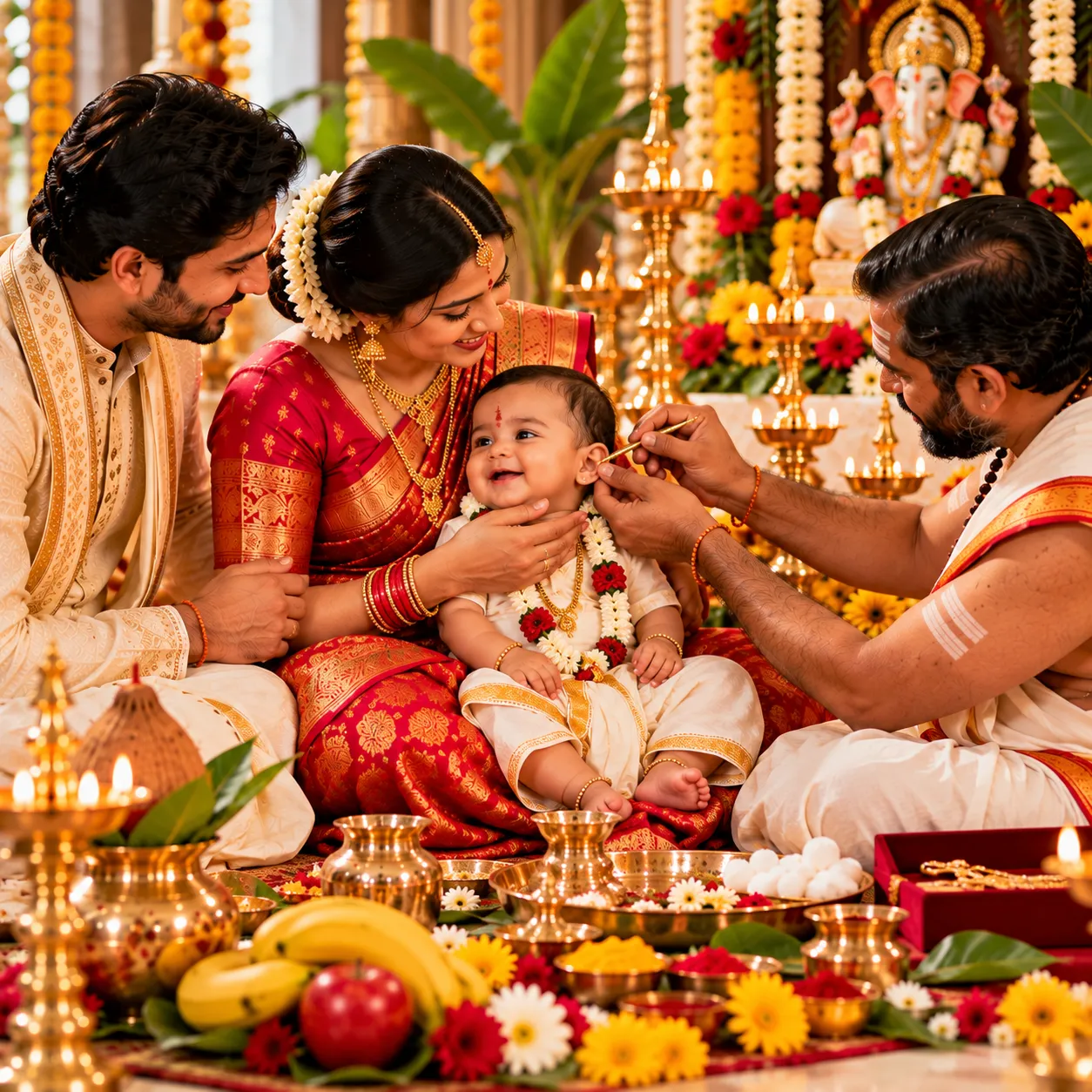
Karnavedh Sanskar is one of the sixteen essential Hindu sacraments (Solah Sanskar), marking the traditional ear-piercing ceremony for a child. Performed to invoke divine blessings for physical health, intellect, and longevity, this sacred ritual is also believed in Ayurveda to stimulate vital acupressure points that enhance mental acuity, eyesight, and overall immunity. The ceremony begins with Ganpati Puja and Swasti Vachan to invoke auspicious energies and remove obstacles, followed by Kalash Puja, Navgraha Puja, and Sankalp by the parents. Special prayers and mantras are chanted for the child’s well-being. The ear piercing is traditionally performed by a skilled goldsmith or qualified practitioner while sacred Vedic mantras are recited, followed by Aarti and distribution of Prasad. Samagri: Idols or images of Lord Ganesha and family deity, Kalash, coconut, mango leaves, betel leaves, supari (areca nuts), flowers, akshat (unbroken rice), roli, chandan (sandalwood paste), turmeric, sacred thread (moli/kalawa), gangajal, pure ghee, brass or earthen diyas, incense sticks, camphor, fresh fruits, sweets/prasad, gold or silver ear studs/wire, antiseptic/turmeric paste, and new clothes for the child. Note: Karnavedh Sanskar is traditionally conducted on an auspicious date (Shubh Muhurat) determined by Vedic astrology, typically during the sixth, seventh, eighth, tenth, or twelfth month, or in odd years of childhood. By tradition, the right ear is pierced first for a boy, and the left ear first for a girl. Specific rituals and samagri may vary according to family traditions, gotra, and regional customs.
Kumbh Vivah / Ark Vivah
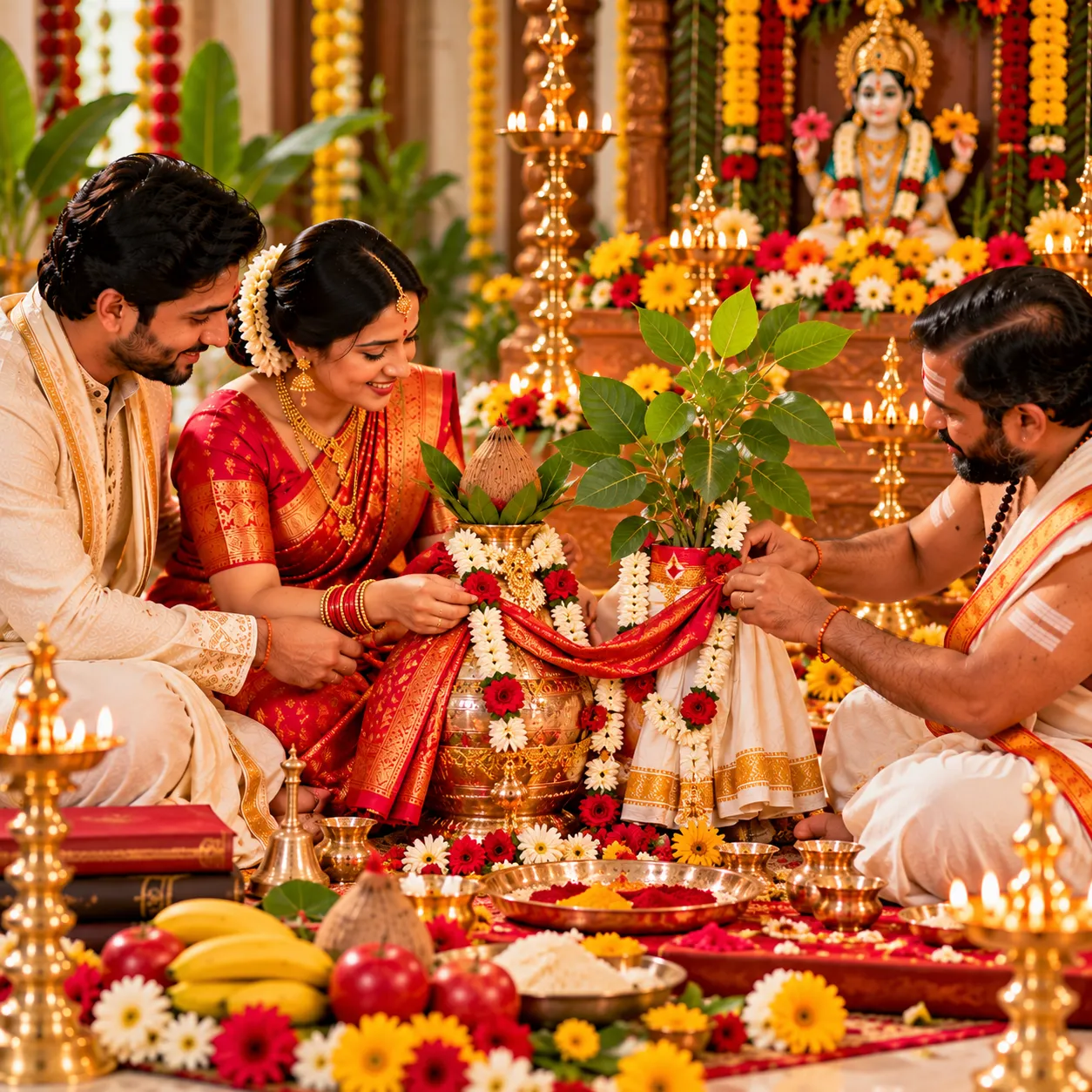
Kumbh Vivah and Ark Vivah are traditional Vedic remedial wedding rituals performed to neutralize significant astrological afflictions, most notably severe Manglik Dosha, Vaidhavyam Yoga (widowhood afflictions), or adverse planetary alignments in the birth chart. By symbolically marrying a sacred object prior to the formal human marriage, any latent marital obstacles, negative karmic influences, or early bereavement doshas are believed to transfer onto the sacred symbol, ensuring a harmonious, protected, and enduring married life. The ceremony begins with Ganpati Puja, Punyaha Vachan, Kalash Sthapana, and Sankalp. For a bride facing astrological doshas, Kumbh Vivah is conducted where she is symbolically wedded to a consecrated clay pot (Kumbh) containing water and an idol of Lord Vishnu, culminating in the formal immersion (visarjan) of the pot. For a groom facing severe doshas, Ark Vivah is conducted where he is married to an Ark (Calotropis gigantea / Madar) plant with full Vedic marital rites, including Kanyadaan, Mangalsutra or thread tying, Saptapadi (seven steps), and Havan, followed by Purnahuti, Aarti, and blessings. Samagri: Clay pot (Kumbh) or small Ark (Madar) plant, small idol of Lord Vishnu/Shaligram, Kalash, coconut, mango leaves, yellow and red cloth, sacred thread (moli/kalawa), yellow sacred thread (mangalsutra/kautuka), akshat (unbroken rice), roli, chandan (sandalwood paste), turmeric powder and whole knots, betel leaves, supari, flowers, garland (jaimala), gangajal, pure cow ghee, havan samagri, dry wood (samidha), camphor, brass or earthen diyas, fresh fruits, sweets/prasad, and dakshina for the priests. Note: Kumbh Vivah (performed for females) and Ark Vivah (performed for males) are customized remedial rituals based strictly on the native's Janam Kundali (horoscope). The ritual must be performed on an auspicious day or muhurat under the guidance of learned Vedic astrologers and priests before the actual wedding ceremony takes place. Ritual nuances and samagri requirements may vary depending on regional customs and specific planetary remedies.
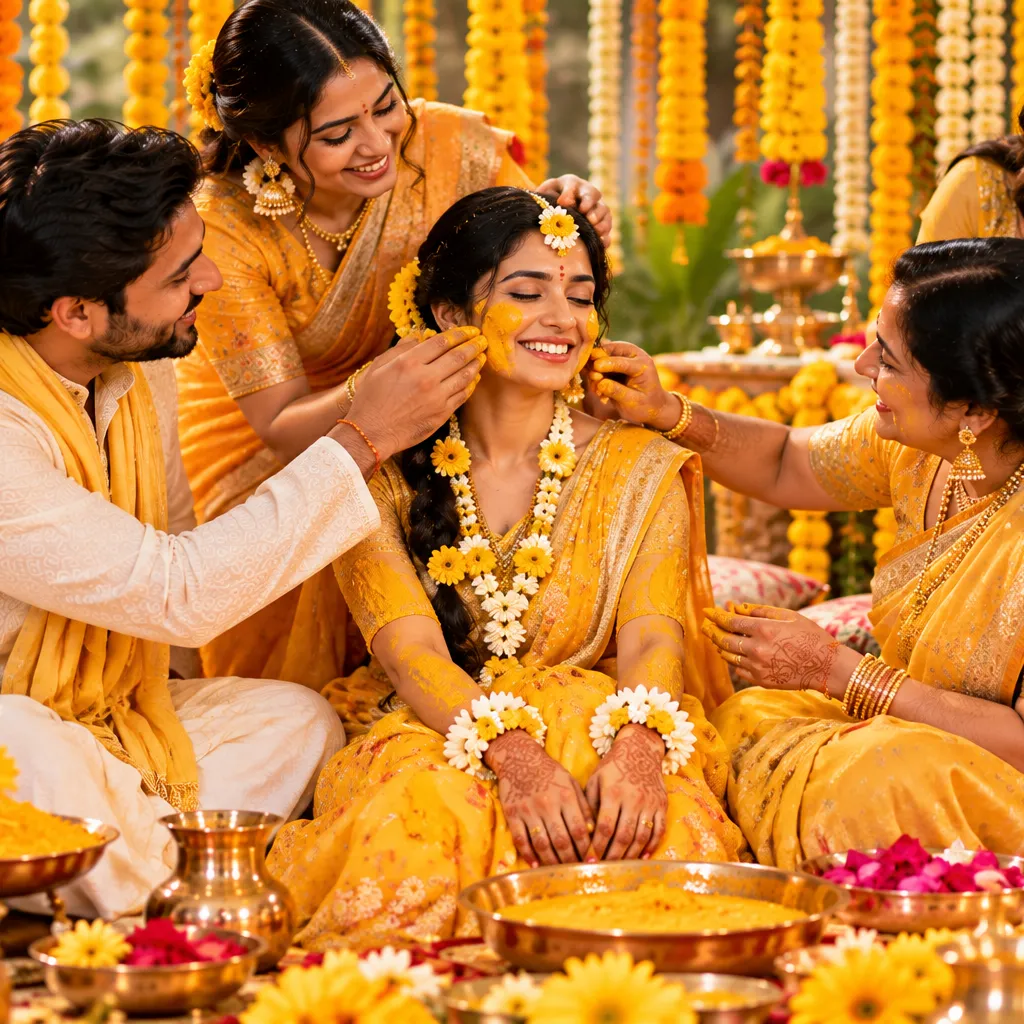
Haldi Ceremony
Haldi Ceremony (also known as Ubtan, Tel Baan, or Gaye Holud) is one of the most vibrant and joyous pre-wedding rituals in Indian tradition, held separately for the bride and the groom. Celebrated to prepare the couple for their wedding day, the application of turmeric paste is believed to purify the body and mind, bestow a natural bridal glow, ward off the evil eye (buri nazar), and invoke divine blessings for health, prosperity, and fertility. The ceremony begins with Lord Ganesha Puja and Kalash Puja to eliminate obstacles and invoke auspicious energies. A fragrant paste prepared from pure turmeric, sandalwood, rose water, and herbs is consecrated with Vedic mantras. Family members and close elders take turns using doob (sacred grass) or mango leaves to apply the paste to the bride’s or groom’s feet, knees, hands, shoulders, and face. The ritual culminates in joyful folk songs, ceremonial blessings from married women (Suhagins), Aarti, and distribution of sweets. Samagri: Idol or photo of Lord Ganesha, turmeric powder and raw turmeric roots (haldi gath), sandalwood powder/paste, rose water, besan (gram flour), mustard oil/sesame oil, doob grass (durva) or mango leaves, Kalash, coconut, betel leaves, supari, akshat (unbroken rice), roli, sacred thread (moli/kalawa), yellow cloth/yellow attire for the bride or groom, brass/silver bowls for ubtan, fresh marigold flowers and rose petals, earthen/brass diyas, camphor, incense sticks, fresh fruits, and traditional sweets (laddoo/peda). Note: The Haldi ceremony is traditionally performed on the morning of or the day preceding the wedding day during an auspicious muhurat. By custom, once the haldi is applied, the bride and groom are advised not to leave the home until the wedding ceremony to protect them from negative energies. The specific customs, ingredients used in the paste, and associated rituals (such as Kangana tying or Tel Chadhana) may vary according to regional traditions and family lineage.
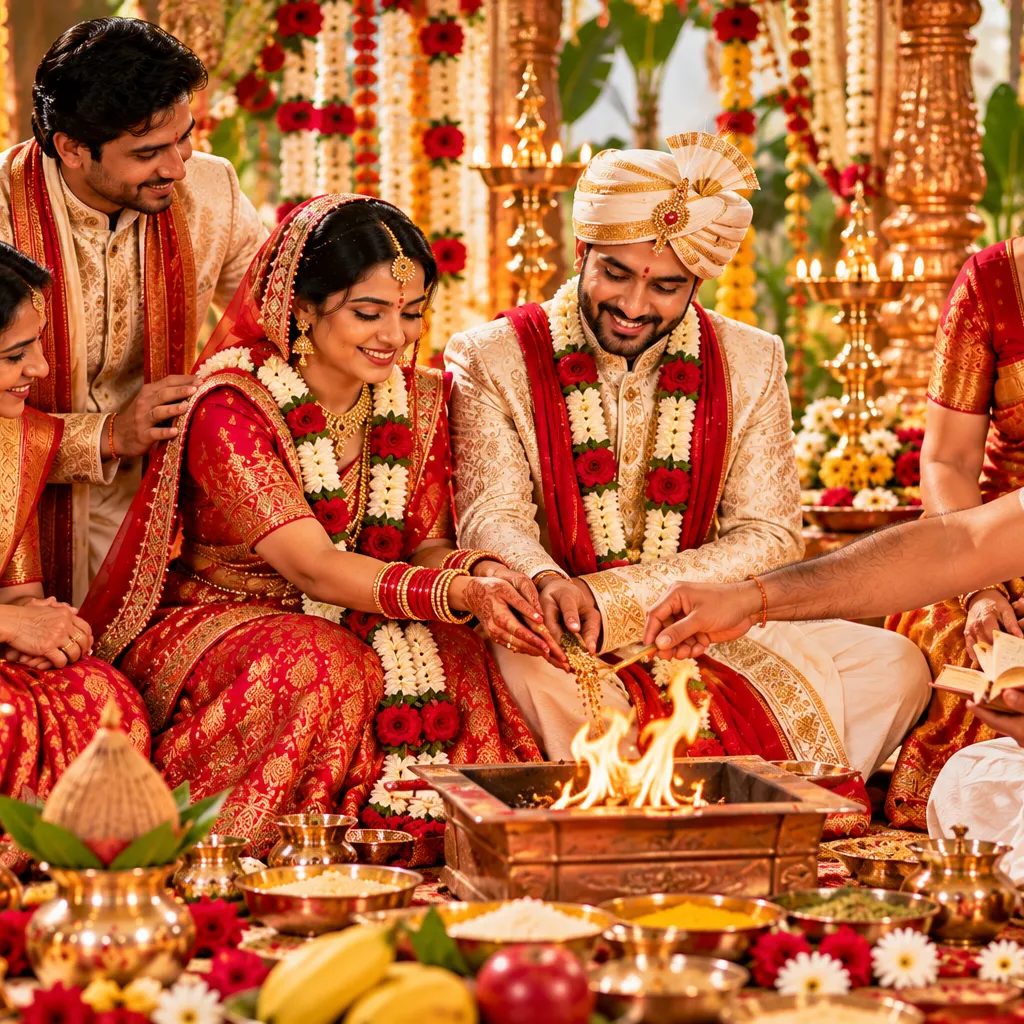
Vivah Sanskar
Vivah Sanskar is the most sacred and central of the sixteen Hindu sacraments (Solah Sanskar), establishing the transition of two individuals into the Grihastha Ashrama (householder stage). Far more than a social contract, it is revered as a divine union of two souls and families, entered into for spiritual growth, lineage continuation (dharma), mutual companionship, and societal responsibility. The ceremony begins with the welcoming of the groom (Var Aagman), Madhuparka, Ganpati Puja, and Gauri Puja, followed by the formal Kanyadaan where parents entrust the bride to the groom. Key Vedic rites include Hastamelap (Panigrahana/joining of hands), Agni Sthapana and Vivah Havan, Laja Hom (puffed rice offerings), Mangalphera (sacred circumambulation), and Saptapadi (seven sacred vows taken around the holy fire). The ritual culminates in Sindoor Daan, Mangalsutra Dharan, Ashirwad (blessings from elders and priests), and Prasad distribution. Samagri: Idols or photos of Lord Ganesha and Goddess Lakshmi-Narayan, Kalash, coconuts, mango leaves, betel leaves, supari, raw turmeric knots, yellow rice (akshat), roli, sandalwood paste, moli (kalawa), sacred cloth for Gathbandhan (chuni and uttariya), dry coconut (gola), pure cow ghee, havan kund, samidha (dry mango wood), havan samagri, puffed rice (kheel/laja), stone/slab (shila for Shilarohan), fresh flower garlands (Jaimala), Mangalsutra, sindoor, toe rings (bichhiya), brass/silver plates, diyas, camphor, gangajal, fresh fruits, and traditional sweets. Note: Vivah Sanskar is conducted on an auspicious date and lagna (Shubh Muhurat) determined through horoscopic matchmaking and planetary alignment. As each vow and step holds deep spiritual and legal sanctity in Vedic tradition, presence and active participation of both families are essential. Specific rituals, mantras, and order of ceremonies can vary depending on gotra traditions, Vedic shakha, and regional cultural customs.
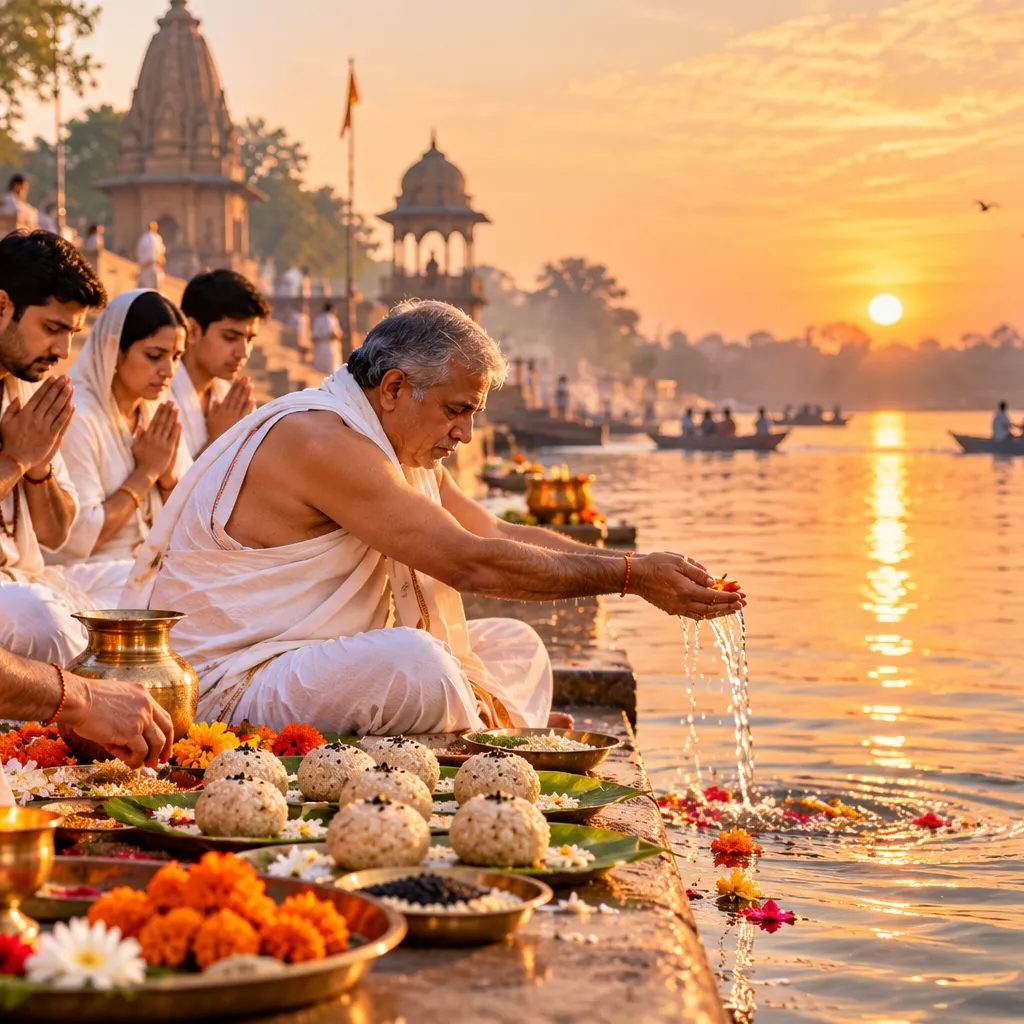
Antyeshti Sanskar / Pind Daan
Antyeshti Sanskar (also known as Antim Sanskar or the last rites) is the final of the sixteen sacred Hindu sacraments (Solah Sanskar), performed upon the physical passing of an individual. Pind Daan comprises the sacred post-cremation and commemorative rites that facilitate the departure and safe transit of the subtle soul (Jiva) from the earthly plane (Preta loka) toward the realm of ancestors (Pitri loka). Rooted in the Garuda Purana, these rites allow the family to express gratitude, seek forgiveness, and pray for the eternal peace and liberation (Moksha) of the departed soul. The ritual cycle commences with Dah Sanskar (cremation rituals with Vedic prayers and Agni Sthapana), followed by Asthi Sanchayan (collection and immersion of holy ashes in a sacred river). Over the subsequent 10 to 13 days, daily Tarpana and Pind Daan (symbolic offerings made of cooked rice/barley flour, sesame seeds, and ghee) are offered by the Karta (primary mourner) to symbolically nourish and reconstitute the subtle body of the departed. The cycle culminates in Ekadashah (11th-day rites), Dwadashah (12th-day rites), Sapindikarana (formal union of the soul with the ancestral line), and the 13th-day Terahvi / Shanti Path, concluding with Brahman Bhojan and charity. Samagri: Barley flour (jau ka atta) or cooked rice, black sesame seeds (kale til), Kusha grass (Darbha), white unstitched cloth (shroud/dhoti for Karta), Gangajal, pure cow ghee, honey, cow milk, curd, tulsi leaves, betel leaves, supari, earthen pots (ghat/matka), earthen diyas, mustard oil, camphor, matchbox, havan samagri, dry mango wood, kusha rings (pavitri), raw white thread (kacha soot), fruits, sweet offerings (mithai), utensils for tarpan, and items for daan (vessel, umbrella, footwear, clothing, and dakshina). Note: Antyeshti and Pind Daan rituals must be performed strictly under the guidance of knowledgeable Vedic priests following prescribed scriptures such as the Garuda Purana. The Karta observes strict discipline, dietary purity (satvik food without onion, garlic, or oil), and mourning guidelines throughout the designated period. Minor customs, timing of Asthi Visarjan, and ritual sequencing may vary based on gotra traditions, family lineage, and regional conventions.
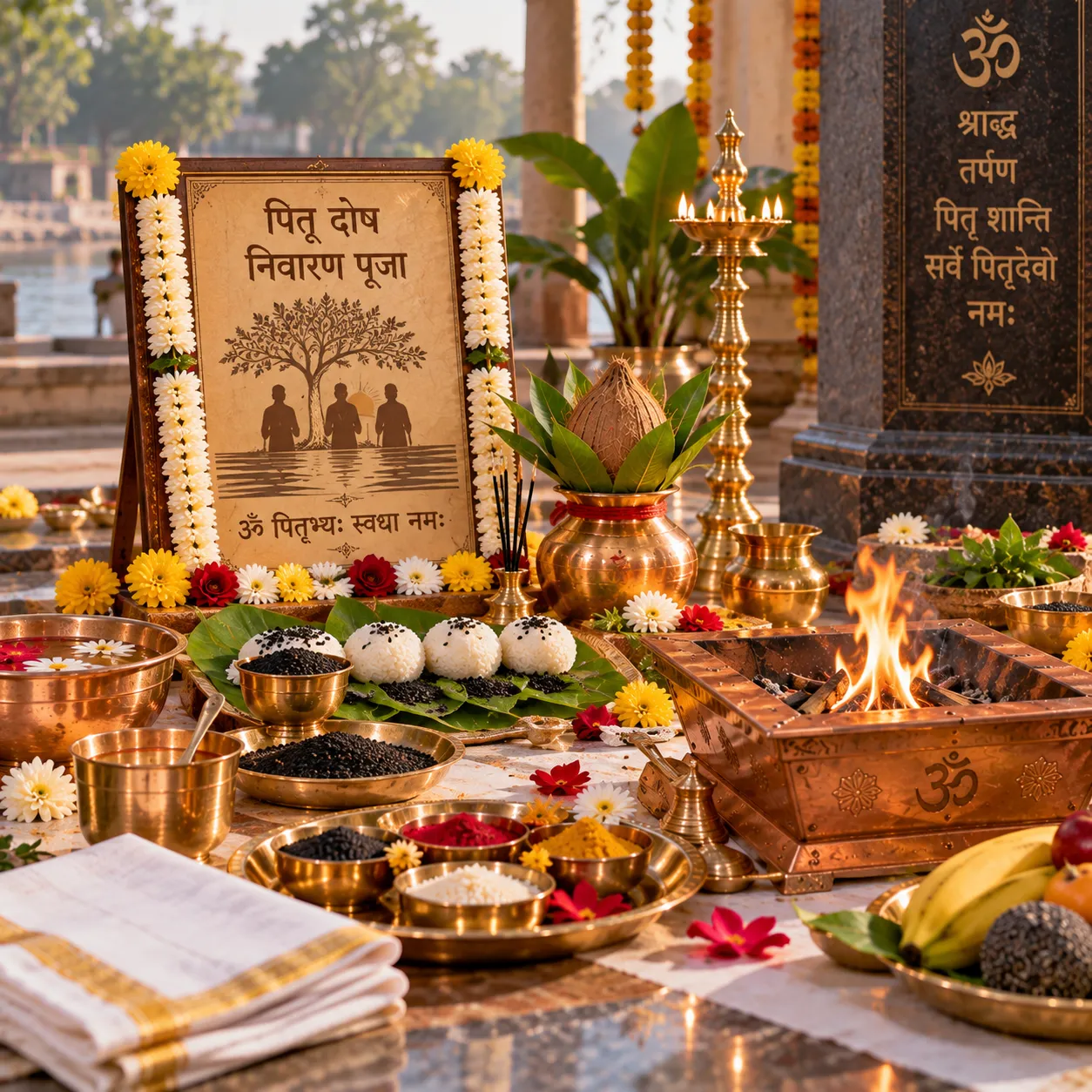
Narayan Bali / Pitra Dosh Puja
Pitra Dosh Nivaran Puja is a traditional Hindu ritual performed to honor ancestors and seek their blessings. It is undertaken according to family tradition and astrological guidance, with the intention of performing ancestral rites, expressing gratitude, and seeking peace and harmony for the family. The ceremony may include Sankalp, Ganesh Puja, Kalash Sthapana, Pitra Devata Puja, ancestral prayers, Tarpan, Pind-related rituals where appropriate, Navagraha Puja, Mantra Jaap, Havan, Purnahuti, and Aarti. The Pandit Ji guides the family through the prescribed rituals. Samagri: Kalash, coconut, darbha/kusha grass, black sesame seeds, barley, rice, flowers, fruits, milk, ghee, water, betel leaves, supari, roli, kumkum, akshat, incense, camphor, diya, havan samagri, and other items required for the specific ancestral ritual. Note: The exact vidhi, samagri, and rituals may vary based on family tradition, location, and the specific purpose of the ceremony. Certain Pitra-related rituals are traditionally performed on specific tithis, particularly during Pitru Paksha.