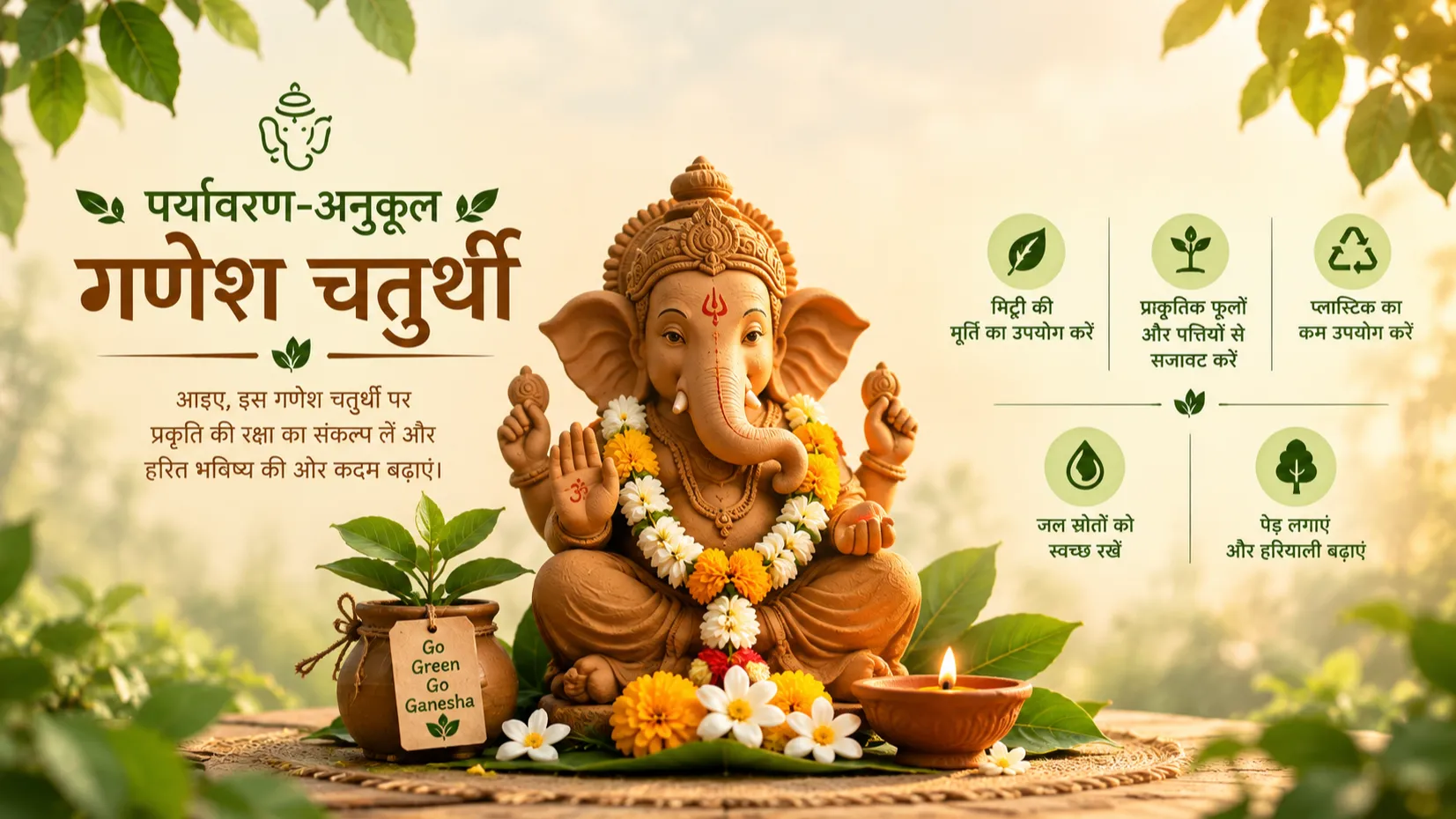
Ganesh Chaturthi, the sacred festival celebrating the birth of Lord Ganesha, is one of the most vibrant and beloved festivals celebrated in India. It symbolizes devotion, faith, enthusiasm, and communal harmony. Every year, the arrival of Ganesh Chaturthi brings with it new zeal and a special spiritual energy. During this time, beautiful idols of Lord Ganesha are installed in homes, pandals, and public places, and the entire atmosphere resonates with the chants of 'Ganpati Bappa Morya'. This festival lasts for ten days, culminating with the immersion of the idols of God on Anant Chaturdashi, symbolizing their return to nature.
However, in recent years, awareness regarding the environmental impact of this grand celebration has increased. In the joy of our festivals, we often overlook the effects on our nature and environment. This is why the concept of celebrating Eco-Friendly Ganesh Chaturthi is rapidly gaining popularity. It is not just a trend, but a moral and spiritual necessity. As devotees, it is our duty to respect our revered deity and also to protect the nature that God has given us as a gift. In this detailed guide, we will learn how Ganesh Chaturthi can be made eco-friendly, from selecting Bappa's idol to its immersion, so that our devotion remains pure and our environment stays safe.
Why is Eco-Friendly Ganesh Chaturthi Important?
Some aspects of traditionally celebrated Ganesh Chaturthi festivals inadvertently cause serious harm to the environment. Understanding these impacts is the first step towards environmental protection.
1. Impact of POP (Plaster of Paris) Idols
- Non-Biodegradable: POP is made from calcium sulfate hemihydrate, which does not dissolve easily in water. After immersion, these idols accumulate at the bottom of rivers and ponds, blocking waterways and posing a threat to aquatic life.
- Use of Chemical Colors: Synthetic and toxic chemical colors are used to make POP idols vibrant. These colors contain heavy metals like lead, cadmium, and chromium, which are extremely harmful to aquatic plants and animals when dissolved in water. These chemicals pollute the water, affecting the quality of drinking water and having a negative impact on human health.
- Ecological Imbalance: Due to these idols and colors, the oxygen level in the water decreases, leading to the death of fish and other aquatic creatures, and disturbing the balance of the entire aquatic ecosystem.
2. Decoration Materials
- Plastic and Thermocol: Traditionally, plastic, thermocol (polystyrene), and other non-biodegradable materials are widely used for decorating pandals and homes. These materials cause large-scale waste after the festival, which accumulates in landfills for decades or releases toxic gases when burned.
- Shiny Paints and Glitter: Shiny paints and glitter used in many decorative items are also microplastic particles, which pollute the environment by mixing with water and soil.
3. River/Pond Pollution After Immersion
Not only idols and decorations, but other leftover materials from worship such as flowers, leaves, coconuts, incense sticks, dhoop, and plastic bags are also often immersed in rivers and ponds. All of this combined severely pollutes water bodies, increasing the risk of waterborne diseases and badly affecting the quality of natural water sources.
From a spiritual perspective, polluting nature is akin to disrespecting God. Lord Ganesha himself is associated with the elements of nature. He represents the earth element, and his worship inherently includes respect for nature. Therefore, true and pure devotion is that which also nourishes our environment.
Choosing or Creating an Eco-Friendly Ganesh Idol
An Eco-Friendly Ganesh celebration begins with the selection of the idol. This is the most crucial step that determines the environmental footprint of your celebration.
1. Clay Ganesh Idols
Idols made from natural clay or 'Shaadu Maati' are the foundation of an Eco-Friendly Ganesh celebration. This is the oldest and most traditional method.
- Benefits:
- Completely Biodegradable: Natural clay dissolves easily in water and returns to nature. This ensures no harmful chemicals are released into the water, and aquatic life is not harmed.
- Purity: Clay symbolizes the earth element and is considered extremely sacred. Worshipping an idol made of clay signifies a deep connection with nature.
- Supports Local Artists: Clay idols are often made by local artisans, promoting their art and supporting the rural economy.
- Where to Obtain: Nowadays, many artisans and organizations offer idols made from Shaadu Maati. You can buy them from local markets, special eco-friendly stalls, or online platforms. When buying, ensure that the idol is made entirely of natural clay and natural colors.
- Making at Home (with craft clay): If you are creative, you can make your own Ganesh idol at home.
- Materials: Natural craft clay (unbaked and easily dissolvable), water, and natural colors (turmeric, kumkum, sandalwood powder, Multani mitti, henna powder, geru, or colors made from flowers).
- Method: Knead the clay with water to create your desired Ganesh idol. Let it dry. Once dry, decorate it with natural colors. This can be a spiritual and satisfying experience, especially when done with children.
2. Seed Ganesh
This is an innovative and highly Eco-Friendly Ganesh concept.
- Concept: These idols are made from natural clay and have various plant seeds (such as basil, marigold, or other flower/vegetable seeds) embedded within them. After immersion, the clay dissolves in water, and the seeds germinate to give birth to a new plant.
- Benefits: This symbolizes the cycle of life. Your devotion not only keeps the environment clean but also gives birth to new life, which is highly auspicious and inspiring. It also provides an opportunity to create a green corner in your home.
3. Use of Natural Colors
Whether you buy or make the idol, ensure that only natural colors are used on it.
- Options: Turmeric (for yellow), kumkum or sindoor (for red/orange), Multani mitti (for white), henna or spinach juice (for green), beetroot juice (for pink), coffee powder (for brown), charcoal (for black). These colors cause no harm to nature and dissolve easily with the clay.
Decoration Ideas with Natural and Recyclable Materials
Natural decoration adds both beauty and sanctity to the festival, while also reducing harmful environmental impacts.
1. Use of Flowers and Leaves
- Fresh Flowers: Marigolds, roses, jasmine, night-flowering jasmine, hibiscus, and other seasonal flowers are excellent choices for decoration. You can make garlands, torans, or use them as rangoli. The fragrant atmosphere of flowers makes the festival even more divine. After immersion, these flowers can be used for composting.
- Mango and Ashoka Leaves: Mango and Ashoka leaves are considered auspicious. Make torans from them or decorate walls with them. They are natural and completely biodegradable.
- Banana Leaves and Coconut Fronds: Use banana leaves and coconut fronds for decorating pandals and mandaps. This looks traditional and appealing.
2. Recyclable Materials
Wonderful decorations can be created by creatively using discarded items from your home. This is a big step towards environmental protection.
- Paper and Cardboard: Using old newspapers, magazines, posters, or cardboard boxes, you can make beautiful paper torans, lanterns, streamers, and backdrop decorations. Involve children in this activity; it will be a fun and learning experience for them.
- Fabric: Old sarees, dupattas, or leftover fabric pieces can be used to make beautiful curtains, backdrops for mandaps, or to decorate walls. Fabric can be washed and reused or repurposed later.
- Clay Lamps (Diyas): Instead of electric glare, use traditional clay diyas. They not only save energy but also lend a traditional and serene glow to the festival. You can reuse them repeatedly.
- Wooden Decorations: Small pieces of wood or bamboo sticks can be used to create decoration frames or in other creative ways.
- Jute and Rope: Various types of decorations can also be made using jute or cotton ropes.
3. Avoid Artificial Items
Avoid using thermocol, plastic streamers, plastic flowers, and overly shiny glitter. These items do not decompose and cause long-term environmental damage. Choose natural and recyclable alternatives instead.
4. Lighting
To save energy, use energy-efficient LED lights instead of traditional incandescent bulbs. You can also use traditional oil lamps, which give the festival a special glow.
Eco-Friendly Ganesh Immersion Methods
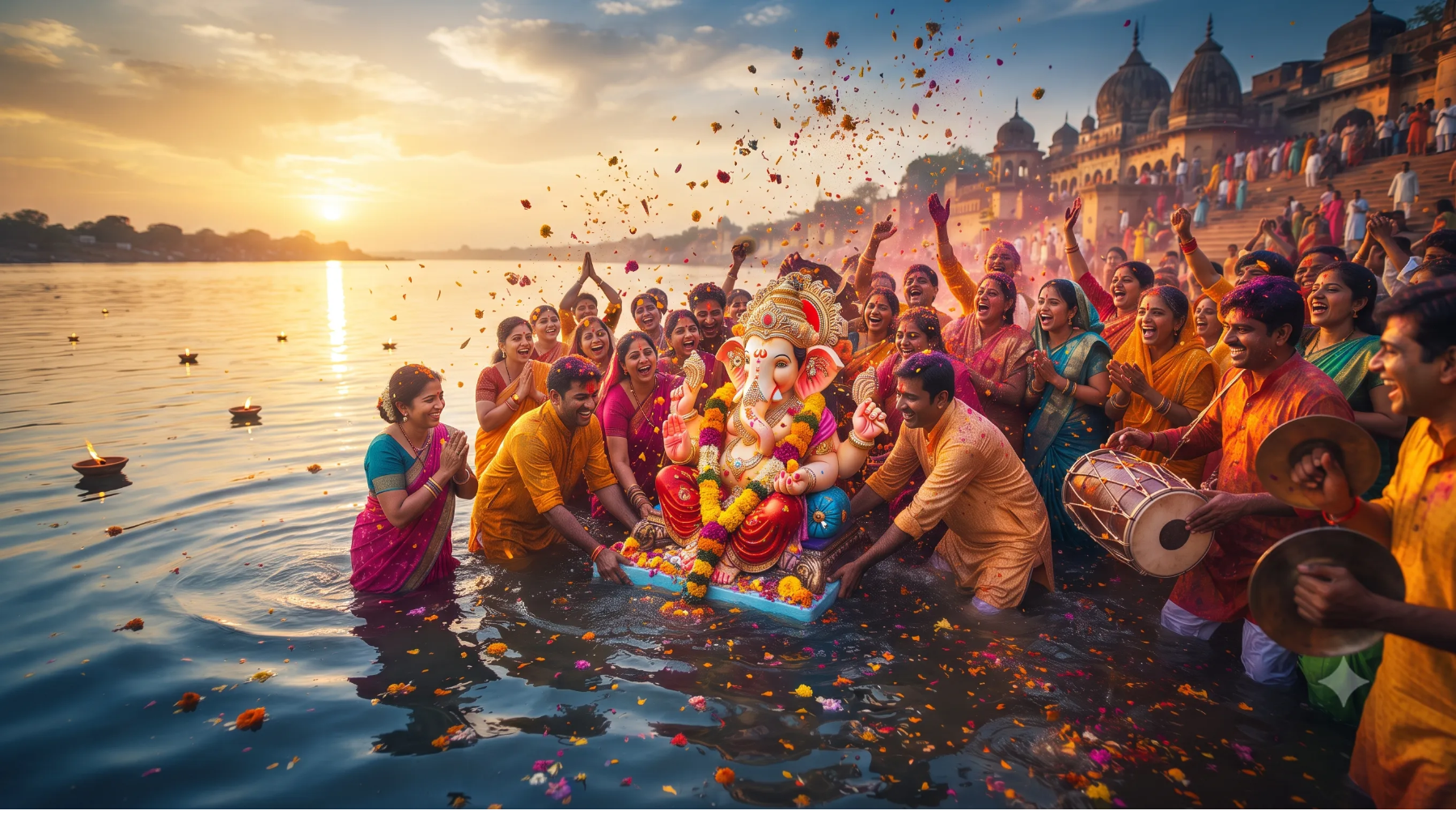
Ganesh immersion is the final and important stage of the festival. It symbolizes Lord Ganesha's return to Mount Kailash. It is extremely important to perform this process in an Eco-Friendly Ganesh manner.
1. Immersion at Home (Pot Immersion)
This is the most personal and eco-friendly method, especially for small idols.
- Method: Fill a large tub or bucket with clean water. Immerse the idol of Lord Ganesha in it with devotion. The clay idol will gradually dissolve in the water.
Once the clay has completely dissolved, pour this soil-mixed water into your home garden, potted plants, or on any empty land. This soil will act as fertilizer for the plants. If there are seeds inside the idol, they will germinate and grow into plants. - Benefits:
- No pollution of any public water body (river, pond, sea).
- It provides a private and spiritual experience where you can bid farewell to God within your home.
- The clay returns to nature, completing the environmental cycle.
- You can enrich your garden by using the soil as fertilizer after immersion.
2. Community Eco-Pools or Artificial Ponds
This is an excellent option for large idols installed in big communities and public pandals.
- Concept: Many cities and local administrations now construct temporary artificial ponds or 'eco-pools' for Ganesh immersion. These ponds are specifically created for immersion, and the immersed idols and worship materials are later collected and processed in a controlled manner.
- Benefits:
- It reduces the pressure on natural water bodies.
- The collected clay and other materials can be disposed of in an eco-friendly manner (e.g., composting).
- It promotes community participation and collective awareness towards environmental protection.
- Collaboration: If such eco-pools are available in your area, use them and encourage others to do so as well. You can also contact your local municipality and offer to help in establishing such ponds.
3. Management of Worship Materials
It is important to manage other worship materials properly along with the idol.
- Organic Waste: Collect organic materials like flowers, leaves, fruits, etc., in a separate bin. These can be used for composting or given to a local composting unit. Do not immerse them directly in water.
- Non-Organic Waste: Ash from incense sticks, dhoop ash, coconut fibers, and other worship materials that are not organic should be put into the general waste disposal system.
- Recyclable Materials: If you have used any recyclable materials (such as paper, cloth), collect them after immersion and send them for proper recycling.
4. Avoid Plastic
Avoid using plastic bags and containers for carrying the idol to the immersion site or distributing prasad. Instead, use cloth bags, jute bags, steel containers, or banana leaves.
5. Reduce Noise
Instead of DJs and loud music, use traditional musical instruments and try to minimize noise pollution. This will make Bappa's farewell more peaceful and spiritual.
Environmental Protection and Spiritual Consciousness
Celebrating Eco-Friendly Ganesh Chaturthi is not just about following rules; it is an expansion of our spiritual consciousness. It teaches us that our devotion is not limited to rituals, but also includes love and respect for the entire universe, its creation, and all beings residing in it.
- Respect for Tradition: It is important to understand that eco-friendly methods do not disrespect traditional practices, but rather make them even more meaningful by connecting them with modern challenges. Using clay idols and natural decorations is a return to our old traditions, where humans lived in harmony with nature.
- Moral Responsibility: As devotees, it is our moral responsibility to protect our 'Mother Earth'. Lord Ganesha, who is called 'Vighnaharta' (remover of obstacles), will surely bless our efforts made to overcome environmental obstacles.
- For Future Generations: It is our duty to leave a healthy and clean planet for our children and future generations. When we teach them to celebrate Eco-Friendly Ganesh festivals, we are not only teaching them how to celebrate a festival but also making them environmentally conscious and responsible citizens.
- Bappa's Message: Lord Ganesha himself gives us the message of balance and discretion. Only by maintaining balance with nature can we achieve true happiness and prosperity.
Conclusion
The festival of Ganesh Chaturthi infuses new energy and enthusiasm into our lives. This time, let's make this sacred occasion even more special by expressing our devotion through Eco-Friendly Ganesh Chaturthi. From the selection of Bappa's idol to its immersion, caring for the environment at every step is true devotion. When we install idols made of natural clay, decorate with natural flowers and leaves, and respectfully immerse them at home or in eco-pools, we not only please Lord Ganesha but also preserve nature, which is itself a form of God.
Let us all together make this Ganesh Chaturthi a 'Green Ganesh Chaturthi', where along with the echoing chants, there is also a resolution for nature conservation. Because only when nature is safe will our lives and our festivals truly be joyful and sacred.
Ganpati Bappa Morya! Mangalmurti Morya!
अक्सर पूछे जाने वाले प्रश्न (FAQ)
Q: What is the festival of Ganesh Chaturthi?
Ganesh Chaturthi is the sacred festival celebrating the birth of Lord Ganesha, one of the most vibrant and beloved festivals celebrated in India. It symbolizes devotion, faith, enthusiasm, and communal harmony.
Q: How many days does the Ganesh Chaturthi festival last?
This festival lasts for ten days, culminating with the immersion of the idols of God on Anant Chaturdashi.
Q: Why is it important to celebrate Eco-Friendly Ganesh Chaturthi?
Celebrating Eco-Friendly Ganesh Chaturthi is a moral and spiritual necessity because some aspects of traditionally celebrated festivals inadvertently cause serious harm to the environment.
Q: What harm do POP (Plaster of Paris) idols cause to the environment?
POP idols are non-biodegradable and do not dissolve easily in water. After immersion, they accumulate at the bottom of rivers and ponds, blocking waterways and posing a threat to aquatic life.
Q: What is the effect of chemical colors used in POP idols?
These colors contain heavy metals like lead, cadmium, and chromium, which are extremely harmful to aquatic plants and animals when dissolved in water. These chemicals pollute the water, affecting the quality of drinking water and having a negative impact on human health.
Q: How do POP idols and chemical colors affect the aquatic ecosystem?
Due to these idols and colors, the oxygen level in the water decreases, leading to the death of fish and other aquatic creatures, and disturbing the balance of the entire aquatic ecosystem.
Q: How do traditional decoration materials harm the environment?
Plastic, thermocol (polystyrene), and other non-biodegradable materials cause large-scale waste after the festival, which accumulates in landfills for decades or releases toxic gases when burned.
Q: As a devotee, what is our duty towards the environment?
As devotees, it is our duty to respect our revered deity and also to protect the nature that God has given us as a gift.
Q: What does the immersion of Ganesh idols symbolize?
The immersion of Ganesh idols symbolizes their return to nature.
Q: What is POP (Plaster of Paris)?
POP is made from calcium sulfate hemihydrate, which does not dissolve easily in water and is non-biodegradable.
Q: What is the problem with shiny paints and glitter used during festivals?
Shiny paints and glitter used in many decorative items are also microplastic particles, which cause pollution in water and soil.
Q: Which aspects of traditional Ganesh Chaturthi cause serious harm to the environment?
The use of POP idols and non-biodegradable materials like plastic and thermocol in decorations cause serious harm to the environment.
Q: Why is the concept of celebrating Eco-Friendly Ganesh Chaturthi gaining popularity?
In recent years, awareness regarding the environmental impact of grand celebrations has increased, leading to the rapid popularity of the concept of celebrating Eco-Friendly Ganesh Chaturthi.
Q: How do chemical colors affect human health when dissolved in water?
Heavy metals present in chemical colors pollute the water, affecting the quality of drinking water and having a negative impact on human health.
Q: Where does plastic and thermocol waste go after the festival?
Plastic and thermocol waste accumulates in landfills for decades or releases toxic gases when burned, leading to increased pollution.

Author
Praarthana Editorial Team
The Praarthana Editorial Team shares daily spiritual guidance, authentic rituals, and deep insights from ancient Sanatan scriptures to support your spiritual journey.
Download App
पंचांग तिथि, त्यौहार, व्रत, उत्सव, एकादशी, आरती संग्रह, मंत्र, व्रत कथा


एक टिप्पणी छोड़ें