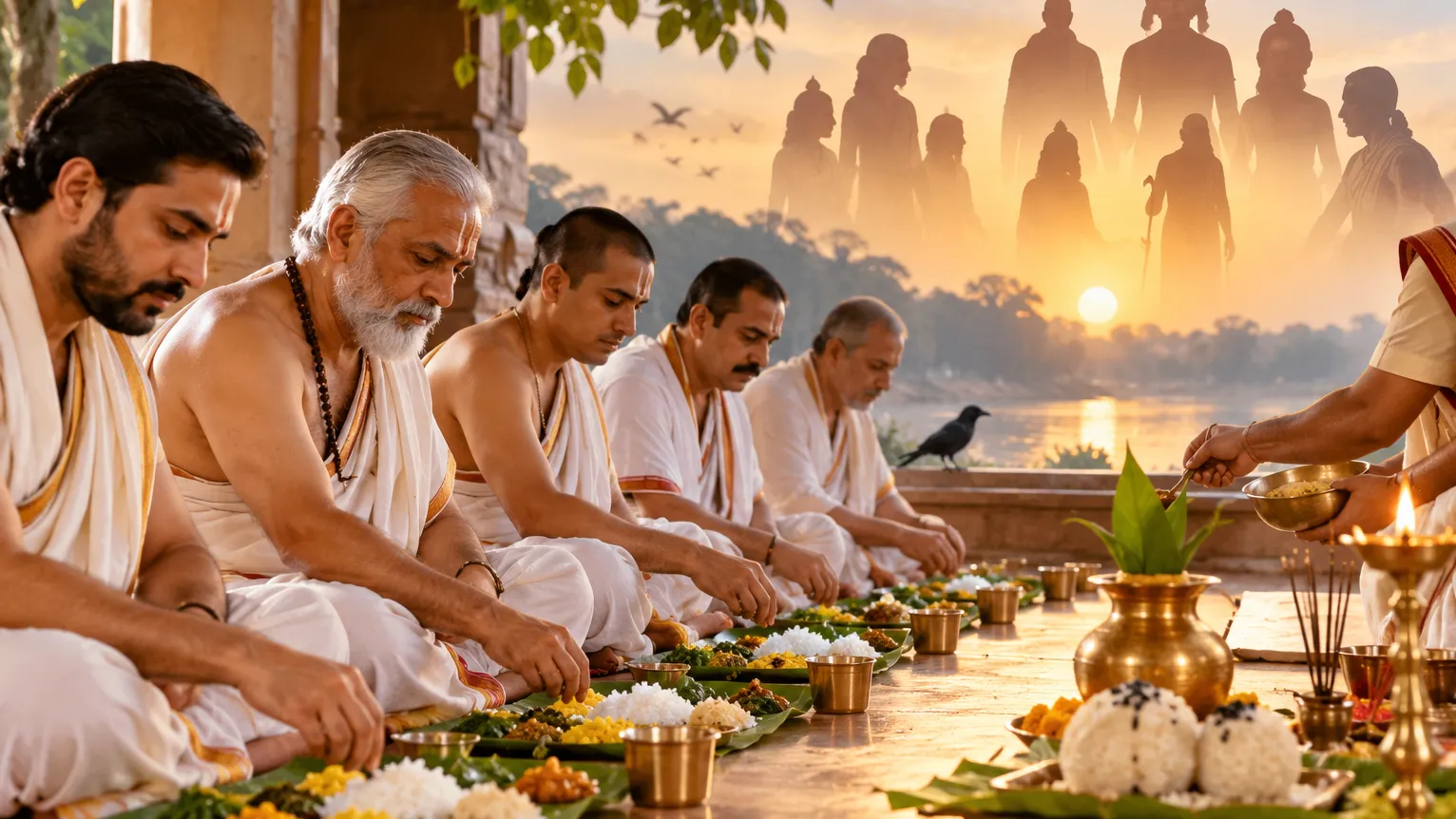
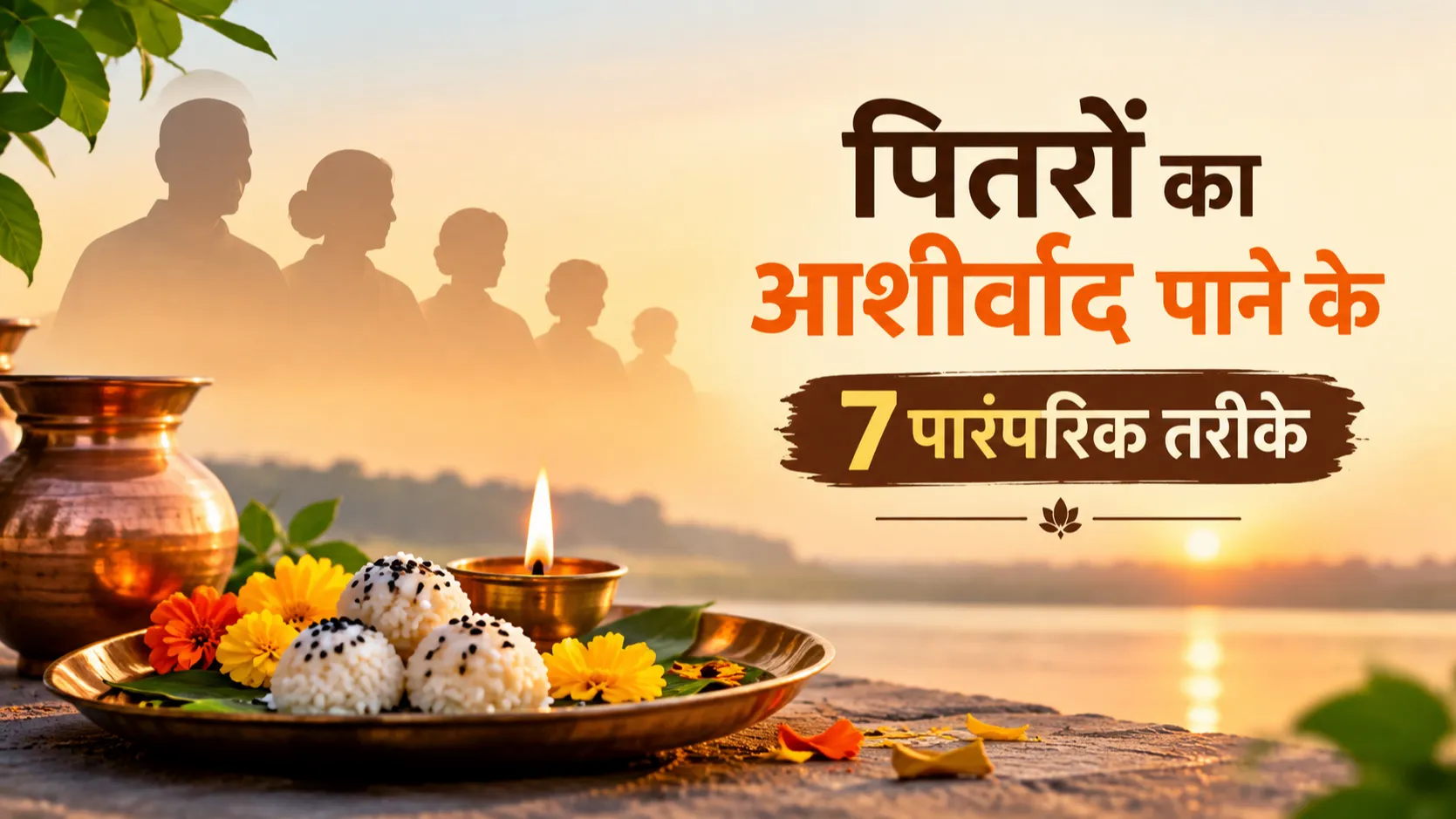
In Sanatan Dharma, rituals and traditions hold immense significance. From birth until after death, various rituals are prescribed in our culture. Among these, the period of Shraddha Paksha or Pitru Paksha is considered extremely sacred and important. According to the Hindu calendar, the 16-day period from the full moon (Purnima) of the Bhadrapada month to the new moon (Amavasya) of the Ashwin month is called Shraddha Paksha. During this time, every follower of Sanatan Dharma remembers their ancestors (Pitrus) and performs various rituals for the peace and satisfaction of their souls.
During these sixteen days of Shraddha, there is a special provision for Tarpan, Pind Daan, and acts of charity. However, the most central and mandatory process among all these rituals is considered to be Brahmin Bhoj in Shraddha. The Shraddha ritual is not considered complete without feeding Brahmins. Naturally, this brings a common question to people's minds: why is Brahmin Bhoj conducted during Shraddha and what are the actual reasons behind it? In today's article, we will discuss this subject in detail and try to understand both its religious and scientific aspects.
Shraddha Paksha and the Debt to Ancestors (Pitru Rina)
According to Hindu scriptures, every human being is born with three types of debts—Dev Rina (debt to gods), Rishi Rina (debt to sages), and Pitru Rina (debt to ancestors). Among these, paying off the Pitru Rina is considered the most difficult and important duty. Our parents and ancestors give us life, values, and the vision to see this world. Shraddha Paksha is the medium to express gratitude towards them. When we remember our ancestors with a feeling of reverence, it is called 'Shraddha' (meaning 'Shraddha + Idam = Shraddha').
The Importance of Brahmin Bhoj in Shraddha
When we talk about the Shraddha ritual, the importance of Brahmin Bhoj comes foremost. According to religious beliefs, Brahmins are considered representatives of the gods. It is believed that the offerings or food accepted through the mouth of a Brahmin directly reaches the gods and our ancestors.
Great Sanatan texts like Garuda Purana, Matsya Purana, and Agni Purana explicitly mention that feeding qualified, scholarly, and sattvic Brahmins during Shraddha deeply pleases the ancestors. During Pitru Paksha, our ancestors visit our homes in a subtle form and expect food and water offered by their descendants.
How Does Food Reach the Ancestors Directly? (References from Scriptures)
It is a very natural question: how does food consumed on Earth reach the ancestors residing in other realms? In this regard, Sanatan Dharma scriptures provide a very beautiful explanation.
According to Garuda Purana, the deities—Vasu, Rudra, and Aditya—manage the various forms of ancestors. When a person feeds Brahmins with devotion, divine powers (especially Vishvedeva and Agni Dev) receive the subtle elements of that food through the chanting of mantras and in the presence of fire.
- The Medium of Fire: Scriptures state that Agni Dev and Vayu Dev perform the task of delivering Havishya (oblations for havan) and food to the gods and ancestors.
- Divine Satisfaction: Just as fodder fed to a cow reaches its various parts and provides energy, similarly, food consecrated with mantras and served to Brahmins reaches the subtle-bodied ancestors through a divine pathway.
- Imperishable Satisfaction: When Brahmins finish eating and say "Triptosmi" (I am satisfied), that blessing brings peace and fulfillment to the souls of the ancestors.
Religious Reasons for Brahmin Bhoj in Shraddha
From a religious perspective, Brahmin Bhoj in Shraddha has several deep meanings:
- Satisfaction and Blessings of Ancestors: Feeding Brahmins satisfies the ancestors. Satisfied ancestors bless their descendants with long life, good health, fame, strength, wealth, and prosperity.
- Pleasing the Deities: Brahmins are knowers of the Vedas and are considered the mouth of the Lord. Feeding Brahmins pleases all the deities, including Brahma, Vishnu, and Mahesh.
- Liberation from Sins: It is believed that performing Shraddha rituals and Brahmin Bhoj destroys many unknown sins from a person's past and present lives, granting them spiritual merit (punya).
- Progeny Growth: Scriptures state that the person who performs Shraddha and Brahmin Bhoj for their ancestors with devotion never faces an interruption in lineage growth, and generations flourish.
Scientific Reasons for Brahmin Bhoj in Shraddha
Sanatan traditions are not merely superstitions or hollow imaginations; rather, they have a strong scientific and logical basis. Both the religious and scientific reasons for Brahmin Bhoj are beneficial for society. Let us understand its scientific aspects:
- Energy Conservation and Environmental Balance: The period of Shraddha Paksha is when the season transitions (the end of the rainy season and the beginning of autumn). During this transitional phase, the digestive system can become weak. Eating and serving sattvic food (pure food without garlic and onion) helps maintain the body's energy balance.
- Spirit of Social Service and Philanthropy: In ancient times, sages created a system ensuring that the scholars, ascetics, and studying Brahmins of society (who often stayed away from worldly troubles and engaged in spiritual pursuit) could receive good and nutritious food periodically. In a way, this was a scientific system to honor and nourish the intellectuals of society.
- Positive Energy: When Brahmins with sattvic thoughts and who recite the Vedas eat at someone's home, the chanting of mantras and their positive energy purify the atmosphere of the entire house. Modern science also acknowledges that sound waves and positive thoughts have a profound impact on our surrounding environment.
- Mental Peace and Contentment: When we fulfill our duties towards our ancestors, a type of mental satisfaction and contentment arises within us. This psychological peace is extremely beneficial for our mental health.
What Points Should Be Kept in Mind While Arranging Brahmin Bhoj?
Since the ritual of Brahmin Bhoj in Shraddha is extremely sacred, it is considered necessary to follow certain special rules while performing it:
- Sattvic Food: The food must be completely sattvic. The use of garlic, onion, asafoetida, or non-vegetarian items is strictly prohibited. Including kheer, puri, and seasonal vegetables in the meal is considered auspicious.
- Selection of Qualified Brahmins: Brahmins chosen for the meal should be disciplined, knowledgeable in the Vedas, and of a sattvic nature.
- Honor and Respect: Before serving food to Brahmins, their feet should be washed, and after the meal, they should be bid farewell with respectful dakshina (offerings) and clothing donations.
- Silence and Calm Demeanor: There is a tradition of observing silence or maintaining a calm state of mind while serving and consuming food, which preserves the sanctity of the meal.
Conclusion
In short, Brahmin Bhoj in Shraddha is not just a ritual or tradition, but a unique confluence of our culture, respect for ancestors, and our responsibility toward society. It connects us to our roots and teaches us what our gratitude should be toward those who are no longer in this world. According to religious beliefs, while it satisfies the ancestors, from a scientific perspective, it is an excellent medium to nourish society and spread positivity. Therefore, we must perform this sacred ritual of Brahmin Bhoj during Shraddha Paksha with utmost devotion and proper procedures.
अक्सर पूछे जाने वाले प्रश्न (FAQ)
Q: What is Shraddha Paksha or Pitru Paksha?
According to the Hindu calendar, the 16-day period from the full moon of Bhadrapada to the new moon of Ashwin is called Shraddha Paksha, during which ancestors are remembered.
Q: Which main process is considered mandatory during Shraddha Paksha?
Apart from Tarpan, Pind Daan, and charity, Brahmin Bhoj is considered the most central and mandatory process during Shraddha Paksha.
Q: How many types of debts do humans have?
According to Hindu scriptures, every human being has three types of debts—Dev Rina, Rishi Rina, and Pitru Rina.
Q: What is the literal meaning of the word 'Shraddha'?
The word 'Shraddha' is made up of 'Shraddha + Idam', which means remembering one's ancestors with a feeling of reverence.
Q: Why is it necessary to feed Brahmins in Shraddha?
According to religious beliefs, Brahmins are considered representatives of the gods, and through them, food reaches our ancestors.
Q: In which scriptures is Brahmin Bhoj in Shraddha mentioned?
Great Sanatan texts like Garuda Purana, Matsya Purana, and Agni Purana explicitly mention Brahmin Bhoj during Shraddha.
Q: In what form do ancestors visit home during Pitru Paksha?
During Pitru Paksha, our ancestors visit our homes in a subtle form and expect food and water offered by their descendants.
Q: How does food eaten on Earth reach the ancestors?
Through the chanting of mantras, the witness of fire, and divine powers (especially Vishvedeva and Agni Dev), the subtle elements of the food reach the ancestors.
Q: Who performs the task of delivering food to the gods and ancestors?
According to scriptures, Agni Dev and Vayu Dev primarily perform the task of delivering food to the gods and ancestors.
Q: What kind of Brahmins should be fed during Shraddha?
During Shraddha, qualified, scholarly, and sattvic Brahmins should be fed, which deeply pleases the ancestors.

Author
Praarthana Editorial Team
The Praarthana Editorial Team shares daily spiritual guidance, authentic rituals, and deep insights from ancient Sanatan scriptures to support your spiritual journey.
ऐप डाउनलोड करें
पंचांग तिथि, त्यौहार, व्रत, उत्सव, एकादशी, आरती संग्रह, मंत्र, व्रत कथा



एक टिप्पणी छोड़ें