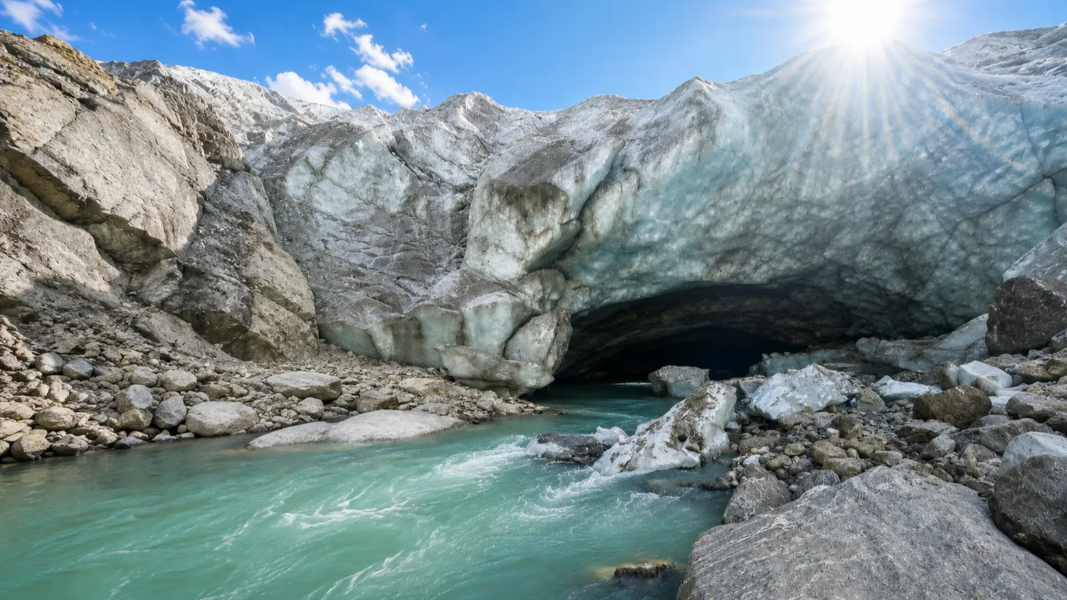
Many rivers flow on the land of India, but none is as revered and mysterious as the Ganga. Ganga is not just a river; she is a life-giving mother, a sacred symbol, and the soul of Indian civilization. Originating from the snowy peaks of the Himalayas to the Bay of Bengal, it is an amazing journey of Ganga that has inspired millions for ages. This journey is not merely geographical but imbued with spiritual, cultural, and mythological significance. Let us embark on this divine river's journey and try to uncover its every stop, every story, and every mystery.
The Origin of Ganga: Where Divinity Begins - Gaumukh
The journey of Ganga begins at Gaumukh, near the Gangotri Glacier, located in the Uttarkashi district of Uttarakhand. This place is situated at an altitude of approximately 3,892 meters (12,770 feet) above sea level. From here, a thin stream emerges, known as Bhagirathi. This place is called 'Gaumukh' because the snout of the glacier resembles a cow's mouth.
Mythological Tale: Bhagirath's Penance and Shiva's Grace
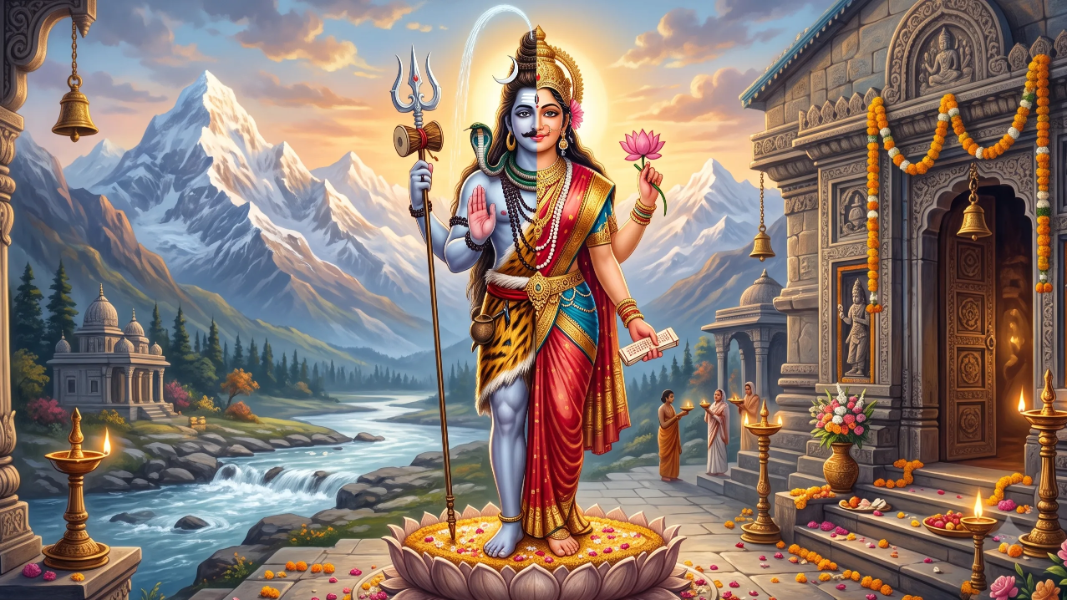
The story of Ganga's descent to Earth is extremely interesting and inspiring. It is believed that to liberate the sixty thousand sons of King Sagara from the curse of Sage Kapila, their descendant, King Bhagirath, performed severe penance. Pleased by his penance, Lord Brahma allowed Ganga to come to Earth, but Ganga's flow was so ferocious that Earth could not bear it. Then Bhagirath worshipped Lord Shiva. Shiva held Ganga in his matted locks and then released her onto Earth in seven streams. One of these streams became known as 'Bhagirathi', which is the original source of today's Ganga. This story symbolizes that even the immense power of nature can be controlled by divine grace and human efforts.
Himalayan Journey: Confluence of Struggle and Beauty
After emerging from Gaumukh, the Bhagirathi River meanders through narrow valleys and high mountains. This path is extremely arduous, yet its beauty is unparalleled. Flowing through melting glaciers, soil rich in Himalayan herbs, and icy winds, the Bhagirathi acquires its purity and medicinal properties.
Devprayag: First Among the Panch Prayag
An important stop on Bhagirathi's journey is Devprayag. Here, the Alaknanda River, which originates from the Satopanth Glacier, meets the Bhagirathi. Only after this confluence is the river known as 'Ganga'. Devprayag is one of the Panch Prayag (five confluences) of Hindu religion and holds immense religious significance. It is believed that bathing here absolves one of sins. At this divine confluence, Ganga takes on her new, vast, and more sacred form.
Haridwar: The Gateway to Salvation
Moving further from Devprayag, Ganga emerges from the mountains and enters the plains. This gateway is in Haridwar, which means 'Gateway to Hari (Lord Vishnu)' or 'Gateway to Har (Lord Shiva)'. Haridwar is one of the seven sacred cities of India, and Ganga's first major bathing ghat, 'Har Ki Pauri', is located here. The Ganga Aarti held at Har Ki Pauri in the evening is a wonderful and unforgettable experience. Every twelve years, the Kumbh Mela is organized here, where millions of devotees take a holy dip in the Ganga seeking salvation. In Haridwar, the waters of Ganga become calm and expansive, making it ideal for bathing and rituals.
Rishikesh: City of Yoga and आध्यात्मिकता
Before Haridwar, Ganga passes through Rishikesh, known as the 'Yoga Capital of the World'. Here, Ganga's flow is still swift, suitable for rafting and other adventure sports. Rishikesh is famous for its ashrams, yoga centers, and meditation camps. Famous bridges like Laxman Jhula and Ram Jhula span the Ganga, enhancing the beauty of this place. The experience of meditating by the banks of the Ganga here is extremely peaceful.
Plain Journey: The Grand Form of the Life-Giver
Moving forward from Haridwar, the Ganga River enters the vast plains of North India, where it becomes the lifeline for millions of people. It brings with it fertile silt, which is extremely important for agriculture. Its journey through the plains gives life to thousands of villages and cities.
Kanpur and Prayagraj (Allahabad): The Great Pilgrimage of Confluence
In Uttar Pradesh, Ganga passes through several important cities. Kanpur, a major industrial city, uses Ganga's water for industries and irrigation. However, this has also led to pollution problems, for which many efforts are being made to mitigate.
Moving past Kanpur, Ganga reaches Prayagraj, formerly known as Allahabad. Here, the Triveni Sangam occurs, where the Ganga, Yamuna, and the mythological Saraswati rivers meet. This is the holiest confluence in Hinduism, and every twelve years, the Kumbh Mela is also organized here, considered the largest human gathering in the world. Bathing at the Sangam is considered an important means of attaining salvation. The Akshayavat tree also holds mythological significance here, believed to be indestructible even during dissolution. In Prayagraj, the spiritual and cultural significance of Ganga reaches its peak.
Varanasi (Kashi): The City of Salvation
Located a short distance from Prayagraj, Varanasi, also known as Kashi or Banaras, is the most revered stop on Ganga's journey. It is one of the world's oldest continuously inhabited cities and is considered the city of Lord Shiva. The amazing beauty and religious significance of Ganga can be seen on the ghats of Varanasi. Thousands of people daily take holy dips, perform Pooja, and conduct last rites at ghats like Dashashwamedh Ghat, Manikarnika Ghat, and Harishchandra Ghat.
It is believed that those who die in Kashi attain direct salvation. The mornings here, with the Aarti on the ghats, the ringing of temple bells, and the lamps floating in the Ganga, present an unforgettable sight. The Sacred Ganga here is not merely a river but an eternal symbol of the cycle of life and death. In the alleys of Varanasi, by the banks of the Ganga, and in the temples, the story of Ganga is told in every corner.
Ganga in Bihar: The Lifeline of Magadh
Leaving Uttar Pradesh, Ganga enters Bihar, where it serves as the state's main water source and lifeline. Patna, formerly known as ancient Pataliputra, is a historic city located on the southern bank of the Ganga. The plains of Bihar are extremely fertile due to the rich soil brought by the Ganga, making them agriculturally prosperous. Here, Ganga absorbs many smaller rivers, transforming into a mighty river. The waters of Ganga irrigate the fields of Bihar and nourish the lives of its people.
Towards the Bay of Bengal: The Mysterious World of the Delta
Moving further from Bihar, Ganga enters West Bengal and gradually proceeds towards its final destination, the Bay of Bengal. Here, the river branches out into numerous distributaries, forming the world's largest delta region.
Farakka Barrage: Human Intervention
In West Bengal, the Farakka Barrage is an important engineering structure built with the objective of diverting Ganga river water into the Hooghly River to protect Kolkata Port from siltation and to provide water for irrigation. The barrage has affected the river's natural flow, leading to some environmental and ecological impacts, particularly regarding water-sharing issues with Bangladesh.
Sundarbans: Mangroves and Biodiversity
Beyond Farakka, the main stream of Ganga enters Bangladesh as the Padma, where it meets the Brahmaputra River (known as Jamuna). Together, these two rivers form the world's largest delta, the Sundarbans. The Sundarbans is a UNESCO World Heritage Site and the natural habitat of the Royal Bengal Tiger. This vast mangrove forest creates a unique ecosystem, rich in biodiversity, and protects coastal areas from storms. Here, Ganga's water mixes with seawater, creating a unique blend of brackish and fresh water.
Gangasagar: Where Ganga Meets the Ocean
Finally, a branch of the Ganga, the Hooghly River, reaches Sagar Island in the South 24 Parganas district of West Bengal, where it merges into the Bay of Bengal. This place is known as Gangasagar and is an extremely sacred pilgrimage site in Hinduism. The saying 'All pilgrimages many times, Gangasagar once' illustrates the significance of this place.
Here lies the ashram of Sage Kapila, where the sons of King Sagara attained salvation. On the occasion of Makar Sankranti, a huge fair is organized here, where millions of devotees come to take a holy dip at the confluence of Ganga and the ocean. Gangasagar is the final stop on Ganga's amazing journey, where the river's existence merges into the sea, symbolizing the end of life's journey and its merging into the infinite. This place reinforces the idea that eventually, everything merges into the Brahman.
Mysteries of Ganga: Supernatural and Scientific Aspects
For centuries, the Ganga River has held many mysteries within itself. The purity and self-purifying quality of its water are not only based on mythological beliefs but also attributed to some scientific reasons.
Self-Purifying Quality
Ganga water often does not breed insects and remains untainted even after being kept for many days. Scientists attribute this self-purifying quality to the presence of a special type of bacteriophage virus. These viruses destroy bacteria present in Ganga water, keeping the water pure. Additionally, flowing through the Himalayan rocks, Ganga water acquires certain minerals and medicinal properties that make it unique. Mythological tales consider it the result of Shiva's touch and his blessings, which make this water divine and medicinal. These mysteries of Ganga have astonished people for ages.
Purity and Medicinal Properties of Ganga Water
In Hinduism, Ganga water holds the highest purity. It is used in all religious rituals, worship, and ceremonies. It is believed that Ganga water purifies the home and body. Ancient texts also mention its medicinal properties, where it is considered helpful in treating several diseases. Modern research also confirms some unique properties in Ganga water, although further research is needed.
Mystery of the Invisible Saraswati
At the Triveni Sangam in Prayagraj, a third river, Saraswati, is said to meet Ganga and Yamuna invisibly. While Ganga and Yamuna are clearly visible, the existence of the Saraswati River remains a mystery. According to mythological tales, Saraswati is an underground river that emerges at the confluence. Geological studies have also found traces of ancient river channels in some areas, confirming that such a river might have existed at one time. This mystery further enhances the divinity of Ganga.
Importance of Ganga: Spiritual, Cultural, and Environmental
The importance of Ganga is deeply ingrained in every aspect of Indian life. It is not just a river, but a mother, a goddess, a history, and a future.
Religious Significance: Giver of Salvation and Absolver of Sins
In Hinduism, Ganga is worshipped as Goddess Ganga. She is considered the giver of salvation and the absolver of sins. Bathing in the Ganga is believed to wash away all sins and grant liberation from the cycle of birth and death. Immersing ashes in the Ganga after cremation is an important ritual for attaining salvation. Places like Haridwar, Prayagraj, Varanasi, and Gangasagar are major pilgrimage sites where devotees offer their faith and reverence.
Cultural Significance: Mother of Civilization
The story of Ganga is the story of Indian civilization and culture. Since ancient times, many civilizations and empires have developed along the banks of the Ganga. The emergence and development of many powerful empires, including Magadh, Maurya, Gupta, and Mughal empires, occurred in the fertile plains of Ganga. Ganga deeply influences Indian art, literature, music, and philosophy. It has been the subject of countless folk tales, songs, poems, and paintings. The banks of the Ganga River have been a center of rich cultural heritage.
Environmental Significance: Biodiversity and Ecology
The Ganga River nourishes a vast ecosystem. It is home to many types of fish, turtles, dolphins (the Ganga Dolphin is India's national aquatic animal), and birds. Its plains are extremely fertile for agriculture and play a vital role in India's food security. Ganga's water provides drinking water and irrigation for millions of people.
However, due to increasing population, industrialization, and urbanization, the Ganga River has become severely polluted. Government programs like 'Namami Gange' are being implemented for its conservation, aiming to make Ganga clean and free-flowing. Maintaining the ecological balance of Ganga is crucial not only for the river but also for India's ecosystem and the health of its people.
Conclusion: A Continuous Journey, An Eternal Inspiration
From the snowy peaks of Gaumukh to the vast ocean at Gangasagar, this amazing journey of Ganga not only covers thousands of kilometers but also encompasses the deep meanings of Indian culture, आध्यात्मिकता, and life. Ganga is not just a river; she is our faith, our identity, and our heritage. It is a continuous saga of struggle, sacrifice, purification, and ultimately, salvation.
We must understand the importance of this great river and make collective efforts for its conservation so that future generations can also experience its purity, its mysteries, and its life-giving power. May Ganga remain an eternal source of inspiration for us, reminding us that every journey in life has its importance, and eventually, everything merges into the infinite.
अक्सर पूछे जाने वाले प्रश्न (FAQ)
Q: Where does the Ganga River originate?
The Ganga River originates from Gaumukh, near the Gangotri Glacier, located in the Uttarkashi district of Uttarakhand.
Q: What is the altitude of Gaumukh above sea level?
Gaumukh is situated at an altitude of approximately 3,892 meters (12,770 feet) above sea level.
Q: By what name is the Ganga River initially known?
The Ganga River is initially known as 'Bhagirathi'.
Q: Why is the place named 'Gaumukh'?
The glacier's snout resembles a cow's mouth, hence the place is called 'Gaumukh'.
Q: Who performed penance to bring Ganga to Earth?
King Bhagirath performed intense penance to bring Ganga to Earth to liberate his ancestors from the curse of Sage Kapila.
Q: How did Lord Shiva hold Ganga?
The force of Ganga was so immense that Earth could not bear it, so Lord Shiva held Ganga in his matted locks.
Q: Which rivers meet at Devprayag?
At Devprayag, the Alaknanda River (which originates from Satopanth Glacier) meets the Bhagirathi.
Q: After the confluence of Bhagirathi and Alaknanda, by what name is the river known?
After the confluence of Bhagirathi and Alaknanda, the river is known as 'Ganga'.
Q: What is the meaning of Haridwar?
Haridwar means 'Gateway to Hari (Lord Vishnu)' or 'Gateway to Har (Lord Shiva)'.
Q: Which is the first major bathing ghat of Ganga in Haridwar?
Har Ki Pauri is the first major bathing ghat of Ganga in Haridwar.

Author
Praarthana Editorial Team
The Praarthana Editorial Team shares daily spiritual guidance, authentic rituals, and deep insights from ancient Sanatan scriptures to support your spiritual journey.

ऐप डाउनलोड करें
पंचांग तिथि, त्यौहार, व्रत, उत्सव, एकादशी, आरती संग्रह, मंत्र, व्रत कथा



एक टिप्पणी छोड़ें