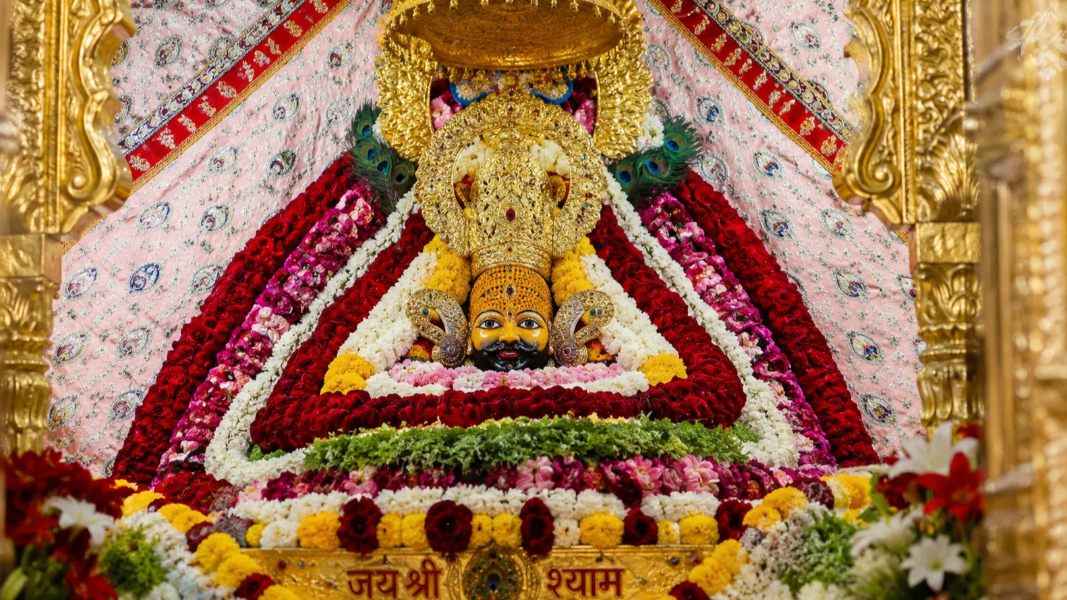
In the heartland of Rajasthan, nestled in the Sikar district, lies a sacred pilgrimage site that resonates with the fervent devotion of millions. It is the abode of Khatu Shyam, a deity revered as the benevolent fulfiller of wishes, the protector of the helpless, and the embodiment of unwavering faith. Known affectionately as Baba Shyam, this divine figure draws devotees from across the globe, especially in the Kaliyuga, offering solace, hope, and the promise of divine intervention. But who is Khatu Shyam, and what is the profound Khatu Shyam legend that underpins such immense devotion? Join us as we unravel the captivating Baba Shyam story, tracing his journey from a mighty warrior prince named Barbarika to the beloved deity of today.
This comprehensive exploration will delve deep into the ancient Puranic tales, revealing the extraordinary lineage of Barbarika, the boons he received, his ultimate sacrifice during the epic Kurukshetra War, and how he came to be worshipped by the very name of Lord Krishna. We will also explore the grandeur of the Khatu Shyamji Temple, its rich history, the sacred rituals performed, and the spiritual profoundness that defines the worship of Baba Shyam.
The Dawn of a Legend: Barbarika's Illustrious Lineage
The story of Khatu Shyam begins not in the deserts of Rajasthan, but amidst the grandeur and conflicts of the Mahabharata era. Barbarika, the central figure of this legend, was no ordinary mortal. He was the grandson of the mighty Pandava Bhima, known for his extraordinary strength, and the son of the powerful and virtuous Ghatotkacha. His mother was Maurvi, a formidable Nagkanya (daughter of the serpent king).
From his very birth, Barbarika was destined for greatness. He inherited the valor and strength of his father and grandfather, combined with a profound sense of dharma and righteousness. Even as a child, his spiritual inclinations were evident, leading him on a path of intense penance and devotion. He performed severe austerities to please two of the most powerful deities in the Hindu pantheon: Lord Shiva and Goddess Durga.
Through his unwavering devotion, Barbarika was blessed with extraordinary powers. Lord Shiva, pleased with his penance, granted him three infallible arrows (Teen Baan). These arrows possessed immense destructive capabilities, capable of obliterating any force in existence. Goddess Durga, equally impressed by his purity and determination, bestowed upon him immense strength and the ability to be victorious in any battle. Armed with these divine boons, Barbarika became an unparalleled warrior, confident in his ability to uphold dharma.
The Approaching Storm: Barbarika's Vow for Dharma
As the drums of war began to beat, signaling the impending cataclysmic battle of Kurukshetra between the Pandavas and Kauravas, the young Barbarika found himself at a crossroads. He was aware of the righteous cause of his grandfather Bhima and the Pandavas, yet his heart was torn by the immense suffering that war would bring. Seeking guidance, he approached his mother, Maurvi, for counsel.
His mother, with her deep wisdom, advised him to always stand by the side that was weaker, the side that was on the verge of defeat. She instilled in him the principle of supporting the helpless and upholding justice. Taking his mother's words to heart, Barbarika made a solemn vow: he would not participate in the war to support a particular faction, but rather to ensure the victory of the 'Haare Ka Sahara' – the one who was losing or was weaker. This vow would become central to the unfolding of his incredible destiny.
With his three divine arrows, his bow, and a profound vow, Barbarika set off towards Kurukshetra, intending to be a silent, yet decisive, observer who would intervene only when one side was clearly in peril.
The Divine Test: Lord Krishna and Barbarika's Sacrifice
Lord Krishna, the divine orchestrator of the Mahabharata, was keenly aware of Barbarika's immense power and his vow. He knew that if Barbarika were to enter the war, even with the noble intention of supporting the weaker side, it would disrupt the delicate balance of destiny and the predetermined outcome of the war, which was essential for the establishment of dharma. Krishna understood that Barbarika's single-handed intervention could prolong the war indefinitely or even prevent the necessary cleansing of the world through the war.
Disguised as a humble Brahmin, Lord Krishna encountered Barbarika on his way to Kurukshetra. Krishna, ever the master strategist, initiated a conversation, subtly probing Barbarika's intentions and capabilities. He questioned Barbarika's youth and his apparent confidence in participating in such a massive war. Barbarika, unaware of the Brahmin's true identity, confidently asserted that he alone could finish the entire war in a matter of moments, with his three infallible arrows.
Skeptical, the Brahmin challenged Barbarika to prove the power of his arrows. He pointed to a large peepal tree and asked if Barbarika could pierce every single leaf on it with one arrow. Barbarika accepted the challenge with a smile. As he prepared to release his arrow, Krishna secretly plucked a leaf from the tree and hid it under his foot. Barbarika released his first arrow, and to Krishna's astonishment, it meticulously pierced every single leaf on the tree, including the one under Krishna's foot, without harming Krishna himself. The arrow then returned to Barbarika's quiver, proving its unerring accuracy and destructive potential.
Having witnessed the incredible power, Krishna then directly questioned Barbarika about his vow to support the weaker side. He explained the dilemma: if Barbarika were to side with the Pandavas, the Kauravas would become weaker, making the Pandavas the stronger side. If Barbarika then switched to support the Kauravas, the Pandavas would become weaker. This cycle would continue, leading to endless destruction, and ultimately, no side would emerge victorious, completely thwarting the divine purpose of the war.
Krishna then revealed his true, majestic form to Barbarika. Overwhelmed by the divine presence, Barbarika immediately understood the gravity of the situation and the depth of Krishna's concern. Lord Krishna explained that for the war to proceed as destined and for dharma to be established, the greatest sacrifice was required – the head of the greatest Kshatriya warrior present. Barbarika, recognizing Krishna as the supreme being and understanding the divine plan, realized that he, with his unparalleled power and the vow, was the greatest warrior whose sacrifice was needed.
Without a moment's hesitation, filled with devotion and a profound understanding of his role in the cosmic drama, Barbarika agreed to the sacrifice. He requested only one boon: to witness the entire Kurukshetra War from beginning to end. Krishna granted this wish. With incredible selflessness, Barbarika severed his own head with his sword, offering it to Lord Krishna. Krishna then placed Barbarika's head on the top of a hill overlooking the battlefield, from where he could observe every moment of the epic war.
The Birth of Khatu Shyam: A New Identity and Purpose
For eighteen days, Barbarika's head, imbued with divine vision, watched the brutal war unfold. After the war concluded, the victorious Pandavas began to argue amongst themselves about who was the greatest hero and whose prowess had led to their victory. Lord Krishna, knowing the truth, directed them to Barbarika's head for an unbiased answer.
To their astonishment, Barbarika's head spoke, clarifying that only Lord Krishna, with his divine orchestration, was the true victor. He revealed that he saw nothing but Krishna's Sudarshan Chakra mowing down the enemy forces and Krishna's Maya (divine illusion) at play. He attributed the entire victory to Lord Krishna alone.
Deeply moved by Barbarika's supreme sacrifice, his adherence to dharma, and his humble acceptance of Krishna's supremacy, Lord Krishna bestowed upon him a magnificent boon. Krishna declared that Barbarika would henceforth be worshipped by Krishna's own name, "Shyam." He further pronounced that in the Kaliyuga, Barbarika would become the deity who fulfills the wishes of his devotees, especially those who come to him with a pure heart, unwavering faith, and a spirit of true surrender. He would be known as Khatu Shyam, a name derived from the village of Khatu, where his sacred head would eventually be found and worshipped.
Thus, Barbarika, the mighty warrior, transcended his mortal form and was elevated to the status of a divine protector, a true embodiment of sacrifice and devotion. His promise to be the "Haare Ka Sahara" continues to this day, drawing countless devotees seeking solace and support.
The Sacred Abode: Khatu Shyamji Temple, Rajasthan
The story of Khatu Shyam took a tangible form centuries later. According to the Khatu Shyam history, a cow belonging to a local villager was observed to mysteriously pour milk from her udders at a specific spot on a barren piece of land every day. Intrigued, the villagers investigated and, upon digging, discovered a divine idol – the sacred head of Barbarika, now Khatu Shyam. This miraculous discovery marked the beginning of his formal worship in Khatu village.
The first temple dedicated to Baba Shyam was constructed in 1027 AD by Roop Singh Chauhan, the then ruler of Khatu. The present magnificent structure, however, was built in 1720 AD by Diwan Abhay Singh Rathore after the original temple was damaged. The Khatu Shyamji Temple is located in the Khatu Shyamji village, in the Sikar district of Rajasthan, India. It stands as a testament to centuries of devotion and architectural marvel.
The temple is a grand spectacle of white marble, adorned with intricate carvings and exquisite artwork. The main deity, the revered head of Baba Shyam, is enshrined in the sanctum sanctorum, captivating devotees with its serene and benevolent gaze. The temple complex is vast, featuring spacious courtyards, a magnificent Darshan Mandap (assembly hall for devotees), and facilities to accommodate the millions of pilgrims who visit annually. The architecture reflects a blend of traditional Rajasthani and Mughal styles, creating an atmosphere of profound spiritual tranquility.
Rituals and Devotion at Khatu Shyamji Temple
Devotion at Khatu Shyamji Temple is a vibrant and deeply personal experience. The rituals followed by devotees are a blend of ancient traditions and heartfelt offerings, all designed to express their love and surrender to Baba Shyam.
Key Rituals and Practices:
- Darshan: Millions throng the temple for a glimpse of the revered head of Baba Shyam. The temple has elaborate arrangements for queue management, especially during peak seasons.
- Offerings: Devotees offer a variety of items, including fresh flowers, coconuts, sweets, and most notably, 'kheer' (sweet rice pudding) and 'prasad'. Many also offer elaborate clothes (poshak) for the deity.
- Jyot Darshan: Lighting lamps (Jyot) is a common practice, symbolizing the dispelling of darkness and seeking divine light.
- Aarti: Daily Aarti ceremonies are performed five times a day, each holding unique significance:
- Mangla Aarti: Performed early morning at sunrise.
- Shringar Aarti: After the deity is adorned with new clothes and ornaments.
- Rajbhog Aarti: At noon, along with the main meal offering.
- Sandhya Aarti: In the evening, at sunset.
- Shayan Aarti: Before the temple closes for the night.
- Nishaan Yatra: One of the most significant and emotionally charged rituals is the 'Nishaan Yatra'. Devotees, often walking barefoot for hundreds of kilometers, carry brightly colored flags (Nishaan) on poles to the temple. This act of pilgrimage and offering the Nishaan at the temple is a profound expression of devotion, surrender, and the fulfillment of vows.
- Chhappan Bhog: On special occasions, a 'Chhappan Bhog' (an offering of 56 different food items) is presented to Baba Shyam.
Major Festivals:
The temple comes alive during its annual festivals. The most important is the Phalguni Mela, held during the Hindu month of Phalguni (February/March), which attracts millions of devotees from across India and beyond. During this grand fair, the temple is adorned magnificently, and the entire village pulsates with divine energy, bhajans, and fervent prayers. Other important festivals include Janmashtami (Lord Krishna's birthday) and Basant Panchami.
The Spiritual Significance and Unwavering Faith in Baba Shyam
The significance of Baba Shyam transcends mere ritualistic worship; it is deeply rooted in his profound legend and his role as the 'Haare Ka Sahara'. He is seen as the ultimate refuge for those who feel defeated, helpless, or burdened by life's challenges. His story teaches several vital spiritual lessons:
- Selfless Sacrifice: Barbarika's willingness to sacrifice his own life for the greater good and the establishment of dharma is a powerful testament to selflessness and devotion.
- Adherence to Dharma: His vow to support the weaker side, even at the cost of his own existence, exemplifies a steadfast commitment to righteousness.
- Unwavering Faith: The millions who visit Khatu Shyamji Temple bear witness to the unwavering faith they place in him. Devotees believe that Baba Shyam listens to every prayer and fulfills every pure wish.
- Deity of Kaliyuga: Lord Krishna himself declared Barbarika as the deity for the Kaliyuga, promising that he would be the fulfiller of desires. This gives devotees immense hope in an age often perceived as challenging and materialistic.
- Symbol of Hope: For many, Baba Shyam is a beacon of hope in times of despair. His presence signifies that even in the darkest moments, divine intervention and protection are available for those who sincerely seek it.
Countless stories circulate among devotees about miracles experienced, wishes granted, and seemingly insurmountable obstacles overcome through the grace of Baba Shyam. The unwavering faith is palpable, creating an atmosphere of collective spiritual energy that is both humbling and inspiring. People often share how their lives have been transformed, their illnesses cured, and their families blessed after seeking the blessings of Baba Shyam.
Conclusion
The journey from Barbarika, the mighty grandson of Bhima, to the revered Khatu Shyam, the benevolent deity of Kaliyuga, is a testament to sacrifice, devotion, and divine grace. His legend, woven into the fabric of the Mahabharata, continues to inspire and guide millions, offering a spiritual anchor in an ever-changing world.
The Khatu Shyamji Temple in Rajasthan stands as a living monument to this incredible Baba Shyam story, a place where history, myth, and unwavering faith converge. It is not just a destination for pilgrimage, but a sanctuary where hearts find solace, prayers are heard, and the powerful presence of the 'Haare Ka Sahara' can be deeply felt.
Whether you are a seeker of truth, a devotee yearning for divine connection, or simply curious about the profound tales of ancient India, the Khatu Shyam legend offers a timeless narrative of courage, selfless love, and the enduring power of faith. May the blessings of Baba Shyam illuminate your path and fulfill your purest desires.
अक्सर पूछे जाने वाले प्रश्न (FAQ)
Q: Who is Khatu Shyam?
Khatu Shyam is a deity revered as the benevolent fulfiller of wishes, the protector of the helpless, and the embodiment of unwavering faith. He is also affectionately known as Baba Shyam.
Q: Where is the sacred pilgrimage site of Khatu Shyam located?
The sacred pilgrimage site of Khatu Shyam is nestled in the Sikar district of Rajasthan.
Q: What was Khatu Shyam's original identity?
Khatu Shyam's story traces his journey from a mighty warrior prince named Barbarika to the beloved deity of today.
Q: What was Barbarika's lineage?
Barbarika was the grandson of the mighty Pandava Bhima and the son of the powerful Ghatotkacha. His mother was Maurvi, a formidable Nagkanya (daughter of the serpent king).
Q: What divine boons did Barbarika receive?
Lord Shiva granted him three infallible arrows (Teen Baan) with immense destructive capabilities, and Goddess Durga bestowed upon him immense strength and the ability to be victorious in any battle.
Q: Why do devotees worship Khatu Shyam?
Devotees worship Khatu Shyam, especially in the Kaliyuga, seeking solace, hope, and the promise of divine intervention, as he is revered as a fulfiller of wishes and protector.
Q: In what ancient era does the legend of Barbarika begin?
The legend of Barbarika begins amidst the grandeur and conflicts of the Mahabharata era.
Q: What were Barbarika's spiritual inclinations from childhood?
Even as a child, Barbarika's spiritual inclinations were evident, leading him on a path of intense penance and devotion to please Lord Shiva and Goddess Durga.
Q: What were the characteristics of Barbarika's 'Teen Baan'?
The 'Teen Baan' were three infallible arrows possessing immense destructive capabilities, capable of obliterating any force in existence.
Q: Who was Barbarika's mother and what was her origin?
Barbarika's mother was Maurvi, who was a formidable Nagkanya, meaning a daughter of the serpent king.

Author
Praarthana Editorial Team
The Praarthana Editorial Team shares daily spiritual guidance, authentic rituals, and deep insights from ancient Sanatan scriptures to support your spiritual journey.
ऐप डाउनलोड करें
पंचांग तिथि, त्यौहार, व्रत, उत्सव, एकादशी, आरती संग्रह, मंत्र, व्रत कथा



एक टिप्पणी छोड़ें