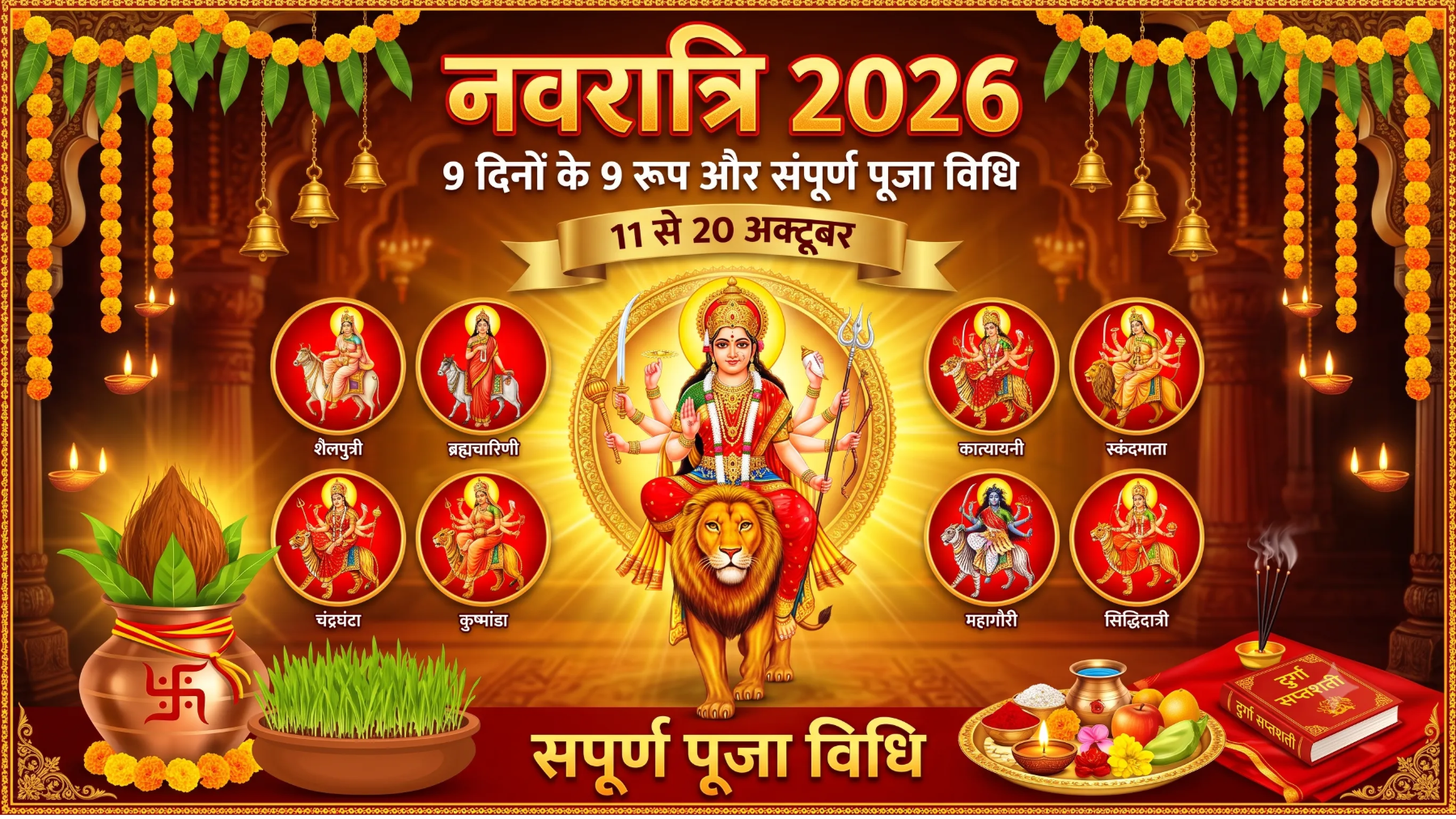
In Sanatan culture, the festival of worshiping divine energy, Navratri, is considered extremely important and energetic. Navratri arrives four times a year, which includes two Gupt Navratris and two main (Chaitra and Sharad) Navratris. Navratri arriving in the month of Chaitra holds special spiritual and astrological significance. This year, seekers are ready to worship Mother Shakti in the month of Chaitra. In this detailed article today, we will discuss the auspicious festival of Navratri 2026, its dates, the auspicious muhurat for Ghatasthapana, the nine forms of Goddess Durga, and the complete worship procedure.
Chaitra Navratri 2026 Date and Auspicious Muhurat for Ghatasthapana
According to the Sanatan calendar, the New Year and Chaitra Navratri commence from the Pratipada Tithi of the Shukla Paksha in the month of Chaitra. Devotees are filled with great enthusiasm regarding the Navratri 2026 dates. According to astrological calculations, Chaitra Navratri will begin in the third week of March 2026.
- Navratri Commencement (Pratipada Tithi): March 2026 (Exact date is valid based on the local calendar and sunrise)
- Auspicious Muhurat for Ghatasthapana (Kalash Establishment): Ghatasthapana is performed in the morning on the first day of Navratri, which is Pratipada Tithi. The first 2 hours after sunrise are considered the best for Ghatasthapana. Establishing the Kalash during the Abhijit Muhurat is also considered extremely auspicious.
- Navratri Parana (Ashtami/Navami): After worshiping the Goddess for nine days, the fast is concluded (parana) after performing Kanya Pujan.
Significance and Procedure of Ghatasthapana (Kalash Establishment)
The foundation of the nine-day grand festival is laid with Ghatasthapana on the first day of Navratri. Ghatasthapana means invoking the positive energy of the universe, all deities, and pilgrimage sites into one's home.
- First, clean the worship area thoroughly and purify it by sprinkling Gangajal (holy water).
- Spread a red cloth on a wooden platform (chowki) and install the picture or idol of Goddess Durga on it.
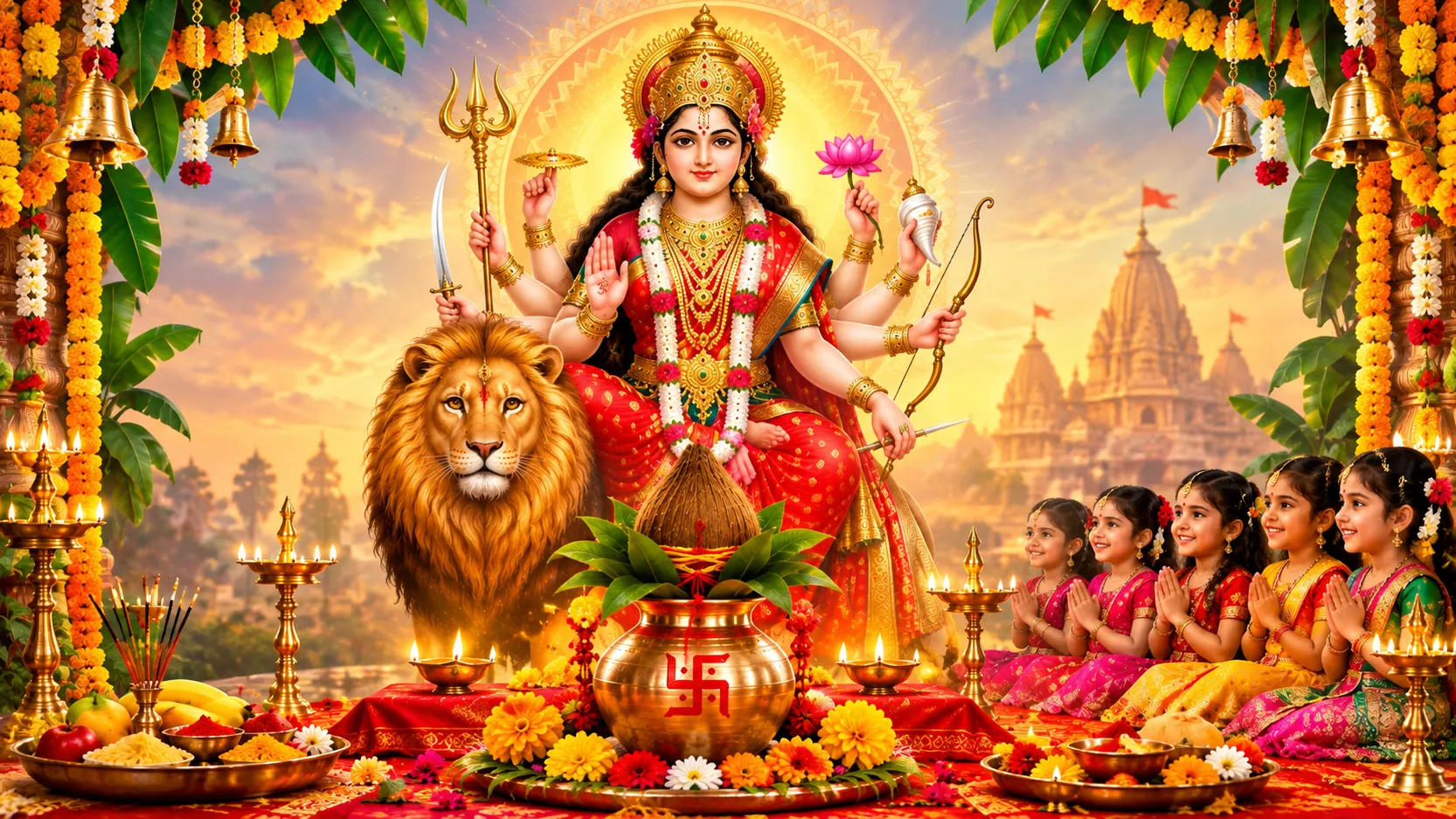
- Now, place pure water, Gangajal, betel nut, a coin, akshat (rice), and durva grass in an earthen or copper kalash (pot).
- Place mango or ashoka leaves at the mouth of the kalash, and place a coconut tied with sacred thread (kalava) and wrapped in a red cloth over it.
- Near the kalash, place soil in an earthen pot for sowing barley (khetri) and sow the barley seeds in it.
- After this, invoke the Kalash deity, Varuna deity, and Goddess Durga following the proper rituals.
9 Forms of 9 Days: Significance of the Nine Manifestations of Goddess Durga
During these sacred days of Navratri, different forms of Goddess Durga are worshiped. Let us know in detail about the 9 forms of 9 days and their significance:
1. Maa Shailputri (First Day)
Being the daughter of the mountain king Himalaya, she is called Shailputri. The Goddess holds a Trishul in one hand and a blooming lotus in the other. Worshiping her awakens the Muladhara Chakra and bestows stability, patience, and supreme strength upon the individual.
2. Maa Brahmacharini (Second Day)
'Brahma' means penance and 'charini' means the one who conducts herself accordingly. This form enhances austerity, renunciation, detachment, good conduct, and self-restraint. She holds a rosary of japa in her right hand and a kamandalu in her left hand. Her worship increases radiance and restraint within devotees.
3. Maa Chandraghanta (Third Day)
A bell-shaped half-moon adorns the forehead of the Goddess, which is why she is called Chandraghanta. This manifestation is peaceful and benevolent, yet always ready to destroy unrighteousness. Her worship destroys fear and bestows bravery.
4. Maa Skandmata (Fifth Day)
Being the mother of Lord Kartikeya (Skand), she is called Skandmata. The Goddess is seated on a lotus throne with child Kartikeya in her lap. Worshiping her bestows radiance like the sun and the blessing of progeny.
5. Maa Kushmanda (Fourth Day)
Due to creating the universe (anda) with her gentle smile, she is called Goddess Kushmanda. She is considered the primal form and Adi Shakti of creation. Her worship eradicates all types of diseases, flaws, and sorrows of devotees while increasing longevity, fame, and strength.
6. Maa Katyayani (Sixth Day)
Pleased by the penance of Sage Katyayan, Adi Shakti was born as a daughter to him. This form is extremely radiant and warrior-like. Worshiping Maa Katyayani specifically removes obstacles in marriage and pacifies flaws related to the planet Jupiter.
7. Maa Kalaratri (Seventh Day)
This form of Goddess Durga is very fierce and powerful, destroying darkness and negative energies. Her complexion is dark like the night and her hair is disheveled. Worshiping Kalaratri frees the seeker from ghosts, fear, diseases, and enemies.
8. Maa Mahagauri (Eighth Day)
Her complexion is extremely fair (white), due to which she is called Mahagauri. This form is a symbol of peace, purity, and maternal affection. Special worship of Mahagauri and Kanya Pujan are prescribed on the day of Ashtami. Her worship washes away all sins of a person and brings happiness and prosperity.
9. Maa Siddhidatri (Ninth Day)
Maa Siddhidatri is worshiped on the final day of Navratri. As the name suggests, she bestows all eight siddhis known as Anima, Mahima, Garima, Laghima, Prapti, Prakamya, Ishitva, and Vashitva. Even impossible tasks become possible by her grace.
Complete Navratri Worship Procedure
To receive the grace of the Goddess, it is essential to follow the Navratri worship procedure with discipline:
- Brahma Muhurta Bath: Wake up daily during Brahma Muhurta in the morning for all nine days of Navratri, take a bath, and wear clean clothes (especially red, yellow, or pink colors).
- Purification of Worship Place: Clean the home temple and light a lamp. Those lighting an Akhand Jyoti should ignite the fire on the first day itself.
- Shodashopchar Puja: Offer roli, akshat, sindoor, red flowers, makeup items (suhaag materials), betel leaf, betel nut, cloves, cardamom, and fruits-sweets to Goddess Durga.
- Durga Saptashati Recitation: Reciting 'Sri Durga Saptashati' or chanting the mantra "Om Aim Hreem Kleem Chamundai Vichche" during Navratri is considered extremely fruitful.
- Aarti and Bhog: Perform aarti of the Goddess both morning and evening using camphor or a ghee lamp, and offer her favorite bhog (such as makhana kheer, halwa, or fresh fruits).
- Kanya Pujan: Feed young girls on the day of Ashtami or Navami, wash their feet, apply tilak, and give them dakshina and gifts as a token of respect.
Conclusion
Navratri 2026 is not just a festival, but a sacred opportunity to eradicate negativity, ego, and evil from within us and awaken positive energy, knowledge, and devotion. Sincere worship of the nine manifestations of the Goddess during these nine days removes all sufferings of life and brings happiness, peace, and prosperity into the home. May the grace of Goddess Bhagwati Jagdamba always remain upon you and your family. Jai Mata Di!
अक्सर पूछे जाने वाले प्रश्न (FAQ)
Q: Why is the festival of Navratri 2026 important in Sanatan culture?
In Sanatan culture, Navratri is considered an extremely important and energetic festival dedicated to the worship of divine energy, where the nine forms of Goddess Durga are worshiped.
Q: How many times does Navratri arrive in a year?
Navratri arrives a total of four times a year, which includes two Gupt Navratris and two main Navratris (Chaitra and Sharad).
Q: When will Chaitra Navratri 2026 begin?
Chaitra Navratri 2026 will begin in the third week of March 2026 on the Pratipada Tithi of the Shukla Paksha in the month of Chaitra.
Q: Which time is considered best for Ghatasthapana (Kalash establishment)?
The first 2 hours after sunrise on the first day of Navratri and the Abhijit Muhurat are considered the best and most auspicious for Ghatasthapana.
Q: What is the primary meaning of Ghatasthapana?
Ghatasthapana means invoking the positive energy of the universe, all deities, and pilgrimage sites into one's home.
Q: What is placed on top of the kalash during the Ghatasthapana ritual?
Mango or ashoka leaves are placed at the mouth of the kalash, and over them, a coconut tied with sacred thread and wrapped in a red cloth is placed.
Q: Which form of Goddess Durga is worshiped on the first day of Navratri?
On the first day of Navratri, the first manifestation of Goddess Durga, 'Maa Shailputri', is worshiped.
Q: Which chakra is awakened by the worship of Maa Shailputri?
Worship of Maa Shailputri awakens the Muladhara Chakra and bestows stability, patience, and supreme strength upon the individual.
Q: What does the form of Maa Brahmacharini symbolize?
The form of Maa Brahmacharini enhances austerity, renunciation, detachment, good conduct, and self-restraint.
Q: By which ornament or characteristic is Maa Chandraghanta recognized?
A bell-shaped half-moon is adorned on the forehead of the Goddess, which is why she is called Maa Chandraghanta.

Author
Praarthana Editorial Team
The Praarthana Editorial Team shares daily spiritual guidance, authentic rituals, and deep insights from ancient Sanatan scriptures to support your spiritual journey.
ऐप डाउनलोड करें
पंचांग तिथि, त्यौहार, व्रत, उत्सव, एकादशी, आरती संग्रह, मंत्र, व्रत कथा



एक टिप्पणी छोड़ें