Navratri
Navratri 2026: From Ghatasthapana to Kanya Pujan, Know the Right Rituals and Auspicious Timings
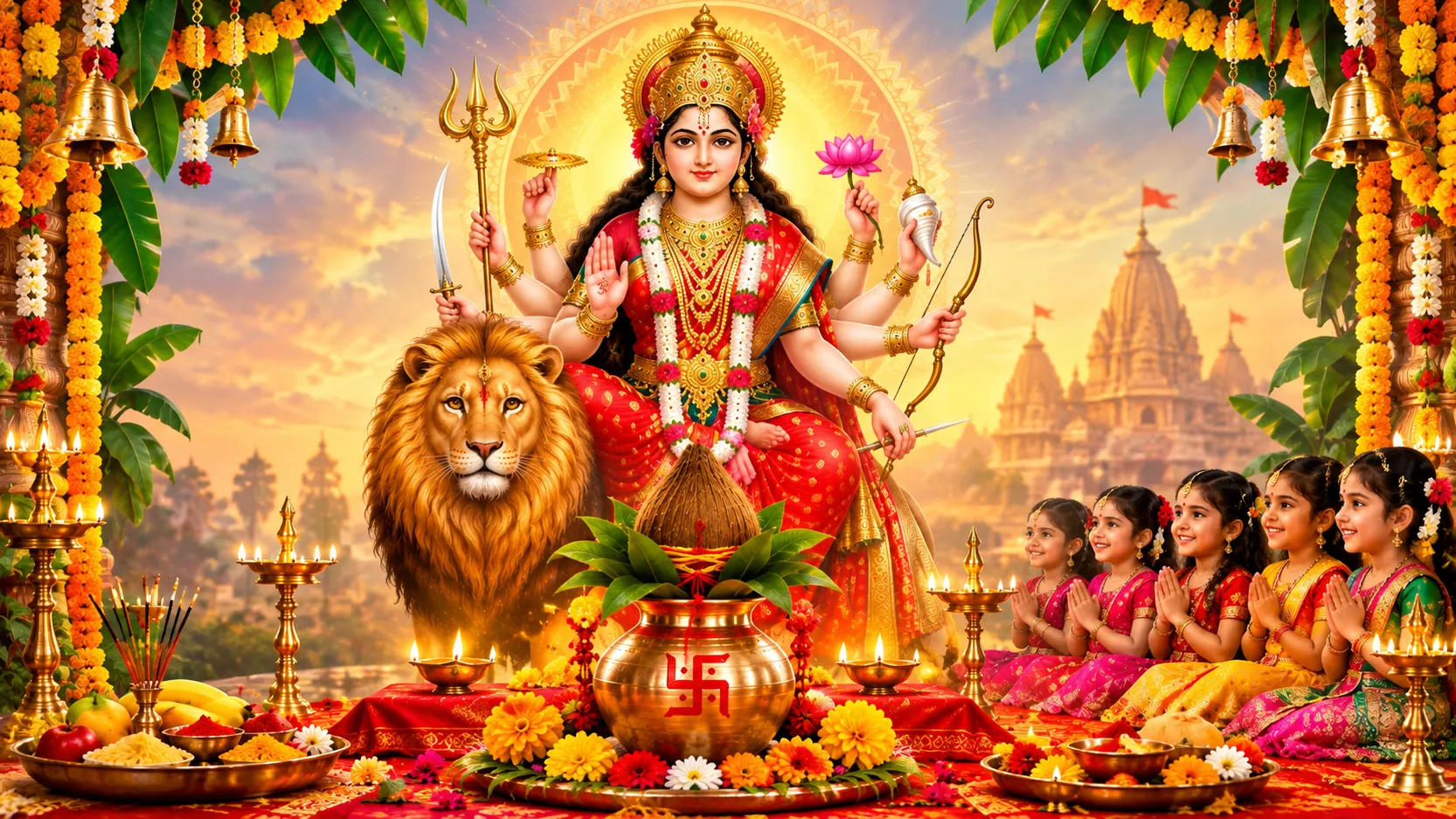
In Hindu religion, the festival of Navratri is considered extremely sacred, energetic, and full of joy. There are a total of four Navratris in a year, which include two Gupt Navratris and two main Navratris (Chaitra and Sharad). Speaking of the year 2026, this auspicious year brings special spiritual practice and worship for the devotees of Goddess Durga. To receive the blessings of Mata Rani, it is essential that every ritual is performed according to the rules prescribed in the scriptures and at the right time.
In this detailed guide, we will discuss all the important information related to Navratri 2026 Ghatasthapana and Kanya Pujan, which includes the auspicious muhurat for Ghatasthapana, the method of Kalash स्थापना (installation), the forms of the nine days, and the rules for Kanya Pujan.
Chaitra and Sharad Navratri 2026: At a Glance
The Chaitra Sharad Navratri 2026 arriving in the year 2026 holds special significance in Sanatan culture. The Hindu New Year (Vikram Samvat) begins with Chaitra Navratri, while Sharad Navratri is celebrated in the month of Ashwin as a symbol of the victory of good over evil. On both occasions, nine different forms of Goddess Durga are worshipped, and devotees fast for nine days to please the Goddess.
Ghatasthapana 2026: Significance and Auspicious Muhurat
On the first day of Navratri, Ghatasthapana (Kalash establishment) is performed to welcome and invoke Goddess Durga. According to astrology, Ghatasthapana should always be done during an auspicious muhurat so that happiness, peace, and prosperity reside in the home.
Navratri 2026 Auspicious Muhurat: According to the Panchang, performing Ghatasthapana during the early part of Pratipada Tithi or Abhijit Muhurat is considered best. (Readers are advised to confirm the exact time according to their local Panchang). Generally, the first one to two hours after sunrise are considered best for Ghatasthapana. Ghatasthapana should be avoided during Rahukal.
Ghatasthapana Rituals 2026: Step-by-Step Guide
Performing Kalash installation correctly removes negative energy from the house and promotes positivity. Let us know in detail about the Ghatasthapana Vidhi 2026:
- Purification of the Place: On the first day of Navratri, after finishing morning baths and chores, clean the worship room thoroughly and purify it by sprinkling Gangajal.
- Construction of the Altar: Place a clean chowki at the worship site and spread a red or yellow cloth on it. Establish the idol or picture of the Goddess on this.
- Sowing Barley (Jawa): Put pure soil in an earthen pot near the chowki and sow barley seeds in it. Sprinkle some water on it. This is a symbol of prosperity and future grain.
- Kalash Installation: Draw a Swastika on a copper, brass, or earthen pot and tie Mauli (kalwa) on it. Put Gangajal, pure water, betel nut, coin, Akshat (rice), and Durva in the Kalash.
- Mango or Ashoka Leaves: Place 5 or 7 mango or Ashoka leaves at the mouth of the Kalash and place a lid filled with rice over it.
- Establishing the Coconut: Wrap a red cloth or chunri on the coconut with fibers, tie it with Mauli, and place it on top of the Kalash. The face of the coconut should be towards you or upwards.
- Lighting the Lamp: After installing the Kalash, light an Akhand Jyoti or a normal ghee lamp and start the worship by remembering Lord Ganesha.
Nine Days of Navratri: Worship of the Nine Forms of the Goddess
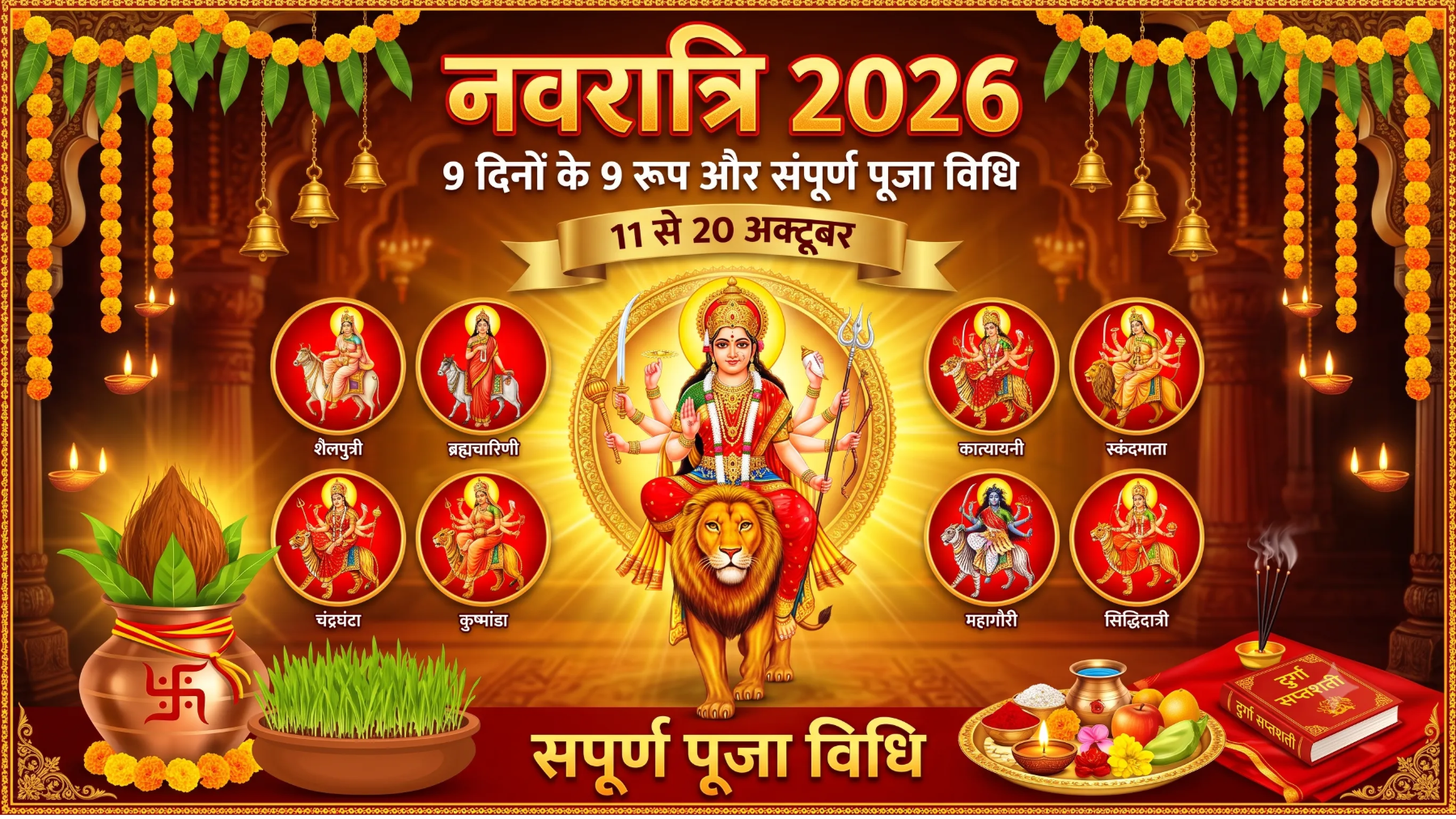
This grand festival lasting Nine Days of Navratri is dedicated to nine different forms of the Goddess. Each day has its own special significance, color, and bhog:
- First Day (Pratipada): Worship of Maa Shailputri (Ghatasthapana)
- Second Day (Dwitiya): Worship of Maa Brahmacharini
- Third Day (Tritiya): Worship of Maa Chandraghanta
- Fourth Day (Chaturthi): Worship of Maa Kushmanda
- Fifth Day (Panchami): Worship of Maa Skandamata (This is also observed according to Shashthi or Panchami tithi)
- Sixth Day (Shashthi): Worship of Maa Katyayani
- Seventh Day (Saptami): Worship of Maa Kalaratri (Maha Saptami)
- Eighth Day (Ashtami): Worship of Maa Mahagauri (Mahashtami and Sandhi Puja)
- Ninth Day (Navami): Worship of Maa Siddhidatri and Mahanavami
Kanya Pujan Vidhi and Rules (Ashtami or Navami)
The conclusion of Navratri is considered incomplete without Kanya Pujan. Many people perform Kanya Pujan on Ashtami while some do it on Navami. According to the Devi Bhagavata Purana, worshipping girls aged 2 to 10 years is considered best.
Kanya Pujan Rituals:
- Invite the girls and a boy (considered a symbol of Batuk Bhairav) to your home with respect.
- Upon arrival, wash the feet of all the girls and make them sit on a clean seat.
- Apply Kumkum, Akshat, and Roli tilak on everyone's forehead.
- Serve the sattvic prasad of halwa, puri, and black gram to the girls with devotion.
- After the meal, present gifts to the girls according to your capacity (dakshina, fruits, makeup items, or books).
- Finally, touch their feet to seek blessings and bid them farewell.
Do's and Don'ts During Navratri
It is very important to follow certain special rules during fasting and worship to get the full fruits of spiritual practice:
Do's:
- Maintain a sattvic environment in the house for nine days and avoid the use of garlic and onion.
- Regularly perform the Aarti of the Goddess and read Durga Chalisa in the morning and evening.
- If you have lit an Akhand Jyoti, do not leave the house unattended and take continuous care of it.
- Give charity to the poor and needy, this pleases the Goddess immensely.
- Keep positive thoughts in your mind and do not hold grudges against anyone.
Don'ts:
- Avoid using leather items (belts, purses, etc.) during the fast.
- Cutting hair, nails, or shaving (until Ashtami/Navami) is considered prohibited.
- Do not use abusive words and do not insult anyone.
- Consumption of tamasic food (meat, alcohol) is strictly prohibited.
- If you have installed Kalash or lit Akhand Jyoti at home, do not leave the house empty.
Conclusion
May this grand festival of Navratri 2026 bring happiness, peace, strength, and immense success to your life. If you worship Goddess Durga following the Ghatasthapana Vidhi 2026 at the right muhurat and finally perform Kanya Pujan with true feelings, the boundless grace of Mata Rani will always remain upon you and your family. All that is required is complete devotion, faith, and discipline.
Bolo Mata Rani ki Jai! Happy Navratri!
अक्सर पूछे जाने वाले प्रश्न (FAQ)
Q: Why is the festival of Navratri important in the year 2026?
The auspicious year 2026 brings special spiritual practice and worship for the devotees of Goddess Durga, where performing rituals according to scriptural rules invokes the special grace of Mata Rani.
Q: How many times do Navratris occur in a year?
There are a total of four Navratris in a year, which include two Gupt Navratris and two main Navratris (Chaitra and Sharad).
Q: What is the significance of Chaitra and Sharad Navratri in Sanatan culture?
Chaitra Navratri marks the beginning of the Hindu New Year, Vikram Samvat, while Sharad Navratri is celebrated in the month of Ashwin as a symbol of the victory of good over evil.
Q: When is Ghatasthapana (Kalash Sthapana) performed?
Ghatasthapana is performed on the first day of Navratri to welcome and invoke Goddess Durga.
Q: Which time is considered best for Ghatasthapana?
According to astrology, Ghatasthapana is best performed during the early part of Pratipada Tithi, Abhijit Muhurat, or the first one to two hours after sunrise.
Q: Which period should be avoided during Ghatasthapana?
Ghatasthapana should always be done during an auspicious muhurat and should be avoided during Rahukal.
Q: How is the worship site purified under the Ghatasthapana ritual?
On the first day of Navratri, after completing morning rituals, the worship room is thoroughly cleaned and purified by sprinkling Gangajal.
Q: What items are placed inside the Kalash?
Gangajal, pure water, betel nut, coin, Akshat (rice), and Durva are placed inside the Kalash.
Q: How is the coconut installed on top of the Kalash?
A coconut with fibers is wrapped in a red cloth or chunri, tied with Mauli, and placed on top of the leaves and lid over the Kalash, with its face pointing towards you or upwards.
Q: What is the significance of sowing barley (jawa) on the chowki?
Barley is sown in an earthen pot near the chowki and water is sprinkled on it, which is considered a symbol of prosperity and future grain.

Author
Praarthana Editorial Team
The Praarthana Editorial Team shares daily spiritual guidance, authentic rituals, and deep insights from ancient Sanatan scriptures to support your spiritual journey.
ऐप डाउनलोड करें
पंचांग तिथि, त्यौहार, व्रत, उत्सव, एकादशी, आरती संग्रह, मंत्र, व्रत कथा



एक टिप्पणी छोड़ें