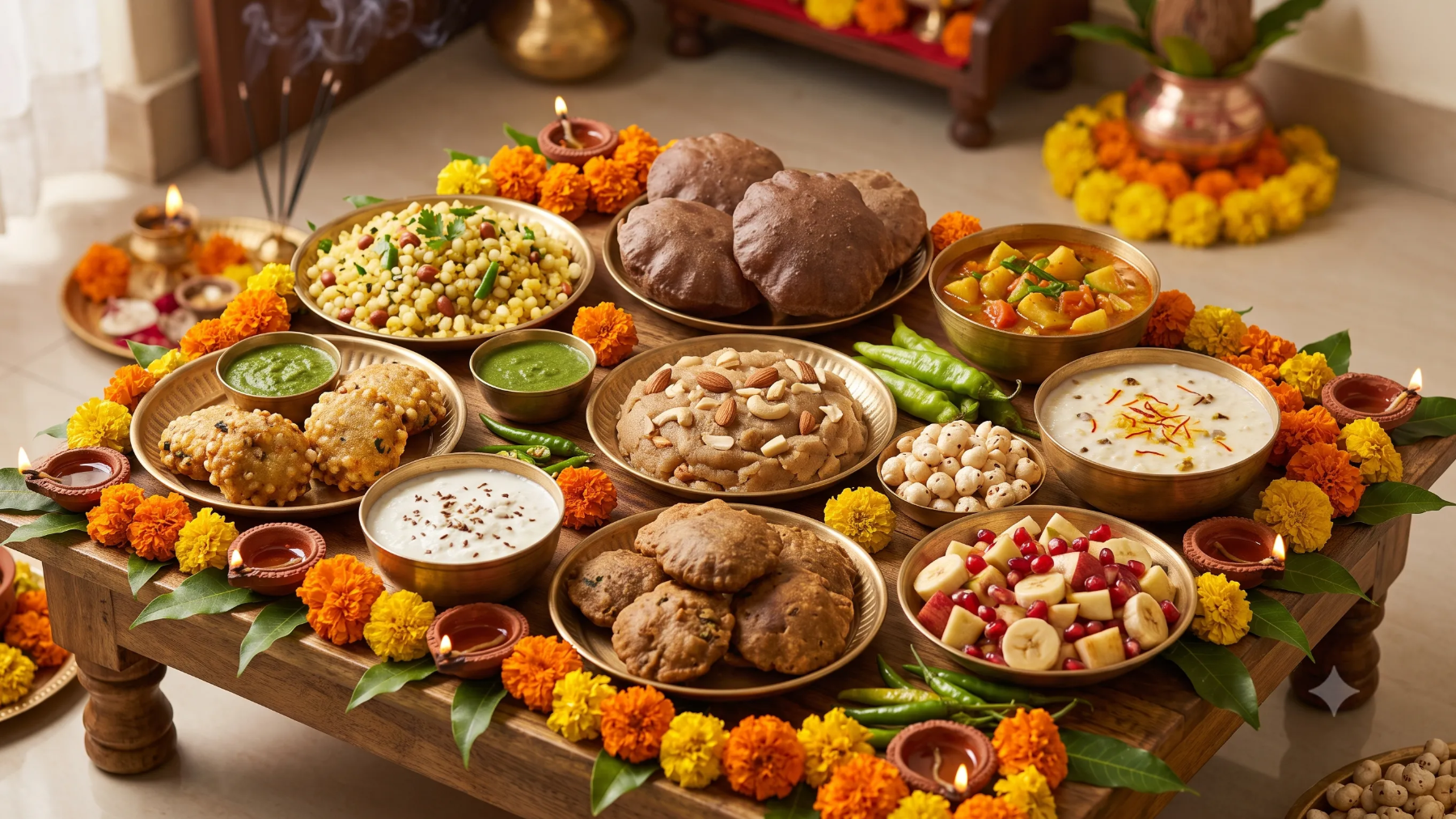
Jai Mata Di! As the sacred festival of Navratri arrives, a unique energy, excitement, and enthusiasm can be seen in our homes. During these nine days, along with worshipping Goddess Durga, observing fasts (vrat) holds special significance. Fasting gives our bodies a chance to detox, provided we consume the right and nutritious diet. However, the biggest question is: what new and delicious yet healthy dish should be prepared every day for this nine-day vrat thali?
If you also wonder every year what special to make during the fast, you no longer need to worry. In today's article, we bring you an ultimate guide containing a complete list of Falahari recipes. Along with this, we will explore how beneficial the ingredients used in fasting food are for our health. So, without any further delay, let's begin!
Why is fasting food beneficial for health?
People often feel that food options become limited during fasts and that it may cause bodily weakness. However, if you consume traditional fasting food, it is no less than a superfood diet. The ingredients used in our Navratri vrat thali, such as:
- Rock Salt (Sendha Namak): Unlike regular salt, it is not heavily processed. It helps in regulating blood pressure and improving digestion.
- Water Chestnut Flour (Singhare ka Atta): It is gluten-free, rich in energy, and packed with antioxidants.
- Fox Nuts (Makhana): Also known as lotus seeds, it is an excellent source of calcium, iron, and protein, which helps in weight management.
- Sago (Sabudana): It is an easily digestible carbohydrate that provides instant energy during fasts.
9 Delicious and Easy Falahari Recipes for the 9 Days of Navratri
Let's now look at those 9 special Navratri recipes that you can try turn by turn during these nine days:
1. Day One: Sabudana Khichdi
Start your fast with the most favorite and classic dish. It is light on the stomach and delicious.
- Ingredients: Sago (soaked), boiled potato, peanuts, green chilies, curry leaves, cumin seeds, lemon juice, and rock salt.
- Step-by-step Method:
- Soak the sago 4-5 hours in advance so that the grains remain separate and fluffy.
- Heat ghee in a pan and roast the peanuts, then set them aside.
- In the same ghee, add cumin seeds, green chilies, and curry leaves.
- Add chopped boiled potatoes and sauté for 2 minutes.
- Mix in the soaked sago, roasted peanuts, and rock salt.
- Cook on low heat for 5 minutes, finish with lemon juice and fresh coriander leaves, and serve hot.
2. Day Two: Singhare ke Atta Puri and Dry Potato Curry
This combo enhances the grace of your Navratri vrat thali.
- Ingredients: Water chestnut flour, boiled potato, rock salt, ghee or peanut oil.
- Method:
- In a bowl, mix water chestnut flour, mashed boiled potato, rock salt, and a little ghee.
- Knead into a firm dough without water (or use lukewarm water if needed).
- Make small dough balls and roll them into puri shapes.
- Heat ghee in a pan and fry the puris until golden brown. Enjoy them with fasting potato curry.
3. Day Three: Makhana Kheer
Time for something sweet! Makhana kheer is the best for offering bhog to the Goddess and for consuming during the fast.
- Ingredients: Makhana, milk, sugar or jaggery, cardamom powder, and dry fruits (almonds, cashews, raisins).
- Method:
- Roast the makhanas in a pan with a teaspoon of ghee until crispy.
- Coarsely grind a few makhanas and keep the rest whole.
- Boil milk in a vessel, add the roasted makhanas, and cook until it thickens.
- Add sugar, cardamom powder, and your favorite dry fruits. Your makhana kheer is ready.
4. Day Four: Kuttu ke Atta Cheela
If you want to avoid fried items, buckwheat (kuttu) cheela is a healthy option.
- Ingredients: Buckwheat flour, curd, finely chopped tomatoes and green chilies, rock salt, fresh coriander.
- Method:
- In a bowl, mix buckwheat flour and a little curd to prepare a thick batter.
- Add rock salt, green chilies, and fresh coriander to it.
- Grease a griddle (tawa) with ghee, spread the batter, and cook on medium heat until golden and crispy on both sides.
5. Day Five: Aloo Makhana Gravy Curry
This curry is made in very little time and tastes extremely delicious.
- Ingredients: Makhana, boiled potatoes, tomato puree, green chilies, ginger, cumin seeds, vrat masala, and rock salt.
- Method:
- Lightly roast makhanas in ghee and set aside.
- Heat ghee in a pan, temper with cumin seeds, ginger, and green chilies.
- Add tomato puree and cook until it releases oil.
- Add spices and rock salt, then mix in chopped boiled potatoes and makhanas.
- Add water as needed, boil for 5 minutes, garnish with coriander leaves, and serve.
6. Day Six: Samak Rice Khichdi or Pulao
Samak rice fulfills the craving for rice during fasts and is very easy to digest.
- Ingredients: Samak rice, cumin seeds, ghee, boiled potato, carrot or bottle gourd (if consumed during fasts), rock salt.
- Method:
- Soak the samak rice for 15 minutes.
- Heat ghee in a pressure cooker, add cumin seeds and green chilies.
- Add chopped potatoes and soaked samak rice, and sauté for 1 minute.
- Add twice the amount of water as rice along with rock salt, and cook for one whistle.
7. Day Seven: Raw Banana Koftas
If you feel like eating something restaurant-style during the fast, raw banana koftas are a must-try.
- Ingredients: Raw bananas (boiled and mashed), water chestnut flour, rock salt, green chilies, curd, and ingredients for tomato gravy.
- Method:
- Mix mashed bananas with water chestnut flour, salt, and chilies to form small balls (koftas).
- Fry them in hot ghee until golden brown.
- Prepare a fasting-friendly tomato and curd gravy, drop the koftas into it, and simmer for 2 minutes.
8. Day Eight: Falahari Mixed Veg Raita
This adds cooling refreshment and wonderful flavor to your thali.
- Ingredients: Fresh curd, boiled potato, cucumber (if allowed in fasts), roasted cumin powder, black pepper powder, pomegranate seeds, and rock salt.
- Method:
- Whisk the curd thoroughly.
- Mix in small pieces of boiled potatoes and pomegranate seeds.
- Top with roasted cumin powder, black pepper, and rock salt, and serve chilled.
9. Day Nine: Sweet Potato Chaat
A healthy and energy-packed recipe to conclude your fast on Navami.
- Ingredients: Sweet potatoes (boiled and chopped), lemon juice, rock salt, fasting chaat masala, and green chutney.
- Method:
- Peel the boiled sweet potatoes and cut them into round or cube pieces.
- Heat a little ghee in a pan and roast the sweet potato pieces until crispy on both sides.
- Transfer to a bowl, toss with lemon juice, rock salt, and green chutney, and enjoy.
Conclusion
So friends, now you know how to make your Navratri vrat thali delicious, colorful, and healthy during these nine days. By adopting these easy Falahari recipes, you will not only fully enjoy the fasts but also feed your family something new and nutritious. Drink plenty of water during the fasts, consume falahar, and stay immersed in the devotion of Maa Durga.
Which of these recipes did you like the most? Do let us know by commenting and don't forget to share this article with your friends and family. Happy Navratri!
अक्सर पूछे जाने वाले प्रश्न (FAQ)
Q: Which Falahari ingredients are beneficial for health during Navratri fasts?
During fasts, ingredients like rock salt, water chestnut flour, makhana, and sago are very beneficial for health as they provide energy and nutrition.
Q: Why is consuming rock salt considered good for health?
Rock salt is not processed like regular salt and helps in regulating blood pressure and improving digestion.
Q: What are the health benefits of water chestnut flour?
Water chestnut flour is gluten-free, rich in energy, and contains a high amount of antioxidants.
Q: What benefits does eating makhana provide to the body?
Makhana is an excellent source of calcium, iron, and protein, which is helpful in weight management.
Q: Why is sago eaten during fasts?
Sago is an easily digestible carbohydrate that provides instant energy to the body during fasts.
Q: Which recipe can be made on the first day of Navratri?
On the first day of Navratri, you can make the classic and light 'Sabudana Khichdi'.
Q: How long should sago be soaked to make sabudana khichdi?
To get fluffy and separate grains, sago should be soaked 4-5 hours in advance.
Q: Which is the second major dish that enhances the pride of the vrat thali?
The combo of water chestnut flour puris and dry potato curry enhances the grace of the vrat thali.
Q: How is the dough for water chestnut flour puris kneaded?
Water chestnut flour is kneaded into a firm dough by mixing mashed boiled potato, rock salt, and a little ghee, without using water (or using lukewarm water if necessary).
Q: Does eating fasting food cause bodily weakness?
No, if traditional nutritious fasting food is consumed, it is no less than a superfood diet and does not cause weakness.

Author
Praarthana Editorial Team
The Praarthana Editorial Team shares daily spiritual guidance, authentic rituals, and deep insights from ancient Sanatan scriptures to support your spiritual journey.





ऐप डाउनलोड करें
पंचांग तिथि, त्यौहार, व्रत, उत्सव, एकादशी, आरती संग्रह, मंत्र, व्रत कथा



एक टिप्पणी छोड़ें