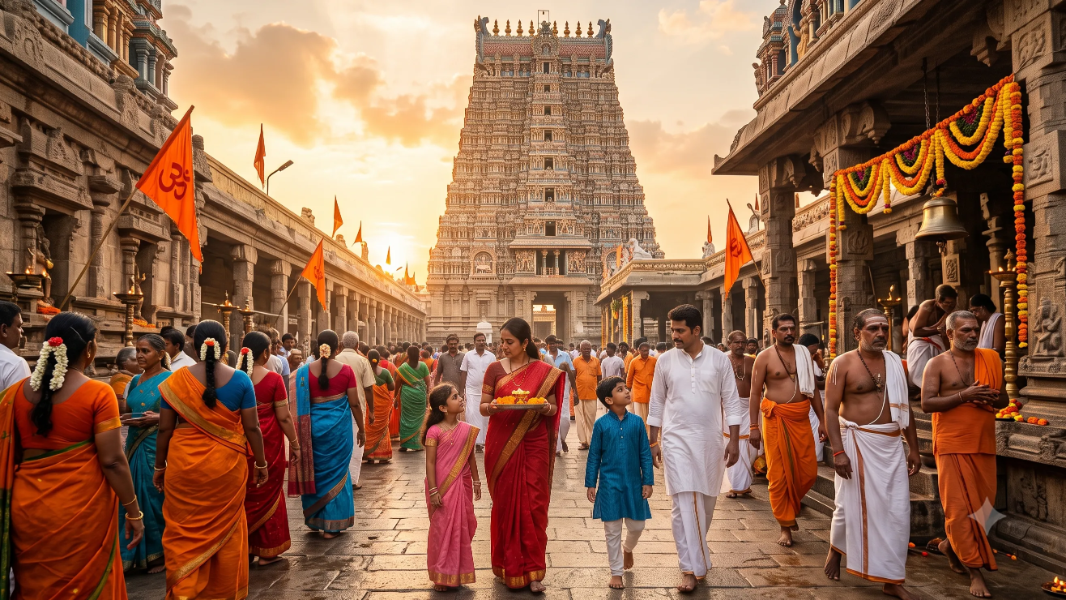
India, a land steeped in ancient आध्यात्मिकता and vibrant culture, is home to countless revered sanctuaries that serve as epicenters of faith and devotion. For millennia, these magnificent structures have not only been places of worship but also repositories of history, art, and profound spiritual energy. Embarking on an India pilgrimage to these sacred sites is an experience that transcends mere tourism, offering a deep dive into the heart of Hindu tradition and an opportunity for introspection and spiritual rejuvenation. This guide aims to take you on a journey through ten of the most significant and awe-inspiring Hindu Temples in India, each offering a unique spiritual experience and a glimpse into the architectural marvels of bygone eras.
From the snowy peaks of the Himalayas to the sun-drenched coasts, these sacred temples draw millions of devotees annually, seeking blessings, solace, and liberation. They represent diverse architectural styles, traditions, and deities, reflecting the rich tapestry of Hinduism. Prepare to be inspired as we explore these famous Hindu temples, offering practical insights and highlighting the profound spiritual journeys they offer, making this an ultimate temple travel guide for devotees.
1. Kashi Vishwanath Temple, Varanasi, Uttar Pradesh
The Spiritual Heart of the Universe
Standing on the sacred banks of the Ganges in Varanasi, the Kashi Vishwanath Temple is one of the most revered of the twelve Jyotirlingas, symbolizing Lord Shiva as the Lord of the Universe (Vishwanath). For centuries, pilgrims have flocked to this spiritual epicenter seeking moksha and inner peace. Its very location in Varanasi, considered one of the oldest living cities in the world, imbues it with an unparalleled aura of sanctity and ancient wisdom, making it a cornerstone for any India pilgrimage.
Historical Significance
The history of Kashi Vishwanath Temple is as old as time itself, intertwined with myths and legends. While the current structure was built by Maharani Ahilyabai Holkar of Indore in 1780, the temple's lineage dates back millennia, having been destroyed and rebuilt multiple times due to invasions. Its mention in ancient Hindu scriptures underscores its enduring importance as a powerful spiritual vortex where prayers are believed to be immediately heard and fulfilled, a true testament to its status among sacred temples.
Architectural Highlights
Though not as sprawling as some South Indian temples, Kashi Vishwanath is renowned for its golden spire and dome, which were gilded with 1000 kg of gold donated by Maharaja Ranjit Singh of Punjab. The temple complex includes smaller shrines dedicated to various deities. The main temple is a modest but elegant structure, embodying North Indian temple architecture, drawing devotees into a deep sense of reverence with its powerful atmosphere rather than grand facades. The narrow lanes leading to it are part of the quintessential Varanasi experience.
Main Deity
The primary deity enshrined here is Lord Shiva, in the form of a Jyotirlingam. Worshipped as Vishwanath, the ruler of the universe, devotees believe that a darshan (sacred viewing) of this Jyotirlingam grants salvation and liberation from the cycle of rebirth. The spiritual energy emanating from the sanctum sanctorum is palpable, a profound experience for any devotee visiting Hindu temples in India.
Important Festivals
- Maha Shivaratri: Celebrated with immense fervor, drawing lakhs of devotees who offer water and milk to the lingam.
- Annakoot: Following Diwali, this festival sees the temple adorned with a mountain of food offerings.
- Dev Deepawali: The banks of the Ganges light up spectacularly, adding to the temple's mystical charm.
Practical Travel Tips
- Best Time to Visit: October to March offers pleasant weather for exploration and temple visits.
- Nearest Airport: Lal Bahadur Shastri International Airport (VNS), Varanasi (approx. 25 km).
- Nearest Railway Station: Varanasi Junction (BSB) and Manduadih Railway Station (MUV) are well-connected.
- Accommodation: A wide range of options, from budget guesthouses along the ghats to luxury hotels, are available. Book in advance during peak season and festivals.
A visit to Kashi Vishwanath is not just a temple tour; it is a profound journey into the heart of Hindu आध्यात्मिकता. The chants, the aroma of incense, the holy dip in the Ganges, and the powerful presence of Lord Shiva create an unforgettable spiritual communion, an essential part of any temple travel guide for India.
2. Ramanathaswamy Temple, Rameshwaram, Tamil Nadu
Gateway to Salvation in the South Seas
Located on Rameswaram Island in Tamil Nadu, the Ramanathaswamy Temple is one of the twelve Jyotirlinga shrines dedicated to Lord Shiva and also one of the four Char Dham pilgrimage sites. Its spiritual significance is immense, as it is believed that Lord Rama worshipped Shiva here before crossing over to Lanka. The journey to Rameswaram is a quest for atonement and blessings, making it a pivotal destination for any devotee on an India pilgrimage.
Historical Significance
Legend has it that Lord Rama consecrated this lingam, made by Sita, to absolve himself of the sin of killing a Brahmin (Ravana). The temple's history dates back centuries, with significant contributions from various Pandya and Nayak rulers, who expanded its majestic architecture. It stands as a symbol of devotion and righteousness, a truly powerful among spiritual sites India offers.
Architectural Highlights
Ramanathaswamy Temple is celebrated for its magnificent corridors, particularly the 'third corridor,' which is the longest in the world, stretching approximately 1219 meters. Adorned with intricately carved pillars, the corridors create a mesmerizing perspective, leading devotees towards the sanctum. The temple also boasts 22 holy wells (tirthams), whose waters are believed to possess medicinal and purifying properties, adding to its unique spiritual allure among Hindu temples in India.
Main Deity
The main deity is Lord Shiva, worshipped as Ramanathaswamy. The primary lingam is believed to have been established by Lord Rama. There are also shrines for Parvathavardhini (Parvati) and Visalakshi (Vishnu), and other deities. Pilgrims typically perform a ritual bath in the Agni Theertham, a sacred sea patch, before entering the temple and bathing in the 22 wells.
Important Festivals
- Maha Shivaratri: Celebrated with elaborate pujas and processions, attracting thousands.
- Ramalinga Pratishta: Commemorates the consecration of the lingam by Lord Rama.
- Thirukalyanam (Celestial Wedding): The divine marriage of Lord Ramanathaswamy and Goddess Parvathavardhini.
Practical Travel Tips
- Best Time to Visit: October to March offers pleasant weather. Avoid monsoon (July-September).
- Nearest Airport: Madurai Airport (IXM), approx. 170 km.
- Nearest Railway Station: Rameswaram Railway Station (RMM) is well-connected.
- Accommodation: Hotels and lodges are available near the temple and beach.
The spiritual journey to Ramanathaswamy Temple, including the ritual baths, offers a profound sense of purification and devotion, connecting devotees directly to the epic tale of Ramayana. It's an indispensable experience for any devotee seeking to explore sacred temples and their deep-rooted history.
3. Dwarkadhish Temple, Dwarka, Gujarat
The Kingdom of Lord Krishna
Perched on the western coast of Gujarat, the Dwarkadhish Temple, also known as Jagat Mandir, is a revered Vaishnava shrine and a significant part of the Char Dham pilgrimage. This ancient temple is dedicated to Lord Krishna, who is believed to have established his kingdom here after leaving Mathura. Dwarka's mystical aura and historical connection to the Mahabharata make it one of the most cherished spiritual sites India has to offer.
Historical Significance
The legend states that the original temple was built by Vajranabha, the great-grandson of Lord Krishna, over Lord Krishna's hari-griha (Lord's residential place). The current temple structure dates back to the 16th century, having been rebuilt multiple times over the centuries. It stands on the banks of the Gomti River, overlooking the Arabian Sea, symbolizing Lord Krishna's divine presence and eternal kingdom, a jewel among famous Hindu temples.
Architectural Highlights
The Dwarkadhish Temple is a magnificent five-storied structure supported by 72 pillars, standing at an impressive height of 43 meters. It is built of limestone, which has survived centuries of erosion. The temple's grand shikhara (spire) culminates in a flag bearing the sun and moon, which is changed five times a day. The exquisite carvings and sculptures depict various aspects of Krishna's life, inviting devotees into his divine realm, a marvel of ancient Indian architecture among Hindu temples in India.
Main Deity
The presiding deity is Lord Krishna, worshipped as Dwarkadhish or the 'King of Dwarka.' The idol is a four-armed black stone murti (idol) holding a conch, chakra, mace, and lotus. The spiritual energy emanating from this idol is said to be incredibly potent, providing devotees with a profound sense of peace and connection to the divine cowboy king.
Important Festivals
- Janmashtami: Lord Krishna's birthday is celebrated with immense enthusiasm, including midnight rituals and a grand procession.
- Holi: The festival of colors is celebrated with traditional fervor and devotion.
- Dwarka Rath Yatra: Similar to Puri, a chariot procession takes place, though on a smaller scale.
Practical Travel Tips
- Best Time to Visit: October to March for pleasant weather. Avoid monsoon due to heavy rainfall and cyclonic activity.
- Nearest Airport: Jamnagar Airport (JGA), approx. 130 km. Rajkot Airport (RAJ) is another option, approx. 225 km.
- Nearest Railway Station: Dwarka Railway Station (DWK) is well-connected to major cities.
- Accommodation: Several hotels, guesthouses, and dharamshalas are available for all budgets.
A visit to Dwarkadhish Temple is a journey back in time, allowing devotees to immerse themselves in the legends of Lord Krishna and experience his enduring presence. The devotional hymns and the breathtaking sea views combine to create a deeply moving spiritual experience, a must-visit in any temple travel guide for India.
4. Jagannath Temple, Puri, Odisha
The Lord of the Universe by the Sea
The Jagannath Temple in Puri, Odisha, is one of the most revered and enigmatic sacred temples dedicated to Lord Jagannath (a form of Krishna), Balabhadra, and Subhadra. As one of the Char Dham pilgrimage sites, it holds immense significance for Vaishnavites worldwide. Situated by the Bay of Bengal, the temple's unique deities and grand annual Rath Yatra attract millions, solidifying its place among prominent spiritual sites India offers.
Historical Significance
The current temple structure was built in the 12th century by King Anantavarman Chodaganga Deva of the Eastern Ganga Dynasty. Its history is shrouded in ancient legends, including tales of its construction from a divine log of wood found in the sea. The temple has faced numerous invasions and attempts at destruction but has consistently been restored, embodying resilience and unwavering faith. It's a living testament to a continuous tradition that dates back millennia.
Architectural Highlights
Built in the Kalinga architectural style, the Jagannath Temple is a towering complex, dominated by a 65-meter-high curvilinear spire (shikhara). The temple complex consists of four main structures: the Vimana (Sanctum), Mukhasala (Frontal Porch), Nata Mandir (Audience Hall), and Bhoga Mandap (Offering Hall). The most distinctive feature, however, are the wooden idols of the deities, which are replaced every 12 or 19 years in a grand ritual called Nabakalebara, making it unique among Hindu temples in India.
Main Deity
The primary deities are Lord Jagannath (Krishna), his elder brother Balabhadra, and his sister Subhadra. Unlike most Hindu deities, their idols are unfinished wooden forms, believed to have been miraculously created. These abstract forms represent the universal and all-encompassing nature of the divine. The 'Anna Bhog' (food offering) at Jagannath Temple is famous for its massive scale and variety, considered a sacred प्रसाद (prasad).
Important Festivals
- Rath Yatra (Chariot Festival): The most famous festival, where the deities are taken out in grand chariots to the Gundicha Temple, attracting millions globally.
- Snana Yatra: The bathing festival where deities are bathed publicly.
- Nabakalebara: The rare ritual of replacing the old wooden idols with new ones, occurring approximately every 12 to 19 years.
Practical Travel Tips
- Best Time to Visit: October to March offers pleasant weather. Avoid the monsoon season (July-September). Book accommodation well in advance for Rath Yatra.
- Nearest Airport: Biju Patnaik International Airport (BBI), Bhubaneswar (approx. 60 km).
- Nearest Railway Station: Puri Railway Station (PURI) is very well-connected.
- Accommodation: Many hotels, resorts, and guest houses are available in Puri, catering to various budgets.
The spiritual energy of Jagannath Temple, especially during the Rath Yatra, is an experience of collective devotion and faith unmatched anywhere else. The unique iconography and the profound sense of connection to the Lord of the Universe make it an unforgettable part of any India pilgrimage, truly one of the famous Hindu temples.
5. Sri Venkateswara Swamy Temple, Tirumala, Andhra Pradesh
The Richest Shrine on Earth
Nestled amidst the lush hills of Tirumala, the Sri Venkateswara Swamy Temple is one of the most visited and wealthiest religious centers in the world. Dedicated to Lord Venkateswara, a manifestation of Vishnu, this temple is a paramount destination for Vaishnavites and draws devotees from all walks of life seeking blessings for prosperity and well-being. Its spiritual significance and grand scale position it among the most revered Hindu Temples in India.
Historical Significance
The temple's origins are ancient, with mentions in various Puranas and ancient texts. The Pallavas, Cholas, Pandyas, and Vijayanagara emperors have contributed significantly to its current structure and traditions. Legend has it that Lord Venkateswara descended to Earth to save humanity from the trials and tribulations of Kali Yuga. Pilgrims undertake the arduous walk up the Tirumala hills as an act of devotion, embodying a true India pilgrimage.
Architectural Highlights
The temple complex is a masterpiece of Dravidian architecture, with its majestic gopurams (towers), intricately carved mandapams, and the golden Vimanam (dome) over the sanctum sanctorum. The main temple is built on seven hills, representing the seven heads of Adisesha, the cosmic serpent. The 'Hundi' (donation box) here receives enormous offerings, making it an economic powerhouse and a testament to the fervent faith of millions.
Main Deity
The presiding deity is Lord Venkateswara, also known as Srinivasa, Balaji, or Govinda. The captivating idol of the Lord is adorned with precious jewels and radiates an aura of divine grace. Devotees offer their hair (Mokku) as a symbol of sacrifice and surrender, believing it fulfills their vows and cleanses them of sins, making this one of the most iconic spiritual sites India has to offer.
Important Festivals
- Brahmotsavam: The most important annual festival, celebrated over nine days with grand processions and rituals, attracting millions.
- Vaikunta Ekadashi: The 'Vaikunta Dwaram' (gate to Vaikunta) is opened on this day, believed to grant moksha to those who pass through it.
- Rathasapthami: Celebrated as 'Surya Jayanthi', where the Lord is carried in seven different vahanas (vehicles) in a single day.
Practical Travel Tips
- Best Time to Visit: Throughout the year, but September to February offers pleasant weather. Avoid peak festival times if you prefer less crowd.
- Nearest Airport: Tirupati Airport (TIR), approx. 15 km from Tirupati town.
- Nearest Railway Station: Tirupati Main Railway Station (TPTY) is well-connected.
- Accommodation: TTD (Tirumala Tirupati Devasthanams) offers many budget accommodation options. Private hotels are available in Tirupati town. Book well in advance.
The sheer scale of devotion and the powerful spiritual presence of Lord Venkateswara at Tirumala create an experience of overwhelming faith and divine connection. It's a transformative journey for every devotee, solidifying its place in any comprehensive temple travel guide for India.
6. Meenakshi Amman Temple, Madurai, Tamil Nadu
A Dravidian Marvel of Devotion
The Meenakshi Amman Temple in Madurai, Tamil Nadu, is a vibrant and living testament to ancient Dravidian architectural genius and fervent devotion. Dedicated to Goddess Meenakshi (a form of Parvati) and her consort Sundareswarar (Shiva), this sprawling temple complex is not just a place of worship but a cultural heartland. Its grandeur, intricate sculptures, and vibrant rituals make it one of the most magnificent famous Hindu temples.
Historical Significance
The temple's origins are deeply rooted in Tamil Sangam literature, with mentions dating back over 2000 years. The current structure was largely built between the 12th and 18th centuries by the Pandyan and Nayak kings. Legends narrate the divine marriage of Meenakshi and Sundareswarar, which is reenacted annually. It stands as a symbol of the enduring power of feminine divinity and a focal point for Tamil culture and आध्यात्मिकता, making it one of the most cherished spiritual sites India has.
Architectural Highlights
The Meenakshi Amman Temple is renowned for its towering gopurams (gateway towers), of which there are 14, covered with a kaleidoscope of thousands of painted stone figures of deities, mythical animals, and demons. The South Gopuram, at 52 meters, is the tallest. Inside, the Hall of Thousand Pillars (Ayirakkal Mandapam) is an architectural wonder, with each pillar exquisitely carved. The temple also features a sacred Golden Lotus Pond, believed to bestow knowledge upon those who bathe in it.
Main Deity
The primary deities are Goddess Meenakshi (literally, 'fish-eyed') and her consort Lord Sundareswarar (the beautiful Shiva). The temple is unique for prioritizing the worship of the Goddess before Lord Shiva, reflecting the matriarchal traditions of the region. The vibrancy and devotion witnessed here are a profound experience for any visitor to Hindu temples in India.
Important Festivals
- Chithirai Festival (Meenakshi Tirukkalyanam): The most important festival, celebrating the divine marriage of Meenakshi and Sundareswarar, drawing millions and featuring a grand procession.
- Navaratri: Celebrated with special pujas and adornments for the Goddess.
- Teppam (Float Festival): Deities are taken on a float around the Mariamman Teppakulam (temple tank).
Practical Travel Tips
- Best Time to Visit: October to March offers pleasant weather. Avoid April-May when the Chithirai Festival makes it very crowded and hot.
- Nearest Airport: Madurai International Airport (IXM), approx. 12 km.
- Nearest Railway Station: Madurai Junction (MDU) is a major railway hub.
- Accommodation: Wide range of hotels, from budget to luxury, available in Madurai city.
A visit to Meenakshi Amman Temple is a sensory and spiritual feast, with its vibrant colors, intricate art, and the continuous buzz of devotion. It's a powerful reminder of the beauty and depth of Hindu आध्यात्मिकता, a definitive highlight in any temple travel guide for India.
7. Kedarnath Temple, Uttarakhand
The Abode of Lord Shiva in the Himalayas
Nestled amidst the majestic Garhwal Himalayas in Uttarakhand, the Kedarnath Temple is one of the twelve Jyotirlingas of Lord Shiva and a vital component of the Char Dham and Panch Kedar pilgrimages. Perched at an altitude of 3,583 meters, this ancient temple is a beacon of faith, drawing devotees who undertake a challenging journey to seek the blessings of Lord Shiva. Its serene yet formidable surroundings make it one of the most awe-inspiring spiritual sites India has to offer.
Historical Significance
The original Kedarnath Temple is believed to have been built by the Pandavas and later revived by Adi Shankaracharya in the 8th century. The current stone structure stands resilient against extreme weather conditions, a testament to ancient engineering and unwavering faith. Legend says Lord Shiva, disguised as a bull, dived into the ground here to escape the Pandavas, with his hump forming the lingam. The arduous trek to this sacred temple signifies a pilgrim's dedication and penance.
Architectural Highlights
Built of large, grey stone slabs, Kedarnath Temple exemplifies ancient North Indian temple architecture. Its robust construction has withstood floods and earthquakes over centuries. The conical rock formation within the temple is worshipped as the Sadashiva form of Lord Shiva. The backdrop of snow-capped peaks and the sound of the Mandakini River amplify its mystical ambiance, making it a unique among Hindu temples in India.
Main Deity
The primary deity is Lord Shiva, worshipped as Kedarnath. The irregular, pyramid-shaped lingam is believed to be the hump of the bull form of Shiva. The profound silence of the mountains combined with the powerful presence of the deity offers a deeply meditative and transformative spiritual experience.
Important Festivals
- Maha Shivaratri: Though the temple is closed during winter, this festival is celebrated in the Ukhimath winter seat of Kedarnath.
- Opening and Closing Ceremonies: The ceremonial opening (usually late April/early May) and closing (usually late October/early November) of the temple before and after winter are significant events.
Practical Travel Tips
- Best Time to Visit: May to June and September to October. The temple is closed for six months during winter (November to April) due to heavy snowfall.
- Nearest Airport: Jolly Grant Airport (DED), Dehradun (approx. 250 km).
- Nearest Railway Station: Rishikesh Railway Station (RKSH), approx. 220 km. From here, one travels by road to Gaurikund, followed by a 16 km trek (pony/palanquin services available).
- Accommodation: Basic guesthouses and dharamshalas are available in Kedarnath and Gaurikund. Bookings are essential, especially during peak season.
The journey to Kedarnath is a profound act of faith, challenging the body but elevating the spirit. The raw natural beauty of the Himalayas coupled with the ancient sanctity of the temple offers an unparalleled spiritual communion, a true highlight of any India pilgrimage, and certainly one of the most famous Hindu temples.
8. Vaishno Devi Temple, Katra, Jammu & Kashmir
The Holy Cave Shrine of Mata Rani
Nestled in the Trikuta Mountains of Jammu & Kashmir, the Vaishno Devi Temple is one of the most revered and visited sacred temples dedicated to Goddess Vaishno Devi (a manifestation of the Mother Goddess Shakti). Millions of devotees undertake an arduous uphill trek to reach this holy cave shrine, believing that a visit here fulfills wishes and grants divine blessings. It's one of the most significant spiritual sites India offers, particularly for devotees of Shakti.
Historical Significance
The legend of Vaishno Devi dates back to the Treta Yuga, where a young girl named Vaishnavi, a devotee of Lord Vishnu, undertook penance in a cave. She was pursued by the demon Bhairavnath, whom she eventually slew, and then revealed herself as the Mother Goddess, residing in the cave in her three manifestations (Pindis). The temple's ancient origins and the faith in Maa Vaishno Devi's protective power have drawn devotees for centuries, making it an enduring center of devotion.
Architectural Highlights
Unlike conventional temples, the Vaishno Devi shrine is a natural cave housing three rock formations (Pindis) representing Maha Kali, Maha Lakshmi, and Maha Saraswati. There are no sculpted idols. The arduous 13 km trek from Katra to the Bhawan (sanctum) is lined with facilities and smaller shrines. The path and facilities have been continuously upgraded to accommodate the massive influx of pilgrims, emphasizing the journey itself as an integral part of the spiritual experience among Hindu temples in India.
Main Deity
The primary deity is Goddess Vaishno Devi, revered in her three Pindi forms: Maha Kali, Maha Lakshmi, and Maha Saraswati. Devotees believe that a darshan of these Pindis grants immediate fulfillment of desires and bestows immense spiritual power and protection. The experience of reaching the cave after the challenging trek is deeply moving and spiritually uplifting.
Important Festivals
- Navaratri: Celebrated with immense grandeur, drawing a massive influx of devotees. Special pujas and festivities are observed for nine days.
- Diwali: The festival of lights is celebrated with great enthusiasm, adding to the temple's mystical aura.
Practical Travel Tips
- Best Time to Visit: March to October offers pleasant weather. Avoid peak summer (June-July) and winter (December-February) if you prefer milder temperatures, though the pilgrimage continues year-round.
- Nearest Airport: Jammu Airport (IXJ), approx. 50 km from Katra.
- Nearest Railway Station: Shri Mata Vaishno Devi Katra (SVDK) railway station is directly connected to major Indian cities.
- Accommodation: Katra offers numerous hotels and guesthouses. The Shri Mata Vaishno Devi Shrine Board (SMVDSB) provides budget accommodation and facilities along the trek.
The pilgrimage to Vaishno Devi is a testament to unwavering faith and devotion. The physical effort of the trek is spiritually rewarding, culminating in the divine darshan of the Mother Goddess, an experience of profound protection and grace. It's a quintessential journey for any devotee seeking a powerful India pilgrimage, detailed in every temple travel guide.
9. Somnath Temple, Veraval, Gujarat
The Eternal Shrine on the Western Coast
Located on the western coast of Gujarat, the Somnath Temple is revered as the first among the twelve Jyotirlinga shrines of Lord Shiva. Its name, "Lord of the Moon," connects it to ancient legends of the moon god Soma. This magnificent temple has witnessed destruction and reconstruction multiple times, symbolizing the eternal resilience of Hindu faith. Its poignant history and stunning seaside location make it one of the most impactful sacred temples in India.
Historical Significance
The history of Somnath Temple is a saga of destruction and resurrection. It is believed that the original temple was built in gold by Soma, then in silver by Ravana, in wood by Lord Krishna, and in stone by Bhima. The current seventh structure was consecrated in 1951, spearheaded by Sardar Vallabhbhai Patel, after extensive rebuilding. Each reconstruction has reaffirmed the enduring faith of Hindus, making it a powerful testament to their devotion and a significant among famous Hindu temples.
Architectural Highlights
The current Somnath Temple is an exemplary specimen of Chalukya (or Kailash Mahameru Prasad) architectural style. It stands majestically on the confluence of three rivers – Hiran, Kapila, and Saraswati – and the Arabian Sea. The towering shikhara, intricate carvings, and the Golden Kalash (finial) evoke a sense of grandeur and timeless devotion. The "Baan-Stambh" (arrow pillar) points directly to the South Pole, indicating an uninterrupted stretch of sea, a marvel of ancient Indian knowledge among Hindu temples in India.
Main Deity
The primary deity is Lord Shiva, worshipped as Somnath, the 'Protector of the Moon God'. The Jyotirlingam here is believed to have divine powers to cure ailments and bestow blessings. The evening Aartis are particularly mesmerizing, with the sounds of devotional chants resonating against the backdrop of the sea waves, creating a deeply spiritual atmosphere.
Important Festivals
- Maha Shivaratri: Celebrated with great fervor, drawing thousands of devotees for special pujas and rituals.
- Kartik Purnima: A significant holy day for bathing in the Triveni Sangam and offering prayers.
- Somnath Mahotsav: A cultural and spiritual festival held annually, showcasing local traditions.
Practical Travel Tips
- Best Time to Visit: October to March offers pleasant weather. Avoid the monsoon season (June-September) due to heavy rainfall.
- Nearest Airport: Diu Airport (DIU), approx. 85 km. Rajkot Airport (RAJ) is about 195 km.
- Nearest Railway Station: Veraval Railway Station (VRL), approx. 7 km, is well-connected.
- Accommodation: Various hotels, guesthouses, and dharamshalas are available in Veraval and Prabhas Patan (where the temple is located).
A visit to Somnath Temple is not just about witnessing an architectural marvel but experiencing the profound resilience of faith that has endured through centuries. The peaceful sounds of the Arabian Sea coupled with the powerful spiritual presence of Lord Shiva create an unforgettable spiritual communion, making it an essential destination in any temple travel guide for India.
10. Brihadeeswarar Temple, Thanjavur, Tamil Nadu
The Great Living Chola Temple
The Brihadeeswarar Temple, located in Thanjavur, Tamil Nadu, is a colossal marvel of Chola architecture and a UNESCO World Heritage Site. Dedicated to Lord Shiva, this grand temple, also known as Peruvudaiyar Kovil, is a testament to the might and artistic brilliance of the Chola dynasty. Its engineering prowess, intricate sculptures, and active religious practices make it one of the most significant and awe-inspiring Hindu Temples in India.
Historical Significance
Built by the great Chola emperor Raja Raja I in the 11th century, the Brihadeeswarar Temple was completed in just seven years (1003-1010 CE). It was designed not only as a place of worship but also as a symbol of the Chola Empire's power and a center for art, education, and social life. The temple's historical narrative is etched in its inscriptions, providing invaluable insights into medieval South Indian culture and administration, truly one of the most prominent spiritual sites India boasts.
Architectural Highlights
Brihadeeswarar Temple is famed for its vimana (temple tower), which stands at an impressive 66 meters, making it one of the tallest in the world. The engineering feat of placing an 80-ton capstone at its summit without modern machinery remains a mystery. The temple is built entirely of granite and features exquisite carvings, frescoes, and a massive Nandi (bull) statue at the entrance, carved from a single stone. The unique shadow play of its tower, which is said to never fall directly on the ground at noon, adds to its mystique among famous Hindu temples.
Main Deity
The presiding deity is Lord Shiva, worshipped as Peruvudaiyar (Great Lord) or Brihadeeswarar. The main lingam, standing at approximately 3.7 meters, is one of the largest monolithic lingams in India. The sheer scale and ancient energy of the sanctum sanctorum evoke a profound sense of awe and devotion in visitors.
Important Festivals
- Maha Shivaratri: Celebrated with elaborate ceremonies and cultural programs, drawing devotees from across the region.
- Brahmotsavam: A multi-day festival celebrated with special pujas and processions for the deities.
- Chithirai Brahmotsavam: A grand festival held in April-May, featuring divine processions.
Practical Travel Tips
- Best Time to Visit: October to March offers cooler, pleasant weather, ideal for exploring the vast temple complex.
- Nearest Airport: Tiruchirappalli International Airport (TRZ), approx. 60 km.
- Nearest Railway Station: Thanjavur Junction (TJ) is well-connected.
- Accommodation: Thanjavur offers various hotels, guesthouses, and resorts, catering to different budgets.
Visiting Brihadeeswarar Temple is like stepping back into the golden age of the Cholas. The grandeur of its architecture, the detailed artistry, and the powerful spiritual presence of Lord Shiva offer a truly humbling and enriching experience, making it an indispensable part of any temple travel guide for India.
Embark on Your Spiritual Journey
India's spiritual landscape is as diverse and ancient as its civilization. The Hindu Temples in India are more than just architectural marvels; they are living testaments to an enduring faith, repositories of ancient wisdom, and powerful centers of divine energy. Each of these famous Hindu temples offers a unique window into the rich tapestry of Indian आध्यात्मिकता, from the high Himalayas to the coastal plains.
Whether you seek solace, wish fulfillment, spiritual liberation, or simply a deeper understanding of Hindu culture, an India pilgrimage to these sacred temples promises a transformative experience. They invite you to step away from the mundane, connect with the divine, and embark on a journey of self-discovery. Use this temple travel guide to plan your next spiritual adventure and immerse yourself in the profound sanctity of these unparalleled spiritual sites India has to offer. May your journey be filled with blessings and inner peace.
अक्सर पूछे जाने वाले प्रश्न (FAQ)
Q: What is the primary significance of Hindu temples in India?
Hindu temples in India serve as epicenters of faith and devotion, repositories of history, art, and profound spiritual energy, and places for introspection and spiritual rejuvenation.
Q: What can one expect from an India pilgrimage to these sacred sites?
An India pilgrimage offers an experience that transcends mere tourism, providing a deep dive into the heart of Hindu tradition and an opportunity for introspection and spiritual rejuvenation.
Q: Why do millions of devotees visit Hindu temples annually?
Millions of devotees visit these temples annually seeking blessings, solace, and liberation, drawn by the diverse architectural styles, traditions, and deities they represent.
Q: Where is the Kashi Vishwanath Temple located?
The Kashi Vishwanath Temple is situated on the sacred banks of the Ganges River in Varanasi, Uttar Pradesh.
Q: Which deity is primarily worshipped at Kashi Vishwanath Temple?
Lord Shiva is primarily worshipped at Kashi Vishwanath Temple, symbolized as the Lord of the Universe (Vishwanath), and it is one of the twelve Jyotirlingas.
Q: What is the historical background of the Kashi Vishwanath Temple?
The temple's history dates back millennia, having been destroyed and rebuilt multiple times due to invasions. The current structure was built by Maharani Ahilyabai Holkar of Indore in 1780.
Q: What makes Varanasi a significant location for the Kashi Vishwanath Temple?
Varanasi is considered one of the oldest living cities in the world, imbuing the temple with an unparalleled aura of sanctity and ancient wisdom, making it a cornerstone for any India pilgrimage.
Q: What are the notable architectural features of Kashi Vishwanath Temple?
Kashi Vishwanath Temple is renowned for its golden spire and dome, which were gilded with 1000 kg of gold, and embodies North Indian temple architecture in a modest yet elegant structure.
Q: What spiritual significance does Kashi Vishwanath Temple hold for devotees?
For centuries, pilgrims have flocked to Kashi Vishwanath Temple seeking moksha and inner peace, as it is considered a powerful spiritual vortex where prayers are believed to be immediately heard and fulfilled.
Q: Are there other shrines within the Kashi Vishwanath Temple complex?
Yes, the temple complex includes smaller shrines dedicated to various deities.

Author
Praarthana Editorial Team
The Praarthana Editorial Team shares daily spiritual guidance, authentic rituals, and deep insights from ancient Sanatan scriptures to support your spiritual journey.
Download App
पंचांग तिथि, त्यौहार, व्रत, उत्सव, एकादशी, आरती संग्रह, मंत्र, व्रत कथा



एक टिप्पणी छोड़ें