
Durge Smrita Harasi Bheetim Ashesh Jantoh Swasthaih Smrita Matimateeva Shubham Dadasi. Daridrya Dukha Bhayaharini Ka Tvanya Sarvopakaara Karanaaya Sadaardrachitta॥
Unlock inner peace & wisdom with Durga Sarvopakar Mantra. Remove fear, gain clarity & invoke divine protection. Explore meaning, benefits & chanting guide.
Meaning of Mantra
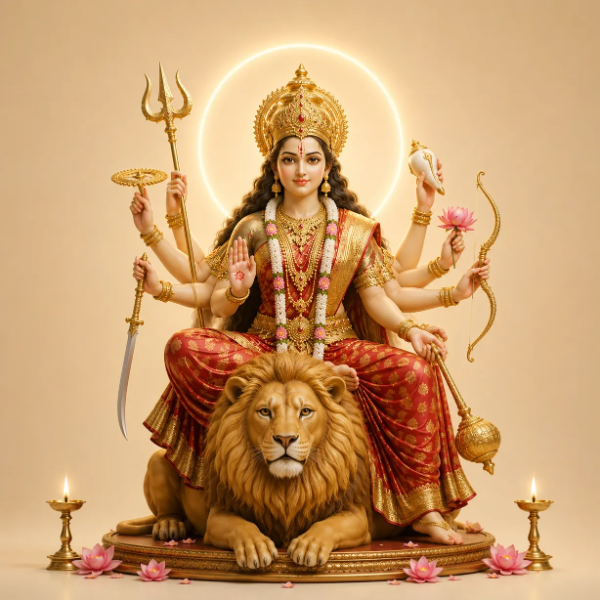
O Durga, when remembered, you remove all fear from all beings. When remembered by the healthy and prosperous, you bestow an exceedingly auspicious intellect. Who else but you, whose heart is ever compassionate, can remove poverty, sorrow, and fear, and cause universal welfare?
Benefits & Science
Benefits of Chanting:
Chanting the Durga Sarvopakar Mantra invokes the compassionate energy of Goddess Durga, acting as a shield against all fears, adversities, and negative influences. It not only removes external obstacles but also purifies the mind, bestowing clarity, wisdom, and an auspicious outlook. Devotees experience relief from financial burdens, emotional pain, and existential anxieties, leading to overall well-being and a sense of divine protection. The mantra's power lies in its ability to transform the devotee's inner and outer reality, fostering an environment of universal good.
Scientific Perspective:
From a scientific perspective, chanting mantras involves rhythmic vocalization and focused attention, which can have significant psychological and physiological benefits. The specific sound vibrations of Sanskrit mantras are believed to positively affect brain waves, inducing a meditative state, reducing stress, and enhancing cognitive functions like concentration and memory. The repetitive nature of chanting acts as a form of mindfulness, promoting emotional regulation and mental clarity. This mantra, by fostering a sense of protection and hope, can reduce anxiety and boost resilience.
Mythology & Origin
Mantra Origin Saga:
This specific verse is part of the 'Devi Mahatmyam' (also known as 'Durga Saptashati' or 'Chandi Path'), a scripture that glorifies Goddess Durga. It arises from the context where the gods, distressed by various demonic forces, invoke the ultimate divine feminine power to restore order and welfare in the cosmos. Durga, the unified power of all deities, emerges to vanquish evil and bless creation.
Scriptures Mentions:
The primary scripture for this mantra is the 'Devi Mahatmyam' (Markandeya Purana, Chapter 11, Verse 3), which details the exploits and glories of Goddess Durga. It is a foundational text for Shaktism, highlighting the supremacy of the Divine Mother.
Associated Rishi & Deity:
The mantra is part of the 'Devi Stuti' (praise of the Goddess) offered by the Devas (gods) to Goddess Durga, particularly after she vanquishes the demon Shumbha and Nishumbha. Sage Markandeya is traditionally associated with the compilation of the Purana containing this hymn.
Historical Significance:
The 'Devi Mahatmyam', from which this mantra is taken, has been a cornerstone of Hindu devotion for centuries, particularly in regions where Shaktism is prominent. It has inspired countless artists, philosophers, and devotees, shaping cultural practices and festivals like Navaratri. The mantra's message of divine protection and welfare has provided solace and strength through various historical periods of challenges and uncertainties.
Frequently Asked Questions (FAQs)
What is the origin of the Durga Sarvopakar Mantra?
Who can chant the Durga Sarvopakar Mantra?
What are the primary benefits of chanting this mantra?
Is there a specific time or day best for chanting?
Do I need to be initiated to chant this mantra?
Can this mantra help with financial problems?
What posture should I adopt while chanting?
How long does it take to chant 108 times?
What is the spiritual significance of 'Sadaardrachitta' in the mantra?
Can pregnant women chant this mantra?
Mantra Sadhana Guidelines
Best Time to Chant
- Mondays are especially auspicious and beneficial.
- Early morning Brahma Muhurta (4:00 - 6:00 AM) is best.
- Highly fruitful during Pradosh Kaal and Mahashivratri.
- Chant before commencing any auspicious task or ritual.
Other Popular Adi Shakti Mantras
Other Devotional Categories

Download App
पंचांग तिथि, त्यौहार, व्रत, उत्सव, एकादशी, आरती संग्रह, मंत्र, व्रत कथा