
Manmanā Bhava: The Great Mantra from Bhagavad Gita
Explore the profound Manmanā Bhava mantra (Bhagavad Gita 18.65). Understand its meaning, benefits, and how Lord Krishna's promise leads to spiritual liberation and divine connection through devotion. A complete guide for seekers.
Meaning of Mantra
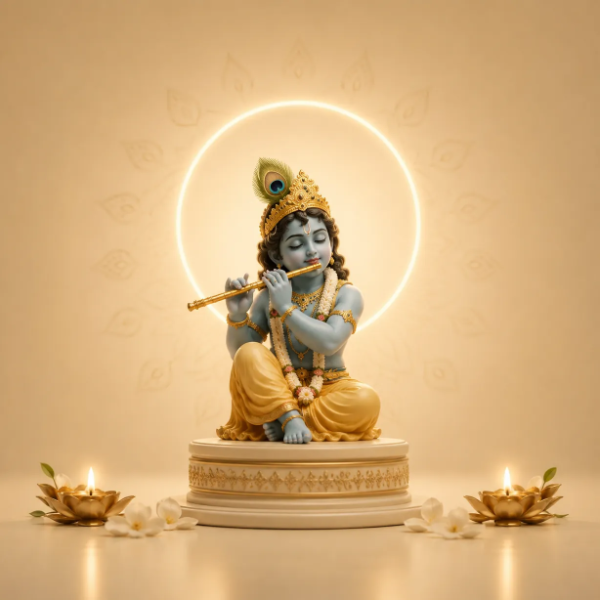
Fix your mind on Me, be devoted to Me, worship Me, and offer your obeisances to Me. Thus, you will surely come to Me. I promise you this truthfully, for you are very dear to Me. This profound instruction from Lord Krishna in the Bhagavad Gita encapsulates the essence of complete surrender and unwavering devotion, promising ultimate union with the Divine for those who sincerely follow this path.
Benefits & Science
Benefits of Chanting:
Chanting or contemplating this mantra cultivates a deep sense of inner peace and serenity by shifting focus from worldly anxieties to the Divine. Regular practice can lead to a profound connection with the Supreme, fostering spiritual liberation and a release from the cycle of suffering. It promotes mental clarity by quieting the mind's incessant chatter and enhancing concentration. Devotees often experience increased emotional stability and a reduction in stress levels as they surrender their burdens to a higher power. This mantra strengthens devotion (Bhakti) and paves the way for self-realization, helping individuals recognize their true spiritual identity. While not an instant fix, consistent practice can gradually lead to a transformative spiritual journey, potentially culminating in the attainment of Moksha (liberation) and an experience of unconditional divine love, leading to a more purposeful and fulfilling life.
Scientific Perspective:
The rhythmic chanting of this mantra generates specific sound vibrations that can positively influence brainwave patterns, potentially shifting them towards alpha or theta states associated with relaxation, meditation, and heightened awareness. This coherent vibration can stimulate the vagus nerve, which plays a crucial role in regulating the body's 'rest and digest' response, reducing sympathetic nervous system activity (stress response), and promoting a sense of calm. The focused attention required during chanting enhances neuroplasticity and strengthens neural pathways associated with mindfulness and emotional regulation. By repeatedly focusing the mind ('मनमना भव'), practitioners engage in a form of cognitive restructuring, training the brain to prioritize positive, divine-centric thoughts, which can lead to measurable improvements in mood, stress resilience, and overall mental well-being by fostering a sense of purpose and connection.
Mythology & Origin
Mantra Origin Saga:
This mantra originates directly from the Bhagavad Gita, the sacred dialogue between Lord Krishna and Arjuna on the battlefield of Kurukshetra. It is part of Krishna's concluding instructions to Arjuna, revealing the most profound and confidential knowledge of devotion and surrender. Specifically, it is verse 65 from Chapter 18, known as 'Moksha Sanyasa Yoga' (The Yoga of Liberation through Renunciation), wherein Krishna assures Arjuna of ultimate attainment if he follows these instructions.
Scriptures Mentions:
Bhagavad Gita (Chapter 18, Verse 65). This is a foundational text within the Mahabharata and a key scripture for various Hindu traditions, especially Vaishnavism, revered as the essence of Vedic wisdom.
Associated Rishi & Deity:
Lord Krishna (speaker), Arjuna (recipient). The teachings were originally revealed by Vyasa through Sanjaya to Dhritarashtra. The mantra embodies the direct words of the Supreme Personality of Godhead, Lord Krishna.
Historical Significance:
This verse is considered one of the most pivotal and confidential teachings of the Bhagavad Gita, often referred to as the 'Charama Shloka' or the ultimate verse. It encapsulates the essence of Bhakti Yoga and the path to ultimate liberation (Moksha) through complete surrender to the Divine. Its historical significance lies in its timeless appeal as a guide for spiritual seekers across millennia, offering a direct and compassionate route to the Supreme. It has profoundly influenced countless saints, philosophers, and devotees, shaping the spiritual landscape of India and beyond as a cornerstone of devotional practice.
Frequently Asked Questions (FAQs)
Who should chant this mantra?
Is this mantra specific to a particular deity?
Can chanting this mantra help with daily life challenges?
What is the significance of 'प्रियोऽसि मे' (You are dear to Me)?
Do I need a guru to chant this mantra?
What is the best way to practice this mantra for maximum benefit?
Can this mantra be used for specific material desires?
How does surrendering to Krishna (as mentioned in the mantra) impact one's free will?
Mantra Sadhana Guidelines
Best Time to Chant
- Mondays are especially auspicious and beneficial.
- Early morning Brahma Muhurta (4:00 - 6:00 AM) is best.
- Highly fruitful during Pradosh Kaal and Mahashivratri.
- Chant before commencing any auspicious task or ritual.
Other Popular Other Mantra Mantras
Other Devotional Categories

Download App
पंचांग तिथि, त्यौहार, व्रत, उत्सव, एकादशी, आरती संग्रह, मंत्र, व्रत कथा