
Japakusuma Sankasham Kashyapeyam Mahadyutim Mantra
Explore the Japakusuma Sankasham mantra for Surya Dev. Uncover its deep spiritual meaning, benefits, and how chanting this powerful Vedic sloka can bring health, clarity, and dispel darkness.
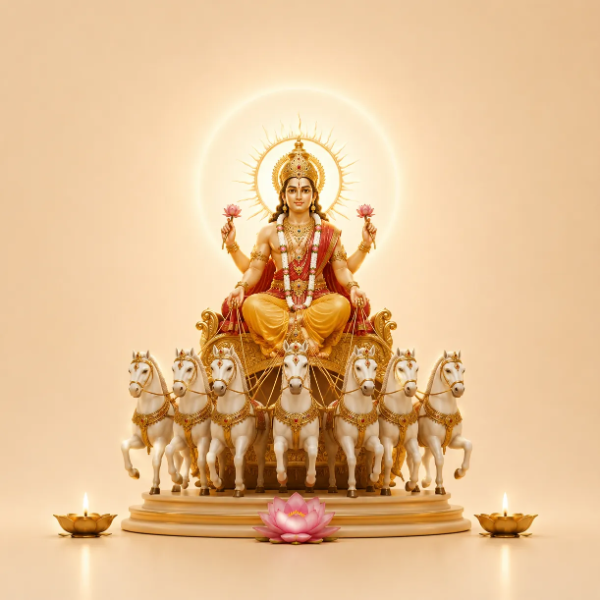
Meaning of Mantra
I bow down to the Sun God, the creator of the day, who resembles the vibrant hibiscus flower in his red splendor, who is the son of Sage Kashyapa, who possesses immense brilliance, who is the dispeller of darkness, and the destroyer of all sins and impurities.
Benefits & Science
Benefits of Chanting:
Chanting this mantra is believed to foster a deep connection with the solar energy, which is intrinsically linked to vitality, intellect, and spiritual awakening. Regular recitation can help in dispelling mental fog, promoting clarity of thought, and encouraging positive outlooks by metaphorically removing 'darkness' from the mind and spirit. The purification aspect aids in resolving internal conflicts and promoting emotional well-being. Physically, it is traditionally associated with improved overall health, especially eye health and immunity, aligning with the Sun's role as a life-giver. This practice can cultivate a sense of inner peace and resilience, empowering individuals to face life's challenges with greater strength and wisdom.
Scientific Perspective:
From a scientific lens, chanting acts as a form of auditory meditation. The rhythmic repetition of Sanskrit sounds creates specific vibrations in the vocal cords and resonating cavities, potentially stimulating the vagus nerve. This stimulation can lead to a parasympathetic nervous system response, reducing stress, lowering heart rate, and inducing a state of calm and focus. The precise phonetics of Sanskrit are believed to have a harmonizing effect on brainwave patterns, potentially shifting them towards alpha or theta states, conducive to deep relaxation, enhanced creativity, and improved cognitive function. The focused attention required for chanting also strengthens neural pathways associated with concentration and mindfulness, offering neuroplastic benefits over time.
Mythology & Origin
Mantra Origin Saga:
This particular sloka is a classical Dhyana Sloka (meditative verse) for Surya, often found in various Puranas and Smritis that praise the Sun God. It's not attributed to a single, dramatic origin story but rather emerged as a devotional hymn within the rich tradition of Surya Upasana (worship of the Sun). Its widespread use highlights its traditional acceptance as a core prayer for invoking Surya's attributes.
Scriptures Mentions:
This mantra is commonly found in texts like the Aditya Hrudayam (part of the Ramayana), various Puranas (e.g., Bhavishya Purana, Markandeya Purana, Brahma Purana), and ritualistic manuals for daily prayers (Nitya Karma Paddhati). It's a foundational verse for devotees performing Surya Namaskaram and other solar invocations.
Associated Rishi & Deity:
The primary deity is Surya (the Sun God). The mantra explicitly mentions 'Kaashyapeyam,' indicating Surya as the son of Sage Kashyapa and Aditi (often called Adityas). Sage Kashyapa is one of the Saptarishis (seven great sages), revered as a progenitor of humanity and various divine beings.
Historical Significance:
Historically, Surya worship has been a fundamental aspect of Vedic culture, predating many other forms of Hindu worship. The Sun was revered as the source of all life, light, and warmth, crucial for agriculture and human survival. This mantra, as part of Surya Upasana, signifies the continuity of this ancient tradition, emphasizing health, prosperity, and spiritual enlightenment as core values transmitted across millennia. Many ancient temples, like the Konark Sun Temple, stand as testaments to the profound historical significance of Surya in Indian civilization.
Frequently Asked Questions (FAQs)
What is the primary significance of this Japakusuma mantra?
Who is Sage Kashyapa mentioned in the mantra?
How does chanting this mantra help in dispelling darkness?
Can this mantra be chanted by anyone, regardless of religious background?
What is the significance of the hibiscus flower ('Japakusuma') reference?
Is there a specific mudra or posture recommended while chanting?
How often should one chant this mantra for optimal results?
What does 'Sarvapaapaghnam' truly imply in a spiritual sense?
Mantra Sadhana Guidelines
Best Time to Chant
- Mondays are especially auspicious and beneficial.
- Early morning Brahma Muhurta (4:00 - 6:00 AM) is best.
- Highly fruitful during Pradosh Kaal and Mahashivratri.
- Chant before commencing any auspicious task or ritual.
Other Popular Lord Surya Dev Mantras
Other Devotional Categories

Download App
पंचांग तिथि, त्यौहार, व्रत, उत्सव, एकादशी, आरती संग्रह, मंत्र, व्रत कथा