
Om Bhanave Namaha
Discover the profound meaning, benefits, and chanting guide for Om Bhanave Namaha. Invoke Sun God Surya for vitality, clarity, and spiritual illumination.
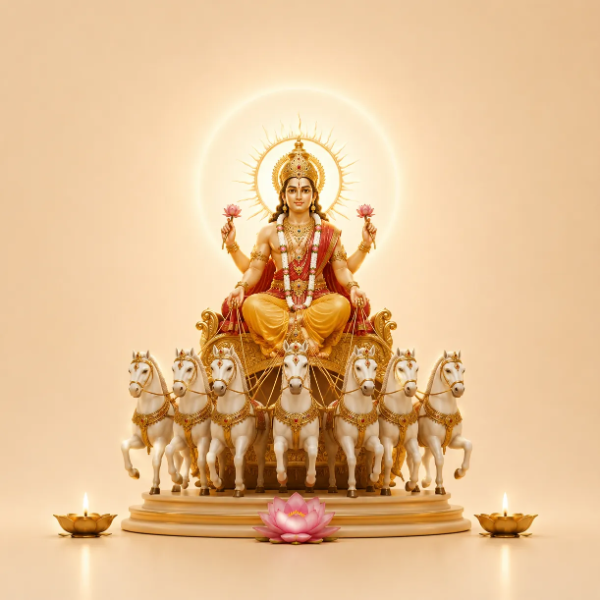
Meaning of Mantra
The mantra "Om Bhanave Namaha" translates to "Salutations to the radiant Sun God." It is a profound expression of reverence for Surya, the divine embodiment of light, life, and energy. Chanting this mantra is an act of acknowledging the Sun as the supreme source of illumination, warmth, and vitality that sustains all creation, both externally in the cosmos and internally within our own being. It seeks to invoke the auspicious energies of the Sun for clarity, strength, and overall well-being.
Benefits & Science
Benefits of Chanting:
Chanting "Om Bhanave Namaha" is believed to imbue the practitioner with the Sun's dynamic energy. Regular recitation may enhance physical vitality, contributing to improved health and a stronger immune system, much like the Sun sustains life on Earth. Mentally, it is associated with fostering mental clarity, focus, and dispelling confusion or gloom, bringing forth a positive outlook. Spiritually, this mantra can awaken inner radiance, promote self-awareness, and facilitate the removal of inner darkness, leading to greater spiritual insight and a deeper connection to the divine. It is also thought to inspire confidence, leadership qualities, and the ability to overcome life's challenges with strength and resolve.
Scientific Perspective:
From a scientific perspective, chanting mantras like "Om Bhanave Namaha" involves rhythmic vocalization that can induce a meditative state. The repetitive nature of the sound vibrations can synchronize brainwaves, potentially leading to alpha or theta brainwave states associated with relaxation, reduced stress, and enhanced focus. The vibration of 'Om' is particularly noted for its profound effect on the vagus nerve, which plays a crucial role in regulating heart rate, digestion, and stress response. Regular chanting can stimulate the vagus nerve, promoting the parasympathetic nervous system, leading to a 'rest and digest' state. This can improve physiological functions, foster emotional balance, and enhance overall cognitive well-being by creating coherent heart rhythms and neural pathways, leading to a sense of calm and clarity.
Mythology & Origin
Mantra Origin Saga:
The veneration of Surya, the Sun God, is one of the oldest and most fundamental aspects of Vedic religion. Surya is mentioned extensively in the Rig Veda as a prime deity, the source of light, heat, and life. Mantras dedicated to Surya, including simple salutations like "Om Bhanave Namaha," stem from this ancient tradition of acknowledging the Sun's paramount importance to existence. While this specific mantra is a simpler adoration, it is rooted in the vast Vedic hymns and Puranic narratives glorifying Surya.
Scriptures Mentions:
Surya Dev is prominently mentioned in the Rig Veda, Yajur Veda, and Atharva Veda. The Surya Upanishad is entirely dedicated to him. Puranas such as the Brahma Purana, Markandeya Purana, and Bhavishya Purana contain extensive narratives, genealogies, and glorifications of Surya, often referring to him by various names including Bhanu. The Aditya Hrudayam, a hymn from the Ramayana, is another celebrated prayer to Surya.
Associated Rishi & Deity:
The primary deity associated with this mantra is Surya Dev (The Sun God) himself. Various Rishis (sages) like Agastya Muni (who taught Aditya Hrudayam to Rama) and others from the Vedic era have composed hymns and mantras venerating Surya. This mantra reflects the universal adoration for the celestial body that sustains life.
Historical Significance:
The worship of the Sun (Surya Upasana) has been a cornerstone of Hindu culture since ancient times. It signifies the acknowledgment of a natural force as divine and life-giving. Surya temples, like the Konark Sun Temple, stand as testaments to this historical reverence. Daily rituals such as Sandhya Vandanam often include prayers to Surya, highlighting his integral role in daily spiritual practices and the socio-cultural fabric of India.
Frequently Asked Questions (FAQs)
What is the significance of the word 'Bhanave' in the mantra?
Is "Om Bhanave Namaha" related to Surya Namaskar?
Can beginners chant this mantra?
What are the specific health benefits associated with chanting this mantra?
Does chanting this mantra have any effect on mental well-being?
Should I use a mala (rosary) for chanting "Om Bhanave Namaha"?
What is the significance of chanting this mantra on Sundays?
Can this mantra help in career or leadership?
Mantra Sadhana Guidelines
Best Time to Chant
- Mondays are especially auspicious and beneficial.
- Early morning Brahma Muhurta (4:00 - 6:00 AM) is best.
- Highly fruitful during Pradosh Kaal and Mahashivratri.
- Chant before commencing any auspicious task or ritual.
Other Popular Lord Surya Dev Mantras
Other Devotional Categories

Download App
पंचांग तिथि, त्यौहार, व्रत, उत्सव, एकादशी, आरती संग्रह, मंत्र, व्रत कथा