
Om Mitraya Namah ||
Discover the profound 'Om Mitraya Namah' mantra. Learn its meaning, benefits for friendship, inner peace, cosmic order, and well-being. A powerful Vedic chant for harmonious living.
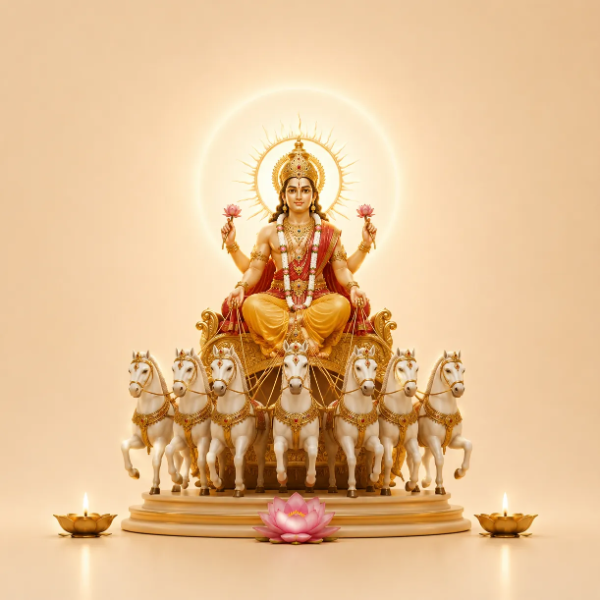
Meaning of Mantra
“Salutations to Mitra.” This simple yet profound mantra invokes the divine aspect of Mitra, who embodies universal friendship, cosmic order, truth, and compassion. It is an acknowledgment of the Sun as a benevolent friend and sustainer of life, promoting harmony and well-being. Chanting this mantra is an act of surrendering to the principles of truth and alliance, fostering peace and mutual understanding in all relationships.
Benefits & Science
Benefits of Chanting:
Chanting 'Om Mitraya Namah' systematically cultivates a mindset of universal friendship and compassion. The rhythmic vibrations generated by the mantra are believed to resonate with the heart chakra, enabling individuals to experience greater empathy and attract harmonious relationships. By invoking Mitra, who is associated with the benevolent aspects of the Sun, the mantra can enhance inner radiance, clarity, and optimism, helping to dispel gloom and negativity. It also aligns the practitioner with the cosmic laws of truth and order (Rta), fostering integrity, honesty, and ethical conduct in one's life. Regular practice can lead to a profound sense of interconnectedness, reducing feelings of loneliness and promoting overall mental and physical well-being. This meditative practice aids in calming the nervous system, potentially reducing stress, improving emotional regulation, and enhancing a pervasive sense of peace and benevolence.
Scientific Perspective:
The repetitive chanting of 'Om Mitraya Namah' creates rhythmic sound vibrations that can influence brainwave patterns, potentially shifting from active beta states to more relaxed alpha or theta states, which are associated with meditation, creativity, and deep relaxation. The 'Om' sound, in particular, has been studied for its deep resonance that can stimulate the vagus nerve. This stimulation plays a crucial role in activating the parasympathetic nervous system, promoting a 'rest and digest' response, and significantly reducing physiological stress. The focused attention required during chanting enhances mindfulness, improving cognitive functions, fostering emotional regulation, and potentially strengthening neural pathways associated with positive social emotions. The positive affirmations inherent in the mantra (friendship, salutations) can also contribute to neuroplasticity, fostering positive neural networks over time, leading to improved mood, empathy, and social connection.
Mythology & Origin
Mantra Origin Saga:
Mitra is a prominent Vedic deity, one of the Adityas, the solar deities, sons of Aditi. He is often paired with Varuna, forming the Mitra-Varuna duality representing social order, truth, and cosmic law (Rta). The Rigveda frequently invokes Mitra, highlighting his role as a benevolent guardian of covenants and friendships, ensuring loyalty and preventing deceit.
Scriptures Mentions:
Mitra's presence is primarily found in the Rigveda (e.g., Mandala 3 Hymn 59, Mandala 5 Hymn 62, Mandala 10 Hymn 11), where he is celebrated for his role in upholding cosmic order (Rta) and maintaining harmonious human relations. He is also mentioned in the Yajurveda, Atharvaveda, and later Brahmanas and Puranas, often in association with Surya (the Sun) and other Adityas. Significantly, Mitra's worship extends beyond India, with parallels in Zoroastrian scriptures (Avesta) where he appears as Mithra, reflecting ancient Indo-Iranian shared heritage concerning the deity of covenant and light.
Associated Rishi & Deity:
Mitra (the deity), associated with Varuna (as Mitra-Varuna), and Aditi (his mother). The Rishis (sages) who composed the Rigvedic hymns dedicated to Mitra, such as Dirghatamas, Gritsamada, and Vasistha, would be considered his primary ancient proponents and seers of his divine qualities.
Historical Significance:
Mitra's worship dates back to the Indo-Iranian period, making him one of the oldest deities in the Vedic pantheon with profound parallels in Zoroastrianism (Mithra), signifying a shared ancient spiritual lineage. His association with treaties, truth, light, and the Sun made him crucial for maintaining social harmony, justice, and cosmic order in ancient societies. The mantra continues this ancient tradition, invoking principles vital for human flourishing, ethical governance, and universal harmony, emphasizing the timeless importance of friendship, truth, and compassion.
Frequently Asked Questions (FAQs)
Who is Mitra in Vedic tradition?
What is the primary purpose of chanting 'Om Mitraya Namah'?
Can this mantra be chanted by anyone, regardless of faith?
Are there specific times when this mantra is most effective?
How does chanting this mantra contribute to well-being?
What is the significance of 'Rta' in relation to Mitra?
How long should one chant 'Om Mitraya Namah' for optimal results?
Is Mitra related to the Sun God Surya?
Mantra Sadhana Guidelines
Best Time to Chant
- Mondays are especially auspicious and beneficial.
- Early morning Brahma Muhurta (4:00 - 6:00 AM) is best.
- Highly fruitful during Pradosh Kaal and Mahashivratri.
- Chant before commencing any auspicious task or ritual.
Other Popular Lord Surya Dev Mantras
Other Devotional Categories

Download App
पंचांग तिथि, त्यौहार, व्रत, उत्सव, एकादशी, आरती संग्रह, मंत्र, व्रत कथा