
Om Adityaya Namah
Unlock vitality, health, and spiritual growth with the powerful Om Adityaya Namah mantra. Explore its deep meaning, pronunciation, benefits, and ancient significance.
Meaning of Mantra
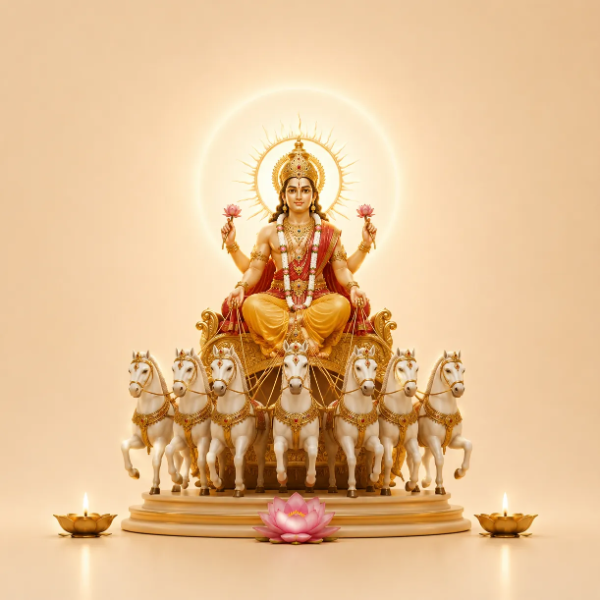
The mantra "Om Adityaya Namah" translates to "Salutations to the Sun God, Aditya." It is a profound expression of reverence for Surya, who is revered as Aditya, one of the sons of Aditi. This mantra acknowledges the Sun as the ultimate source of light, energy, life, and consciousness on Earth. Chanting it is an invocation to the cosmic radiant power that sustains all existence, bringing forth health, vitality, clarity, and spiritual illumination.
Benefits & Science
Benefits of Chanting:
Chanting "Om Adityaya Namah" regularly is believed to harmonize the body's energy centers with the solar energy, fostering profound physical and mental well-being. The vibrations are thought to stimulate the solar plexus, enhancing digestion, metabolism, and overall vitality. Practitioners often report increased mental clarity, improved focus, and a reduction in stress and anxiety, contributing to emotional balance. By invoking the Sun's radiant energy, the mantra may also attract positive circumstances, opportunities for growth, and financial stability. Spiritually, it acts as a catalyst for awakening inner wisdom and dispelling the darkness of ignorance, promoting a path towards self-realization and spiritual enlightenment. Consistent practice is associated with a strengthened immune system and an overall sense of energetic rejuvenation.
Scientific Perspective:
From a scientific viewpoint, the rhythmic chanting of "Om Adityaya Namah" generates specific sound vibrations that can influence brainwave patterns, potentially leading to states of relaxed alertness (alpha and theta waves). This mindful repetition engages the vagus nerve, which plays a crucial role in regulating stress responses and promoting the parasympathetic nervous system, leading to physiological calming. The focus required during chanting can act as a form of meditation, improving attention span and cognitive functions. Furthermore, the inherent resonance of Sanskrit syllables is believed to create an energetic blueprint within the body, fostering a sense of harmony and well-being. This practice of vibrational medicine can positively impact mood, reduce perceived stress, and enhance the body's natural healing capabilities.
Mythology & Origin
Mantra Origin Saga:
Aditya refers to the twelve sons of Aditi and the sage Kashyapa, with Surya (the Sun God) being the most prominent among them. The term 'Aditya' itself signifies 'belonging to Aditi' and has been revered since Vedic times as the celestial deities embodying the various aspects of the sun's brilliance, power, and life-giving properties. This mantra specifically invokes Surya as the primary Aditya, the bringer of light and destroyer of darkness.
Scriptures Mentions:
The worship of Surya and the Adityas is deeply rooted in ancient Hindu scriptures. They are extensively mentioned in the Rig Veda, Yajur Veda, and Atharva Veda, where hymns celebrate their life-sustaining powers. The Brahma Purana and Bhavishya Purana dedicate significant sections to Surya worship (Surya Upasana). The renowned 'Aditya Hrudayam' stotram, found in the Yuddha Kanda of the Ramayana, further highlights the potency and reverence for Aditya, chanted by Sage Agastya to Lord Rama for strength and victory.
Associated Rishi & Deity:
The primary deity associated with this mantra is Lord Surya, the Sun God, revered as Aditya. His parents are Rishi Kashyapa and Devi Aditi. Other associated deities include the nine planets (Navagrahas), with Surya being the chief among them. Historically, numerous sages and kings have worshipped Surya for health, prosperity, and power.
Historical Significance:
Sun worship (Surya Upasana) is one of the oldest forms of worship in human history, predating many organized religions. In ancient India, Surya was not only revered as a deity but also understood as the source of all energy and life, influencing agriculture, health, and cosmic cycles. Temples dedicated to Surya, such as the Konark Sun Temple, stand as testaments to the profound historical and cultural significance of Surya worship. The practice of offering water to the sun (Surya Arghyam) and chanting solar mantras like 'Om Adityaya Namah' has been a continuous tradition for millennia, emphasizing its enduring importance in Hindu dharma.
Frequently Asked Questions (FAQs)
Who is Aditya, and what is his significance in this mantra?
What are the primary benefits of regularly chanting "Om Adityaya Namah"?
Is there a specific time or day considered most auspicious for chanting this mantra?
Can anyone chant the "Om Adityaya Namah" mantra, regardless of their background?
What is the significance of offering water (Arghyam) to the Sun before chanting?
Does this mantra have any specific effects on physical health?
Is it necessary to use a mala (rosary) for chanting "Om Adityaya Namah"?
How does chanting this mantra help in removing obstacles?
Mantra Sadhana Guidelines
Best Time to Chant
- Mondays are especially auspicious and beneficial.
- Early morning Brahma Muhurta (4:00 - 6:00 AM) is best.
- Highly fruitful during Pradosh Kaal and Mahashivratri.
- Chant before commencing any auspicious task or ritual.
Other Popular Lord Surya Dev Mantras
Other Devotional Categories


Download App
पंचांग तिथि, त्यौहार, व्रत, उत्सव, एकादशी, आरती संग्रह, मंत्र, व्रत कथा