
Om Savitre Namah
Unlock inner wisdom & clarity with 'Om Savitre Namah', a powerful Vedic mantra invoking Savitr, the divine impeller. Explore its deep meaning, benefits & chanting guide.
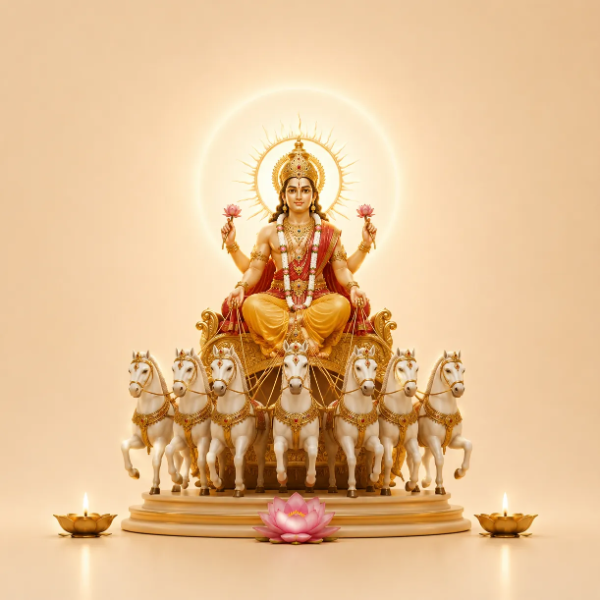
Meaning of Mantra
“Om, I offer my respectful salutations to Savitr, the radiant divine being who animates, inspires, and bestows life. This mantra is a profound invocation to the spiritual sun, the ultimate source of all light, wisdom, and creative energy within the cosmos and within oneself.”
Benefits & Science
Benefits of Chanting:
Chanting 'Om Savitre Namah' is believed to stimulate the Anahata (heart) and Ajna (third eye) chakras, fostering emotional balance and intuitive clarity. The vibrations resonate with the solar plexus, enhancing vitality and personal power. Regular practice can lead to a profound sense of inner peace, effectively reducing anxiety and stress. It cultivates a radiant aura, potentially attracting positive circumstances and people into one's life. The invocation of Savitr, the 'impeller,' helps overcome inertia, prompting one towards righteous action and spiritual evolution. It systematically aids in dissolving mental fog, promoting sharpened focus, and facilitating the acquisition of higher wisdom. This leads to an integrated personality and a clearer path towards self-realization.
Scientific Perspective:
From a scientific viewpoint, the rhythmic chanting of 'Om Savitre Namah' generates specific sound vibrations (phonemes) that activate neural pathways. The 'Om' sound is known to stimulate the vagus nerve, which plays a crucial role in regulating heart rate, digestion, and mood, leading to a 'relaxation response.' The repetitive nature of the mantra promotes brainwave coherence, potentially shifting brain states from beta (awake, alert) to alpha (relaxed, meditative) and even theta (deep relaxation, creativity). This neurological shift can reduce cortisol levels, improve focus, and enhance neuroplasticity, fostering cognitive and emotional well-being. The sustained focus required during chanting also strengthens prefrontal cortex activity, improving decision-making and impulse control. The resonance of the sound within the vocal cords and chest cavity creates internal massage, stimulating glandular function and promoting overall cellular health.
Mythology & Origin
Mantra Origin Saga:
Savitr is a prominent solar deity in the Rigveda, predating the later Puranic Surya. The name 'Savitr' literally means 'impeller,' 'rouser,' or 'producer,' highlighting his role as the animating force behind creation. He is often associated with the golden light of dawn and sunset, symbolizing the transition and the awakening of consciousness. The famous Gayatri Mantra is also addressed to Savitr, underscoring his paramount importance in Vedic cosmology as the ultimate source of spiritual light and inspiration.
Scriptures Mentions:
The Rigveda dedicates numerous hymns to Savitr, particularly Mandala 5, Hymn 81 and 82. He is frequently invoked alongside other prominent deities. The Brihadaranyaka Upanishad also references Savitr in the context of the sun's animating power. His role as the 'impeller' of the mind and intellect is a central theme in Vedic and Upanishadic texts, establishing him as a key figure in the pursuit of wisdom and spiritual enlightenment.
Associated Rishi & Deity:
Savitr is a Vedic deity. The Rishi (sage) associated with many hymns dedicated to Savitr in the Rigveda is Vishwamitra, who is traditionally credited with the composition of the Gayatri Mantra addressed to Savitr. This connection emphasizes Savitr's role in inspiring the intellect and bestowing wisdom upon the sages and humanity.
Historical Significance:
Historically, Savitr represents one of the earliest and most profound personifications of the sun's divine aspects in Indo-European traditions. His prominence in the Rigveda indicates a deep understanding and reverence for the sun's life-sustaining and consciousness-awakening properties among ancient Vedic people. The invocation of Savitr marked a significant spiritual practice aimed at cultivating intellectual and spiritual illumination, laying foundational principles for later Hindu philosophical thought on divine light and consciousness.
Frequently Asked Questions (FAQs)
Who is Savitr, the deity invoked in this mantra?
What is the primary spiritual benefit of chanting 'Om Savitre Namah'?
Is 'Om Savitre Namah' related to the famous Gayatri Mantra?
Can anyone chant this mantra, regardless of their background?
What are the most auspicious times to chant this mantra?
How does chanting 'Om Savitre Namah' contribute to mental clarity?
Are there any specific rituals or offerings associated with this mantra?
What is the recommended chanting duration for effective results?
Mantra Sadhana Guidelines
Best Time to Chant
- Mondays are especially auspicious and beneficial.
- Early morning Brahma Muhurta (4:00 - 6:00 AM) is best.
- Highly fruitful during Pradosh Kaal and Mahashivratri.
- Chant before commencing any auspicious task or ritual.
Other Popular Lord Surya Dev Mantras
Other Devotional Categories

Download App
पंचांग तिथि, त्यौहार, व्रत, उत्सव, एकादशी, आरती संग्रह, मंत्र, व्रत कथा