
Har Har Mahadev Mantra
Explore the profound meaning, spiritual benefits, and chanting guide for the powerful 'Har Har Mahadev' mantra. Connect with Lord Shiva for inner peace & liberation.
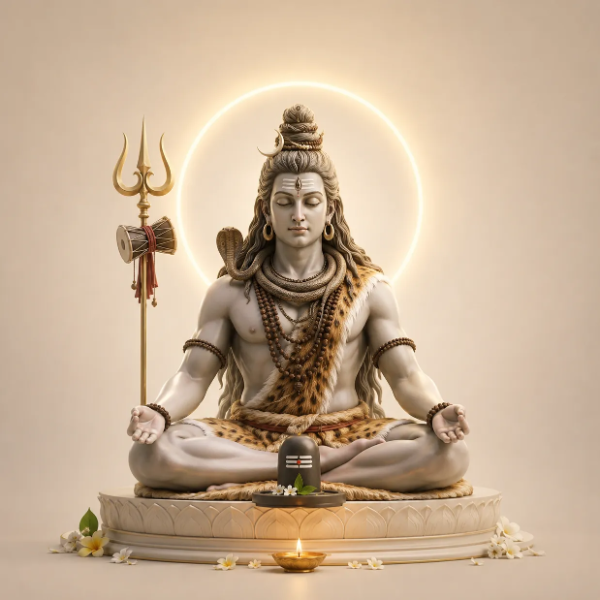
Meaning of Mantra
This mantra, 'Har Har Mahadev,' is a powerful invocation meaning 'O Great God, the Remover of all sorrows and obstacles!' It is a fervent plea to Lord Shiva, the ultimate destroyer of ignorance, ego, and the cycle of birth and death. The repetition of 'Har' emphasizes the profound aspect of Shiva as the ultimate deliverer from worldly tribulations and spiritual darkness. It's a declaration of surrender and devotion, acknowledging Shiva's supreme power to purify and elevate the consciousness. This chant resonates with the aspiration for liberation and profound inner peace.
Benefits & Science
Benefits of Chanting:
Chanting 'Har Har Mahadev' is believed to initiate a profound process of spiritual purification, aiding in the dissolution of negative thought patterns and emotional blockages. Regular practice can foster a deep sense of inner peace and serenity, allowing individuals to navigate life's challenges with greater resilience. Devotees often experience an enhanced connection with the divine, leading to strengthened faith and devotion. The vibrational energy of the mantra helps to reduce stress and anxiety, promoting a calmer state of mind. It is also considered conducive to attracting positive energy, fostering emotional balance, and paving the way for introspection and potential self-realization by aligning one's consciousness with the expansive energy of Lord Shiva.
Scientific Perspective:
From a scientific viewpoint, the rhythmic chanting of 'Har Har Mahadev' produces specific sound vibrations that can influence brainwave patterns. Repetitive vocalization, particularly of Sanskrit mantras, has been observed to stimulate the vagus nerve, which plays a crucial role in regulating the body's 'rest and digest' (parasympathetic) response. This activation can lead to a reduction in heart rate, blood pressure, and muscle tension, promoting a state of physiological relaxation and mental clarity. The sustained focus required for mantra chanting can also enhance neuroplasticity, potentially improving cognitive functions and emotional regulation. The sound resonance within the body can act as an internal massage, activating energy centers and fostering a sense of well-being.
Mythology & Origin
Mantra Origin Saga:
The chant 'Har Har Mahadev' has ancient roots in Vedic traditions, emerging from the profound devotion and reverence for Lord Shiva. It is not tied to a single specific origin story but rather evolved as a common salutation and fervent invocation among Shiva devotees across millennia. It embodies the essence of Shiva's epithets and his role as the ultimate destroyer of evil, ignorance, and suffering. The phrase gained significant popularization during various Bhakti movements, where the direct, simple language appealed to the masses seeking spiritual solace and liberation.
Scriptures Mentions:
While not a direct Vedic mantra in the traditional sense, the sentiment of 'Har Har' (Shiva as the remover) and 'Mahadev' (Great God) is deeply embedded in various Puranas, Upanishads, and Agamas dedicated to Lord Shiva. Scriptures like the Shiva Purana, Linga Purana, and Skanda Purana extensively describe Shiva's attributes as the destroyer of ignorance and the benefactor of liberation, which the mantra encapsulates. It is a popular devotional expression rather than a specific Shruti (revealed) text verse.
Associated Rishi & Deity:
Lord Shiva is the principal deity associated with this mantra. While specific sages are not traditionally credited with composing 'Har Har Mahadev' due to its evolutionary nature as a popular devotional cry, numerous Shiva bhaktas (devotees), Shaiva saints, and yogis throughout history have chanted and propagated this powerful invocation, internalizing its essence in their spiritual practices.
Historical Significance:
The phrase 'Har Har Mahadev' holds immense historical significance as a unifying war cry and a devotional salutation among followers of Shaivism. It was famously chanted by Maratha warriors under Chhatrapati Shivaji Maharaj, symbolizing courage, divine protection, and an unwavering spirit against adversity. Beyond the battlefield, it has served as a cultural and spiritual rallying call, preserving and propagating the profound reverence for Lord Shiva across generations, inspiring countless individuals in their spiritual journey and daily lives.
Frequently Asked Questions (FAQs)
Who is Lord Shiva in Hinduism?
Can women chant 'Har Har Mahadev'?
Is 'Har Har Mahadev' a Vedic mantra?
What are the best times to chant this mantra?
Do I need a guru to chant this mantra?
What posture is recommended for chanting?
Can this mantra help with material problems?
What is the significance of 'Har' being repeated twice?
Mantra Sadhana Guidelines
Best Time to Chant
- Mondays are especially auspicious and beneficial.
- Early morning Brahma Muhurta (4:00 - 6:00 AM) is best.
- Highly fruitful during Pradosh Kaal and Mahashivratri.
- Chant before commencing any auspicious task or ritual.
Other Popular Lord Shiva Mantras
Other Devotional Categories


Download App
पंचांग तिथि, त्यौहार, व्रत, उत्सव, एकादशी, आरती संग्रह, मंत्र, व्रत कथा