
Karpuragauram Karunavataram Mantra
Explore the profound Karpuragauram Karunavataram mantra of Lord Shiva. Discover its deep spiritual meaning, philosophical insights, benefits, and how to chant for inner peace and divine connection.
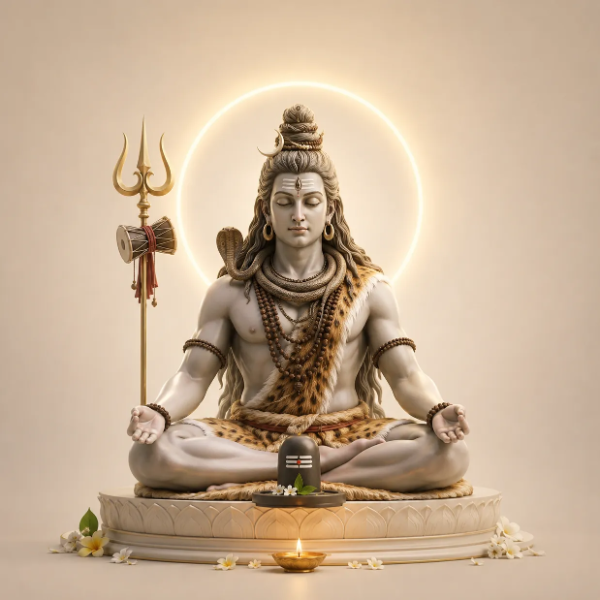
Meaning of Mantra
I bow to Lord Shiva, who is as white as camphor, the very embodiment of compassion, the essence of the world's existence, and who wears the king of serpents as a garland. May He, along with Goddess Bhavani (Parvati), forever reside in the lotus of my heart. This mantra is a profound invocation and prayer to Lord Shiva, expressing deep reverence for his transcendent qualities and his immanent presence within the devotee's heart. It beautifully describes Shiva's pure form (Karpuragauram), his compassionate nature (Karunavataram), his fundamental role in creation (Samsarasaram), and his mastery over primal forces (Bhujagendraharam). The prayer concludes with a heartfelt plea for his eternal presence, along with his divine consort Parvati, within the devotee's innermost being, signifying a desire for constant spiritual connection and guidance.
Benefits & Science
Benefits of Chanting:
Chanting the Karpuragauram mantra is believed to bring profound spiritual and psychological benefits. Regularly reciting this prayer can foster a deep sense of inner peace and tranquility by focusing the mind on divine attributes. It aids in achieving spiritual clarity, helping devotees to understand the true essence of existence and their place within the cosmic order. The mantra promotes emotional balance, reducing anxiety and stress, and cultivating a calm demeanor. It is often invoked for protection from negative energies and influences, creating a shield of divine grace. By contemplating Shiva's compassionate nature, practitioners may find an enhancement of their own empathy and kindness. Consistent chanting strengthens one's devotion and connection to the divine, leading to a more profound spiritual journey. It encourages mindfulness and presence, allowing individuals to live more fully in the present moment, thereby reducing the mental chatter that often causes distress. Ultimately, this mantra can facilitate the attainment of wisdom and a deeper connection with the universal consciousness, leading to holistic well-being.
Scientific Perspective:
From a scientific perspective, mantra chanting involves rhythmic vocalization and repetition, which has observable effects on the brain and body. The specific vibratory patterns generated by Sanskrit sounds are thought to resonate with different energy centers (chakras) and neural pathways. The sustained focus required during chanting can lead to a meditative state, characterized by a shift from beta brainwaves (associated with active thought) to alpha and theta brainwaves (associated with relaxation, creativity, and deep meditation). This shift can calm the nervous system, reduce cortisol levels, and activate the vagus nerve. Activation of the vagus nerve is linked to the parasympathetic nervous system, promoting a "rest and digest" state, reducing heart rate, blood pressure, and inflammation. The controlled breathing patterns inherent in chanting also increase oxygen intake and improve lung capacity. The phonetics of Sanskrit are precise, and their vibrational quality is believed to have a harmonizing effect on the mind and body, promoting overall physiological and psychological well-being.
Mythology & Origin
Mantra Origin Saga:
The Karpuragauram mantra is part of ancient Hindu devotional literature, specifically Shiva Stutis. While its exact authorship is not attributed to a single Rishi, it is widely believed to be a prayer composed by Adi Shankaracharya, a revered 8th-century Indian philosopher and theologian, known for his profound contributions to Advaita Vedanta. This stuti is often recited as a general invocation to Lord Shiva, especially during Shiva worship rituals (Pujas).
Scriptures Mentions:
This particular verse is a standalone prayer, frequently found in various Puranic texts (like Shiva Purana, Linga Purana) as part of hymns dedicated to Lord Shiva, and also in collections of devotional poetry. It is a widely recognized and cherished verse in Hindu spiritual traditions.
Associated Rishi & Deity:
The primary deity associated is Lord Shiva, accompanied by Goddess Parvati (Bhavani). As mentioned, its composition is often attributed to Adi Shankaracharya, a great saint and philosopher who played a crucial role in revitalizing Hinduism.
Historical Significance:
This mantra holds significant historical and cultural importance as a fundamental prayer in Shaivism, a major tradition within Hinduism that reveres Shiva as the Supreme Being. Its widespread adoption across centuries attests to its spiritual potency and lyrical beauty. It has been a cornerstone of daily prayers and ceremonial rituals, strengthening the devotional fabric of Hindu society and serving as a bridge between philosophical understanding and heartfelt adoration of the divine.
Frequently Asked Questions (FAQs)
What is the primary significance of the Karpuragauram mantra?
Who composed the Karpuragauram mantra?
Why is Lord Shiva described as "white as camphor" (Karpuragauram)?
What does "Bhujagendraharam" refer to?
Is this mantra suitable for daily chanting?
What is the benefit of having Shiva and Parvati reside in the "lotus of the heart"?
Are there any specific days to chant this mantra?
How does chanting this mantra aid in emotional balance?
Mantra Sadhana Guidelines
Best Time to Chant
- Mondays are especially auspicious and beneficial.
- Early morning Brahma Muhurta (4:00 - 6:00 AM) is best.
- Highly fruitful during Pradosh Kaal and Mahashivratri.
- Chant before commencing any auspicious task or ritual.
Other Popular Lord Shiva Mantras
Other Devotional Categories


Download App
पंचांग तिथि, त्यौहार, व्रत, उत्सव, एकादशी, आरती संग्रह, मंत्र, व्रत कथा