
Om Tryambakam Yajamahe Sugandhim Pushtivardhanam | Urvarukamiva Bandhanan Mrityormukshiya Maamritat ||
Explore the profound Maha Mrityunjaya Mantra for protection, healing & spiritual liberation. Detailed meaning, benefits, chanting rules & scientific insights.
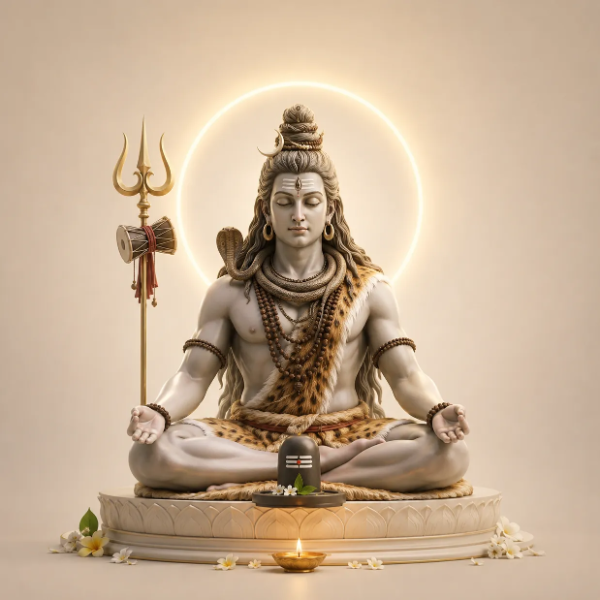
Meaning of Mantra
We worship the three-eyed Lord Shiva, who is fragrant and nourishes all beings. May He liberate us from the bondage of death, just as a cucumber is severed from its vine, and lead us towards immortality (moksha), not from the ultimate reality of death but from its fear and cycle.
Benefits & Science
Benefits of Chanting:
The Mahamrityunjaya Mantra is a powerful Vedic mantra revered for its life-giving and health-restoring properties. Chanting it regularly is believed to invoke Lord Shiva's blessings for protection against all forms of danger, disease, and untimely demise. It purifies the mind and body, fosters spiritual awareness, and helps overcome the deepest fears, especially the fear of death, guiding the devotee towards liberation.
Scientific Perspective:
From a scientific perspective, chanting mantras involves rhythmic repetition of sounds, which can have a meditative effect on the brain. The vibrations produced during chanting are believed to stimulate the vagus nerve, promoting relaxation, reducing stress hormones like cortisol, and enhancing focus. This practice can lead to a calmer mind, improved cardiovascular health, and a stronger immune system due to reduced stress. The specific sounds of the Mahamrityunjaya Mantra are considered to resonate with the body's energy centers, promoting overall well-being.
Mythology & Origin
Mantra Origin Saga:
The Mahamrityunjaya Mantra is attributed to Sage Markandeya. According to legend, he was destined to die at the age of sixteen. Lord Shiva, pleased by Markandeya's devotion and his sincere chanting of this mantra, appeared and granted him immortality.
Scriptures Mentions:
This mantra is found in the Rig Veda (7.59.12) and the Yajur Veda (3.60). It is also mentioned in various Puranas, including the Shiva Purana and the Markandeya Purana.
Associated Rishi & Deity:
Lord Shiva (the deity to whom the mantra is addressed), Sage Markandeya (the one who rediscovered and popularized it), and Sage Shukracharya (who taught it to Rishi Dadichi).
Historical Significance:
The mantra has been chanted for thousands of years in India and by Hindus worldwide. It is considered one of the most potent Vedic mantras for health, healing, protection, and spiritual liberation. Its practice is deeply rooted in ancient Vedic traditions and continues to be a central part of Hindu spiritual life.
Frequently Asked Questions (FAQs)
Who can chant the Mahamrityunjaya Mantra?
Is it mandatory to chant 108 times?
Can I chant this mantra for someone else?
What is the best time to chant this mantra?
Do I need a guru's initiation to chant this mantra?
Mantra Sadhana Guidelines
Best Time to Chant
- Mondays are especially auspicious and beneficial.
- Early morning Brahma Muhurta (4:00 - 6:00 AM) is best.
- Highly fruitful during Pradosh Kaal and Mahashivratri.
- Chant before commencing any auspicious task or ritual.
Other Popular Lord Shiva Mantras
Other Devotional Categories


Download App
पंचांग तिथि, त्यौहार, व्रत, उत्सव, एकादशी, आरती संग्रह, मंत्र, व्रत कथा