
Om Bhavadevaya Namah
Explore the profound meaning, spiritual benefits, and comprehensive chanting guide for the powerful Om Bhavadevaya Namah mantra dedicated to Lord Shiva as the essence of existence. Enhance inner peace, reduce stress, and deepen spiritual connection.
Meaning of Mantra
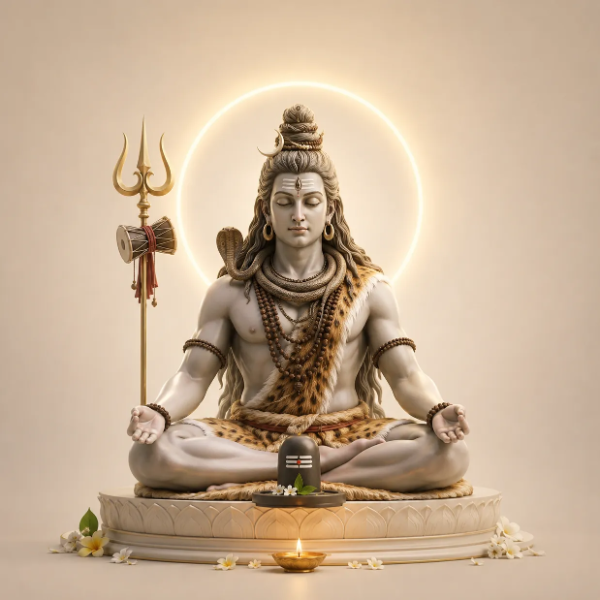
Om, I offer my humble salutations to Bhavadeva, the divine lord who is the very essence of existence and being, the creator and sustainer of all that is. This mantra is a profound invocation to Lord Shiva in his aspect as the embodiment of universal existence.
Benefits & Science
Benefits of Chanting:
Chanting "Om Bhavadevaya Namah" is revered for its potential to usher in profound inner peace and foster a deeper spiritual connection. The consistent recitation helps calm the restless mind, leading to a notable reduction in stress and anxiety. It cultivates mindfulness and promotes emotional balance, creating a stable mental and emotional landscape. Practitioners often report a sense of divine protection and an aura of positive vibrations, guiding them towards a more harmonious existence. By aligning with the fundamental principle of cosmic existence, this mantra can significantly aid in the journey towards self-realization, enhance mental clarity, and improve concentration, contributing to overall well-being.
Scientific Perspective:
The repetitive chanting of 'Om Bhavadevaya Namah' generates specific resonant sound vibrations that can significantly influence brainwave patterns. This rhythmic vocalization often transitions the brain from beta to more relaxed alpha or even deep theta states, characteristic of profound meditation. The primal 'Om' sound, in particular, is known to stimulate the vagus nerve, a key component in the parasympathetic nervous system responsible for the 'rest and digest' response. This stimulation can lead to a cascade of physiological benefits, including reduced cortisol levels (stress hormone), lowered blood pressure, improved heart rate variability, and enhanced immune function. Neuroplasticity is also fostered, promoting neural coherence and potentially rewiring neural pathways for increased resilience, focus, and overall psychological well-being.
Mythology & Origin
Mantra Origin Saga:
The name 'Bhava' is one of the revered eight forms (Ashtamurtis) of Lord Shiva, a concept deeply ingrained in various Puranas and Agamas. These Ashtamurtis embody the elemental and cosmic aspects of creation. Bhava is specifically associated with the principle of existence itself, often linked to the element of water (Apah) and the very essence that permeates all beings. This mantra is a direct salutation to Shiva in this all-pervading, foundational form, recognizing him as the source and sustenance of all life.
Scriptures Mentions:
The concept of Shiva's Ashtamurtis, including Bhava, is extensively detailed in ancient Hindu scriptures such as the Shiva Purana (e.g., Vayu Samhita), Linga Purana, and various Saiva Agamas. These texts identify Bhava as one of the cosmic manifestations of Shiva, signifying his role as the fundamental existent principle. The mantra's essence aligns with the Vedic pronouncements of Shiva (Rudra) as the universal lord and sustainer of the cosmos.
Associated Rishi & Deity:
The primary deity associated with this mantra is Lord Shiva himself, in his aspect as Bhavadeva. While no single Rishi is credited with the 'creation' of this specific direct salutation mantra, its understanding and propagation stem from the profound spiritual insights of countless ancient Rishis and seers who meditated upon and expounded the various divine forms and attributes of Lord Shiva through the ages. It is a synthesis of millennia of devotional and philosophical contemplation.
Historical Significance:
Historically, the worship of Shiva in his various forms, including the Ashtamurtis, dates back to ancient Vedic and Puranic eras. This mantra signifies a deep philosophical tradition where the deity is not merely anthropomorphic but represents fundamental cosmic principles. It reflects an advanced understanding of Shiva as the omnipresent, omnipotent force underlying all existence, making the mantra a timeless tool for connecting with these profound truths. Its simplicity allows it to be accessible, yet its meaning offers layers of spiritual depth, maintaining its relevance across centuries of Hindu devotion.
Frequently Asked Questions (FAQs)
Who is Bhavadeva and what does this mantra signify?
What are the primary benefits of regularly chanting "Om Bhavadevaya Namah"?
Can anyone chant this mantra, regardless of their religious background?
What is the significance of the sound 'Om' in this mantra?
How does chanting this mantra affect the mind and body from a scientific perspective?
Is there a recommended posture or environment for chanting?
What is the importance of chanting 108 times?
How does 'Bhavadeva' relate to the creation aspect of Lord Shiva?
Mantra Sadhana Guidelines
Best Time to Chant
- Mondays are especially auspicious and beneficial.
- Early morning Brahma Muhurta (4:00 - 6:00 AM) is best.
- Highly fruitful during Pradosh Kaal and Mahashivratri.
- Chant before commencing any auspicious task or ritual.
Other Popular Lord Shiva Mantras
Other Devotional Categories



Download App
पंचांग तिथि, त्यौहार, व्रत, उत्सव, एकादशी, आरती संग्रह, मंत्र, व्रत कथा