Om Namo Bhagavate Rudraya
Discover the profound Om Namo Bhagavate Rudraya mantra. Explore its meaning, spiritual significance, chanting benefits, and ancient Vedic roots for inner peace & transformation.
Meaning of Mantra
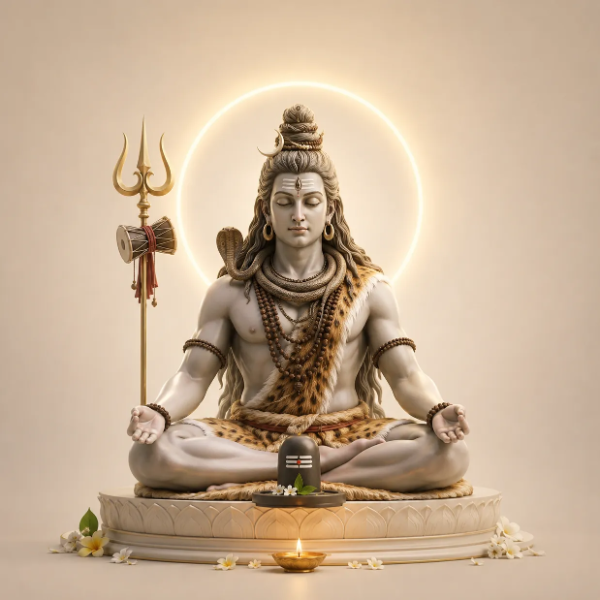
I bow down to Lord Rudra, the revered and fierce form of Shiva, who is the giver of ultimate knowledge, destroyer of suffering, and bestower of auspiciousness.
Benefits & Science
Benefits of Chanting:
The Rudra Moola Mantra is a powerful invocation that aligns the chanter with the cosmic energy of Lord Rudra. Regular chanting builds a protective shield, dissolving karmic impurities and fostering a sense of invincibility against life's challenges. It purifies the subtle body, leading to improved health, mental stability, and a profound sense of connection to the divine. The sound vibrations resonate with the energy centers, balancing them and promoting holistic well-being. It is particularly effective for those seeking relief from chronic issues, desiring profound spiritual transformation, and aspiring for a life free from fear.
Scientific Perspective:
From a scientific viewpoint, chanting involves rhythmic vocalization which can induce a meditative state. The repetitive nature and specific sound vibrations (especially 'Om') are known to activate the vagus nerve, leading to a 'relaxation response'. This can lower heart rate, blood pressure, and reduce cortisol levels (stress hormone). Focused chanting improves concentration, memory, and cognitive functions. The resonance created by these sounds can positively affect neural pathways, promoting neuroplasticity and overall brain health. It's a form of active meditation that combines auditory input with focused intention, fostering mental calm and emotional regulation.
Mythology & Origin
Mantra Origin Saga:
The Rudra Moola Mantra finds its origins in the ancient Vedic texts, particularly revered in the Yajurveda, where Lord Rudra is extensively praised as a powerful deity associated with both destructive and benevolent aspects. It is considered a fundamental mantra for propitiating Lord Shiva's fierce form, Rudra, who is also seen as a protector and healer.
Scriptures Mentions:
Primarily found in the Yajurveda, particularly the Shri Rudram (Rudrashtadhyayi), which is a part of the Taittiriya Samhita. Its principles and efficacy are also elucidated in various Puranas such as the Shiva Purana and Skanda Purana, and in Shaiva Agamas, emphasizing its significance in Shaiva tradition and rituals.
Associated Rishi & Deity:
Lord Shiva himself is the presiding deity of this mantra. Many ancient sages like Yajnavalkya and various Rishis are associated with the transmission and understanding of Vedic hymns and mantras dedicated to Rudra. Devotees throughout history have chanted this mantra for various purposes, seeking Rudra's blessings.
Historical Significance:
Historically, the chanting of Rudra mantras, including the Moola Mantra, has been central to Shaivite practices for protection, healing, and attaining moksha. Kings and warriors performed Rudra Homas for victory and well-being. It signifies a profound spiritual tradition of recognizing and harmonizing with both the gentle and formidable aspects of the divine, used for personal and collective welfare since ancient times.
Frequently Asked Questions (FAQs)
Who is Lord Rudra?
Can beginners chant this mantra?
What is the best time to chant this mantra?
Is there any specific mudra or posture recommended?
What are the common misconceptions about Rudra?
Can women chant this mantra during menstruation?
What is the significance of 'Om' in this mantra?
How often should I chant this mantra for effective results?
Are there any dietary restrictions associated with chanting this mantra?
Mantra Sadhana Guidelines
Best Time to Chant
- Mondays are especially auspicious and beneficial.
- Early morning Brahma Muhurta (4:00 - 6:00 AM) is best.
- Highly fruitful during Pradosh Kaal and Mahashivratri.
- Chant before commencing any auspicious task or ritual.
Other Popular Lord Shiva Mantras
Other Devotional Categories



Download App
पंचांग तिथि, त्यौहार, व्रत, उत्सव, एकादशी, आरती संग्रह, मंत्र, व्रत कथा