
Om Namo Bhagavate Rudraya
Explore the profound 'Om Namo Bhagavate Rudraya' mantra. Discover its meaning, spiritual benefits, scientific perspective, and how to chant for protection, peace, and spiritual growth.
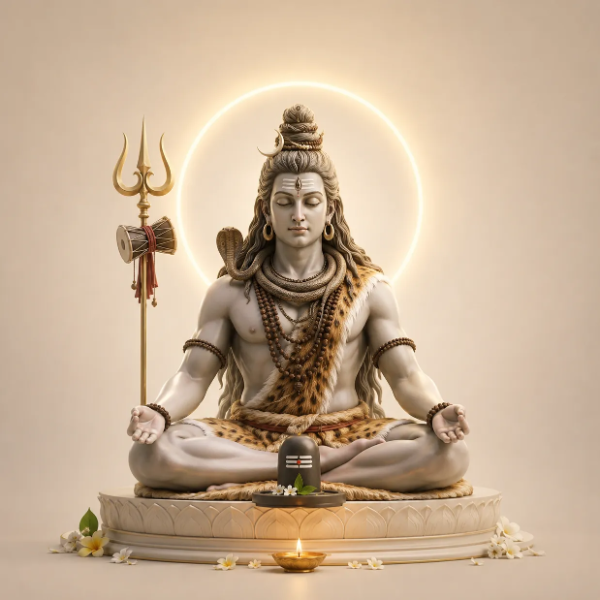
Meaning of Mantra
The mantra "Om Namo Bhagavate Rudraya" translates to "Salutations to the adorable Lord Rudra." It is a powerful invocation of Lord Rudra, an ancient and fierce yet ultimately benevolent aspect of Lord Shiva. This sacred phrase expresses profound reverence, surrender, and devotion to the divine cosmic force associated with transformation, destruction of negativity, and ultimately, regeneration and spiritual liberation. Chanting this mantra is a direct acknowledgment of Rudra's immense power to remove obstacles, heal ailments, purify one's being, and bestow spiritual blessings, guiding the devotee towards a higher state of consciousness, inner peace, and ultimate well-being.
Benefits & Science
Benefits of Chanting:
The consistent chanting of "Om Namo Bhagavate Rudraya" can establish a robust aura of spiritual protection, potentially shielding the practitioner from negative energies, psychic attacks, and malevolent influences. It is widely believed to be highly effective in the removal of various obstacles in one's life path, paving the way for smoother progress and goal achievement. Many practitioners report experiencing profound inner peace, a significant reduction in stress, and an enhanced sense of emotional balance. The powerful vibrations generated by the mantra are hypothesized to promote holistic physical and mental healing, contributing to overall wellness and vitality. This mantra also serves to sharpen focus and concentration, making it an invaluable aid for meditation and deeper spiritual practices. Furthermore, it is a potent catalyst for spiritual growth, facilitating the purification of accumulated karma and strengthening one's intrinsic connection with the divine, thereby nurturing a deep sense of fearlessness, courage, and inner strength.
Scientific Perspective:
Chanting "Om Namo Bhagavate Rudraya" involves rhythmic vocalization that can induce a profound meditative state. The repetitive utterance of the primordial 'Om' sound, particularly when combined with the specific phonetic structure of the mantra, creates resonant frequencies that are believed to stimulate the vagus nerve. This stimulation can activate the parasympathetic nervous system, leading to a 'rest and digest' response, which promotes deep relaxation, lowers heart rate variability, and reduces the production of stress hormones like cortisol. The sustained auditory and mental focus during chanting is hypothesized to synchronize brainwave patterns, moving them from the agitated beta state towards calmer alpha and even deep theta states. This neurophysiological shift can enhance cognitive functions, improve neuroplasticity, reduce anxiety, and foster an overall sense of well-being, potentially influencing gene expression and cellular repair mechanisms through vibrational resonance.
Mythology & Origin
Mantra Origin Saga:
Lord Rudra is one of the earliest and most powerful manifestations of the divine in Vedic tradition, frequently appearing in the Rigveda as a fierce, roaring deity associated with storms, wind, and disease, yet also as a healer and protector. His name literally means 'the one who cries out' or 'the roarer'. Over time, Rudra became intrinsically identified with Shiva, evolving into the destructive yet regenerative aspect of the Hindu Trimurti (Brahma, Vishnu, Shiva), representing the cosmic force responsible for dissolution, transformation, and ultimately, liberation from suffering.
Scriptures Mentions:
The reverence for Rudra is deeply embedded in the Vedic scriptures, particularly the Yajurveda, where the revered "Sri Rudram" (Namakam and Chamakam) is an elaborate hymn dedicated to Lord Rudra-Shiva, extolling His manifold names and attributes. Beyond the Vedas, the Mahabharata, various Puranas (such as the Shiva Purana, Linga Purana, Skanda Purana), and Agamas extensively narrate the glories and exploits of Rudra-Shiva, solidifying His supreme position in the Hindu pantheon and highlighting the efficacy of mantras dedicated to Him.
Associated Rishi & Deity:
The primary deity associated with this mantra is Lord Rudra himself, who is synonymous with Lord Shiva. Many ancient Rishis and revered sages, including Agastya, Vishwamitra, and Vashistha, have performed extensive tapasya (austerities) and composed hymns glorifying Rudra-Shiva. This mantra is a direct invocation and salutation to the Supreme Lord, acknowledging Him as the ultimate source of all power, transformation, and grace in the cosmos. Devotees and enlightened beings across millennia have channeled their devotion through such potent invocations.
Historical Significance:
Historically, the worship of Rudra marks a crucial evolutionary phase in the development of Hindu theology, eventually culminating in the widespread reverence of Shiva, which became one of the dominant traditions—Shaivism. From the early Vedic era, where Rudra was propitiated to avert calamities, to the Puranic and Tantric periods where Shiva's role as the cosmic dissolver and regenerator became central, the practices associated with Rudra, including mantra chanting, have been pivotal. This mantra's continuous usage for millennia underscores its enduring spiritual power and its role in shaping various philosophical and devotional movements aimed at achieving liberation, protection, and profound inner transformation for countless spiritual seekers.
Frequently Asked Questions (FAQs)
Who is Lord Rudra, and what is his significance?
Is "Om Namo Bhagavate Rudraya" different from other Shiva mantras?
What is the importance of chanting "Bhagavate" in the mantra?
Are there any specific dietary guidelines recommended while chanting this mantra?
Can chanting this mantra help with specific ailments or health issues?
Is it necessary to be initiated (receive Diksha) to chant "Om Namo Bhagavate Rudraya"?
How long should one ideally chant this mantra to experience its benefits?
Can women chant the "Om Namo Bhagavate Rudraya" mantra?
What is the recommended posture for chanting this mantra?
Does this mantra help in managing anger and aggression?
Mantra Sadhana Guidelines
Best Time to Chant
- Mondays are especially auspicious and beneficial.
- Early morning Brahma Muhurta (4:00 - 6:00 AM) is best.
- Highly fruitful during Pradosh Kaal and Mahashivratri.
- Chant before commencing any auspicious task or ritual.
Other Popular Lord Shiva Mantras
Other Devotional Categories


Download App
पंचांग तिथि, त्यौहार, व्रत, उत्सव, एकादशी, आरती संग्रह, मंत्र, व्रत कथा