
Om Pinakine Namah
Explore the profound meaning and benefits of Om Pinakine Namah, a powerful Shiva mantra for protection, inner strength, spiritual growth, and overcoming obstacles. Learn its deep significance.
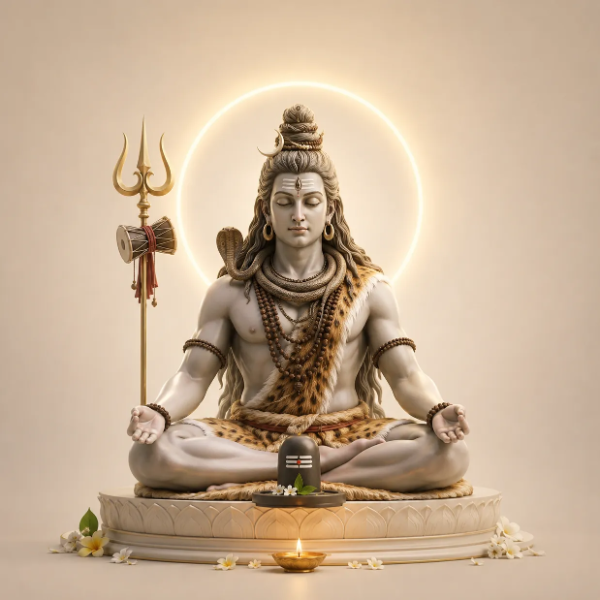
Meaning of Mantra
''Om, Salutations to Pinakin.'' This mantra offers profound reverence to Lord Shiva, specifically in His aspect as Pinakin, the divine archer who wields the powerful Pinaka bow. It invokes His protective energy, His ability to destroy evil, and His immense cosmic power, signifying complete surrender and unwavering devotion to the Supreme Being who upholds cosmic order and vanquishes negativity. Chanting this mantra is a powerful way to connect with Shiva's transformative energy.
Benefits & Science
Benefits of Chanting:
Chanting 'Om Pinakine Namah' regularly is believed to invoke Lord Shiva's protective grace, shielding the devotee from various forms of negativity, both external and internal. It aids in overcoming life's challenges, dissolving obstacles, and fostering a sense of resilience and courage to face adverse situations. The mantra is thought to enhance mental clarity and focus, leading to improved decision-making and a calmer, more composed mind. Spiritually, it facilitates the purification of karma, deepens one's connection with the divine, and guides towards self-realization by potentially reducing ego and fostering humility. The vibrational energy of the mantra is said to create a potent spiritual shield, dispelling fear and instilling unwavering confidence over time.
Scientific Perspective:
The rhythmic chanting of 'Om Pinakine Namah' generates specific sound vibrations that can profoundly influence brainwave patterns, often shifting them from active beta states to more relaxed alpha or even deep meditative theta states. This consistent vocalization stimulates the vagus nerve, a key component of the parasympathetic nervous system, which regulates heart rate, digestion, and mood, leading to a profound calming effect on the entire nervous system. The focused attention required during chanting acts as a powerful form of mindfulness meditation, improving cognitive function, enhancing emotional regulation, and potentially reducing physiological markers of stress. This sustained vibrational resonance is hypothesized to harmonize the body's subtle energy centers, contributing to overall well-being and mental equilibrium.
Mythology & Origin
Mantra Origin Saga:
The epithet 'Pinakin' for Lord Shiva refers to His legendary divine bow, Pinaka. This celestial bow, crafted by Vishwakarma, the divine architect, was bestowed upon Shiva, symbolizing His supreme power and ability to destroy cosmic evil and maintain universal order. The most renowned mythological narrative associated with the Pinaka bow is its breaking by Lord Rama during Sita's swayamvar, a feat that demonstrated Rama's unparalleled divine strength and fulfilled an ancient prophecy, further cementing the bow's legendary status.
Scriptures Mentions:
The name Pinakin is extensively mentioned and glorified across various revered Hindu scriptures, including the Shiva Purana, Linga Purana, Skanda Purana, as well as the epic Mahabharata and Ramayana. These sacred texts consistently portray Pinakin as one of the thousand names of Shiva (Sahastranamavali), underscoring His pivotal role as the supreme destroyer of evil, the protector of the righteous, and the embodiment of cosmic justice. Its frequent mention signifies its deep roots in Hindu theology.
Associated Rishi & Deity:
Lord Shiva himself is the primary presiding deity of this mantra, as it is a direct invocation of His 'Pinakin' aspect. While the mantra’s essence stems directly from Shiva's divine manifestations and attributes, its widespread practice has been propagated by countless sages and spiritual masters throughout history. Lord Rama is also indirectly associated through the mythological event of His breaking of the Pinaka bow during Sita's swayamvar, a testament to divine power and destiny.
Historical Significance:
Historically, the worship of Shiva as Pinakin reflects the ancient Vedic reverence for deities associated with powerful weaponry, symbolizing cosmic order, divine intervention, and the defeat of chaos. The Pinaka bow, therefore, represents not just a physical weapon but a potent metaphorical tool for destroying ignorance, ego, and protecting dharma (righteousness). Its significance has been deeply ingrained and passed down through generations, profoundly shaping devotional practices, artistic representations, and narrative traditions within Hinduism, embodying a timeless spiritual principle.
Mantra Sadhana Guidelines
Best Time to Chant
- Mondays are especially auspicious and beneficial.
- Early morning Brahma Muhurta (4:00 - 6:00 AM) is best.
- Highly fruitful during Pradosh Kaal and Mahashivratri.
- Chant before commencing any auspicious task or ritual.
Other Popular Lord Shiva Mantras
Other Devotional Categories


Download App
पंचांग तिथि, त्यौहार, व्रत, उत्सव, एकादशी, आरती संग्रह, मंत्र, व्रत कथा