
Om Shambhave Namah
Explore the profound meaning, spiritual and scientific benefits, and comprehensive chanting guide for the Om Shambhave Namah mantra. Invoke Lord Shiva's benevolent energy for inner peace, happiness, well-being, and auspiciousness in your life.
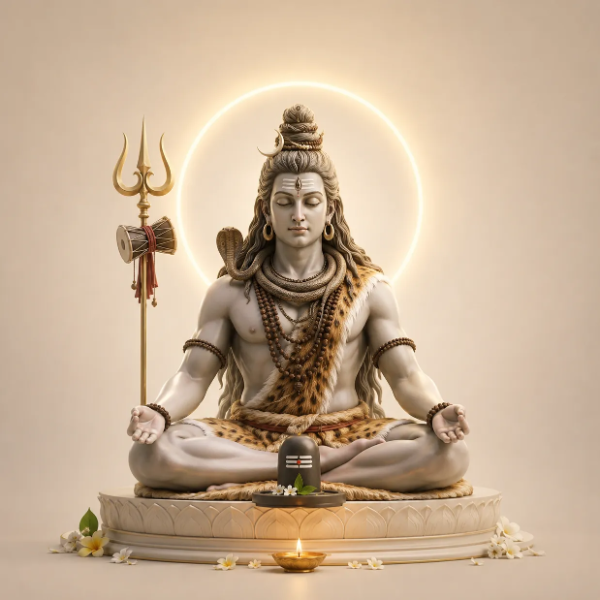
Meaning of Mantra
“I bow to Shambhu, the benevolent one, the source of all happiness and well-being.” This mantra is a deep expression of reverence to Lord Shiva in his aspect as Shambhu, who brings joy, peace, and auspiciousness into one's life. It acknowledges Him as the ultimate giver of prosperity, inner contentment, and freedom from suffering, inviting His compassionate grace.
Benefits & Science
Benefits of Chanting:
Chanting "Om Shambhave Namah" regularly is believed to cultivate a profound sense of inner peace and tranquility, effectively contributing to stress and anxiety reduction. The vibrational frequency of the mantra helps in balancing emotions, leading to greater emotional stability and resilience. Spiritually, it acts as a conduit for connecting with the benevolent aspect of Lord Shiva, fostering spiritual growth and inviting positive, life-affirming energy into one's aura. It is thought to aid in the subtle energetic removal of obstacles, paving the way for auspiciousness and overall holistic well-being. Practicing this mantra can enhance mindfulness, improve concentration, and lead to a more harmonious existence by aligning the individual's energy with cosmic benevolence, thereby attracting divine blessings and fostering a deep sense of contentment and joy.
Scientific Perspective:
From a scientific perspective, mantra chanting, including "Om Shambhave Namah," can induce a meditative state that impacts brainwave activity. The repetitive vocalization and focused attention can shift brainwaves from a beta (alert, active) state to alpha (relaxed, calm) and even theta (deep relaxation, meditation) states, promoting mental tranquility. The 'Om' sound, in particular, has been studied for its potential to stimulate the vagus nerve, which plays a crucial role in regulating the body's parasympathetic nervous system (responsible for 'rest and digest' functions). This stimulation can help lower heart rate, reduce blood pressure, and alleviate muscle tension. The rhythmic vibrations generated by chanting create a resonance within the body, potentially optimizing cellular function and promoting a sense of well-being through neurochemical releases like endorphins, serotonin, and dopamine, which are associated with mood elevation, stress reduction, and overall emotional balance.
Mythology & Origin
Mantra Origin Saga:
The name Shambhu is one of the thousand names of Shiva, found in sacred texts like the Shiva Sahasranama. It originates from Sanskrit roots 'sham' meaning happiness, welfare, peace, and 'bhu' meaning to be, to exist, or the source. Thus, Shambhu means "the source of happiness" or "the one who bestows well-being." This aspect of Shiva highlights his supremely benevolent nature as the protector and giver of auspiciousness, distinguishing him from his more fierce forms. The mantra itself is a direct invocation of this specific, compassionate aspect of Lord Shiva, seeking His blessings for universal harmony and joy.
Scriptures Mentions:
This mantra and the epithet Shambhu are widely mentioned and glorified in various Puranas, Upanishads, and Agamas dedicated to Lord Shiva. Scriptures like the Shiva Purana, Linga Purana, Skanda Purana, and numerous Shiva Stotrams frequently laud Shiva by this epithet, emphasizing his role as the ultimate benefactor of humanity and the entire cosmos. The mantra reflects the deep reverence and understanding of Shiva's auspicious nature found throughout ancient Shaivite traditions and philosophical texts.
Associated Rishi & Deity:
Lord Shiva, in his benevolent aspect as Shambhu, is the primary deity associated with this mantra. While specific sages might have elucidated its power and propagated its usage through various spiritual lineages, the mantra is a direct prayer and invocation to Shiva, the supreme auspicious one, who is revered as the ultimate source of all joy and peace in the universe.
Historical Significance:
The reverence for Shiva as Shambhu dates back to ancient Vedic times, with the concept of an auspicious, benevolent deity being central to early spiritual thought. His popularization as a primary deity and source of wellbeing grew significantly during the Puranic age. The chanting of "Om Shambhave Namah" has been a timeless practice in Hindu traditions, symbolizing the continuous human quest for peace, prosperity, and divine connection. It represents a vital thread in the fabric of Shaivism, passed down through generations of spiritual aspirants as a means to connect with the ultimate source of auspiciousness and inner joy.
Frequently Asked Questions (FAQs)
Who is Shambhu and why is this mantra addressed to him?
What is the primary spiritual benefit of chanting 'Om Shambhave Namah'?
Can chanting this mantra help with stress and anxiety?
Is 'Om Shambhave Namah' suitable for beginners in mantra chanting?
What is the significance of chanting it 108 times?
Are there any specific dietary or lifestyle restrictions while chanting this mantra?
How does this mantra bring auspiciousness into one's life?
Can I chant 'Om Shambhave Namah' silently?
Mantra Sadhana Guidelines
Best Time to Chant
- Mondays are especially auspicious and beneficial.
- Early morning Brahma Muhurta (4:00 - 6:00 AM) is best.
- Highly fruitful during Pradosh Kaal and Mahashivratri.
- Chant before commencing any auspicious task or ritual.
Other Popular Lord Shiva Mantras
Other Devotional Categories


Download App
पंचांग तिथि, त्यौहार, व्रत, उत्सव, एकादशी, आरती संग्रह, मंत्र, व्रत कथा