
Om Tatpurushaya Vidmahe Mahadevaya Dhimahi Tanno Rudrah Prachodayat
Explore the powerful Rudra Gayatri Mantra for spiritual growth, protection, and wisdom. Discover its deep meaning, pronunciation, benefits, and how to chant for divine inspiration and inner peace.
Meaning of Mantra
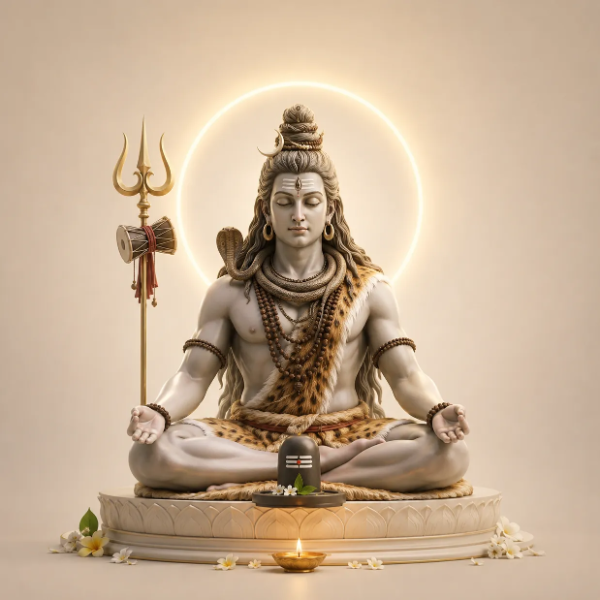
Om. We meditate upon Tatpurusha, the Supreme Being, and contemplate Mahadeva, the Great God. May Rudra, the fierce yet benevolent manifestation of Lord Shiva, enlighten our intellect and inspire us towards the path of righteousness and spiritual realization.
Benefits & Science
Benefits of Chanting:
Regular chanting of the Rudra Gayatri Mantra is believed to harmonize the mind and body, leading to a profound sense of inner peace and tranquility. The focused rhythmic vibrations can help reduce stress and anxiety, promoting emotional stability. It is thought to sharpen the intellect and foster wisdom, guiding individuals towards insightful decision-making. Devotees often experience a heightened sense of protection from negative influences and a deeper connection with the divine, empowering them with courage and resilience to face life's challenges. The mantra's energetic resonance is also associated with cleansing the aura and attracting positive spiritual energies.
Scientific Perspective:
From a scientific viewpoint, the rhythmic chanting of mantras like the Rudra Gayatri can induce a meditative state by slowing down brainwave frequencies (e.g., alpha and theta waves), which are associated with relaxation and increased creativity. The specific phonetic vibrations are believed to stimulate the vagus nerve, influencing heart rate variability and promoting a 'rest and digest' response, thereby reducing physiological stress. The focused breathing and vocalization enhance mindfulness, improving concentration and cognitive function. Regular practice can lead to neuroplastic changes, strengthening neural pathways associated with emotional regulation and well-being, potentially contributing to mental clarity and emotional resilience.
Mythology & Origin
Mantra Origin Saga:
This mantra is a variation of the ancient Gayatri tradition, adapted to invoke Lord Shiva in his majestic Rudra form. While the original Gayatri mantra is dedicated to Savitr, many Puranic and Tantric texts later developed Gayatri mantras for various deities. This specific Rudra Gayatri invokes the transformative energy of Shiva, reflecting the deep reverence for Shiva as both the benevolent protector and fierce destroyer of evil.
Scriptures Mentions:
Variations of the Rudra Gayatri Mantra are found in various Vedic and Puranic scriptures. The Taittiriya Aranyaka of the Yajurveda (10.1.6) contains a Shiva Gayatri Mantra with a similar structure, establishing its Vedic roots. It is also alluded to and revered in numerous Puranas like the Shiva Purana and Linga Purana, which extol the glory of Lord Shiva.
Associated Rishi & Deity:
Rishi Vishwamitra (associated with original Gayatri concept), Lord Shiva (Rudra form)
Historical Significance:
The chanting of Shiva-related Gayatri mantras has been a fundamental practice in Shaivism for millennia, dating back to Vedic times. Its historical significance lies in its role in the evolution of deity worship and the integration of diverse spiritual practices within Hinduism. It signifies a profound tradition of seeking divine illumination and protection through the powerful invocation of Shiva's cosmic presence, continuing to be a cornerstone of spiritual sadhana for countless devotees.
Frequently Asked Questions (FAQs)
What is the core meaning and purpose of the Rudra Gayatri Mantra?
Who is Rudra in the context of this mantra?
What are the primary benefits of regularly chanting this mantra?
Is there a specific time of day or week best suited for chanting?
Can individuals of any background or faith chant the Rudra Gayatri Mantra?
What is the significance of the word 'Prachodayat' in the mantra?
Does chanting this mantra require formal initiation (Diksha)?
How does this mantra contribute to stress reduction and mental clarity?
Mantra Sadhana Guidelines
Best Time to Chant
- Mondays are especially auspicious and beneficial.
- Early morning Brahma Muhurta (4:00 - 6:00 AM) is best.
- Highly fruitful during Pradosh Kaal and Mahashivratri.
- Chant before commencing any auspicious task or ritual.
Other Popular Lord Shiva Mantras
Other Devotional Categories



Download App
पंचांग तिथि, त्यौहार, व्रत, उत्सव, एकादशी, आरती संग्रह, मंत्र, व्रत कथा