
Namamishamishana Nirvanarupam Vibhum Vyapakam Brahma Vedasvarupam.
Discover the profound meaning & benefits of "Namamishamishana Nirvanarupam," a powerful Shiva mantra for inner peace, spiritual growth, and understanding ultimate reality from the Shiva Mahimna Stotram.
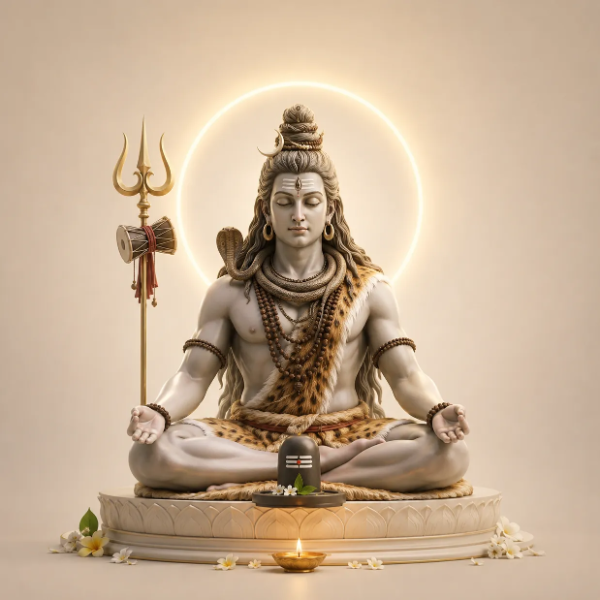
Meaning of Mantra
I bow to the Lord, the supreme ruler (Ishana), whose very form is liberation and ultimate emancipation (Nirvana). He is the all-pervading (Vibhu), the all-encompassing (Vyapakam) Absolute Reality (Brahman), and whose essence is the Vedas themselves (Vedasvarupam), the embodiment of ultimate knowledge.
Benefits & Science
Benefits of Chanting:
Regular chanting of this powerful mantra can facilitate deep introspection and cultivate a profound sense of inner peace and serenity. The rhythmic vibrations help in calming the mind, reducing mental chatter, and mitigating stress and anxiety. It aids in developing spiritual clarity, allowing an individual to perceive situations with greater wisdom and detachment. By connecting with the attributes of Shiva as 'Nirvanarupam' and 'Brahman,' practitioners may experience a heightened sense of divine connection and move closer to understanding the ultimate truth of existence, fostering self-realization and a sense of liberation from worldly attachments. This practice encourages a shift in perspective, promoting a more harmonious and purposeful life.
Scientific Perspective:
The systematic chanting of this mantra involves specific vocalizations and rhythmic breathing, which can significantly impact the brain and body. The resonant vibrations produced by the Sanskrit syllables are known to stimulate the vagus nerve, which plays a crucial role in regulating the body's parasympathetic nervous system, thereby inducing a state of deep relaxation and reducing the 'fight or flight' response. This can lead to a reduction in heart rate and blood pressure. Furthermore, the repetitive nature of chanting can facilitate a shift in brainwave patterns from a high-frequency beta state to calmer alpha and theta states, akin to those observed during meditation, promoting enhanced focus, mental clarity, and emotional balance. This neurophysiological effect contributes to stress reduction and an overall sense of well-being, fostering a conducive environment for introspection and cognitive improvement.
Mythology & Origin
Mantra Origin Saga:
This profound verse is drawn from the revered 'Shiva Mahimna Stotram,' a hymn of praise to Lord Shiva. The legend recounts that the Gandharva king Pushpadanta, renowned for his beautiful singing, once entered King Chitraratha's garden, where he secretly plucked flowers dedicated to Shiva. Enraged by this desecration, Shiva made Pushpadanta lose his divine powers. Realizing his transgression, Pushpadanta sought forgiveness by composing this magnificent hymn, the Shiva Mahimna Stotram, extolling Shiva's supreme glory and attributes. Pleased with his devotion and remorse, Lord Shiva restored Pushpadanta's powers, making the Stotram an eternal testament to Shiva's boundless compassion and power.
Scriptures Mentions:
Shiva Mahimna Stotram, Puranas (indirectly describing Shiva's attributes and cosmic role)
Associated Rishi & Deity:
Pushpadanta Gandharva, Lord Shiva
Historical Significance:
The Shiva Mahimna Stotram, from which this verse originates, is one of the most celebrated and profound hymns in Shaivism. It has been cherished for centuries as a powerful devotional text that eloquently describes the transcendental nature and cosmic supremacy of Lord Shiva. Its philosophical depth and poetic beauty have made it a timeless classic, recited by countless devotees seeking spiritual understanding and liberation, solidifying its place in the rich tapestry of Hindu devotional literature and practice.
Frequently Asked Questions (FAQs)
What is the core message of "Namamishamishana Nirvanarupam"?
Who composed the Shiva Mahimna Stotram from which this verse is taken?
What are the spiritual benefits of regularly chanting this mantra?
Is this mantra only for devotees of Lord Shiva?
What does 'Nirvanarupam' signify in this context?
Can beginners chant this mantra, and are there any prerequisites?
How does 'Vedasvarupam' relate to Lord Shiva?
What is the recommended frequency for chanting this mantra?
Mantra Sadhana Guidelines
Best Time to Chant
- Mondays are especially auspicious and beneficial.
- Early morning Brahma Muhurta (4:00 - 6:00 AM) is best.
- Highly fruitful during Pradosh Kaal and Mahashivratri.
- Chant before commencing any auspicious task or ritual.
Other Popular Lord Shiva Mantras
Other Devotional Categories


Download App
पंचांग तिथि, त्यौहार, व्रत, उत्सव, एकादशी, आरती संग्रह, मंत्र, व्रत कथा