
Jatatavi Galajjala Pravaha Pavitastale (First Shloka of Shiva Tandava Stotram)
Explore the profound spiritual and philosophical meaning of the first Shiva Tandava Stotram shloka, 'Jatatavi Galajjala,' its benefits, and chanting guide for devotion to Lord Shiva.
Meaning of Mantra
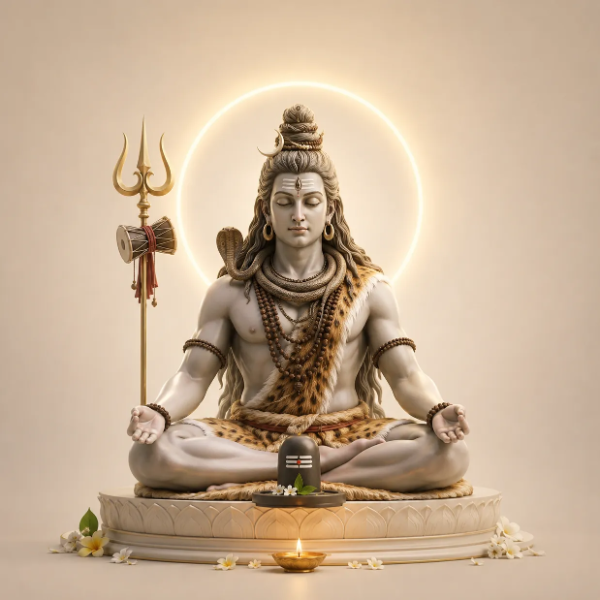
This is the opening verse of the Shiva Tandava Stotram. It vividly describes Lord Shiva's majestic form: "His neck, made sacred by the stream of water flowing from the forest-like matted locks of his hair, bears a long, majestic garland made of serpents dangling upon it." This verse sets a powerful and awe-inspiring tone, painting a picture of Shiva as both a fierce cosmic dancer and a benevolent deity, carrying the sacred Ganga and adorned by serpents.
Benefits & Science
Benefits of Chanting:
Chanting this powerful verse from the Shiva Tandava Stotram can have a profound impact on one's mind and spirit. The rhythmic vibrations and the devotional focus can help in spiritual purification, clearing the mind of distracting thoughts, and fostering a sense of inner peace. Regular recitation is believed to strengthen one's resolve, enhance courage to face life's difficulties, and develop a deeper, unwavering devotion to Lord Shiva. It may also aid in overcoming various obstacles by invoking Shiva's transformative energy, leading to mental clarity, emotional equilibrium, and a heightened sense of protection and well-being. The powerful imagery within the mantra can serve as a meditative tool, guiding the practitioner towards profound spiritual experiences.
Scientific Perspective:
From a scientific standpoint, the rhythmic chanting of Sanskrit verses like this involves the precise modulation of breath and vocal cords, creating specific sound vibrations. These vibrations are known to induce a meditative state, potentially altering brainwave patterns towards alpha and theta states, which are associated with relaxation, heightened creativity, and improved focus. The sustained vocalization can stimulate the vagus nerve, promoting a 'rest and digest' response, reducing stress, and enhancing overall well-being. The intricate phonetic structure of Sanskrit is believed to activate various parts of the brain, improving cognitive functions and neural pathways. The focused attention required during chanting also acts as a form of mindfulness, improving concentration and emotional regulation.
Mythology & Origin
Mantra Origin Saga:
The Shiva Tandava Stotram, of which this is the first verse, is a Hindu stotram (hymn) that describes the Hindu God Shiva's power and beauty. It is traditionally attributed to Ravana, the Rakshasa (demon) king of Lanka and a staunch devotee of Shiva. Legend has it that Ravana, in his immense devotion, once tried to uproot Mount Kailash (Shiva's abode). When Shiva pressed the mountain with his toe, trapping Ravana, the king composed this hymn in praise of Shiva to appease him, earning Shiva's favor and release.
Scriptures Mentions:
The Shiva Tandava Stotram is a well-known devotional text in Hinduism, widely revered and chanted. While not part of the primary Vedas, its profound poetic structure and spiritual depth have cemented its place in Hindu devotional literature, particularly in various Puranas and devotional compilations that speak of Ravana's devotion and Shiva's grace.
Associated Rishi & Deity:
The primary deity associated with this mantra is Lord Shiva. The stotram itself is traditionally attributed to Ravana, the Rakshasa king of Lanka, renowned for his immense devotion ('Bhakti') towards Shiva and his profound knowledge of Vedic scriptures and music.
Historical Significance:
The Shiva Tandava Stotram holds immense historical and cultural significance as a masterpiece of Sanskrit devotional poetry. It stands as a testament to the diverse forms of devotion, even from figures like Ravana, who are often portrayed in a negative light. Its complex rhythm and alliteration have inspired countless musicians and dancers, making it a prominent part of classical Indian arts. It signifies the power of devotion to transcend even adverse circumstances and is a symbol of total surrender to the divine.
Frequently Asked Questions (FAQs)
What is the Shiva Tandava Stotram and who composed it?
Why is this particular shloka ('Jatatavi Galajjala') significant?
Are there any specific benefits of chanting this shloka?
Can anyone chant this mantra, or are there specific requirements?
How often should one chant this shloka?
What is the significance of the serpents on Shiva's neck?
How does chanting affect the mind scientifically?
Is this shloka part of the Vedas?
Mantra Sadhana Guidelines
Best Time to Chant
- Mondays are especially auspicious and beneficial.
- Early morning Brahma Muhurta (4:00 - 6:00 AM) is best.
- Highly fruitful during Pradosh Kaal and Mahashivratri.
- Chant before commencing any auspicious task or ritual.
Other Popular Lord Shiva Mantras
Other Devotional Categories


Download App
पंचांग तिथि, त्यौहार, व्रत, उत्सव, एकादशी, आरती संग्रह, मंत्र, व्रत कथा