
Bhaje Vrajaika Mandanam Mantra: An Adoration of Krishna
Discover the profound meaning of Bhaje Vrajaika Mandanam, a powerful Krishna mantra for spiritual purification, inner peace, and divine devotion to Nanda's beloved son.
Meaning of Mantra
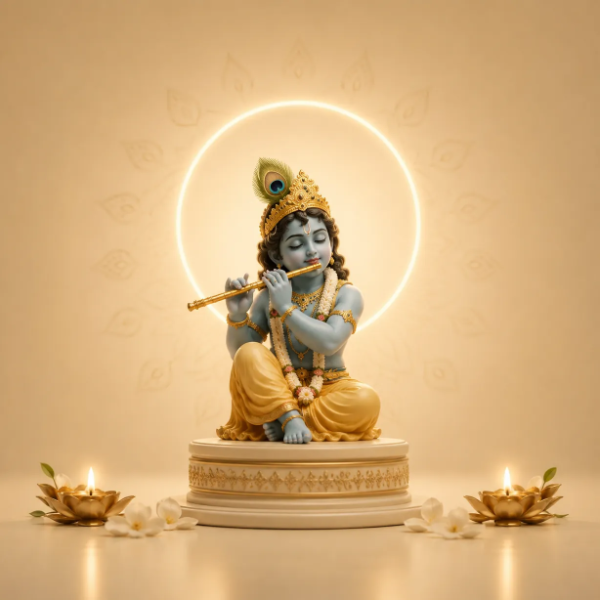
This beautiful mantra is a heartfelt adoration of Lord Krishna. It translates to: 'I always worship Nanda's son (Lord Krishna), who is the sole ornament of Vraja (Vrindavan), the destroyer of all sins, and the one who delights the hearts of His devotees.' It encapsulates the essence of Bhakti (devotion) by identifying Krishna with His most endearing forms and attributes: the beloved child of Nanda, the very beauty of Vrindavan, the remover of all negative karmic imprints, and the ultimate source of joy for those who surrender to Him. It's a concise yet profound expression of faith and love towards the Divine.
Benefits & Science
Benefits of Chanting:
Chanting 'Bhaje Vrajaika Mandanam' systematically guides the practitioner towards profound spiritual and psychological well-being. The invocation of 'Samasta Papa Khandanam' encourages self-reflection and fosters a mindset of releasing past impurities, leading to spiritual purification and a lighter sense of being. The repetitive focus on Krishna as 'Sva Bhakta Citta Ranjanam' cultivates deep devotion and gratitude, which in turn nurtures inner peace, emotional stability, and resilience against life's challenges. This dedicated practice of *nama japa* can systematically reduce stress, calm the mind, and improve concentration, paving the way for mental clarity and a profound sense of connection with the divine, bringing forth an authentic and lasting inner joy.
Scientific Perspective:
From a scientific standpoint, the rhythmic chanting of 'Bhaje Vrajaika Mandanam' generates specific sonic vibrations that have a profound impact on the brain and nervous system. The repetitive vocalization and focused attention can induce a meditative state, characterized by a shift from high-frequency Beta brainwaves to lower-frequency Alpha and Theta waves. This shift is associated with deep relaxation, reduced anxiety, and enhanced creativity. The sustained resonance produced by chanting can stimulate the vagus nerve, which plays a crucial role in regulating the parasympathetic nervous system. Vagal nerve stimulation leads to a 'rest and digest' response, lowering heart rate, blood pressure, and cortisol levels, thereby promoting a sense of calm and well-being. Furthermore, consistent mantra practice can enhance neuroplasticity, strengthening neural pathways related to positive emotional regulation, focus, and spiritual experiences.
Mythology & Origin
Mantra Origin Saga:
While not directly originating from a single Vedic text in the manner of a Suktam, this mantra is deeply rooted in the Puranic and Bhakti traditions of Hinduism, specifically focusing on the divine pastimes (leelas) of Lord Krishna in Vrindavan (Vraja). It is an outpouring of devotion, a poetic expression that likely emerged from the hearts of great Vaishnava devotees, encapsulating the essence of Krishna's identity as the beloved child and supreme ornament of His divine abode.
Scriptures Mentions:
The sentiment and attributes glorified in this mantra are vividly described and celebrated throughout various Vaishnava scriptures, most notably the Srimad Bhagavatam (Bhagavata Purana), which meticulously details Krishna's childhood in Vraja. Other Bhakti texts, Puranas, and the works of Vaishnava Acharyas (like those from the Gaudiya Vaishnava tradition) extensively refer to Krishna as 'Nanda-nandana' and the 'ornament of Vraja'.
Associated Rishi & Deity:
The primary deity associated with this mantra is Lord Krishna himself, specifically in His form as the son of Nanda Baba, beloved by the residents of Vraja. While no single Rishi is traditionally attributed as the 'composer' in the Vedic sense, the mantra reflects the devotional insights and experiences of countless Vaishnava saints, poets, and devotees over millennia who have immersed themselves in Krishna Bhakti.
Historical Significance:
This mantra holds immense historical significance within the Bhakti movement, particularly in traditions centered around Lord Krishna, such as Gaudiya Vaishnavism. It encapsulates the deep emotional connection and personal reverence for Krishna, emphasizing His accessible and charming form rather than solely His omnipotent aspect. Historically, such verses played a crucial role in popularizing devotional worship, making spiritual realization attainable through love and surrender, irrespective of social standing or complex rituals. It reflects a shift towards more personal and emotional forms of worship that deeply resonated with the masses.
Frequently Asked Questions (FAQs)
Who is Nanda-nandanaṁ in this mantra?
What does 'Samasta-pāpa-khaṇḍanaṁ' signify?
Is this mantra suitable for beginners in spiritual practice?
What is the best way to chant this mantra for maximum benefit?
Can women chant this Krishna mantra?
What is the significance of 'Vrajaika-maṇḍanaṁ'?
Does chanting this mantra provide instant results?
Mantra Sadhana Guidelines
Best Time to Chant
- Mondays are especially auspicious and beneficial.
- Early morning Brahma Muhurta (4:00 - 6:00 AM) is best.
- Highly fruitful during Pradosh Kaal and Mahashivratri.
- Chant before commencing any auspicious task or ritual.
Other Popular Lord Sri Krishna Mantras
Other Devotional Categories


Download App
पंचांग तिथि, त्यौहार, व्रत, उत्सव, एकादशी, आरती संग्रह, मंत्र, व्रत कथा