
Krishnaya Vasudevaya Mantra
Explore the profound Krishnaya Vasudevaya mantra meaning, its spiritual benefits, and how to chant for inner peace, protection, and devotion. Detailed guide for Lord Krishna devotees.
Meaning of Mantra
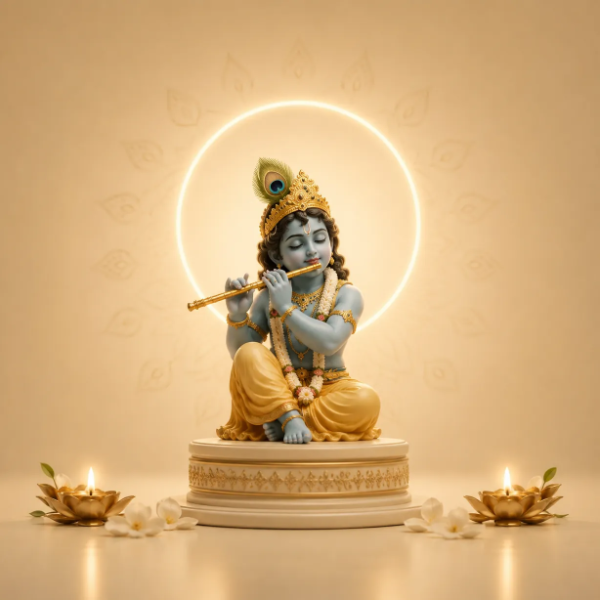
This powerful Sanskrit mantra is a profound salutation to Lord Krishna, identifying Him with His various divine attributes. It translates to: "Salutations again and again to Krishna, the son of Vasudeva, Hari (the remover of all sorrow), the Supreme Self, Govinda (the bestower of joy and protector of senses), who destroys the afflictions (Kleshas) of those who surrender unto Him." This mantra encapsulates the essence of Bhakti Yoga, acknowledging Krishna as the supreme reality, the indweller of all beings, the rescuer from suffering, and the ultimate refuge for devotees seeking liberation from worldly woes and spiritual ignorance.
Benefits & Science
Benefits of Chanting:
Chanting this mantra systematically can foster profound psychological and spiritual benefits. The repeated invocation of Krishna's divine names creates a resonant frequency that calms the mind, reducing stress and anxiety. This practice is believed to align one's consciousness with divine attributes, potentially leading to inner peace, emotional stability, and enhanced mental clarity. Spiritually, it acts as a powerful shield, offering protection from negative influences and helping to dissolve karmic obstacles. Regular chanting strengthens one's devotion (Bhakti), deepening the connection with the divine and facilitating a sense of surrender and trust. This surrender is crucial for the removal of 'Kleshas' (afflictions like ignorance, ego, attachment), paving the way for spiritual growth and a liberation from the cycle of suffering, bringing the practitioner closer to a state of sustained joy and self-realization.
Scientific Perspective:
From a scientific standpoint, mantra chanting can be understood through its impact on neurophysiology. The rhythmic recitation produces specific sound vibrations that can stimulate the vagus nerve, which plays a critical role in regulating stress response, heart rate variability, and overall parasympathetic nervous system activity. This activation helps shift the body into a "rest and digest" state, reducing cortisol levels and promoting relaxation. The repetitive nature of chanting acts as a form of auditory meditation, influencing brainwave patterns from a typically active beta state towards calmer alpha and theta states. This can enhance focus, reduce rumination, and foster a sense of well-being. The sustained vocalization also engages the prefrontal cortex, improving cognitive control and emotional regulation. While not a direct medical cure, these physiological changes contribute to improved mental health, emotional resilience, and a heightened sense of inner tranquility.
Mythology & Origin
Mantra Origin Saga:
This mantra, though not tied to a single, specific origin event like a revelation to a particular Rishi, is deeply embedded in the devotional tradition of Vaishnavism. It’s a popular stuti (eulogy) and Dhyana mantra, a compilation of Krishna’s epithets, emphasizing His various divine roles. It likely evolved organically within the Bhakti movement, synthesizing devotion to Krishna with profound philosophical concepts drawn from Puranas and Vedanta. Its concise yet comprehensive nature suggests it was crafted to encapsulate the essence of Krishna's divinity and His grace towards devotees.
Scriptures Mentions:
This mantra or similar invocations can be found in various Puranic texts, especially the Bhagavata Purana (Srimad Bhagavatam), Vishnu Purana, and Harivamsa, which are central to Krishna worship. While the exact phrasing might vary, the essence of saluting Krishna as Vasudeva, Hari, Paramatma, and Govinda is prevalent throughout these scriptures. The concept of 'Klesha Nasha' (destruction of afflictions) is also a central theme in Yoga Sutras and Vedanta, applied here to Krishna as the supreme liberator.
Associated Rishi & Deity:
Primarily associated with Lord Krishna (Vishnu Avatar) Himself. While no single Rishi is credited with its specific formulation, it is venerated by countless Vaishnava Acharyas, Bhakti saints like Mirabai, Chaitanya Mahaprabhu, Surdas, and exponents of Vedanta who saw Krishna as the Saguna Brahman.
Historical Significance:
This mantra represents a cornerstone of the Bhakti movement, particularly the Vaishnava tradition, which emphasized personal devotion and surrender to a loving God as the primary means of salvation. It facilitated the accessibility of spiritual practice to all, regardless of caste or creed, by simplifying complex philosophical ideas into a heartfelt prayer. Its widespread chanting has helped sustain and propagate the worship of Lord Krishna as the Supreme Being across centuries and continents, influencing art, literature, and philosophy throughout India.
Frequently Asked Questions (FAQs)
Who is Lord Krishna addressed in this mantra?
What are 'Kleshas' and how does the mantra help destroy them?
Is this mantra suitable for beginners?
How does chanting this mantra influence the mind?
What is the significance of the names 'Hari' and 'Govinda' in the mantra?
Can I chant this mantra silently?
Is there a specific time of day best for chanting?
What is the benefit of repetitive chanting (Japa)?
Mantra Sadhana Guidelines
Best Time to Chant
- Mondays are especially auspicious and beneficial.
- Early morning Brahma Muhurta (4:00 - 6:00 AM) is best.
- Highly fruitful during Pradosh Kaal and Mahashivratri.
- Chant before commencing any auspicious task or ritual.
Other Popular Lord Sri Krishna Mantras
Other Devotional Categories


Download App
पंचांग तिथि, त्यौहार, व्रत, उत्सव, एकादशी, आरती संग्रह, मंत्र, व्रत कथा