
Vasudevaya Vidmahe, Damodaraya Dhimahi, Tanno Krishna Prachodayat.
Explore the profound Krishna Gayatri Mantra (Vasudevaya Vidmahe). Uncover its deep spiritual meaning, powerful benefits for enlightenment, and guidance for chanting. Attain divine wisdom and inner peace.
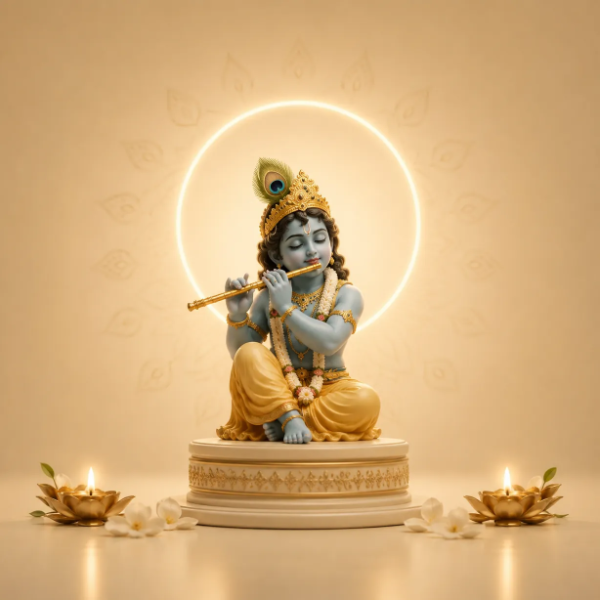
Meaning of Mantra
We know Vasudeva, the son of Vasudeva, who is the all-pervading divine essence. We meditate upon Damodara, the Lord bound by pure love. May that Lord Krishna inspire and enlighten our intellect, guiding us towards truth and righteousness.
Benefits & Science
Benefits of Chanting:
Regular chanting of the Krishna Gayatri Mantra cultivates profound spiritual enlightenment by aligning the chanter's consciousness with the supreme divine energy of Lord Krishna. It is believed to invoke divine wisdom and intellect, guiding one towards right thought, clear discernment, and righteous action, thereby fostering mental clarity and enhancing intuition. Devotees often experience a deep sense of inner peace and serenity, leading to significant stress reduction and emotional balance. The mantra is also considered a potent source of positive energy, offering subtle protection from negative influences, mitigating internal and external obstacles, and attracting auspicious circumstances into one's life. Consistent chanting deepens one's devotion (Bhakti) towards Lord Krishna, establishing a more profound connection with the divine, facilitating overall spiritual growth, and promoting a harmonious state of being.
Scientific Perspective:
From a scientific perspective, the rhythmic chanting of the Krishna Gayatri Mantra generates specific sound vibrations that can positively impact the human brain and nervous system. The repetitive nature of the mantra, coupled with focused attention, can induce a meditative state, characterized by a shift in brainwave patterns from higher-frequency beta (awake, active) to lower-frequency alpha (relaxed, calm) and potentially theta (deep relaxation, deep meditation). This neurophysiological shift can lead to increased coherence between brain hemispheres, improved cognitive function, and enhanced creativity. The controlled exhalation and vocalization during chanting stimulate the vagus nerve, which is a key component of the parasympathetic nervous system. This stimulation helps regulate heart rate, digestion, and stress response, promoting a profound sense of calm, reducing physiological stress markers, and fostering emotional well-being. The intricate sound patterns are thought to resonate within the body, potentially optimizing cellular function and promoting systemic harmony.
Mythology & Origin
Mantra Origin Saga:
The concept of Gayatri mantras for various deities is ancient, rooted in Vedic traditions where the primary Gayatri Mantra is dedicated to Savitr. Over time, as diverse devotional paths evolved, particularly in the Puranic era, the structure of the Gayatri was adapted to invoke other deities. This specific Krishna Gayatri Mantra, focusing on the attributes of Vasudeva and Damodara, emerged within the Vaishnava tradition to facilitate the worship of Lord Krishna and invoke his specific attributes for enlightenment and devotion. It is a powerful derivative designed to establish a direct spiritual connection with Krishna consciousness, reflecting the evolution of devotional practices.
Scriptures Mentions:
This Krishna Gayatri Mantra is predominantly found in various Puranas, such as the Padma Purana, Skanda Purana, and also mentioned in some Vaishnava Agamas and Smriti texts which detail methods of worship and mantra sadhana for Lord Vishnu's avatars, including Krishna. While not directly from the Rig Veda like the Savitri Gayatri, its structure and intent are deeply aligned with the Vedic spirit of invoking divine intelligence and its efficacy is well-documented in devotional literature.
Associated Rishi & Deity:
The Gayatri mantra tradition, in its broader sense, is often attributed to the Vedic sage Vishwamitra (for the original Savitr Gayatri). For the Krishna Gayatri, it is generally associated with the broader lineage of Vaishnava acharyas, rishis, and devotional saints who composed and propagated mantras specific to Lord Krishna for devotion and spiritual upliftment. Lord Krishna himself is the presiding deity (Ishta-Devata) of this mantra, who inspires and guides the devotee.
Historical Significance:
Historically, the Krishna Gayatri Mantra gained immense prominence during the Bhakti movement, particularly with the rise of Vaishnavism, where devotion to Krishna became a central and accessible spiritual path. It provided devotees with a concise yet potent means to connect with Krishna, seek his guidance, and experience his divine presence in their daily lives. It served as a vital tool for personal worship (Ishta-devata sadhana) and community chanting, cementing Krishna's position as the Supreme Godhead capable of granting both material and spiritual boons. Its structured form made it accessible and powerful for daily spiritual practice across various strata of society, fostering a rich devotional culture that continues to thrive.
Frequently Asked Questions (FAQs)
Who is Vasudeva and Damodara in this mantra?
What is the primary purpose of chanting this Krishna Gayatri Mantra?
Is this mantra suitable for beginners in spiritual practice?
Can women chant this Krishna Gayatri Mantra?
How often should one chant this mantra for optimal benefits?
What is the significance of 'Prachodayat' in the mantra?
Does this mantra have any specific requirements for chanting to be effective?
Can this mantra help in overcoming life's challenges?
Mantra Sadhana Guidelines
Best Time to Chant
- Mondays are especially auspicious and beneficial.
- Early morning Brahma Muhurta (4:00 - 6:00 AM) is best.
- Highly fruitful during Pradosh Kaal and Mahashivratri.
- Chant before commencing any auspicious task or ritual.
Other Popular Lord Sri Krishna Mantras
Other Devotional Categories


Download App
पंचांग तिथि, त्यौहार, व्रत, उत्सव, एकादशी, आरती संग्रह, मंत्र, व्रत कथा