
Mookam Karoti Vachalam: Invocation to Paramananda Madhavam
Explore the Mookam Karoti Vachalam mantra, a powerful invocation to Lord Madhava (Vishnu/Krishna). Discover its profound spiritual meaning, benefits, and how divine grace transforms limitations into possibilities. Deep dive into its scientific and philosophical significance.
Meaning of Mantra
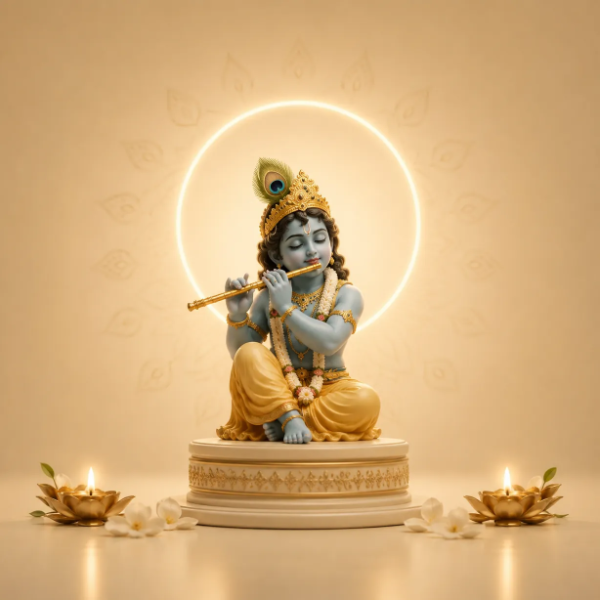
This profound Sanskrit shloka beautifully encapsulates the omnipotence and boundless grace of Lord Madhava (Lord Vishnu or Krishna). It translates to: 'I bow to that Madhava, who is Supreme Bliss, by whose grace the mute becomes eloquent and the lame can cross mountains.' It is an invocation acknowledging the Divine's ability to transcend all human limitations, transforming the seemingly impossible into possible through sheer benevolent power. This mantra serves as a powerful reminder of the ultimate solace and strength found in surrendering to the Supreme Lord, who is the source of all joy and capability.
Benefits & Science
Benefits of Chanting:
Chanting the Mookam Karoti Vachalam mantra can invoke profound benefits. It is believed to bring divine grace, helping individuals overcome seemingly insurmountable obstacles in life. By aligning with the Supreme, practitioners may experience enhanced communication skills, transforming hesitation into eloquence. The mantra fosters immense inner strength and resilience, empowering one to face challenges with confidence. Spiritually, it aids in breaking through limiting beliefs and fostering a deeper understanding of self and the divine, leading towards spiritual enlightenment and self-realization. The meditative repetition can also induce a deep sense of peace, clarity of thought, and strengthen devotion, contributing to overall emotional well-being and a joyful disposition.
Scientific Perspective:
From a scientific perspective, mantra chanting involves rhythmic vocalization and focused attention, which can significantly impact brain function. The vibrations produced by chanting resonate within the body, potentially stimulating the vagus nerve, which plays a crucial role in regulating heart rate, digestion, and mood. This activation can lead to a 'relaxation response,' reducing stress and anxiety. The repetitive nature of chanting can promote neuroplasticity, fostering new neural pathways associated with positive thinking and resilience. Focused recitation can shift brainwave patterns towards alpha or theta states, conducive to deep relaxation, meditation, and enhanced cognitive functions like clarity and concentration. The positive affirmations embedded in the mantra can reprogram subconscious thought patterns, leading to psychological empowerment and self-belief, mirroring the 'eloquence' and 'strength' described.
Mythology & Origin
Mantra Origin Saga:
This shloka is a classical Dhyana (meditation/contemplation) verse, widely adopted in the Vaishnava tradition. While it doesn't have a specific origin story in the Puranas like some narrative mantras, it is traditionally recited as an invocation before commencing sacred texts like the Vishnu Sahasranama. Its purpose is to set the devotee's mind in a state of reverence and surrender, invoking the boundless grace of Lord Vishnu/Krishna (Madhava) before delving into the glories of the Divine. It underscores the belief that the Lord's power can overcome any perceived inadequacy of the devotee.
Scriptures Mentions:
This particular shloka is prominently featured as one of the introductory Dhyana Shlokas for the Vishnu Sahasranama, which is found in the Anushasana Parva of the Mahabharata. It is also found in various devotional compilations and Stotras dedicated to Lord Vishnu and Krishna, signifying its widespread acceptance and importance in Hindu spiritual practices.
Associated Rishi & Deity:
The mantra is an invocation to Lord Madhava, a name for Lord Vishnu or Lord Krishna. While no specific Rishi is singularly attributed to this shloka's composition, it is part of the extensive body of devotional literature associated with great sages like Vyasa, who is traditionally credited with compiling the Mahabharata, including the Vishnu Sahasranama.
Historical Significance:
Historically, this shloka has served as a cornerstone for devotional practices, especially within Vaishnavism, for centuries. Its inclusion as a preliminary verse to the Vishnu Sahasranama signifies its role in preparing the devotee's mind and heart for deeper spiritual engagement. It emphasizes the accessible and benevolent nature of the Divine, inspiring countless individuals to seek solace and transformation through devotion, irrespective of their perceived limitations. It highlights a universal spiritual truth: that ultimate power and grace reside in the Supreme.
Frequently Asked Questions (FAQs)
Who is Madhava in the context of this mantra?
What is the literal meaning of 'Mookam Karoti Vachalam Pangum Langhayate Girim'?
Is this mantra only for physical ailments or limitations?
Can anyone chant this mantra, even beginners in spiritual practice?
What is the significance of calling the Lord 'Paramananda' (Supreme Bliss)?
How does chanting this mantra help with obstacles and challenges in life?
Is it mandatory to chant this mantra 108 times?
How is this mantra related to the Vishnu Sahasranama?
Mantra Sadhana Guidelines
Best Time to Chant
- Mondays are especially auspicious and beneficial.
- Early morning Brahma Muhurta (4:00 - 6:00 AM) is best.
- Highly fruitful during Pradosh Kaal and Mahashivratri.
- Chant before commencing any auspicious task or ritual.
Other Popular Lord Sri Krishna Mantras
Other Devotional Categories


Download App
पंचांग तिथि, त्यौहार, व्रत, उत्सव, एकादशी, आरती संग्रह, मंत्र, व्रत कथा