
Namo Brahmanya Devaya Mantra
Explore the profound meaning, spiritual benefits, and correct chanting of the 'Namo Brahmanya Devaya' mantra dedicated to Lord Krishna for universal welfare. Detailed guide for spiritual growth.
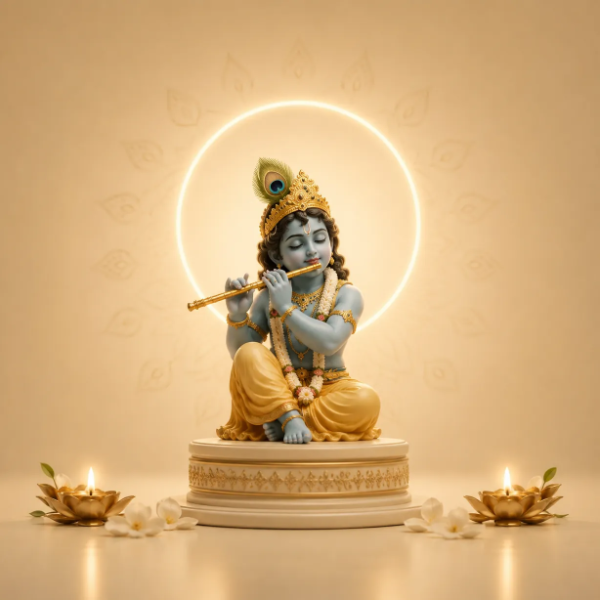
Meaning of Mantra
This sacred mantra is a profound salutation to Lord Krishna, acknowledging His supreme divinity and His role as the ultimate benefactor of all existence. It translates to: 'My repeated salutations to the divine Lord of Brahmins, who is the benefactor of cows and Brahmins, and who works for the welfare of the entire universe. Salutations to Lord Krishna, salutations to Govinda, again and again.' It encapsulates the essence of Krishna's universal compassion and His unwavering commitment to upholding Dharma and ensuring the well-being of all beings, from the most fundamental aspects of society (cows and Brahmins) to the entirety of creation.
Benefits & Science
Benefits of Chanting:
Chanting the 'Namo Brahmanya Devaya' mantra regularly can foster profound spiritual and psychological benefits. The focus on universal welfare cultivates a deep sense of compassion and empathy, extending one's concern beyond personal boundaries. This expanded perspective naturally reduces self-centered anxieties, leading to greater mental peace and inner clarity. By invoking Lord Krishna, the chanter aligns their consciousness with divine virtues, potentially attracting positive energies and guidance. The rhythmic recitation aids in calming the nervous system, potentially reducing stress and promoting a sense of well-being. This devotional practice strengthens one's adherence to Dharma, fostering ethical conduct and a harmonious existence, contributing to spiritual growth and a deeper connection with the divine grace of Lord Krishna.
Scientific Perspective:
From a scientific viewpoint, mantra chanting generates rhythmic sound vibrations that can significantly influence brainwave patterns. Regular chanting often induces alpha and theta brainwave states, associated with deep relaxation, meditation, and heightened receptivity. The repetitive vocalization and focused attention engage the vagus nerve, which plays a crucial role in regulating the body's parasympathetic nervous system, thereby reducing stress, anxiety, and promoting a 'rest and digest' response. The structured rhythm and resonance of the Sanskrit syllables are believed to create specific vibrational frequencies within the body, potentially optimizing cellular functions and energy flow. This bio-acoustic stimulation can enhance focus, improve mood, and contribute to overall mental and physical well-being by fostering neural coherence and a sense of calm.
Mythology & Origin
Mantra Origin Saga:
This mantra is a traditional devotional prayer deeply embedded in Vaishnava traditions. While not attributed to a single, specific origin story, it represents a synthesis of ancient Vedic and Puranic concepts defining Lord Krishna's multifaceted role. It is a condensed expression of reverence found across various scriptures and is a staple in daily prayers and rituals dedicated to Krishna, particularly emphasizing His role as the protector of Dharma and universal welfare during His avatarhood in Dwapara Yuga.
Scriptures Mentions:
This mantra's essence is found in numerous Hindu scriptures, particularly the Bhagavata Purana (Srimad Bhagavatam), Vishnu Purana, and various other Puranas and Vaishnava Agamas that glorify Lord Krishna and His divine attributes. Its philosophical underpinnings resonate with the Bhagavad Gita's teachings on Dharma, selfless action, and universal well-being.
Associated Rishi & Deity:
The primary deity associated with this mantra is Lord Krishna, often invoked in His form as Govinda. While specific Rishis may not be directly attributed to its 'composition' as a single text, the wisdom encapsulated within it has been transmitted and expounded upon by great sages like Vyasa (compiler of Puranas) and spiritual masters throughout the Vaishnava lineage.
Historical Significance:
Historically, this mantra and its underlying principles have been central to the development and propagation of Vaishnavism, one of the largest traditions within Hinduism. It highlights the traditional Vedic respect for cows (Go Raksha) as a source of sustenance and Brahmins (Dharma Raksha) as custodians of spiritual knowledge, both considered pillars of a dharmic society. Its continued chanting reinforces these ancient values, reminding devotees of their collective responsibility towards universal welfare and the preservation of righteousness in society. It remains a foundational prayer in many Krishna temples and homes, symbolizing an unbroken chain of devotion.
Frequently Asked Questions (FAQs)
Who is the 'Brahmanya Deva' referred to in this mantra?
What is the significance of 'Go-Brahmana Hitaya' in the mantra?
Can anyone chant this mantra, or is it reserved for specific individuals?
What is the spiritual purpose of chanting 'Jagaddhitaya'?
Why are both 'Krishna' and 'Govinda' invoked in this mantra?
Does chanting this mantra require any specific preparation or ritual?
How does this mantra contribute to mental peace and well-being?
What is the historical significance of emphasizing cows and Brahmins in this mantra?
Mantra Sadhana Guidelines
Best Time to Chant
- Mondays are especially auspicious and beneficial.
- Early morning Brahma Muhurta (4:00 - 6:00 AM) is best.
- Highly fruitful during Pradosh Kaal and Mahashivratri.
- Chant before commencing any auspicious task or ritual.
Other Popular Lord Sri Krishna Mantras
Other Devotional Categories


Download App
पंचांग तिथि, त्यौहार, व्रत, उत्सव, एकादशी, आरती संग्रह, मंत्र, व्रत कथा