
Vrindavanstham Govardhanadharinam Gopal Sarvakamadam Prapadye Mantra
Explore the profound Vrindavanstham Govardhanadharinam Gopal Sarvakamadam Prapadye mantra. Discover its deep meaning, spiritual benefits, and how to practice surrender to Lord Krishna.
Meaning of Mantra
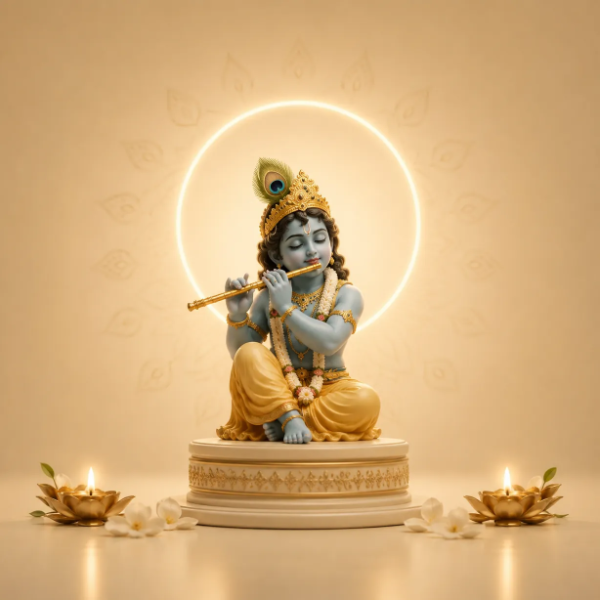
This profound Sanskrit mantra is a declaration of complete surrender and devotion to Lord Krishna. It translates to, "I surrender to the one who resides in Vrindavan, who lifted the Govardhan Hill, who is the protector of cows (Gopala), and who fulfills all desires." It encapsulates a deep spiritual plea for refuge at the lotus feet of Krishna, acknowledging His divine power, His endearing Vrindavan pastimes, and His infinite compassion as the grantor of all righteous aspirations. Chanting this mantra is a direct appeal to the Supreme Being for guidance, protection, and the fulfillment of both material and spiritual wishes.
Benefits & Science
Benefits of Chanting:
Chanting the 'Vrindavanstham Govardhanadharinam Gopal Sarvakamadam Prapadye' mantra offers a tapestry of profound benefits. The practitioner experiences heightened **Divine Protection** by invoking Lord Krishna, the very lifter of Govardhan, who shields devotees from spiritual and material dangers. A deepened **Devotional Connection** with Krishna fosters immense **Spiritual Growth**, guiding the individual towards higher consciousness. The mantra systematically addresses **Fulfillment of Righteous Desires**, not merely by granting fleeting wishes, but by aligning the individual's aspirations with divine will, leading to sustainable contentment. This surrender cultivates profound **Inner Peace and Calm** by alleviating the burden of personal control and fostering trust in divine providence, significantly contributing to **Stress and Anxiety Reduction**. Furthermore, consistent chanting leads to **Clarity of Mind**, enabling better decision-making and a stronger sense of purpose. It instills **Humility** and helps in letting go of ego, paving the path for authentic **Bhakti (devotion)**, ultimately transforming the devotee's life with grace and spiritual abundance.
Scientific Perspective:
From a scientific lens, chanting this mantra involves rhythmic vocalization and focused repetition, which can induce a meditative state. The structured sound vibrations create specific brainwave patterns, often shifting from beta to alpha or theta states, associated with relaxation, heightened creativity, and deeper introspection. This activation promotes vagus nerve stimulation, a key pathway for the parasympathetic nervous system, leading to a 'rest and digest' response that reduces physiological stress, lowers heart rate, and calms the mind. The repetitive nature also enhances neuroplasticity, strengthening neural pathways related to focus, positive emotional regulation, and self-awareness. Engaging with the mantra's meaning fosters mindfulness, detaching the practitioner from external distractions and internal chatter, contributing to cognitive clarity and emotional well-being.
Mythology & Origin
Mantra Origin Saga:
This mantra's origin is rooted in the rich Vaishnava tradition, arising from the deep devotion and understanding of Lord Krishna's pastimes in Vrindavan. While not attributed to a single historical sage, it reflects the essence of devotional prayers offered by countless saints and devotees throughout centuries. It draws inspiration directly from the Bhagavad Gita's emphasis on Prapatti (surrender) and Srimad Bhagavatam's detailed accounts of Krishna's divine leelas, particularly the Govardhan Lila, which is central to its invocation.
Scriptures Mentions:
The core themes of this mantra – devotion, surrender, and the glorification of Krishna's divine attributes – are extensively found across prominent Hindu scriptures. The Bhagavad Gita (Chapter 18, Verse 66) explicitly emphasizes surrender (Sarva-dharman parityajya mam ekam sharanam vraja). The Srimad Bhagavatam (Bhagavata Purana), especially Canto 10, vividly describes Krishna's Vrindavan pastimes, including the Govardhan Lila where he lifted the hill to protect the villagers from Indra's wrath. Various Vaishnava Puranas and Samhitas also glorify Krishna as 'Gopala' and the fulfiller of desires.
Associated Rishi & Deity:
The mantra is primarily dedicated to **Lord Krishna**, in His form as the Supreme Personality of Godhead, the resident of Vrindavan, and the lifter of Govardhan. While no specific sage is typically credited for its composition, it embodies the teachings and devotional sentiments propagated by revered Vaishnava Acharyas and Goswamis, such as the Six Goswamis of Vrindavan (Rupa Goswami, Sanatana Goswami, etc.), who meticulously documented and expanded upon Krishna's divine glories and the path of Bhakti.
Historical Significance:
Historically, this mantra and the sentiment of 'Prapatti' are central to the Bhakti movement, especially within Gaudiya Vaishnavism and other Krishna-centric traditions. It reinforces the significance of Vrindavan and Govardhan as paramount pilgrimage sites where devotees can experience the divine presence of Krishna. The mantra serves as a powerful reminder of Krishna's accessible nature and His promise to protect those who sincerely surrender. It has been a cornerstone for devotees seeking solace, protection, and spiritual evolution through unwavering faith and complete submission to the divine will, shaping centuries of devotional practices.
Frequently Asked Questions (FAQs)
Who is this mantra primarily dedicated to?
What is the significance of Govardhan in this mantra?
Can anyone chant this mantra, regardless of their background?
How does 'surrender' (Prapadye) help in spiritual practice?
What kind of desires does 'Sarvakamadam' fulfill?
Is there a specific way to pronounce the mantra?
What does Vrindavan symbolize in this mantra?
Can this mantra be chanted silently?
What is the ultimate goal of chanting this mantra?
Mantra Sadhana Guidelines
Best Time to Chant
- Mondays are especially auspicious and beneficial.
- Early morning Brahma Muhurta (4:00 - 6:00 AM) is best.
- Highly fruitful during Pradosh Kaal and Mahashivratri.
- Chant before commencing any auspicious task or ritual.
Other Popular Lord Sri Krishna Mantras
Other Devotional Categories


Download App
पंचांग तिथि, त्यौहार, व्रत, उत्सव, एकादशी, आरती संग्रह, मंत्र, व्रत कथा