
Govinda Damodara Madhaveti Mantra
Explore the profound Govinda Damodara Madhaveti mantra. Discover its spiritual meaning, benefits, pronunciation, and how to chant for inner peace and divine connection.
Meaning of Mantra
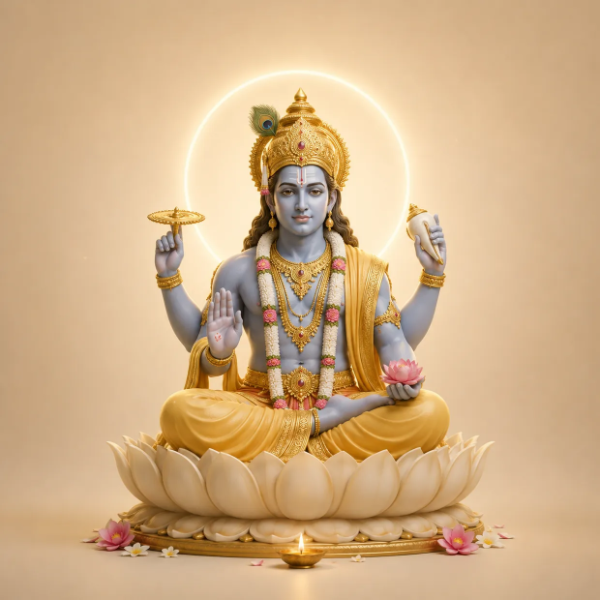
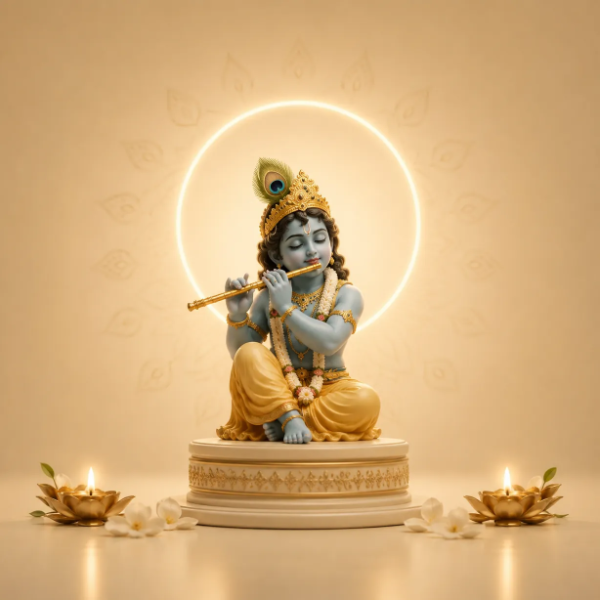
The mantra 'Govinda Damodara Madhaveti' is a profound devotional invocation, literally meaning 'By chanting Govinda, Damodara, and Madhava.' It is a powerful form of 'Naam Smaran' (remembrance of divine names) dedicated to Lord Krishna, an incarnation of Lord Vishnu. Each name encapsulates unique aspects of the Supreme Being: 'Govinda' refers to Krishna as the protector of cows, the earth, and the senses, who brings joy and sustenance. 'Damodara' recollects the endearing childhood pastime where mother Yashoda bound baby Krishna with a rope around his belly, signifying God's accessibility and surrender to pure love. 'Madhava' denotes Krishna as the husband of Lakshmi, the Lord of the Madhu dynasty, and the destroyer of the demon Madhu, representing divine prosperity, lineage, and the vanquisher of negativity. Chanting these names serves as a direct communion with the divine, inviting blessings, purification, and deep spiritual connection.
Benefits & Science
Benefits of Chanting:
Chanting 'Govinda Damodara Madhaveti' regularly can lead to a profound sense of spiritual bliss and inner peace, fostering a calm mind amidst life's challenges. The rhythmic repetition is known to significantly reduce stress and anxiety, promoting emotional balance and mental clarity. It serves as a powerful tool for devotional awakening, deepening one's connection to the divine and fostering unconditional love. This practice is believed to contribute to the cleansing of negative karmic impressions, paving the way for spiritual growth and attracting divine protection. Furthermore, the focused attention required during chanting can enhance concentration and mindfulness, leading to improved cognitive functions and overall well-being. It helps in cultivating resilience and a positive outlook on life by continuously directing the mind towards the sublime.
Scientific Perspective:
From a scientific standpoint, the repetitive chanting of 'Govinda Damodara Madhaveti' can induce several physiological and psychological benefits. The rhythmic vocalization creates coherent sound vibrations that can positively impact brainwave patterns, potentially shifting them from beta (alert, active) to alpha (relaxed, meditative) and even theta (deep relaxation, creativity) states. This shift is associated with reduced stress, enhanced focus, and a sense of calm. The activation of the vagus nerve through deep, resonant chanting stimulates the parasympathetic nervous system, promoting relaxation and reducing the 'fight or flight' response. Furthermore, the sustained focus required for chanting acts as a form of mindfulness meditation, improving attention span and emotional regulation. Neuroplasticity suggests that consistent practice can rewire neural pathways, fostering positive emotional states and resilience over time. The subjective experience of connection and bliss may also be linked to the release of endorphins and other neurochemicals associated with well-being.
Mythology & Origin
Mantra Origin Saga:
The mantra 'Govinda Damodara Madhaveti' does not have a single, definitive origin story akin to a specific Vedic hymn. Instead, it embodies the essence of 'Naam Sankirtan' (congregational chanting of holy names), a practice deeply rooted in the Puranas and various Bhakti traditions. These names are revered attributes of Lord Krishna/Vishnu, frequently appearing in ancient scriptures, devotional poems, and bhajans, making this chant a compilation of potent divine invocations rather than a newly revealed mantra.
Scriptures Mentions:
This mantra's constituent names are prominently mentioned throughout a vast array of Hindu scriptures, including the Bhagavata Purana (Srimad Bhagavatam), Vishnu Purana, Narada Purana, and various Vaishnava Agamas. Its devotional spirit resonates with the compositions of Alvars (South Indian Vaishnava poet-saints) and is central to the Bhakti literature propagated by saints like Chaitanya Mahaprabhu.
Associated Rishi & Deity:
The primary deity associated with this mantra is Lord Krishna, an incarnation of Lord Vishnu. While no single sage is attributed to its creation, its widespread propagation and philosophical depth are indebted to numerous Bhakti saints and scholars, including Narada Muni, Prahlada, Ramanujacharya, Madhvacharya, Vallabhacharya, and particularly Chaitanya Mahaprabhu, who emphasized the power of Naam Sankirtan.
Historical Significance:
Historically, this mantra and the practice of chanting these divine names have played a pivotal role in the Bhakti movement, especially within Vaishnavism. It democratized spiritual practice, making it accessible to people of all castes and backgrounds, emphasizing pure devotion (bhava) over ritualistic complexities. It fostered community, cultural resilience, and a profound spiritual revival across the Indian subcontinent, continuing to inspire millions globally.
Frequently Asked Questions (FAQs)
Who are Govinda, Damodara, and Madhava?
What is the main purpose of chanting this mantra?
Is there a specific time or method for chanting this mantra?
Do I need any special initiation or guru to chant this mantra?
Can chanting this mantra help with mental well-being and stress reduction?
Is this mantra associated with a specific Hindu tradition or sect?
What is the significance of the 'iti' or 'eti' at the end of the mantra?
Mantra Sadhana Guidelines
Best Time to Chant
- Mondays are especially auspicious and beneficial.
- Early morning Brahma Muhurta (4:00 - 6:00 AM) is best.
- Highly fruitful during Pradosh Kaal and Mahashivratri.
- Chant before commencing any auspicious task or ritual.
Other Popular Lord Vishnu Mantras
Other Devotional Categories


Download App
पंचांग तिथि, त्यौहार, व्रत, उत्सव, एकादशी, आरती संग्रह, मंत्र, व्रत कथा