
Govindaya Namo Namah
Explore Govindaya Namo Namah mantra's deep spiritual meaning, powerful benefits, pronunciation, and how to chant for divine connection with Lord Krishna.
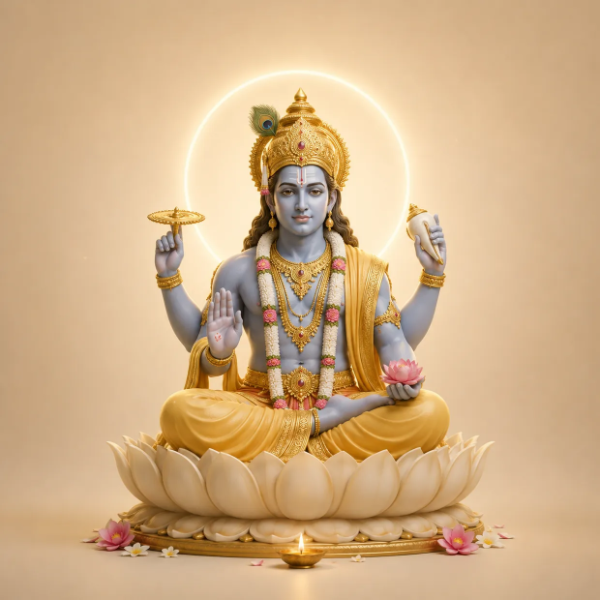
Meaning of Mantra
“Profound salutations to Govinda.” This mantra is a simple yet potent invocation of Lord Krishna, also revered as Govinda. It expresses deep reverence and unwavering devotion to the divine protector, the one who brings immense joy to the senses, and the rescuer of the earth. The repetition of 'Namo Namah' intensifies the feeling of surrender, adoration, and continuous devotion.
Benefits & Science
Benefits of Chanting:
Regular and sincere chanting of "Govindaya Namo Namah" is believed to foster a deep connection with Lord Govinda, leading to divine protection from negative influences, obstacles, and anxieties. It promotes profound inner peace by calming the mind and reducing mental turmoil. Devotees often experience significant spiritual growth, heightened devotion, and purification of their thoughts, intentions, and subtle energetic body. The mantra can instill a profound sense of joy and contentment, potentially mitigating negative karmic effects and providing clarity, guidance, and wisdom in life's decisions. Furthermore, cultivating a loving devotional attitude can lead to greater emotional stability, mental resilience, and attract positive energies that support overall well-being and prosperity in a holistic sense.
Scientific Perspective:
From a scientific perspective, chanting "Govindaya Namo Namah" involves rhythmic vocalization and repetition, which can induce a meditative state through the activation of the parasympathetic nervous system. The repetitive sounds and specific vibrations generated by chanting stimulate the vagus nerve, a critical component in regulating stress response, leading to reduced heart rate, lowered blood pressure, and decreased cortisol levels. This sustained vocal resonance and focused attention help to quiet the 'default mode network' (DMN) in the brain, improving concentration, mental clarity, and emotional regulation. Brainwave patterns may shift towards alpha and theta states, associated with deep relaxation, heightened creativity, and inner calm, contributing to overall cognitive enhancement and emotional well-being.
Mythology & Origin
Mantra Origin Saga:
The name 'Govinda' has multiple ancient origins, primarily associated with Lord Vishnu/Krishna. One popular legend attributes it to Lord Krishna protecting the cows and cowherds ('go') from Indra's wrath by lifting Govardhan Hill. Another interpretation relates 'go' to Earth, where Vishnu, as Varaha, rescued the Earth ('go') from the cosmic waters. 'Go' also refers to senses, meaning the one who pleases the senses or controls them. Thus, Govinda signifies a divine protector, rescuer, controller of senses, and the ultimate source of joy, embodying divine omnipresence and care.
Scriptures Mentions:
This mantra and the name Govinda are extensively mentioned throughout Vedic and Puranic literature, especially in the Bhagavata Purana (Srimad Bhagavatam), Vishnu Purana, and the Mahabharata. Lord Krishna is frequently addressed as Govinda in these scriptures, highlighting his roles as the beloved cowherd, the protector, and the ultimate divine being. The Brahma-samhita famously begins with "Ishvarah Paramaḥ Krishnaḥ Sac-cid-ananda-vigrahaḥ Anadir Adir Govindaḥ Sarva-kārana-kāraṇam," explicitly identifying Krishna as Govinda, the prime cause of all causes, establishing His supreme position.
Associated Rishi & Deity:
The mantra is primarily associated with Lord Vishnu/Krishna. While no specific Rishi is traditionally attributed to this simple nama mantra "Govindaya Namo Namah" as its direct seer, its reverence resonates with the teachings of numerous Vaishnava Acharyas and saints. Great spiritual leaders, particularly those in the Bhakti tradition, such as Ramanujacharya, Madhvacharya, Chaitanya Mahaprabhu, and the Goswamis of Vrindavan, deeply emphasized chanting divine names (Nama Japa) as the primary and most accessible means of spiritual realization in the Kali Yuga.
Historical Significance:
The chanting of Govinda's name has been a cornerstone of the Bhakti movement that swept across India from the medieval period onwards. It played a crucial role in making spiritual practices accessible to all, transcending caste, creed, and social barriers. The profound simplicity and deep devotion encapsulated in Govinda's name fostered a deeply personal and intimate relationship with the Divine, influencing countless poets, saints, and devotees for centuries. Its historical significance lies in its power to unite communities in devotion, inspire a cultural and spiritual renaissance centered on love for the Supreme Being, and democratize spiritual pursuit.
Frequently Asked Questions (FAQs)
Who is Govinda, and why is this name significant?
What is the spiritual significance of repeating 'Namo Namah' in the mantra?
Can individuals from any background chant 'Govindaya Namo Namah'?
Is there a specific best time to chant this mantra for maximum benefits?
How does chanting 'Govindaya Namo Namah' contribute to spiritual growth?
What is the relationship between Govinda and Lord Krishna?
Is using a Japamala (rosary) essential for chanting this mantra?
What posture is recommended for chanting 'Govindaya Namo Namah'?
Mantra Sadhana Guidelines
Best Time to Chant
- Mondays are especially auspicious and beneficial.
- Early morning Brahma Muhurta (4:00 - 6:00 AM) is best.
- Highly fruitful during Pradosh Kaal and Mahashivratri.
- Chant before commencing any auspicious task or ritual.
Other Popular Lord Vishnu Mantras
Other Devotional Categories



Download App
पंचांग तिथि, त्यौहार, व्रत, उत्सव, एकादशी, आरती संग्रह, मंत्र, व्रत कथा