
Madhavo Madhava Madhava Mantra
Discover the profound Madhavo Madhava Madhava mantra, its deep spiritual meaning, scientific benefits, and how to chant it for inner peace, divine connection & well-being. A guide to Lord Vishnu's sacred name.
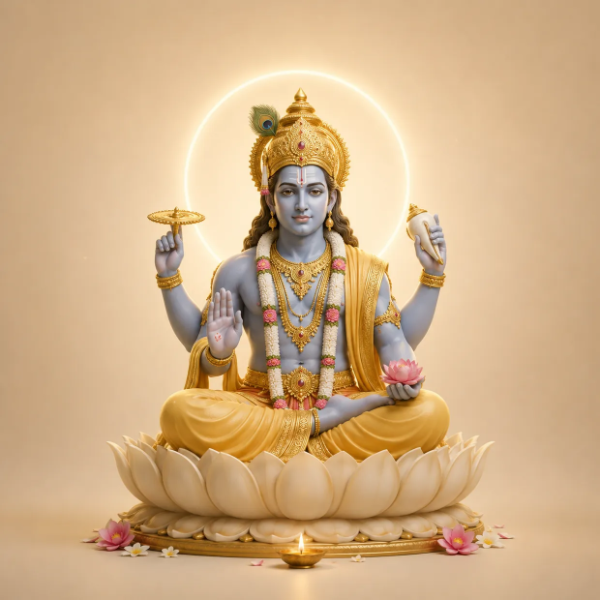
Meaning of Mantra
This mantra is an ecstatic invocation and glorification of Lord Madhava, a revered name for Vishnu and Krishna. The triple repetition of "Madhava" signifies profound devotion, complete surrender, and an intense longing for the divine presence. It is a direct address to the Supreme Being, acknowledging His omnipresence and seeking His divine grace and blessings. The repetition amplifies the power of the invocation, immersing the devotee in the Lord's name and fostering a deep, personal connection with the divine.
Benefits & Science
Benefits of Chanting:
Chanting "Madhavo Madhava Madhava" cultivates a profound sense of spiritual awakening by shifting focus from material pursuits to the divine. The rhythmic repetition helps in achieving inner peace and significantly reduces stress by calming the agitated mind. It deeply enhances devotion (Bhakti) towards the Supreme Lord, fostering a loving connection. The resonant vibrations generated purify the mind, clearing away negative thoughts and emotional blockages. This practice establishes a strong divine connection, inviting positive vibrations into one's life and promoting emotional balance. Regular chanting is believed to offer a subtle form of spiritual protection from negative influences and instill feelings of gratitude and joy, leading to an overall sense of well-being, harmony, and mental clarity.
Scientific Perspective:
From a scientific perspective, mantra chanting involves specific vocalizations and repetitive sounds that can influence brain activity. The rhythmic nature of "Madhavo Madhava Madhava" creates a resonant frequency that may stimulate the vagus nerve, which plays a crucial role in regulating the body's parasympathetic nervous system, responsible for "rest and digest" responses. This activation can lead to a reduction in heart rate, lower blood pressure, and a profound sense of calm. The focused repetition can also induce alpha and theta brainwave states, associated with deep relaxation, meditative absorption, and increased creativity. The internal vibrations produced through chanting create subtle physiological and psychological shifts, promoting mental clarity, emotional regulation, and enhanced neuroplasticity, akin to advanced mindfulness and sound therapy practices.
Mythology & Origin
Mantra Origin Saga:
The name Madhava originates from ancient Sanskrit scriptures, primarily associated with Lord Vishnu. It is one of the thousand names (Vishnu Sahasranama) and frequently appears in the Puranas, particularly the Bhagavata Purana, depicting the life and exploits of Krishna. Its usage stems from devotees' deep reverence and identification of Vishnu/Krishna as the supreme protector, sustainer, and the source of all auspiciousness.
Scriptures Mentions:
Vishnu Sahasranama, Bhagavata Purana, Mahabharata, Puranas (especially Padma Purana, Skanda Purana), Harivamsa.
Associated Rishi & Deity:
Lord Vishnu, Lord Krishna. The mantra itself is a devotional invocation, often used by Vaishnava devotees, rather than being attributed to a specific Rishi for its initial composition in the same way as some Vedic mantras.
Historical Significance:
The name Madhava has been central to Vaishnavism for millennia, representing the divine aspect of Lord Vishnu who embodies grace, love, righteousness, and preservation. Its chanting tradition has been passed down through generations, forming a cornerstone of Bhakti movements across India, influencing countless devotees to seek spiritual solace and connection. Historically, it signifies the enduring devotion to the preserver deity and his various incarnations, especially Krishna, symbolizing the triumph of dharma over adharma.
Frequently Asked Questions (FAQs)
Who is Madhava?
What is the significance of repeating 'Madhava' thrice?
Can anyone chant this mantra?
What are the best times to chant this mantra?
Is there any specific deity to visualize while chanting?
How does this mantra contribute to overall well-being?
Are there any specific rituals associated with chanting Madhava mantra?
Can chanting this mantra help with material desires or worldly success?
Mantra Sadhana Guidelines
Best Time to Chant
- Mondays are especially auspicious and beneficial.
- Early morning Brahma Muhurta (4:00 - 6:00 AM) is best.
- Highly fruitful during Pradosh Kaal and Mahashivratri.
- Chant before commencing any auspicious task or ritual.
Other Popular Lord Vishnu Mantras
Other Devotional Categories


Download App
पंचांग तिथि, त्यौहार, व्रत, उत्सव, एकादशी, आरती संग्रह, मंत्र, व्रत कथा