Lakshmi Narayana Namostute
Explore the profound Lakshmi Narayana Namostute mantra for holistic prosperity, harmony & divine grace. Learn its deep meaning, benefits & correct chanting methods.
Meaning of Mantra
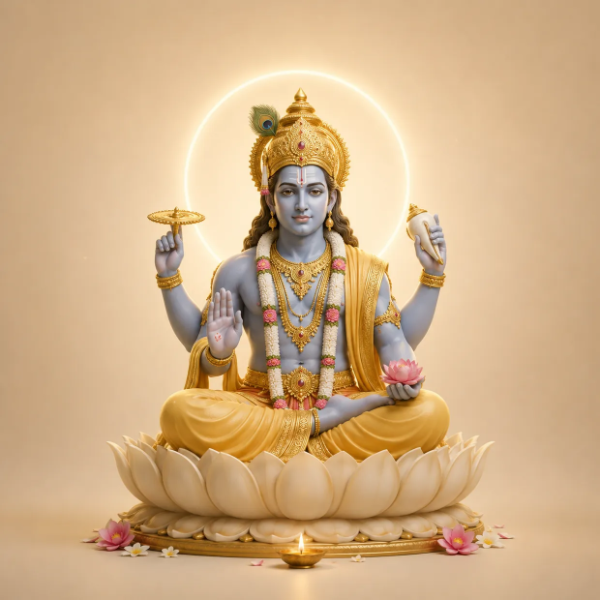
Profound salutations unto the divine couple Lakshmi and Narayana, the primordial sources of all abundance, preservation, and cosmic order. This mantra invokes their combined grace for holistic well-being, material prosperity, spiritual harmony, and the sustenance of righteous living. It is a heartfelt acknowledgment of the divine forces that govern both worldly success and spiritual liberation.
Benefits & Science
Benefits of Chanting:
Chanting 'Lakshmi Narayana Namostute' systematically aligns the devotee with the cosmic energies of preservation and abundance. Regularly engaging with this mantra is believed to foster a profound sense of holistic prosperity, not just limited to material wealth but extending to spiritual enrichment, emotional stability, and harmonious relationships. It aids in developing a positive mindset, attracting auspicious circumstances, and cultivating resilience against life's challenges. The combined grace of Lakshmi and Narayana supports the sustenance of well-being, offering protection and guiding one towards a life imbued with dharma and peace. This practice subtly influences one's vibrational frequency, inviting positive energies and opportunities into one's life, and promoting overall psychological and spiritual equilibrium.
Scientific Perspective:
From a scientific perspective, the rhythmic chanting of 'Lakshmi Narayana Namostute' acts as a potent form of sonic meditation. The specific vibrational frequencies produced by the Sanskrit syllables are believed to resonate with various energy centers (chakras) within the body, promoting a state of physiological and psychological coherence. The sustained vocalization engages the vagus nerve, which plays a crucial role in regulating the parasympathetic nervous system, leading to reduced stress, lower heart rate, and enhanced relaxation. This practice can induce alpha and theta brainwave states, conducive to deep meditation, improved focus, and heightened intuition. The repetition also helps to quiet the 'monkey mind,' fostering neural pathways associated with peace, gratitude, and positive emotional states, thus contributing to overall mental and emotional well-being and potentially influencing cognitive functions and stress reduction.
Mythology & Origin
Mantra Origin Saga:
The devotion to Lakshmi and Narayana as a unified divine couple is deeply rooted in Vaishnava traditions. While there isn't one singular 'origin story' for this specific mantra, it emerged from the profound understanding of their inseparable roles in cosmic preservation and sustenance. Narayana (Vishnu) is the supreme protector, and Lakshmi is His consort, the divine energy (Shakti) that enables His functions, providing wealth, prosperity, and spiritual auspiciousness. Their union represents the complete divine principle responsible for the well-being of the universe. The mantra itself is a direct invocation of this combined, holistic divinity, echoing through countless Puranas and devotional hymns, signifying an ancient lineage of reverence.
Scriptures Mentions:
References to Lakshmi and Narayana's divine partnership are ubiquitous across Hindu scriptures, prominently in the Vedas (e.g., Sri Suktam for Lakshmi, Purusha Suktam for Narayana), Upanishads, Puranas (Vishnu Purana, Padma Purana, Bhagavata Purana), and Itihasas (Ramayana, Mahabharata). The phrase 'Lakshmi-Narayana' frequently appears in devotional hymns, stotras, and philosophical treatises emphasizing their cosmic union as the source of all prosperity (material and spiritual) and cosmic order (dharma). The Bhagavata Purana, in particular, glorifies Lord Vishnu as Narayana and Devi Lakshmi as His eternal consort, highlighting their eternal bond.
Associated Rishi & Deity:
The mantra is dedicated to the divine couple Lakshmi and Narayana themselves. While no specific Rishi is directly attributed as the seer of this particular phrasing, the essence of worshipping Lakshmi-Narayana is a fundamental aspect of Vaishnavism, championed by numerous ancient sages (Rishis) like Narada, Markandeya, and later revered Acharyas (teachers) such as Ramanujacharya, Madhvacharya, and Vallabhacharya, who propagated the devotion to Vishnu and His consort. Their teachings form the bedrock of this divine invocation.
Historical Significance:
The historical significance lies in the continuous veneration of Lakshmi-Narayana throughout millennia, reflecting the enduring human aspiration for holistic well-being – encompassing material prosperity, spiritual growth, and moral righteousness. This mantra represents a timeless tradition of invoking the divine for sustenance and harmony. Its widespread chanting in homes, temples, and spiritual gatherings across India and beyond attests to its deep cultural, religious, and philosophical impact. It signifies a profound belief in the divine providence that sustains life and bestows grace for both worldly success and spiritual liberation, maintaining continuity and relevance in Hindu spiritual practices for generations.
Frequently Asked Questions (FAQs)
Who are Lakshmi and Narayana, and why are they invoked together?
What is the primary benefit of chanting 'Lakshmi Narayana Namostute'?
Is this mantra only for material wealth, or does it have deeper significance?
Can anyone chant this mantra, or are there specific requirements?
What is the ideal time and direction to chant 'Lakshmi Narayana Namostute'?
Do I need a guru's initiation (diksha) to chant this mantra?
How does this mantra contribute to relationship harmony?
What is the significance of chanting 108 times?
Mantra Sadhana Guidelines
Best Time to Chant
- Mondays are especially auspicious and beneficial.
- Early morning Brahma Muhurta (4:00 - 6:00 AM) is best.
- Highly fruitful during Pradosh Kaal and Mahashivratri.
- Chant before commencing any auspicious task or ritual.
Other Popular Lord Vishnu Mantras
Other Devotional Categories


Download App
पंचांग तिथि, त्यौहार, व्रत, उत्सव, एकादशी, आरती संग्रह, मंत्र, व्रत कथा