
Mangalam Bhagavan Vishnuh Mantra
Explore the profound meaning and benefits of Mangalam Bhagavan Vishnuh, a powerful Sanskrit mantra for auspiciousness, protection, and spiritual well-being. Discover its spiritual and philosophical depths.
Meaning of Mantra
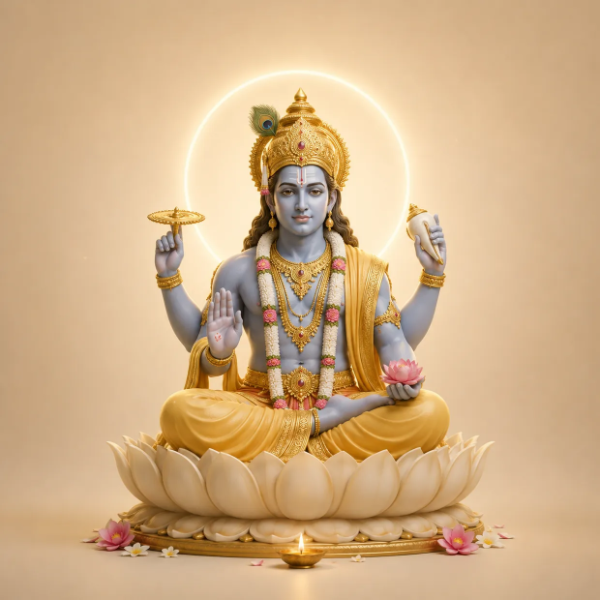
This profound Sanskrit mantra, 'Mangalam Bhagavan Vishnuh, Mangalam Garudadhvajah. Mangalam Pundarikaksho, Mangalayateno Harih,' is a beautiful invocation of Lord Vishnu, emphasizing His inherent and all-pervading auspiciousness. It translates to: 'Auspicious is Lord Vishnu; Auspicious is He whose banner is Garuda; Auspicious is He whose eyes are like lotuses; Auspicious is Hari, the abode of all auspiciousness.' Each line celebrates Vishnu's divine attributes and His role as the source of all good fortune and well-being. It declares that Vishnu, in His very essence, embodies pure auspiciousness and that all positive energies emanate from Him. Chanting this mantra is an act of surrendering to this supreme auspicious principle, inviting harmony and positive vibrations into one's life and environment.
Benefits & Science
Benefits of Chanting:
Chanting the 'Mangalam Bhagavan Vishnuh' mantra can bring about a profound sense of well-being and positive transformation. Regular recitation helps to attune the mind to the frequency of auspiciousness, naturally clearing mental blockages and fostering clarity of thought. The sacred vibrations are believed to create a protective aura around the chanter, mitigating the impact of negative influences and promoting a sense of security. Spiritually, it deepens one's connection with the divine, fostering inner peace and a compassionate outlook. While not promising instant magical solutions, consistent practice can lead to a sustained positive mental state, improved decision-making, and a greater capacity to attract and recognize opportunities, thereby enhancing overall life experiences and promoting spiritual growth.
Scientific Perspective:
From a scientific viewpoint, mantra chanting, including 'Mangalam Bhagavan Vishnuh,' acts as a form of auditory stimulation and focused meditation. The rhythmic repetition of Sanskrit syllables produces specific sound vibrations that can resonate with the brain's neural networks. This rhythmic engagement often leads to a synchronization of brainwave patterns, typically shifting from beta (waking consciousness) to alpha (relaxed, meditative) and even theta (deep relaxation, creativity) states. This can activate the vagus nerve, which plays a crucial role in regulating the body's parasympathetic nervous system, thereby reducing stress, anxiety, and blood pressure. The focused attention required during chanting enhances mindfulness, improving concentration and cognitive function. The positive affirmations within the mantra can also influence neuroplasticity, fostering a more optimistic and resilient mental framework over time.
Mythology & Origin
Mantra Origin Saga:
The 'Mangalam Bhagavan Vishnuh' mantra is a traditional Vedic verse, deeply embedded in Hindu culture. While it doesn't have a single origin story attributed to a specific event or sage, it is a foundational 'Mangalacharan' (invocation for auspiciousness) recited before starting any significant endeavor, prayer, or ritual. Its antiquity suggests its presence in ancient oral traditions before being codified in various Puranic texts. It embodies the core philosophy that the divine, particularly Vishnu, is the ultimate source of all good and well-being.
Scriptures Mentions:
This mantra or variations of it can be found across various Hindu scriptures, including sections of the Puranas (like Vishnu Purana, Padma Purana), Itihasas (like the Mahabharata, where Vishnu's attributes are extensively glorified), and numerous Stutis (hymns of praise) dedicated to Lord Vishnu. It is often used as a standard opening prayer in many spiritual texts and daily worship routines, signifying its universal acceptance and profound reverence within Vaishnava and general Hindu traditions.
Associated Rishi & Deity:
The primary deity associated with this mantra is Lord Vishnu, the preserver of the universe in the Hindu trinity (Brahma, Vishnu, Shiva). While no specific Rishi (sage) is exclusively attributed to its composition, it is a mantra that has been passed down through generations of Vedic scholars and yogis who revered Vishnu as the embodiment of auspiciousness and cosmic order. Sages like Narada and Vyasa, known for their devotion to Vishnu, are indirectly associated with the lineage of Vishnu bhakti that embraces such mantras.
Historical Significance:
Historically, the 'Mangalam Bhagavan Vishnuh' mantra holds immense cultural and religious significance. It has served as a pivotal 'Mangalacharan' for centuries, initiating countless rituals, ceremonies, educational endeavors, and daily activities across India and among the global Hindu diaspora. Its recitation before any new undertaking is believed to sanctify the event, invoke divine blessings, and ensure a successful and harmonious outcome. This tradition underscores the deep-rooted belief in the power of invoking divine auspiciousness to guide human efforts and maintain cosmic balance. It symbolizes a collective aspiration for peace, prosperity, and spiritual purity.
Frequently Asked Questions (FAQs)
Who is Lord Vishnu as described in this mantra?
Why is this mantra often referred to as a 'Mangalacharan'?
What is the significance of 'Garudadhvajah' and 'Pundarikaksho'?
Can people of any faith or background chant this mantra?
Does chanting this mantra guarantee instant removal of all problems?
What is the best time to chant 'Mangalam Bhagavan Vishnuh'?
Are there any specific rituals or offerings required with this mantra?
How does this mantra relate to overall prosperity?
Mantra Sadhana Guidelines
Best Time to Chant
- Mondays are especially auspicious and beneficial.
- Early morning Brahma Muhurta (4:00 - 6:00 AM) is best.
- Highly fruitful during Pradosh Kaal and Mahashivratri.
- Chant before commencing any auspicious task or ritual.
Other Popular Lord Vishnu Mantras
Other Devotional Categories


Download App
पंचांग तिथि, त्यौहार, व्रत, उत्सव, एकादशी, आरती संग्रह, मंत्र, व्रत कथा