
Om Ugram Veeram Mahavishnum Jwalantam Sarvatomukham | Nrisimham Bhishanam Bhadram Mrityumrityum Namamyaham ||
Explore the powerful Narasimha Mantra (Ugram Veeram Mahavishnum). Discover its deep meaning, benefits for protection, overcoming fear, spiritual growth, and scientific impact.
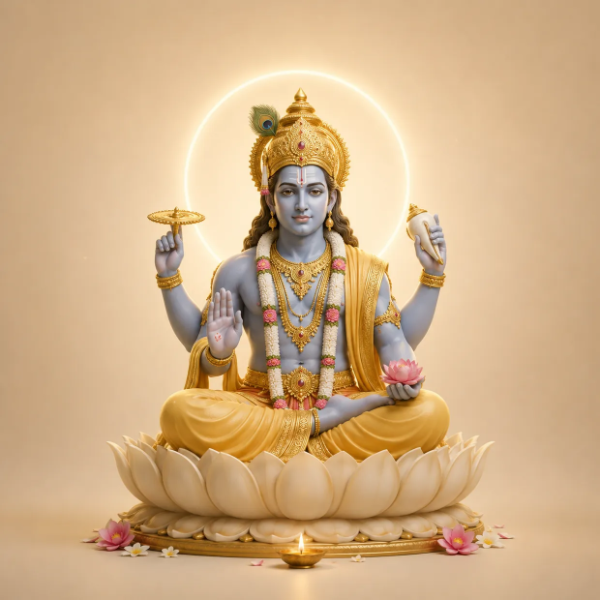
Meaning of Mantra
I bow down to Lord Narasimha, who is fierce and heroic, the great Vishnu, blazing and all-pervading, terrifying yet benevolent, the vanquisher of death itself. This powerful mantra is an invocation to the man-lion avatar, seeking his supreme protection and grace against all forms of adversity.
Benefits & Science
Benefits of Chanting:
Chanting the Narasimha Mantra is believed to invoke Lord Narasimha's fierce yet compassionate protection, guarding devotees from negative energies, illnesses, and unforeseen dangers. It systematically instills immense courage and fortitude, helping individuals overcome deep-seated fears, anxieties, and phobias. Regular practice can lead to a significant boost in willpower, improved physical and mental health, and the removal of hurdles on the path of spiritual and worldly endeavors. It fosters a profound sense of inner peace and security, aligning the practitioner with divine strength for personal transformation and, ultimately, spiritual liberation. This mantra is particularly potent for those seeking to conquer external threats and internal weaknesses.
Scientific Perspective:
The rhythmic chanting of this powerful mantra generates specific sound vibrations (Naada) that resonate through the body, potentially stimulating the vagus nerve and influencing brainwave patterns. The deep resonant 'Om' and subsequent syllables can induce a meditative state, reducing stress hormones like cortisol and promoting a sense of calm and focus. This can lead to improved cognitive function, enhanced emotional regulation, and a stronger immune response. The repetitive nature of chanting helps in achieving alpha and theta brainwave states, associated with deep relaxation, heightened creativity, and access to subconscious spiritual insights, thereby fostering overall physiological and psychological well-being. It also encourages diaphragmatic breathing, which is linked to reduced anxiety and improved cardiovascular health.
Mythology & Origin
Mantra Origin Saga:
The Narasimha avatar appeared to protect his devotee Prahlada from his demonic father Hiranyakashipu, who had a boon making him immune to death from man or beast, day or night, inside or outside, on land or in air. Lord Narasimha, half-man and half-lion, appeared at twilight on the threshold of his palace, placed Hiranyakashipu on his lap, and disemboweled him with his sharp claws, thus ingeniously circumventing all the conditions of the boon and restoring cosmic balance.
Scriptures Mentions:
The story of Lord Narasimha is extensively narrated in various Hindu scriptures, most notably in the Bhagavata Purana (Srimad Bhagavatam) in its seventh canto, as well as in the Vishnu Purana, Harivamsa, and Agni Purana. These texts vividly describe the events leading to his manifestation and his heroic act of saving Prahlada.
Associated Rishi & Deity:
The primary deity is Lord Narasimha, an avatar of Lord Vishnu. Key associated figures include his devout bhakta (devotee) Prahlada, Hiranyakashipu (the demon king), Sage Kashyapa (father of Hiranyakashipu), and Diti (mother of Hiranyakashipu). The mantra itself is a direct invocation to Lord Narasimha.
Historical Significance:
The Narasimha story is a foundational narrative in Hindu mythology, emphasizing the ultimate triumph of good over evil, the unbreakable bond between God and devotee, and the principle that God will always protect His devotees, even by manifesting in extraordinary and unexpected forms. It has inspired numerous temples (like Ahobilam), art forms, and devotional practices throughout Indian history, serving as a powerful symbol of divine justice and protection.
Frequently Asked Questions (FAQs)
Who is Lord Narasimha and why is this mantra significant?
What is the primary purpose of chanting this Narasimha Mantra?
Can anyone chant this powerful mantra, or are there restrictions?
When is the most auspicious time to chant the Narasimha Mantra?
How does this mantra relate to the concept of 'death of death' (Mrityumrityum)?
Are there any specific precautions or rituals to follow while chanting?
Can chanting this mantra help with mental health issues like anxiety or depression?
What is the significance of the 'Om' (ॐ) at the beginning of the mantra?
Mantra Sadhana Guidelines
Best Time to Chant
- Mondays are especially auspicious and beneficial.
- Early morning Brahma Muhurta (4:00 - 6:00 AM) is best.
- Highly fruitful during Pradosh Kaal and Mahashivratri.
- Chant before commencing any auspicious task or ritual.
Other Popular Lord Vishnu Mantras
Other Devotional Categories


Download App
पंचांग तिथि, त्यौहार, व्रत, उत्सव, एकादशी, आरती संग्रह, मंत्र, व्रत कथा