
Om Anantaya Namaha
Explore the profound 'Om Anantaya Namaha' mantra. Connect with the infinite divine, gain inner peace, spiritual growth, and cosmic awareness through this ancient Vedic chant. Meaning, benefits, and chanting guide.
Meaning of Mantra
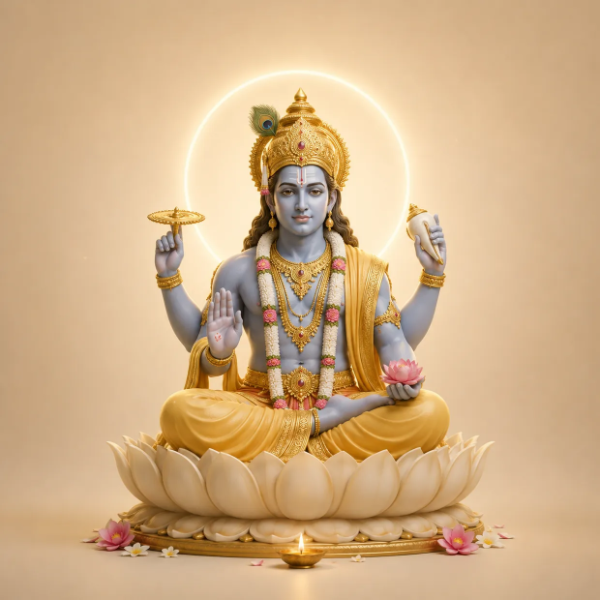
The mantra "Om Anantaya Namaha" is a profound salutation to the Infinite, the Eternal, often identified with Lord Vishnu. 'Om' represents the cosmic vibration, the source of all existence. 'Anantaaya' refers to Ananta, meaning 'endless' or 'infinite', embodying the boundless nature of the Divine. This aspect of Vishnu is often depicted reclining on the cosmic serpent Shesha-Ananta, symbolizing the substratum of all creation. 'Namaha' signifies humble obeisance or respectful salutations. Thus, the mantra collectively translates to "I bow to the Infinite One," or "Salutations to the boundless Lord." It invokes the eternal, all-pervading aspect of the divine, fostering a deep connection with the cosmic order and the limitless potential within oneself.
Benefits & Science
Benefits of Chanting:
Chanting 'Om Anantaya Namaha' can lead to profound benefits by aligning the individual's consciousness with the infinite. Regular practice is thought to cultivate a deep sense of inner peace and tranquility, by shifting focus from transient worries to the eternal nature of existence. It can strengthen one's spiritual connection, fostering a feeling of being supported and guided by a higher power. By meditating on the infinite, practitioners may find that perceived obstacles diminish in significance, leading to enhanced problem-solving abilities and a broader perspective. The vibrations and meaning of the mantra are believed to quiet the mind, reduce stress and anxiety, and promote emotional balance, facilitating a state of mindful awareness. This connection to the boundless also aims to invoke a sense of divine protection and foster wisdom, helping individuals navigate life's challenges with greater equanimity and insight.
Scientific Perspective:
From a scientific perspective, chanting mantras like 'Om Anantaya Namaha' involves rhythmic vocalization that can induce a state of relaxation and altered brainwave patterns. The repetition of sounds creates specific vibrations that resonate within the body and mind. This process is thought to stimulate the vagus nerve, which plays a crucial role in regulating the parasympathetic nervous system, leading to a 'rest and digest' response. This can lower heart rate, reduce blood pressure, and alleviate muscle tension. The focused attention required during chanting can synchronize brain hemispheres and promote the production of alpha and theta brainwaves, associated with deep relaxation, mindfulness, and enhanced creativity. The auditory and proprioceptive feedback from chanting may also help in reducing rumination and fostering a sense of calm and clarity.
Mythology & Origin
Mantra Origin Saga:
The mantra's origin is deeply rooted in ancient Vedic and Puranic traditions, specifically within Vaishnavism. The concept of 'Ananta' as the boundless, eternal aspect of the divine is fundamental. Lord Vishnu is often depicted resting on the cosmic serpent Shesha-Ananta (Anant Nag), floating on the primordial waters (Kshirasagara). Shesha-Ananta symbolizes the infinite consciousness upon which the entire cosmos rests and from which it emerges at the beginning of each cycle of creation. Thus, 'Anantaaya Namaha' is a direct homage to this foundational, infinite reality.
Scriptures Mentions:
References to Ananta are found across various Hindu scriptures. The Bhagavata Purana and Vishnu Purana extensively describe Lord Vishnu's association with Ananta Shesha. In the Bhagavad Gita (Chapter 10, Verse 29), Lord Krishna states, "Among the Nagas (serpents), I am Ananta," highlighting the supreme significance of Ananta as an embodiment of the divine. The Upanishads also implicitly refer to the infinite, eternal nature of Brahman, which 'Ananta' explicitly represents.
Associated Rishi & Deity:
The primary deity associated with this mantra is Lord Vishnu, specifically in his cosmic, all-pervading, and eternal aspect known as Ananta. Ananta Shesha, the multi-headed cosmic serpent, is also revered as a manifestation of this infinite principle, often seen as the support of the universe and a devoted servant of Vishnu. Sages and devotees across millennia have meditated upon Ananta as the ultimate reality.
Historical Significance:
Historically, the veneration of the infinite and eternal aspect of God has been a cornerstone of Hindu philosophy and spiritual practice. The concept of Ananta has been central to the development of Vaishnavism, emphasizing the timeless, unchanging nature of the Supreme Being amidst the transient world. Chanting 'Om Anantaya Namaha' connects practitioners to a lineage of devotion and wisdom that stretches back to antiquity, reinforcing the enduring quest for ultimate truth and liberation (moksha) through recognizing the divine omnipresence.
Frequently Asked Questions (FAQs)
Who is Ananta in the context of this mantra?
What are the primary benefits of chanting 'Om Anantaya Namaha'?
Can anyone chant 'Om Anantaya Namaha' regardless of their religious background?
How often should I chant this mantra?
Does this mantra offer protection?
Can 'Om Anantaya Namaha' aid in meditation?
What is the significance of the 'Om' prefix?
Is there a specific way to visualize while chanting?
Mantra Sadhana Guidelines
Best Time to Chant
- Mondays are especially auspicious and beneficial.
- Early morning Brahma Muhurta (4:00 - 6:00 AM) is best.
- Highly fruitful during Pradosh Kaal and Mahashivratri.
- Chant before commencing any auspicious task or ritual.
Other Popular Lord Vishnu Mantras
Other Devotional Categories



Download App
पंचांग तिथि, त्यौहार, व्रत, उत्सव, एकादशी, आरती संग्रह, मंत्र, व्रत कथा