
Om Namo Bhagavate Vasudevaya
Discover the profound spiritual meaning, benefits, and correct chanting methods for the ancient 'Om Namo Bhagavate Vasudevaya' mantra. Elevate your devotion to Lord Vishnu.
Meaning of Mantra
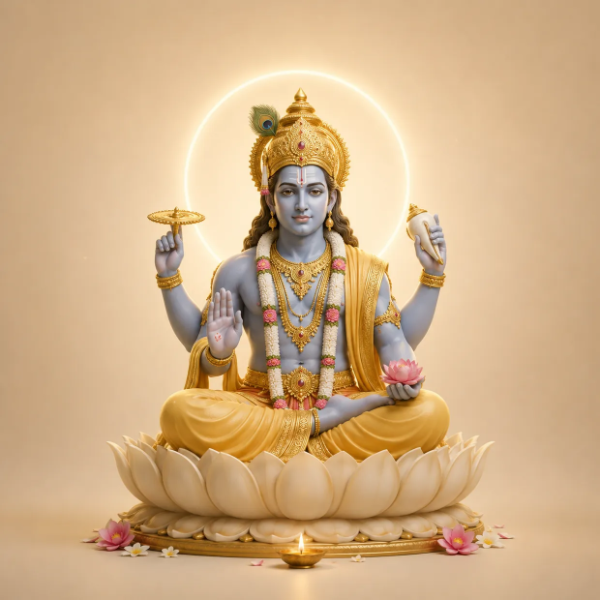
The mantra "Om Namo Bhagavate Vasudevaya" is a powerful and sacred salutation to Lord Vishnu, particularly in His form as Krishna, the son of Vasudeva. It translates to "Om, I bow to the revered Vasudeva." This mantra acknowledges the Supreme Being as the all-pervading divine essence, the ultimate reality who is present within every living being and the universe itself. Chanting it is an act of complete surrender and devotion, inviting divine grace and fostering a deep connection with the cosmic consciousness that Vasudeva represents. It's an affirmation of the omnipresence and omnipotence of the Divine.
Benefits & Science
Benefits of Chanting:
Regular chanting of "Om Namo Bhagavate Vasudevaya" is believed to gradually align the individual's consciousness with the universal divine energy. This alignment can lead to profound spiritual growth, fostering a deeper understanding of one's purpose and connection to the cosmos. The rhythmic chanting helps to calm the nervous system, reduce stress, and promote mental clarity, contributing to a sense of inner peace. It cultivates an attitude of devotion and surrender, which can alleviate mental burdens and provide a sense of divine protection and guidance in life's challenges. Over time, practitioners may experience a purification of thoughts and emotions, leading to the development of virtues like compassion, humility, and unconditional love, which are foundational for spiritual liberation (Moksha).
Scientific Perspective:
From a scientific perspective, mantra chanting, including "Om Namo Bhagavate Vasudevaya," involves rhythmic sound vibrations and controlled breathing. These practices can activate the vagus nerve, which plays a crucial role in regulating heart rate, digestion, and mood, thereby inducing a relaxation response. The repetitive chanting can lead to a meditative state, promoting the generation of alpha and theta brainwaves, which are associated with calmness, creativity, and deep relaxation. The focused attention required during chanting acts as a form of mindfulness, reducing rumination and fostering present-moment awareness. The resonant frequencies produced by the sounds are thought to create subtle physiological and neurological changes, enhancing neural pathways and potentially promoting neuroplasticity, contributing to improved cognitive function and emotional well-being.
Mythology & Origin
Mantra Origin Saga:
The mantra "Om Namo Bhagavate Vasudevaya" is one of the most ancient and revered mantras in Hinduism, particularly within the Vaishnava tradition. Its roots can be traced back to the Vedic period and it is prominently featured in various Puranas and Itihasas. It is considered a 'Dwadasakshari Mantra' (12-syllable mantra) and is often called the Moola Mantra of Lord Vishnu or Krishna. Its power and significance are deeply woven into the fabric of Sanatana Dharma, representing a direct invocation of the Supreme Lord.
Scriptures Mentions:
This mantra finds extensive mention and glorification in numerous Hindu scriptures. It is a central theme in the Bhagavata Purana (Srimad Bhagavatam), the Vishnu Purana, and the Narada Purana. Lord Krishna Himself alludes to its essence in the Bhagavad Gita, particularly in verses that speak of devotion and surrender to the Supreme Being (e.g., Chapter 18, Verse 66: "Sarva-dharman parityajya mam ekam sharanam vraja"). It is also a fundamental chant in the Pancharatra Agamas, which are foundational texts for Vaishnava worship.
Associated Rishi & Deity:
The primary deities associated with this mantra are Lord Vishnu and His incarnation, Lord Krishna. Historically, numerous sages and saints throughout the ages have propagated and chanted this mantra for spiritual realization and to spread the message of devotion (Bhakti). Notable among them are the great Vaishnava acharyas like Ramanujacharya, Madhvacharya, and Vallabhacharya, who established philosophical schools centered around devotion to Vishnu/Krishna. Even ancient sages like Narada Muni are depicted as ardent devotees of Vasudeva.
Historical Significance:
"Om Namo Bhagavate Vasudevaya" holds immense historical significance as a foundational mantra of Vaishnavism, one of the largest traditions within Hinduism. It has been instrumental in shaping the Bhakti movement across India, inspiring countless devotees to seek spiritual solace and liberation through loving devotion to the Supreme Lord. Its widespread chanting has contributed to the preservation and propagation of ancient spiritual knowledge, emphasizing the accessibility of divine grace to all, regardless of caste or creed. It continues to be a living tradition, chanted daily by millions worldwide, signifying an unbroken lineage of devotion spanning millennia.
Frequently Asked Questions (FAQs)
What is the primary significance of the word 'Om' in this mantra?
Who is 'Vasudeva' in the context of this mantra?
Is there a specific time of day best suited for chanting this mantra?
Can beginners or those new to Hinduism chant this mantra?
What kind of benefits can one realistically expect from chanting this mantra regularly?
Is it necessary to understand the full meaning of the mantra to benefit from chanting it?
How does this mantra connect to the concept of Dharma?
What is the significance of the 12 syllables in this mantra?
Can this mantra be used for specific material desires?
Mantra Sadhana Guidelines
Best Time to Chant
- Mondays are especially auspicious and beneficial.
- Early morning Brahma Muhurta (4:00 - 6:00 AM) is best.
- Highly fruitful during Pradosh Kaal and Mahashivratri.
- Chant before commencing any auspicious task or ritual.
Other Popular Lord Vishnu Mantras
Other Devotional Categories


Download App
पंचांग तिथि, त्यौहार, व्रत, उत्सव, एकादशी, आरती संग्रह, मंत्र, व्रत कथा